Share
130+ Journal Prompts for Kids: Fun, Creative, and Simple Writing Ideas
Get kids thinking and writing with easy prompts for all ages and topics.
Journal prompts for kids are simple questions or ideas that help children start writing and remove the anxiety of staring at a blank page. They’re designed to inspire creativity, build literacy skills, process emotions, and make journaling feel more fun and approachable for kids of all ages.
Use our writing prompts at home or in the classroom. They’re organized by age, topic, and format, with something to engage every young writer!
The Benefits of Journaling for Kids:
In the study Enhancing Preschoolers’ Emotion Regulation Skills through Shared Book Reading and Journaling, researchers found that both interactive book reading (shared reading) and journaling helped children strengthen their emotion regulation skills.
The biggest improvements occurred when the two activities were combined. Even three weeks after the intervention ended, children continued to show stronger emotion regulation skills, suggesting these activities can have lasting benefits.
Journal Prompts for Kids by Age
Many journal prompts work across all ages—the only difference is the depth and method of the response. But it’s also helpful to have journal prompts broken down by general age or grade level, like those shown here. We’ve further divided them by classroom and at-home ideas, though they all can work in either setting.
Journal Prompts for Preschool and Kindergarten (Drawing & Early Writing)
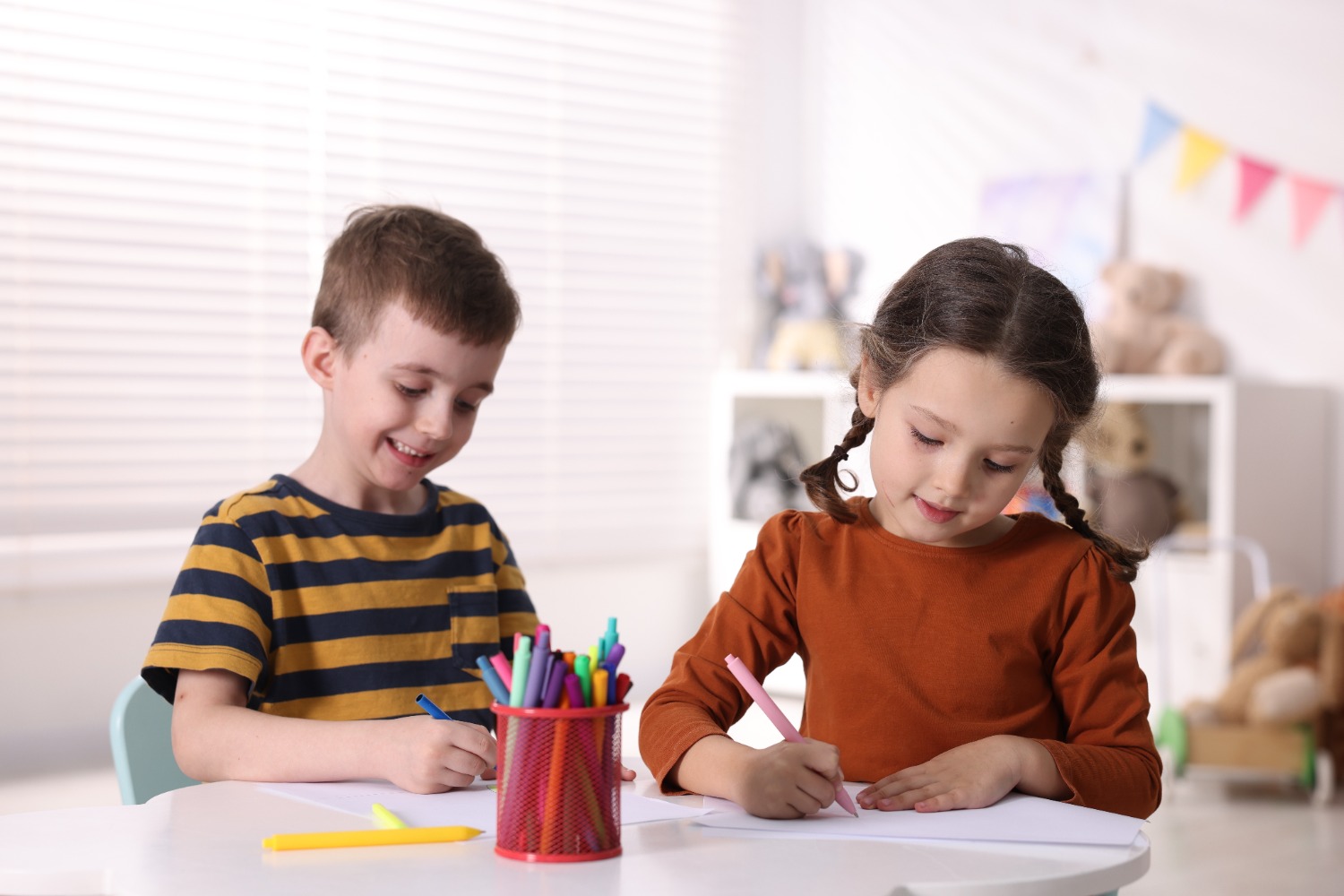
In these early years when kids are still learning to form letters and sentences, journaling is more about learning to process emotions and thoughts and explain them to others through pictures, orally, or one or two simple words on paper.
Tip: A parent or teacher can ask a child to respond to a prompt with an illustration, and then ask for an explanation of the drawing, writing it down alongside the picture.
🏫 Classroom:
- Draw a picture of your teacher, and choose some words that describe how you feel about him or her.
- Make a picture showing you and your friends learning at school.
- Draw a picture of you playing with your favorite toy at school.
- How do you feel when you’re at school? Draw a picture to show those feelings.
- Choose a letter of the alphabet and draw pictures of items starting with that letter.

✏️ At Home:
- Draw your favorite animal, then tell why you like it.
- Describe your day in pictures, then explain each picture out loud.
- What kind of weather do you like best? Draw a picture and choose some words that describe it.
- What’s your favorite color? Draw pictures of things that are that color.
- Close your eyes and listen for one minute. Then, open your eyes and draw a picture of what you heard.
- Draw a picture of how you feel when something makes you sad.
- Draw a picture of yourself wearing your favorite outfit. Explain how you feel when you wear it.
- Illustrate these emotions: happy, excited, worried, and angry.
- Draw a picture of something that scares you, and explain why it makes you feel this way.
- Draw a picture that will make someone laugh.


Journal Prompts for Early Elementary Kids: First Grade (Ages 6–7)
In first grade, students learn to write more and more words each day and journaling is a great way to practice with their growing vocabulary. Kids still won’t know how to write everything they’d like to say, though, so parents or teachers can work side-by-side with them to help them get their thoughts and feelings down on the page.
Tip: Provide a printed list of relevant words that children can use in their journal entries if they want to. Our printable first grade sight word list and first grade spelling word list can help.
Classroom:
- What’s something new you’d like to learn how to do?
- Design the perfect new playground. What would it include and look like?
- What part of your classroom or school do you like best, and why?
- If you could change one thing about your school, what would it be?
- What is your favorite classroom job, and why do you like it?
At Home:
- What do you like to do outside in winter?
- Who is your best friend? Write a list of at least 10 words to describe them.
- How do you calm down when you feel angry?
- Where is your favorite place to be, and why do you love it?
- What season do you like best, and why?
- If you could visit anyplace in the world, where would you go, and why?
- Describe the last time you were excited about something.
- Describe the perfect meal. What would it be and where would you eat it?
- How do you feel when you’re not good at something right away?
- Describe how you feel when you listen to, play, or sing your favorite song.
Journal Prompts for Early Elementary Kids: Second Grade (Ages 7–8)
As children grow more confident with spelling and handwriting, start transitioning journaling time to a more independent activity focused on writing.
- For more writing practice, check out our Writing Worksheets for 2nd Grade
Tip: Stay nearby so you can help with spelling and other questions as they write, but don’t look over their shoulder the whole time.
Classroom:
- What do you like most about school?
- What’s something you wish you could do better? How can you get better at it?
- Describe the funniest thing that happened at school this week.
- Design the perfect classroom for students like you.
- What school rule would you change if you could, and how?
At Home:
- Describe how you celebrated your last birthday.
- How do you help yourself fall asleep when you don’t feel sleepy?
- Are you scared of the dark? Why or why not?
- Pick a color, and write down all the words that make you think of that color.
- What do you think you’ll be doing a year from today?
- What’s something you’re scared to try? Why?
- What food do you really dislike? How does it taste or make you feel when you eat it?
- If you could be any character in a book, show, or movie, who would you be and why?
- Pick a family member, and make a long list of words to describe them.
- Write about a time you made a mistake, and how you fixed it.

Journal Prompts for Upper Elementary Kids:
(Ages 8–10)
At this age, kids are more comfortable writing on their own, but journal prompts still give them a good jumpstart.
Tip: Encourage children to use descriptive language and to work in new vocabulary words when they can.
Classroom:
- Write about the best teacher you’ve ever had, and why you liked them so much.
- Write a letter to a famous person from history that you admire.
- What school subject do you like the least? Why don’t you like it?
- What school subject do you like the best? Why do you like it?
- What’s something you wish your teacher knew about you?
- What’s something you learned recently that surprised you?
At Home:
- Invent a new sport or game, and describe the rules.
- What planet would you like to live on if you could, and why?
- Describe a time when you hurt someone’s feelings, and how it made you feel.
- What do you say to yourself when you need some encouragement?
- What’s your earliest memory?
- Describe what the world will be like 100 years from now.
- What do you enjoy doing on rainy days?
- Describe the last time you helped someone, and how it made you feel.
- What do you think your life will be like in 10 years?
- Write about the perfect summer day.

Journal Prompts for Kids by Type or Topic
Creative Story Starter Journal Prompts
Give kids the first sentence of a story, then let their imaginations run wild!
- The day Juan’s parents turned into penguins was a very strange day indeed.
- “I mean it!” shouted Alice, slamming the door. “I’m never talking to you again!”
- When we planted the seeds the old woman gave us, we could never have guessed what would grow.
- We couldn’t believe our eyes—a real treasure map, and X marked the spot!
- Once upon a time, three little mice lived in an old shoe in a dusty attic.
- To be honest, I didn’t really like old Mr. Lee the first time I met him.
- It was a sunny spring afternoon when I realized I had lost my shadow.
- As the plane took off, Oliver felt very excited, and a little bit scared.
- “And now,” said the genie, floating above his golden lamp, “you may make your first wish. What will it be?
- I was six years old when my parents told me we were moving to the moon.
Fun & Silly Imaginative Prompts
Turn to these prompts to encourage creativity and imagination in writers of all ages.
- What would life be like if we all walked on our hands instead of our feet?
- Write a conversation between your left shoe and your right shoe.
- Imagine all the teachers at your school were replaced by animals—what creatures would they be and how would people react?
- Describe a day in the life of your favorite toy.
- What would happen if every time you opened your backpack, a different kind of bird flew out?
- If you had a magic wand that would turn all vegetables into candy, would you use it? Why or why not?
- If animals could talk, which one would be the most annoying, and why?
- What would the world be like if babies could talk as soon as they were born?
- Combine parts of three different animals to make a new one (like an elephant’s trunk, the shell of a turtle, and the wings of an ostrich). What would you call it, and what would its life be like?
- Invent a superhero with a very silly power—what is their name, and how do they use their superpower?
Feelings & Gratitude Prompts
Social emotional prompts like these help kids connect with and process their feelings, and recognize all they have to be grateful for in their daily lives.
- Describe a time when you felt very happy.
- Write about something that always makes you laugh.
- When was the last time you felt afraid, and why?
- How do you cheer yourself up when you feel sad?
- Tell about a time when you were angry, and how you acted because of it.
- Who can you turn to when you need help or advice?
- Describe a time when someone helped you, and how it made you feel.
- Make a list of 10 things you’re thankful for today.
- Write a letter to someone thanking them for something kind they’ve done for you.
- What are some ways you can thank someone without using any words?
All About Me Prompts
Invite kids to think about who they are, what they like and dislike, and more with these journal topics.
- Describe yourself using words, or draw a picture instead.
- Make a long list of your favorite things: color, food, book, movie, game, place, friends, etc.
- Describe your bedroom in detail.
- Draw a map of your neighborhood and label all the locations.
- Describe your family members—their names, what they look like, what you love about them, and more.
- What are some things you don’t like, and why?
- Who are your closest friends, and why do you like them?
- What would you like to do for a job someday?
- What do you like most about yourself?
- What are some things you do really well?
Would You Rather… Prompts
These journal prompts get kids thinking, whether the scenarios are serious or just hilarious. Encourage children to expand on their answers, explaining why they chose one option over the other as they write.
Tip: Get more printable Would You Rather questions here!
Would you rather:
- Go to the top of Mt. Everest or the bottom of the ocean?
- Have a house at the beach or in the middle of a forest?
- Read a book or play a game?
- Play at home or go to the park?
- Have a pet hippopotamus or a pet kangaroo?
- Be able to turn invisible or fly like a bird?
- Always have to shout or always have to whisper?
- Give up ice cream or pizza?
- Be a tree or a wildflower?
- Live 100 years in the past or 100 years in the future?
Seasonal & Special Occasions Prompts
Try using prompts to get kids excited about upcoming holidays, or to help them reflect on the changing seasons around them.
Tip: Find 80+ more seasonal writing prompts for kids here!

- What’s your favorite thing about spring/summer/winter/fall, and why?
- Which holiday is your favorite, and why do you enjoy it?
- What are some of your favorite [choose a holiday] traditions?
- Describe the best present you ever got, and how it made you feel.
- How do you pick out a gift for someone that you know they’ll love?
- What are some ways to say “I love you” without using the words?
- Plan out your next Halloween costume in detail.
- What food do you look forward to most on Thanksgiving, and why?
- How do you feel when you watch fireworks?
- What’s one goal you have for the new year ahead?
Daily Journal Prompts for Kids
Using a set of regular reflection questions can help turn journaling into a daily habit. Try using a specific prompt for each day of the week as a kick-off to your child’s journaling session. This feeling of predictability can be very reassuring and help make mindful reflection part of a healthy routine. Here are some daily journal prompts to try with your child.
Sunday:
- What are you looking forward to this week?
- What are your goals for this week?
Monday:
- What’s the biggest challenge you’re facing right now?
- What’s one small thing you can do to make this a great week?
Tuesday:
- What made you smile today?
- How did you make someone else smile today?
Wednesday:
- What’s something new you learned today?
- How have you helped someone recently?
Thursday:
- What do you feel proud of today?
- What are you grateful for today?
Friday:
- What will you do for fun this weekend?
- What’s something new you’d like to try?
Saturday:
- What was the best part of your week?
- What made you feel calm and peaceful this week?
Daily 3-2-1 Journaling

3-2-1 journaling provides a bit of structure, which makes it helpful for reluctant writers. It’s very simple—after introducing or reviewing a topic, ask kids to write the following:
- 3 things they learned
- 2 things they found important or interesting
- 1 question they have
At school, teachers can use 3-2-1 journaling to help students process a lesson or learning activity. At home, this type of journal writing gives kids an easy way to start writing about their days or personal experiences.

Example Journal Entries for Kids
Take a look at these examples to get an idea of what your child’s journal entries might look like. You can even share them with kids for inspiration!
All of these examples are in response to the prompt: “What made you smile today?”
Sample Journal Entry for Preschool/
Kindergarten
Child draws a simple picture of an ice cream cone and a smiling face.” Parent writes what the child dictates: “Ice cream makes me smile because it’s yummy. I love chocolate ice cream the best.”
First Grade Journal Entry Example
Child draws a family eating ice cream cones together and writes: “We had ice cream after we went to the park. It made me happy. I like to eat ice cream when I am hot. My mom and dad do too. We smile when we
eat it.”
Second Grade Journal Entry Example
Child writes, “I smiled today when my family played tag at the park and then got ice cream. I like chocolate ice cream, but my dad likes strawberry and my mom likes rocky road. I don’t like rocky road because I don’t like nuts. The best ice cream I ever had was chocolate with marshmallows in it. Ice cream makes me happy even when I
am sad.”
Sample Journal Entry for Older Elementary
Child writes, “Today was the first warm day of spring, so my family went to the park. We fed the ducks and then played tag. Dad couldn’t catch me and it was so funny! We all laughed so hard. Then we walked to the ice cream stand. It just opened for the summer. I was so excited to get my favorite chocolate ice cream! Mom let me try her rocky road, but I thought it was gross because of the nuts. Next time I might get strawberry, like Dad, but with chocolate sprinkles. Ice cream is my favorite food, and I smile whenever I get a chance to eat it.”
10 Tips to Help Make Journaling Easy and Fun for Kids

- Choose a special notebook: Take kids shopping and let them pick one they love!
- Use fun writing/drawing supplies: Pens and pencils are just the start. Put together a box of journaling materials like glitter pens, markers, highlighters, crayons, and more.
- Add embellishments like stickers or washi tape: Throw some of these into your box for kids to add to their entries. Journaling is all about creativity and expression!
- Set aside a regular (short) time each day for journaling: Just 5 to 10 minutes of journaling can be enough. Make it part of your daily routine—it’s especially helpful at the end of the day as a way to reflect and unwind.
- Make it a family activity: Model good behavior by making journal time a family affair. Sit together while each of you writes in your individual journals.
- Let kids write about anything they want: Writing prompts are a good start, but don’t require kids to stay on topic. The real goal is to let them express whatever they want or need to that day.
- Create a journal prompts jar: Print or write journal prompts on individual slips of paper or notecards. Fold them up and put them in a jar or box, then let kids draw one when they need inspiration.
- Try picture prompts: For a creative twist, show kids a picture and ask them to write about how it makes them feel, or tell the story of what’s happening in the image.
- Keep it low-key: Journal writing shouldn’t feel like a chore. Look for ways to make it an enjoyable experience—play music, write on a lap desk in a comfy place, or combine journaling with a special snack or treat.
- Don’t grade or evaluate journal entries: Journaling is a time for freedom and creativity. As long as kids are writing something, don’t worry too much about spelling, grammar, or even clear handwriting.
Benefits of Journal Prompts for Kids
Builds Writing and Communication Skills
Any writing kids do helps to strengthen their handwriting and composition skills—the more they practice, the better they’ll get. Journaling is especially effective, since children can write without fear of being “wrong” or earning a grade. This low-stress environment means they’re likely to write more, constantly improving their ability to express themselves in words.
Encourages Creativity and Self-Expression
A journal is a personal space where kids can try out new things without worrying about what others will think. Journaling has no rules, so children can write and draw freely on any topic they like. As they let their imaginations run free, they’ll become more confident in expressing their creativity in both illustrations and written words.
Helps Process Emotions and Build Confidence
A growing body of research shows that journaling, even at a very young age, builds social emotional skills by giving kids a way to express and process their feelings and experiences. A journal can serve as a “safe space” for children, where they can write about anything they like without fear or judgement. Kids who can express their emotions through words are also often more able to regulate those emotions.
Creates a Calming, Mindful Daily Routine
Journaling helps reduce anxiety, stress, and depression, in both adults and kids.
One study found that regular expressive writing activities like journaling reduced anxiety/depression in nearly 90% of school-age children, and cut down on aggressive behavior in more than half of them. Journaling as part of a daily routine is good for mental health at any age.
Helps Preserve Memories and Experiences
Looking back over past journal entries is a fun way to relive happy times and good memories. It also helps the writer reflect on their personal growth as they consider how they’ve changed over time. Many people keep their childhood journals for decades, so they can enjoy looking back on years past as they grow older. Help your kids start journaling early, and they’ll have memory books they can cherish for a lifetime!
Journal Writing for Kids FAQs
What are journal prompts for kids?
Journal prompts for kids help jump-start the writing process, giving young writers ideas and topics to get started. These prompts are especially helpful for reluctant writers who don’t know where to begin. Journal prompts can encourage daily or personal reflection with questions like, “What made you happy today?,” or, “Who can always cheer you up when you’re sad?” They can also invite creativity through options like, “Tell a story about a mouse the size of a gorilla,” or “What would life be like if we all walked on our hands instead of our feet?”
How do I get my child to start journaling?
Encourage journaling by making it a low-key, stress-free experience for your child. Most importantly, let them choose the topics that interest them most. Don’t grade or evaluate their writing—encourage their creativity and freedom of expression. Help them choose a fun notebook and writing materials, and model good behavior by writing in your own journal while they write in theirs.
What age should kids start journaling?
You can start journaling with kids as early as preschool. In the early years, they can respond with drawings and a few simple words. Parents or teachers can ask them to elaborate on their drawings, then write in a few of the sentences they dictate. As children get older, they can journal more independently, shifting from drawing to writing.
How often should kids journal?
There are real, research-backed benefits to journaling each day. Make it part of your regular routine, with a set time and place for written reflection. For younger children, 10-15 minutes a day is plenty. Older children may want to spend more time, depending on how much they have to write about that day. On days when kids struggle to get started, try using journal prompts or the 3-2-1 method—write 3 things you learned that day, 2 things you found interesting, and 1 question you have.
More Writing and Journaling Activities
Back to School and Writing Worksheets
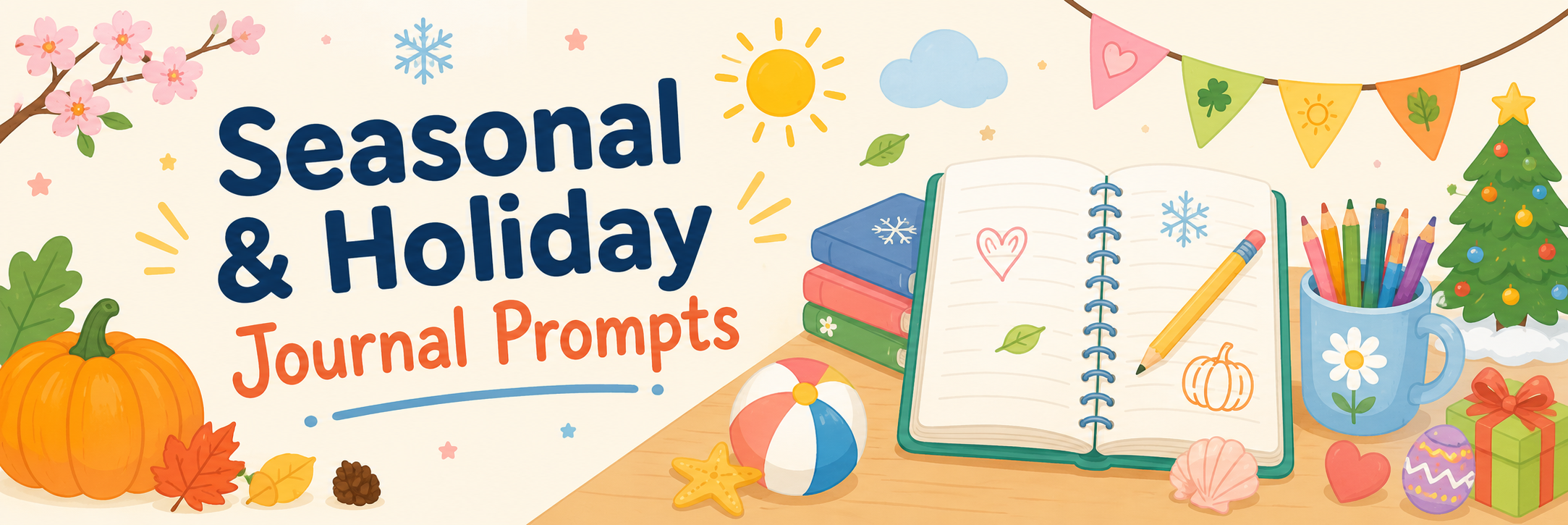
Keep kids writing all year with our seasonal and holiday journal prompts that inspire self-expression, and writing practice through timely topics and celebrations.
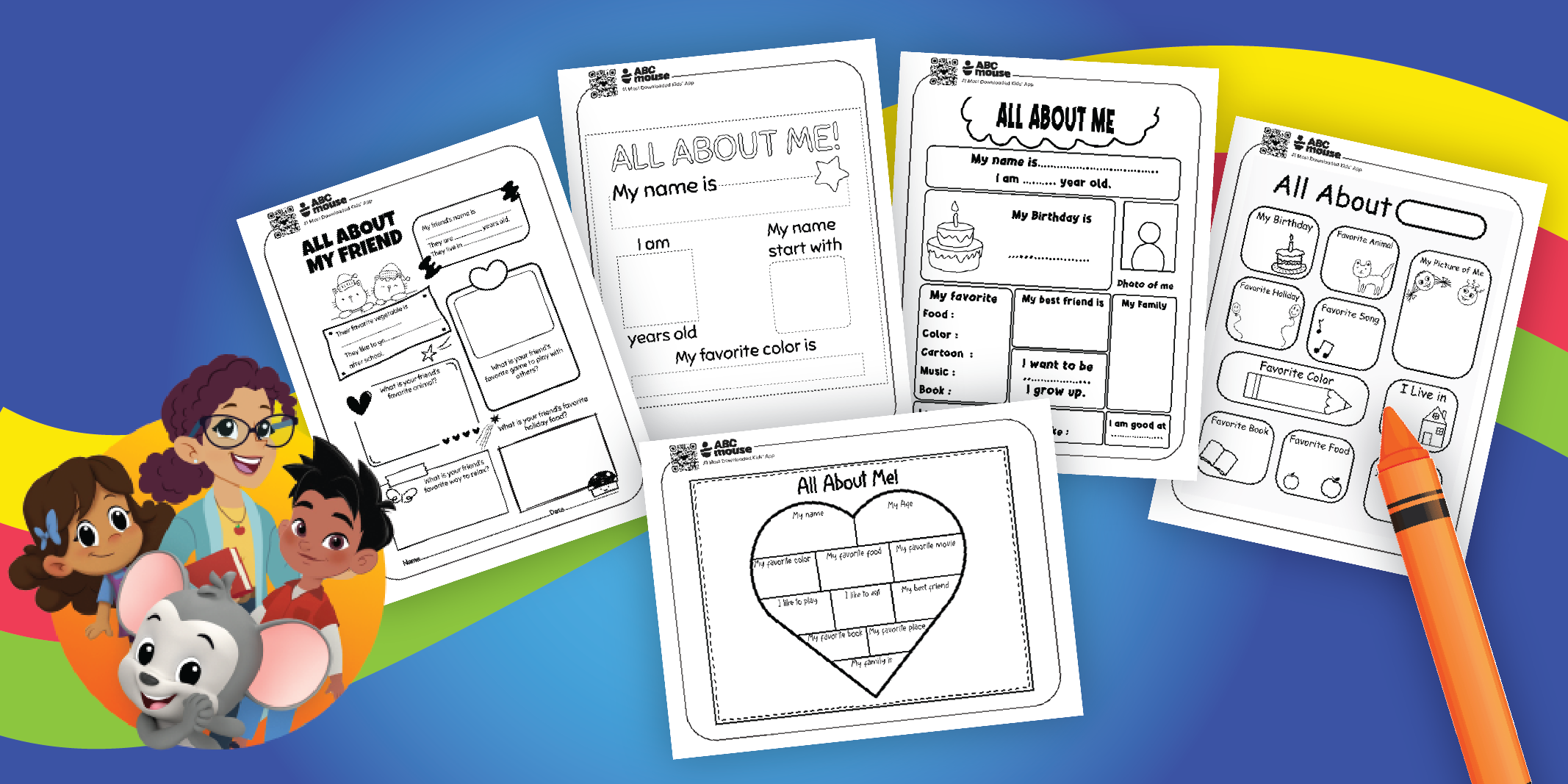
Help kids celebrate what makes them unique with free, printable All About Me worksheets that encourage creativity, self-expression, and writing practice.
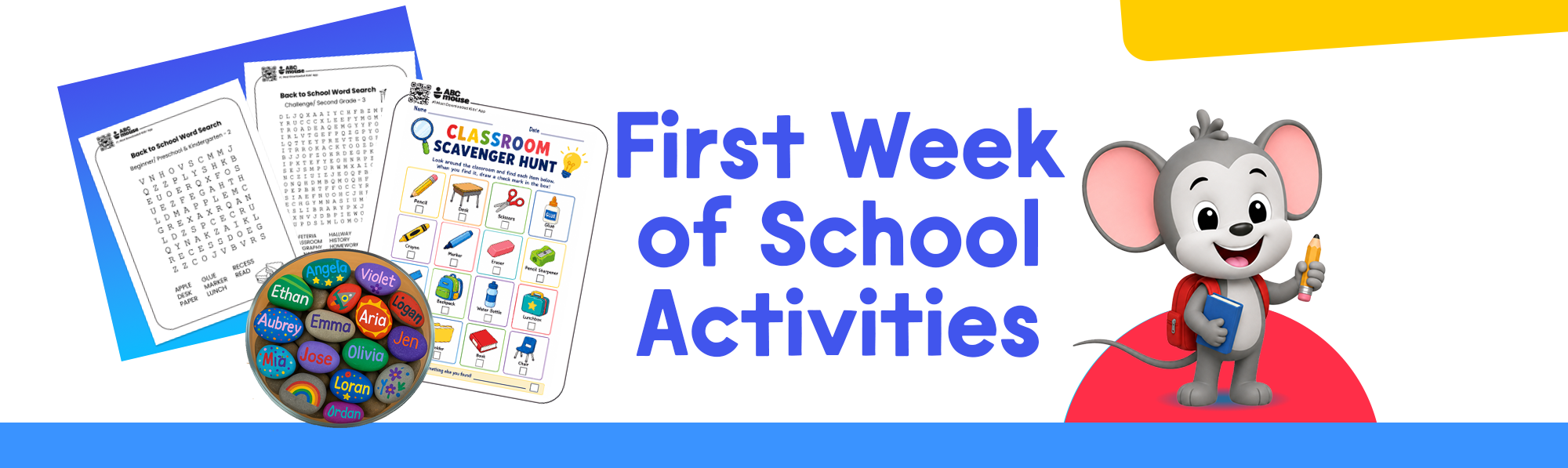
Start the school year with our full list of first week of school activities that help kids ease into new routines, share about themselves, and get excited about learning.
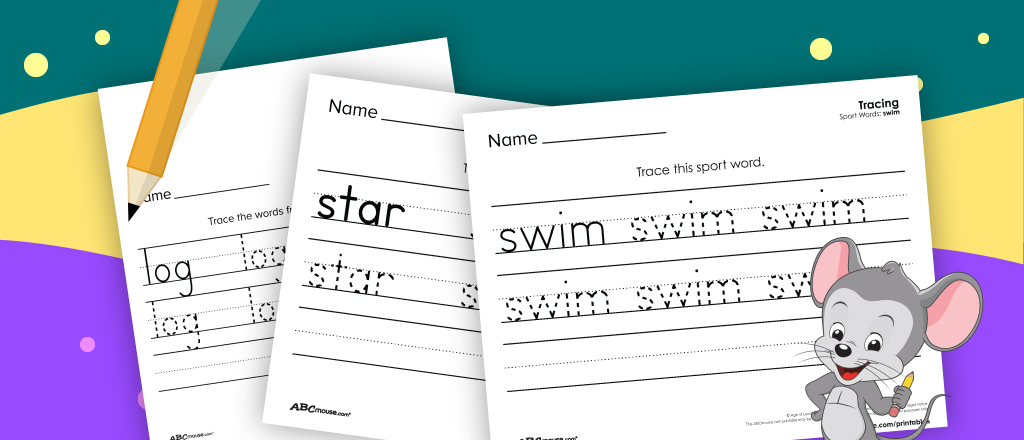
Build early writing skills with our printable handwriting practice sheets that help kids practice letter formation, strengthen fine motor skills, and gain confidence.
ABCmouse Journaling Games


Extend writing practice through play with our ABCmouse journaling games like Ivan’s Weather Journal and Train Journey Journal, where kids can explore, imagine, and build writing skills through interactive adventures.
-

150 Fall Jokes for Kids
Discover 150 family-friendly fall jokes for kids about pumpkins, apples, leaves, football, farms, and Halloween, plus free printables.
-
160+ School Jokes for Kids (Free Printable!)
Discover 160+ free printable school jokes for kids, including classroom puns, knock-knock jokes, and funny one-liners for back-to-school fun.
-
200+ Knock Knock Jokes for Kids (Funny, Silly & Printable!)
200+ silly knock-knock jokes for kids, organized by category. Includes printable pages and fun ways to support reading and laughter at home or on the go.
-
90+ Dinosaur Jokes for Kids (Free Printable!)
Explore 90+ dinosaur jokes for kids, packed with silly puns and playful wordplay. Includes a free printable for laughs at home or school.
-
100 St. Patrick’s Day Jokes for Kids (Free Printable!)
Get kids giggling with these funny, family-friendly St. Patrick’s Day jokes featuring leprechauns, rainbows, and pots of gold.
-

900+ Jokes for Kids with Free Printables!
Free vowel sound word lists & printables to help kids learn short, long, and R-controlled vowels through fun activities.