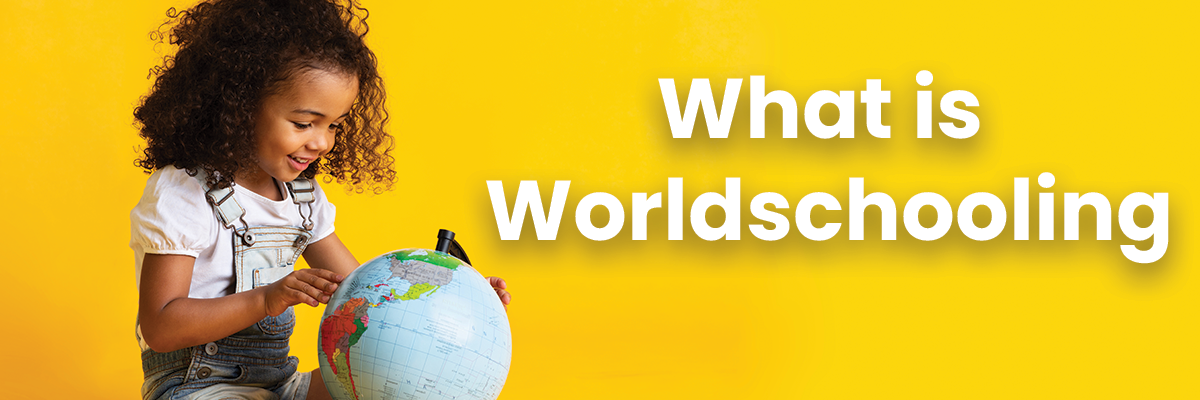
What is worldschooling?
Get insights on this popular approach to learning and how to incorporate it into your homeschool.
Worldschooling is an educational movement or mindset that believes interacting with the world around you is the best way to educate a child. This often involves traveling across the globe to discover and learn from different cultures.
While worldschooling centers on the idea that the world is the best classroom, this learning style has many different approaches and variations. Some worldschooling families combine traveling and traditional school systems by enrolling their children in schools in different countries.

Other families use a homeschooling curriculum and structure for their children while traveling across the world. And still others adopt an unschooling approach to learning, where they trust their child’s instinct to guide them in their education while learning about the world around them.
There’s no one correct path to worldschooling, and it’s an ideal learning environment for some families. For many, what started as a “gap year” (taking a year off of school and work to travel) has evolved into worldschooling and become a way of life.
What are some advantages of worldschooling?
Worldschooled children often have a better understanding of their place in the world and their connection to different cultures due to their world travels. In this unique educational setting, children have an opportunity to learn while exploring, which can lead to more retention and overall learning.
Worldschooling often fosters an appreciation for different traditions, cuisines, and languages. Unlimited time together leads to bonding and growing together as a family. Connecting to the worldschooling community allows families to meet other families with a variety of backgrounds and beliefs.
What are some disadvantages of worldschooling?
Worldschoolers will incur travel costs and often experience a change in income for families, which can cause financial strain. Some parents try switching to remote work that they can do while traveling to help offset costs.
Adopting a new learning structure can also cause stress for families. Selecting and familiarizing yourself with a good on- and offline curriculum before leaving can ease this transition. Worldschooling families may also miss connecting with family and friends, the comforts of home, and scheduled weekly activities such as sports, music programs, or other hobbies.
How can I afford worldschooling?
While seeing the world requires money, worldschooling families find ways to save and make it happen. Families dedicated to travel might rent or sell their home and personal belongings to fund their trip and avoid splurging on unnecessary experiences and products. Simple, inexpensive experiences are often a wonderful way to learn.
Tips for Saving Money While Worldschooling
- Plan your worldschooling adventures in more affordable destinations.
- Purchase groceries and goods from local markets.
- Compare rates at hostels, home and apartment rentals, and hotels. Some rentals reduce the rate if you stay longer.
- Make your own meals at home instead of eating out.
- Use public transportation.
- Try not to treat the entire trip like a vacation. Plan and stick to a budget to help make your funds last.
- Research attractions. Activities in smaller towns can sometimes be more economical than the tourist attractions in large cities.
Are there laws for worldschooling?
Worldschoolers are subject to the homeschooling regulations in their home state, even while abroad. However, if you stay in a foreign country long enough, you may also be subject to their laws and regulations. Consult a legal professional for homeschool laws while abroad.
More from ABCmouse:
-

How Educational Games Can Boost Learning for Young Children
Discover how educational games can boost learning for young children by making learning fun and engaging. Explore research-backed benefits, practical examples like “The Boy Who Cried…
-

Tips For Blending Sight Word Games into Your Child’s Learning
Integrate engaging digital sight word games into your child’s learning routine to boost reading and spelling skills. Discover practical tips for establishing a consistent learning schedule,…
-

What are High Frequency Words? (First 100 Printable List)
Find a printable list of 100 high frequency words for your child, along with tips and insights on teaching them effectively. Discover the difference between high…
-

First Grade Math: How to Help a Struggling Student
Discover effective strategies to support a struggling first grader in key math concepts like addition, subtraction, and telling time. Explore practical tips for fostering a positive…
-
10 Expert-Recommended Methods for Teaching Letter Sounds
Discover expert tips for teaching letter sounds with this guide, featuring 10 methods to help your child progress in reading. Engage with interactive, sensory activities to…
-
How to Teach Number Recognition to Preschoolers
Discover effective strategies for teaching number recognition to preschoolers, essential for early math learning. Includes fun, hands-on activities and games to engage young learners. Start building…