
Share
Piaget’s Theory of Cognitive Development Explained for Parents
Discover how children think, learn, and solve problems through Piaget’s four stages of cognitive development, and find simple ways to support your child’s learning at every stage!
Table of Contents–Jump to Each Section
Piaget’s Theory of Cognitive Development
The Four Stages of Cognitive Development at a Glance
Sensorimotor Stage (Birth–2 Years)
Preoperational Stage (Ages 2–7)
Concrete Operational Stage (Ages 7–11)
Formal Operational Stage (Ages 12+)
What Modern Research Says About Piaget
Piaget’s Influence on Education
Children think and learn differently as they grow, and Jean Piaget’s theory of cognitive development helped transform the way researchers and educators understand these changes. Piaget was an influential early theorist who described children as active learners, building knowledge through their experiences with the world around them.
Understanding Piaget’s ideas can give parents and teachers another way to think about how children learn, reason, and make sense of their experiences and how adults can provide learning opportunities that support their developing thinking.
Explore Piaget’s four stages of cognitive development, see how modern research has expanded on his ideas, and examine his lasting influence on education. Then, put the research into practice with age-appropriate activities and tips that support your child’s learning and cognitive development at home.
Piaget’s Theory of Cognitive Development
Understanding Piaget’s Theory
Before Piaget, children were often viewed as smaller versions of adults. In other words, it was commonly assumed that children thought much like adults but simply had less knowledge and experience. Piaget challenged this view by proposing that the way children think changes as they grow and interact with the world around them.
Rather than being passive recipients of information, Piaget proposed that children actively construct knowledge through their experiences (1952, 1964). As they develop, children’s thinking increases in complexity, allowing them to understand and interact with the world in new ways.
Piaget organized these changes into four stages of cognitive development. However, these stages are best understood as a general framework for how thinking may develop rather than a set of rigid developmental milestones. Children develop at different rates, and modern research has continued to refine our understanding of when and how cognitive abilities emerge.
How Children Learn According to Piaget
Before exploring Piaget’s four stages of cognitive development, it helps to understand four concepts that drive his theory: schemas, assimilation, accommodation, and equilibration. In her 2022 book, Development Through the Lifespan, professor of psychology Laura Berk explains how these processes help children build on what they already know, make sense of new experiences, and develop new ways of thinking as they grow.
Schemas
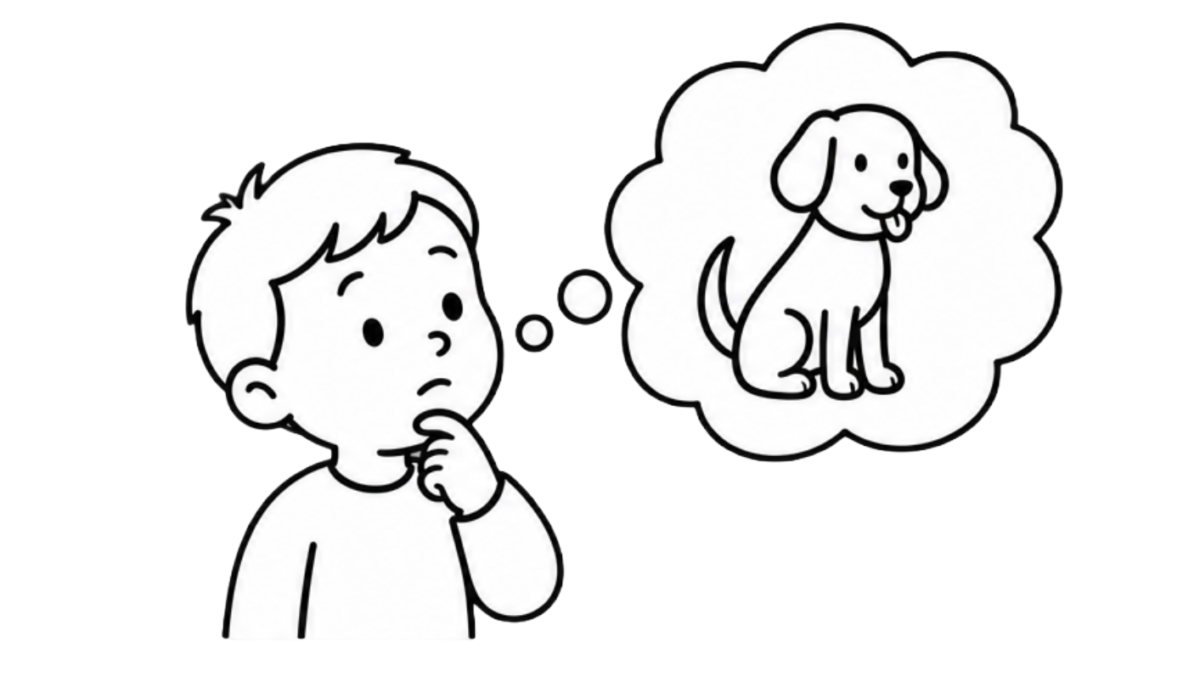
A schema is a mental framework children use to organize and understand information about the world. You can think of schemas as categories or patterns that help children know what to expect and how to respond to different experiences.
For example, a young child may develop a schema for a dog based on the dogs they have seen: four legs, fur, and a tail. As the child encounters more animals and experiences, that schema can grow and become more detailed.
Assimilation
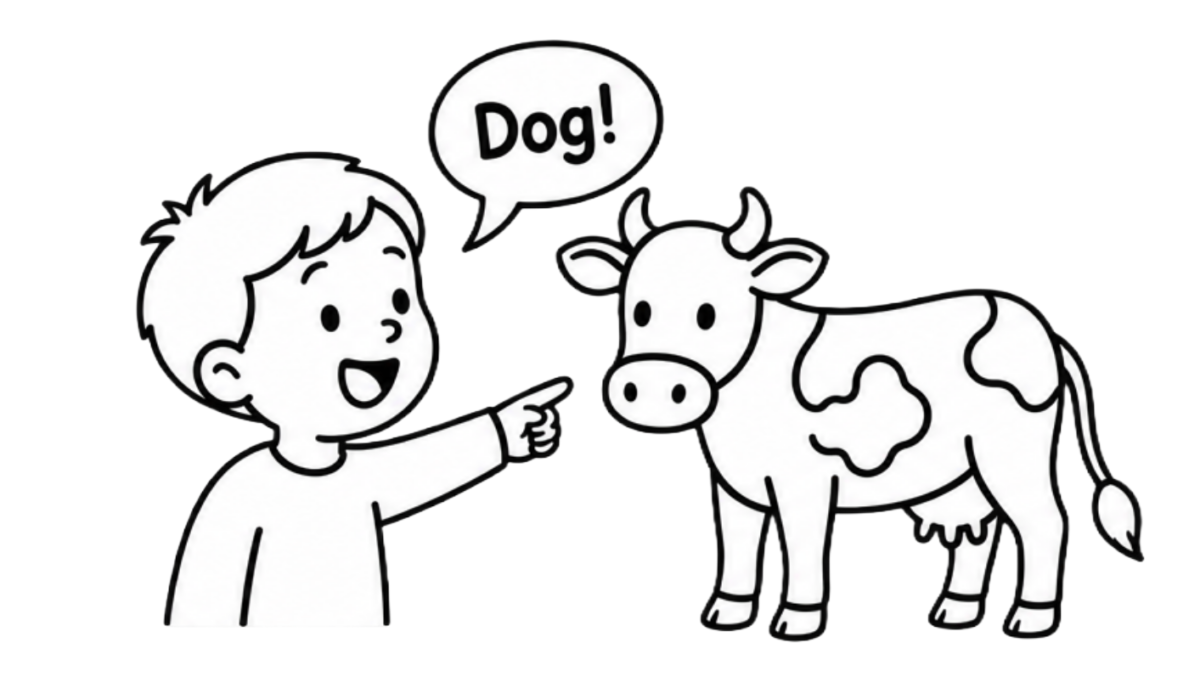
Assimilation happens when children encounter something new and make sense of it using a schema they already have.
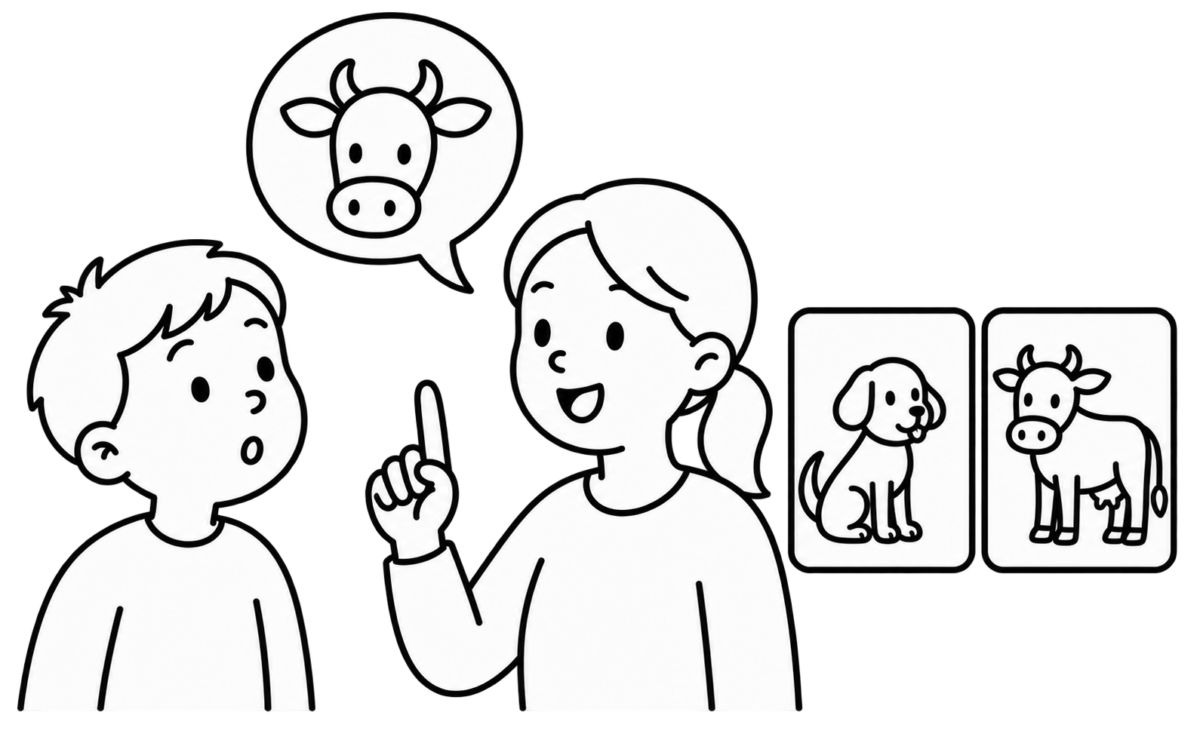
Imagine a child who knows what a dog is and then sees a cow for the first time. Because the cow has four legs and a tail, the child might call it a ‘dog,’ fitting this unfamiliar animal into an existing schema.
Accommodation
Accommodation occurs when new information does not fit an existing schema, so the child adjusts an old schema or develops a new one.
When a parent explains that the animal is actually a cow, not a very large dog, the child begins to recognize the differences between the two. Over time, they may develop separate schemas for dogs and cows and change their understanding to account for the new information.
Equilibration
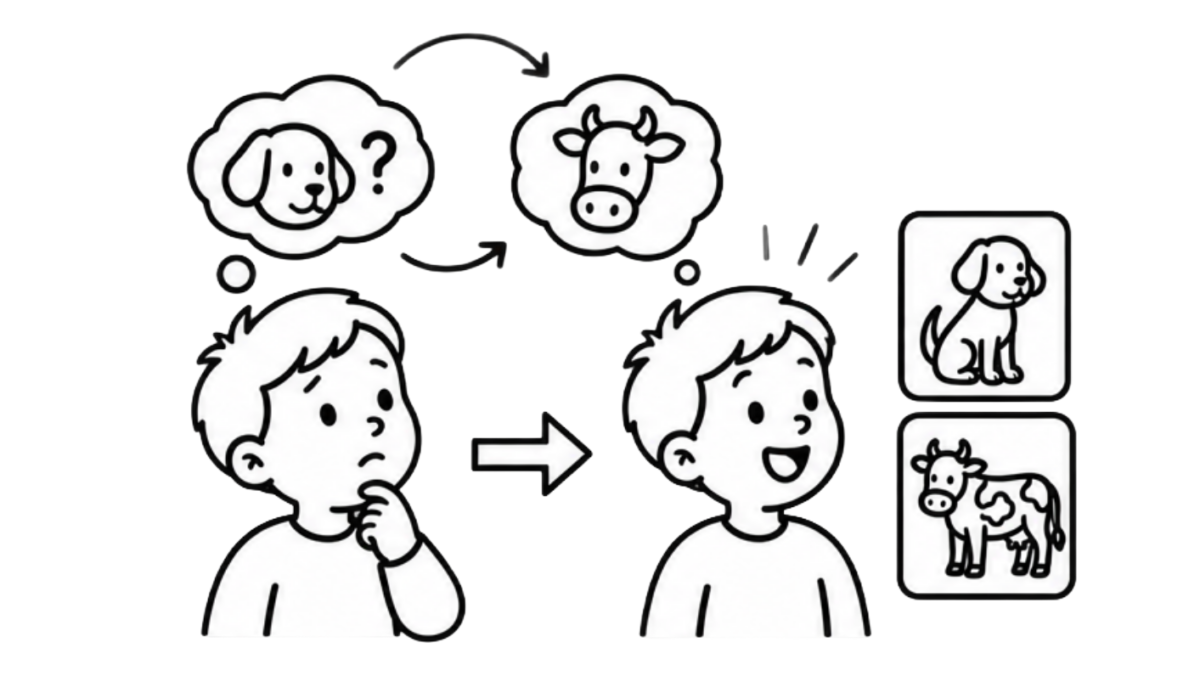
Equilibration is the process of balancing what a child already understands with new information that challenges that understanding. According to Piaget, this ongoing process helps drive cognitive development.
In the dog-and-cow example, calling the cow a “dog” works until the child realizes that the new animal does not completely match what they know about dogs. Assimilation and accommodation help the child resolve that mismatch and arrive at a more accurate understanding of both animals.
The Four Stages of Cognitive Development
Piaget’s (1952, 1964) theory of cognitive development describes four stages of cognitive development, each reflecting new ways children tend to think and make sense of the world.
Piaget’s Four Stages of Cognitive Development
| Stage | Age | What Children Are Learning |
| Sensorimotor | Birth–2 years | Learning through senses, movement, and exploration |
| Preoperational | 2–7 years | Developing language, imagination, and symbolic thinking |
| Concrete Operational | 7–11 years | Using logical thinking to solve concrete problems |
| Formal Operational | 12+ years | Thinking abstractly and reasoning hypothetically |


Sensorimotor Stage (Birth–2 Years)
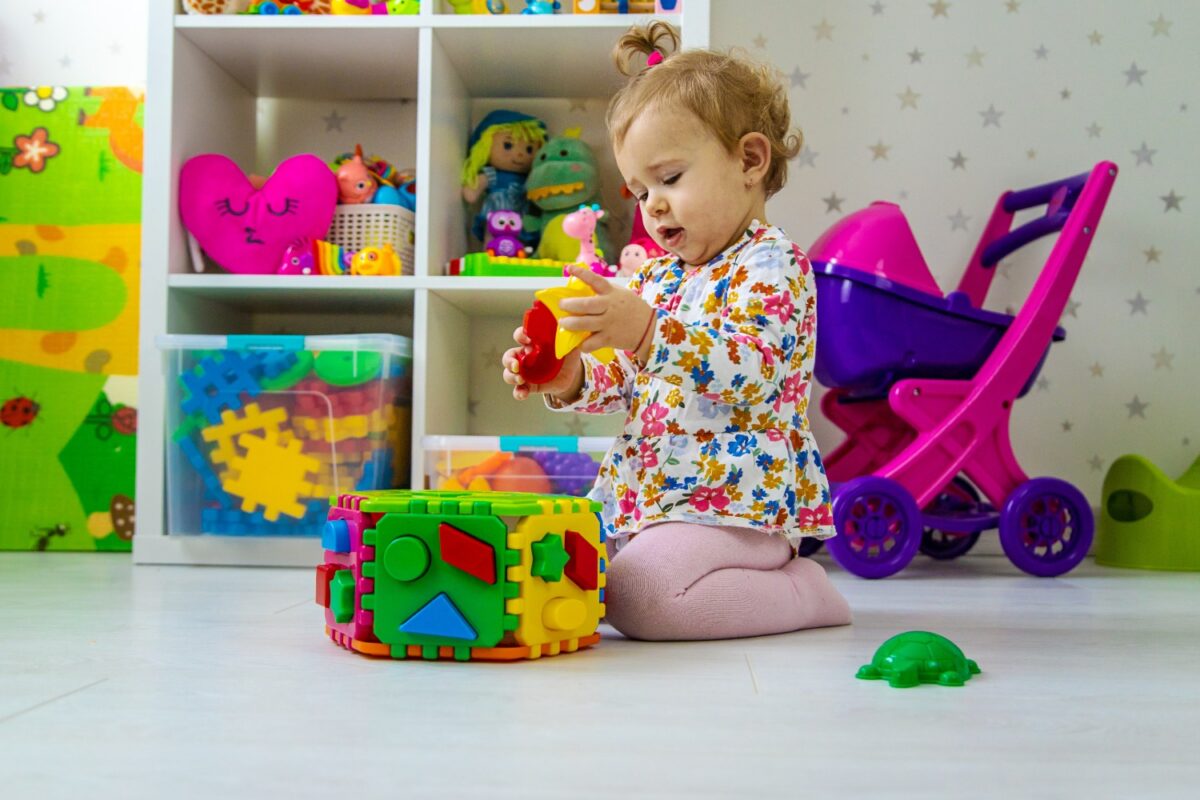
The sensorimotor stage is the first of Piaget’s four stages of cognitive development, beginning at birth and continuing until around age 2. During this stage, babies and toddlers learn primarily through their senses, movements, and physical interactions with the world around them (Piaget, 1952, 1964). Everyday actions like touching a new object, putting a toy in their mouth, or repeatedly dropping something from a high chair all provide opportunities to explore how the world works.
Over these first two years, simple reflexes and actions gradually develop into more intentional behaviors. As researchers Scott and Cogburn summarize in their 2023 study, children begin to connect their actions with outcomes, form mental representations of people and objects, and understand that things can continue to exist even when they can no longer see them.
Key Characteristics & Everyday Examples
| Key Characteristics | What It Means | What Babies May Do |
| 👣 Learning Through Senses and Movement | Babies learn by seeing, touching, hearing, tasting, and physically interacting with their surroundings. | Grasp, shake, bang, or mouth a new toy. |
| 🔁 Understanding Cause and Effect | Babies gradually learn that their actions can cause something to happen. | Repeatedly drop a toy from the high chair and watch what happens each time. |
| 🙈 Developing Object Permanence | Babies gradually begin to understand that people and objects still exist even when they cannot see them. | Search for a toy hidden under a blanket or anticipate that a parent will reappear during peekaboo. |
| 📦 The A-Not-B Error | Early in the development of object permanence, babies may search for an object where they previously found it rather than where they just watched it being moved. | After repeatedly finding a toy under Box A, a baby may still reach for Box A even after watching an adult move the toy to Box B. |
How Parents Can Support Learning During the Sensorimotor Stage
Parents can support this period of rapid learning by giving babies and toddlers plenty of safe opportunities to explore, experiment, and interact with their surroundings. These include:
- Offer sensory play. Explore safe textures, sounds, shapes, and objects together.
- Play interactive games. Try peekaboo or hiding toys to encourage exploration and object permanence.
- Read and talk together. Name pictures and objects and respond to your baby’s sounds and gestures.
- Encourage safe exploration. Provide opportunities to reach, crawl, grasp, stack, and experiment.
- Embrace repetition. Repeating actions, like dropping a toy, helps babies explore cause and effect.
Preoperational Stage (Ages 2–7)
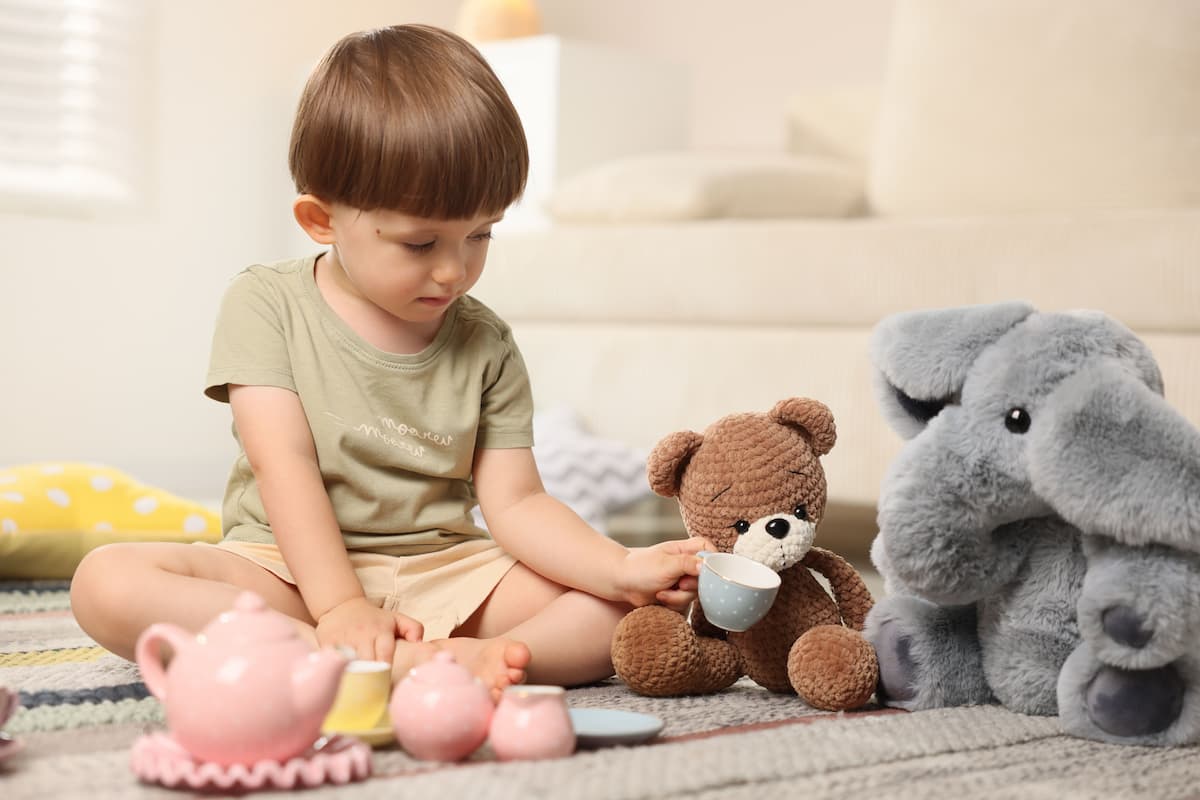
The preoperational stage is Piaget’s (1952, 1964) second stage of cognitive development and typically occurs from around ages 2 to 7. During this stage, children make major advances in language, imagination, and their ability to use symbols to represent objects and ideas. For example, when playing, children may turn a cardboard box into a spaceship, use a block as a phone, and give their favorite stuffed animal a personality of its own.
Although children’s thinking becomes more complex during these years, they do not yet consistently use logical reasoning in the way older children do. Instead, thinking is often shaped by what they can immediately see and experience.
Key Characteristics & Everyday Examples
| Key Characteristics | What It Means | What Children May Do |
| 🎭 Mental Representation & Pretend Play | Children increasingly use words, images, and objects to represent things that are not physically present. | Pretend to cook dinner or play pretend family with dolls. |
| 💬 Growing Language & Symbolic Thinking | Rapid language growth helps children represent and communicate their thoughts, even though their reasoning is not yet consistently logical. | Ask a lot of questions, tell stories, or use words and drawings to represent ideas. |
| 👤 Egocentrism | Children may have difficulty understanding that another person can see or experience a situation differently than they do. | Assume you know what they know or expect you to see something from the same perspective as they do. |
| 🔎 Centration | Children tend to focus on one feature of a situation and overlook other relevant information. | Think a taller, thinner glass contains more juice than a shorter, wider glass, even when both contain the same amount. |
How Parents Can Support Learning During the Preoperational Stage
- Encourage pretend play. Use simple props for dress-up, make-believe, and role-playing.
- Tell stories together. Read and retell familiar stories, or create your own.
- Ask open-ended questions. Try asking, “What do you think will happen next?”
- Explore early math concepts. Count everyday objects or sort toys by shape, size, or color.

Extend learning with ABCmouse. The age range of the preoperational stage includes most ABCmouse learners! Using quality, educational apps during this stage can help reinforce early language, literacy, math, and problem-solving skills through games, stories, and activities.. Learn more about the ABCmouse curriculum.
Concrete Operational Stage (Ages 7–11)
Piaget’s third stage of cognitive development, the concrete operational stage, typically occurs from around ages 7 to 11. During these years, children develop a great ability to think logically, organize information, and solve problems (Piaget, 1952, 1964). However, as Scott and Cogburn (2023) also emphasize, they often find it easier to apply these skills to concrete situations and things they can see or experience rather than purely abstract ideas.
For parents, this growing ability may show up in everyday activities like following the steps of a recipe, organizing a collection, understanding that the amount of water stays the same when poured into a differently shaped glass, or considering more than one part of a problem at a time.
Key Characteristics & Everyday Examples
| Key Characteristics | What It Means | What Children May Do |
| 🥛 Conservation | Children understand that certain properties, such as amount or number, can remain the same even when appearance changes. | Recognize that the same amount of water remains in a glass even after it is poured into a taller container. |
| 📂 Classification | Children become better at grouping and organizing objects according to shared characteristics. | Organize a collection by type, size, color, or other features. |
| 📏 Seriation | Children can arrange objects or information according to measurable qualities. | Put objects in order from shortest to tallest or lightest to heaviest. |
| ↩️ Reversibility | Children begin to understand that some actions or mental processes can be reversed. | Understand that if 8 + 4 = 12, then 12 − 4 = 8. |
How Parents Can Support Learning During the Concrete Operational Stage
- Cook together. Practice measuring, fractions, sequencing, and following directions.
- Try STEM projects. Encourage hands-on experiments and problem-solving.
- Play strategy games. Practice planning, reasoning, and considering different outcomes.
- Ask children to explain their thinking. Encourage them to describe how they reached an answer or solved a problem.
- Extend learning with educational apps, printable worksheets, more reading time, or other learning activities and age-appropriate games.

Formal Operational Stage (Ages 12+)
The formal operational stage is the fourth and final stage in Piaget’s theory (1952, 1964), beginning around age 12 and potentially continuing into adulthood. Piaget proposed that during this stage, children become increasingly capable of thinking beyond concrete experiences to consider abstract ideas, hypothetical situations, and multiple possible outcomes.
Keep in mind that these age ranges are not rigid milestones. Children develop at different rates, and the ability to use abstract reasoning can vary depending on the task, experience, and context.
Key Characteristics & Everyday Examples
| Key Characteristics | What It Means | What Children May Do |
| 💭 Abstract Thinking | Children begin to think more about concepts that are not tied to physical objects or immediate experiences. | Discuss ideas such as fairness, justice, morality, or hypothetical possibilities. |
| ❓ Hypothetical Reasoning | Children can consider “what if” scenarios and reason through possible outcomes. | Think through what might happen under different circumstances before making a decision. |
| 🔬 Scientific Thinking | Children become better able to form hypotheses and systematically test possible explanations. | Design an experiment or consider different explanations for a problem. |
| 🧠 Metacognition | Children become increasingly aware of their own thinking and learning processes. | Recognize which study strategies work best for them or reflect on how they solved a problem. |
| 🎯 Future Planning | Children can think beyond immediate circumstances and consider longer-term possibilities. | Set goals, consider future careers, or plan the steps needed to accomplish something. |
How Parents Can Support Learning During the Formal Operational Stage
- Discuss complex ideas. Talk about current issues, books, or situations with more than one perspective.
- Explore “what if” questions. Encourage children to predict outcomes and explain their reasoning.
- Support goal setting. Help break long-term goals into realistic steps.
- Encourage reflection. Journaling or talking through decisions can help children examine their own thinking.

What Modern Research Says About Piaget
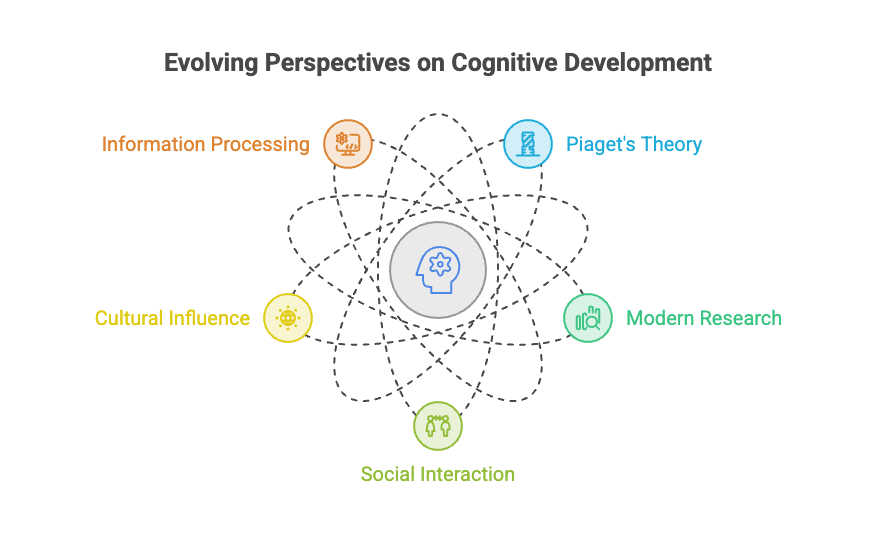
Piaget’s work remains an important foundation in developmental psychology. However, decades of research have also expanded and challenged parts of his original theory. Today, researchers generally view cognitive development as more flexible and complex than Piaget’s four distinct stages.
Why Piaget’s Theory Still Matters
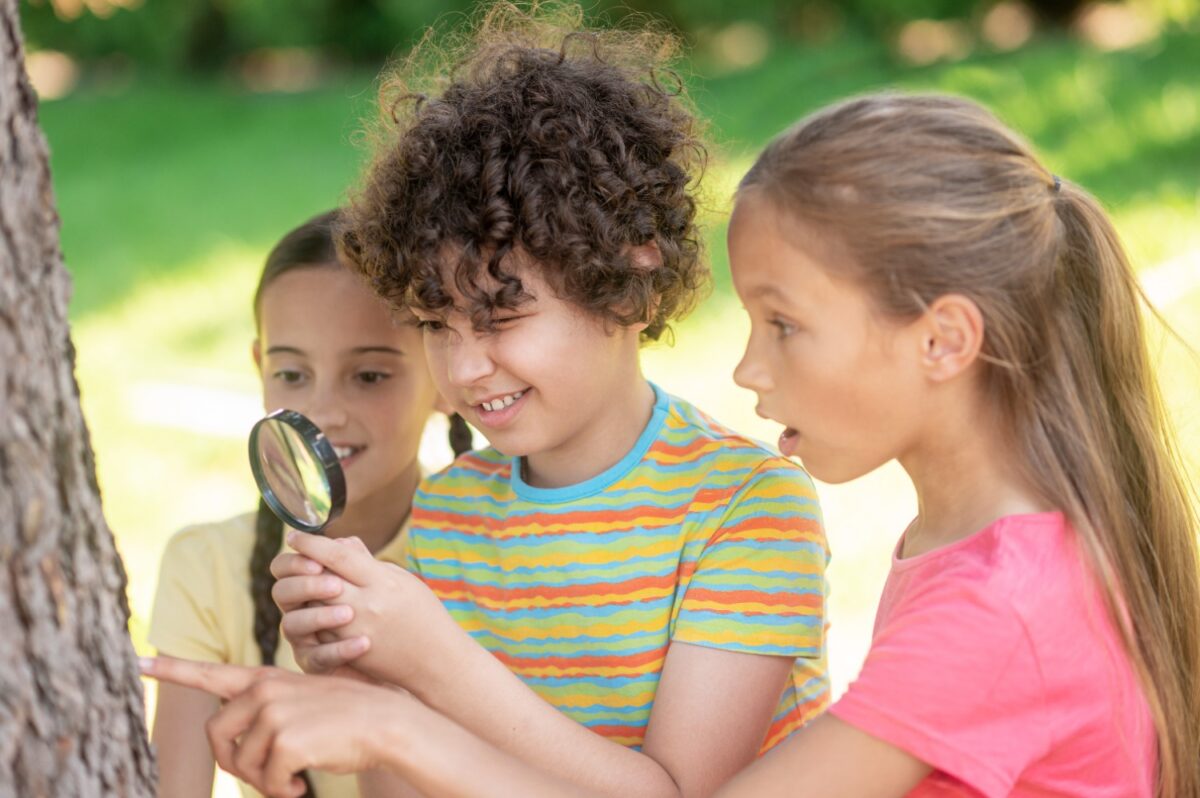
One of Piaget’s most lasting contributions is the idea that children are active participants in their own learning. As cognitive development specialist Robert Siegler examines in his research (2016), instead of simply absorbing information from adults, children build and revise their understanding through experience and interaction with their environment. Piaget’s work also encouraged researchers and educators to consider how children’s ways of thinking change with development and whether learning experiences are appropriate for how a child currently understands the world.
How Our Understanding Has Evolved
Modern research has shown that cognitive development does not always follow the clear, step-by-step progression Piaget originally proposed. Some abilities can emerge earlier than Piaget predicted, while others may depend on the particular task, a child’s previous experiences, or the context in which a skill is tested (Feldman, 2004).
Researchers have also placed greater emphasis on the role of social interaction and culture in cognitive development. Rather than developing through independent exploration alone, children also learn through conversations, relationships, instruction, and experiences shaped by their families and communities. In their 2019 review of Piaget’s cognitive developmental theory, Zana Babakr and colleagues highlight how modern research in memory, attention, executive function, and information processing has further expanded our understanding of how children think and learn.
Common Misconceptions About Piaget’s Stages
| Misconception | What to Keep in Mind |
| Children suddenly “switch” stages. | Cognitive development is gradual, and characteristics of different stages can overlap. |
| Every child reaches each stage at the same age. | Piaget’s age ranges are approximate, and development varies from child to child. |
| The stages are developmental milestones. | They are a theoretical framework for understanding changes in thinking, not a milestone checklist. |
| A child always thinks at one stage. | A child’s reasoning may vary depending on the task, experience, and context. |
Key Takeaways for Parents
For parents, Piaget’s stages can provide a helpful way to understand why a child’s approach to learning and problem-solving changes as they grow. However, it’s important to view them as a general framework rather than a developmental checklist.
Keep in mind:
1. Every child develops differently
2. The ages of each stage are approximate
3. Developmental stages can overlap
4. Children develop within their environment – Interactions with family, peers, culture, and learning experiences can all shape cognitive development.
Piaget’s Influence on Education

Piaget’s work also influences how educators think about learning. If children actively build knowledge through experience, then learning opportunities should give them chances to explore and ask questions, rather than simply receive information.
How Piaget Influenced the Classroom
Piaget’s theory helped support educational approaches that emphasize learning by doing. Hands-on activities allow children to interact with a concept and build their understanding through experience. Piaget’s developmental perspective encouraged educators to consider whether lessons and activities align with how children think and reason at different ages. For example, researcher and school principal Annabelle Rabillas and colleagues (2023) explored how Piaget’s stages of cognitive development can be applied specifically to elementary math learning and instruction.
| Piaget-Inspired Principle | What It Can Look Like in the Classroom |
| Active Learning | Exploring a question or problem by testing different possible solutions. |
| Concrete experiences | Using blocks or counters to visualize a new concept. |
| Developmentally appropriate learning | Introducing concepts through activities that match children’s current ways of thinking and understanding. |
How to Bring Piaget-Inspired Learning to Your Home
Learning through exploration doesn’t have to stop when the school day ends. Parents, grandparents, and homeschool families can provide opportunities for children to practice skills through hands-on activities, questions, games, and everyday problem-solving.
Here are a few free ideas to try:
- Practice the alphabet with these A-Z letter crafts.
- Build critical thinking, creativity, and problem-solving skills with STEM activities for preschool through first grade.
- Explore shapes with engaging shape activities for young children.
- Encourage hands-on discovery with 25+ science activities and experiments for preschoolers and kindergarteners.
ABCmouse can also help extend these learning experiences for younger children with interactive lessons, educational games, stories, and activities that encourage children to engage with concepts in areas such as reading, math, science, and art.
Pairing digital learning with real-world opportunities to explore, play, talk, and practice can give children different ways to engage with new ideas.

FAQs About Piaget’s Theory of Cognitive Development
What are Piaget’s four stages of cognitive development?
Piaget’s four stages of cognitive development are the sensorimotor, preoperational, concrete operational, and formal operational stages. Each stage describes general changes in how children tend to think, learn, and understand the world as they grow.
Are online learning games good for early childhood development?
Online game-based learning is very effective for young children. At this age, learning through play feels natural since play is how young children explore and understand the world around them. Games provide a safe space for kids to try new concepts, make mistakes, and try again. Engaging game features also help hold kids’ attention and provide multiple paths to learning.
At what ages do Piaget’s stages of cognitive development occur?
Piaget proposed that the sensorimotor stage occurs from birth to age 2, the preoperational stage from ages 2 to 7, the concrete operational stage from ages 7 to 11, and the formal operational stage begins around age 12. These ages are approximate, and children may develop particular cognitive abilities at different times.
Are Piaget’s stages of cognitive development still accepted today?
Piaget’s theory remains influential, but modern research suggests that cognitive development is more gradual and flexible than a strict four-stage model may suggest. Researchers have also found that some abilities can emerge earlier than Piaget originally proposed and that a child’s social environment can play an important role in shaping how they learn and develop.
What is an example of Piaget’s theory in everyday life?
A baby searching for a toy that has been hidden under a blanket is one example of developing object permanence, an important development Piaget associated with the sensorimotor stage. An older child understanding that the same amount of water remains after it is poured into a differently shaped glass demonstrates conservation, which Piaget associated with concrete operational thinking.
How can parents use Piaget’s theory to support their child’s learning?
Parents can use Piaget’s theory as a general guide for choosing learning experiences that fit how their child currently thinks and interacts with the world. Hands-on exploration, pretend play, problem-solving, conversations, and age-appropriate learning activities can all provide opportunities for children to actively build their understanding.
How does Piaget’s theory relate to learning with ABCmouse?
Piaget’s theory emphasizes that children actively build knowledge through exploration, practice, and experiences that match their developing ways of thinking. ABCmouse can complement these principles with age-appropriate games, stories, and interactive activities that give young learners opportunities to engage with concepts in reading, math, science, and art.
Legal disclaimer: Any information, materials, or links to third-party resources are provided for informational purposes only. We are not affiliated with and do not sponsor/endorse these third parties and bear no responsibility for the accuracy of content on any external site. All information provided in this article is current as of September 2026.
References:
Babakr, Z. H., Mohamedamin, P., & Kakamad, K. (2019). Piaget’s cognitive developmental theory: Critical review. Education Quarterly Reviews, 2(3), 517–524. https://doi.org/10.31014/aior.1993.02.03.84
Berk, L. E. (2022). Development through the lifespan. Sage Publications.
Feldman, D. H. (2004). Piaget’s stages: The unfinished symphony of cognitive development. New Ideas in Psychology, 22(3), 175–231. https://doi.org/10.1016/j.newideapsych.2004.11.005
Piaget, J. (1952). The origins of intelligence in children (M. Cook, Trans.). W. W. Norton & Company. https://doi.org/10.1037/11494-000
Piaget, J. (1964). Part I: Cognitive development in children: Piaget development and learning. Journal of Research in Science Teaching, 2, 176–186. https://doi.org/10.1002/tea.3660020306
Rabillas, A., Kilag, O. K., Canete, N., Trazona, M., Calope, M. L., & Kilag, J. (2023). Elementary math learning through Piaget’s cognitive development stages. Excellencia: International Multi-disciplinary Journal of Education, 1(4), 128–142. https://www.researchgate.net/profile/Osias-Kit-Kilag/publication/376646424_Elementary_Math_Learning_Through_Piaget’s_Cognitive
_Development_Stages/links/687d52e6b3294610e9b8aed1/Elementary-Math-Learning-Through-Piagets-Cognitive-Development-Stages.pdf
Scott, H. K., & Cogburn, M. (2023). Piaget. In StatPearls. StatPearls Publishing. https://www.ncbi.nlm.nih.gov/books/NBK448206/
Siegler, R. S. (2016). Continuity and change in the field of cognitive development and in the perspectives of one cognitive developmentalist. Child Development Perspectives, 10(2), 128–133. https://doi.org/10.1111/cdep.12173