What Is a Microschool? Everything Families and Educators Need to Know
By: Jill Staake
Share
Microschools are one of the fastest-growing trends in education, but what exactly are they? This guide breaks down how they work, how they compare to homeschooling and traditional schools, and what families should know before diving in.
Table of Contents–Jump to Each Section
While most parents are familiar with public schools, charter schools, private schools, and even homeschooling, many have never heard of microschools. These small schools, often serving fewer than 15 students and operating in homes, community spaces, or hybrid settings, have become more common in the wake of the COVID-19 pandemic. According to best estimates from the National Microschooling Center, between 750,000 and two million students currently use microschools as their main educational provider.
What is a microschool? A microschool is a small, personalized learning environment—typically serving 5–15 students—that may blend elements of homeschooling, private schooling, or traditional classroom instruction, often using flexible schedules, mixed-age groups, and customized curriculum programs.
Microschools have increased in popularity in recent years as some families seek more flexible learning models and personalized approaches. Some states have made Education Savings Account (ESA) funds available to families to help cover the cost of microschool-related expenses.
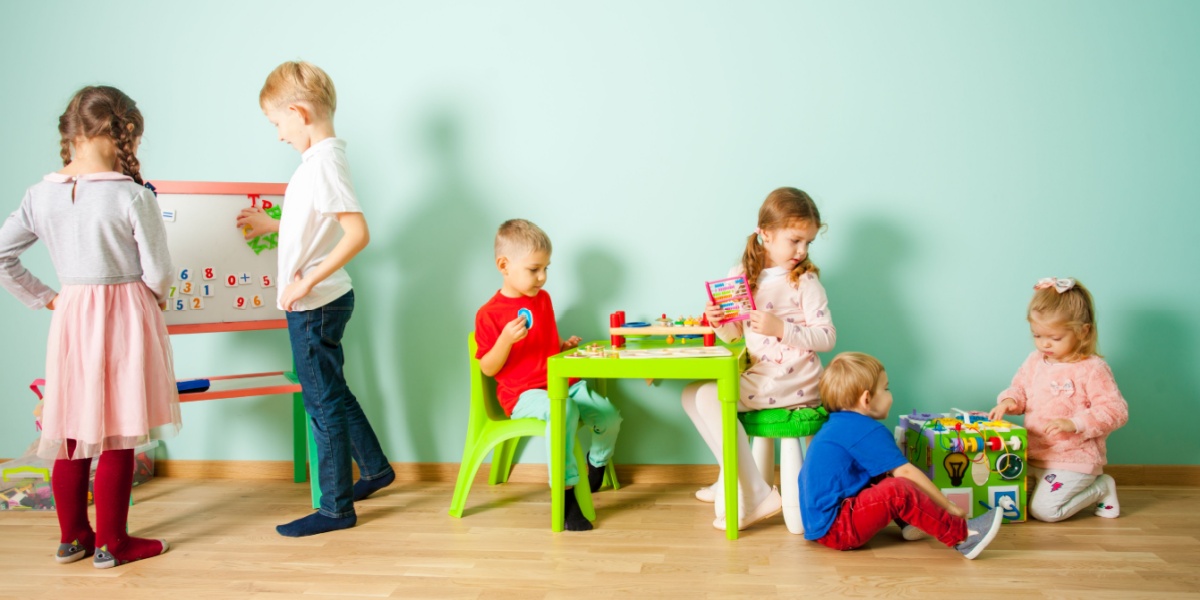
As interest in microschools increases, families may want more information about this K-12 education option to see if it’s right for them. In this guide, you’ll find an overview of microschools, including their history, potential benefits and challenges, educational models, and curriculum options. You’ll also discover the differences between microschools and other school options, and explore the resources families need when they opt for microschooling.
Thinking about starting a microschool? Our article How to Start a Microschool: A Guide for Parents and Educators provides a detailed overview of the considerations and steps you’ll need to take.
What is a Microschool?
A microschool is a small learning environment (typically 5–15 students) that uses flexible schedules, varied curriculum, and a range of instructional approaches. Some educators and researchers call today’s microschools a modern take on the one-room schoolhouse model. Students may range in age from preschool through 12th grade and may learn together in shared or multi-age settings depending on the program structure.
Key Characteristics of a Microschool
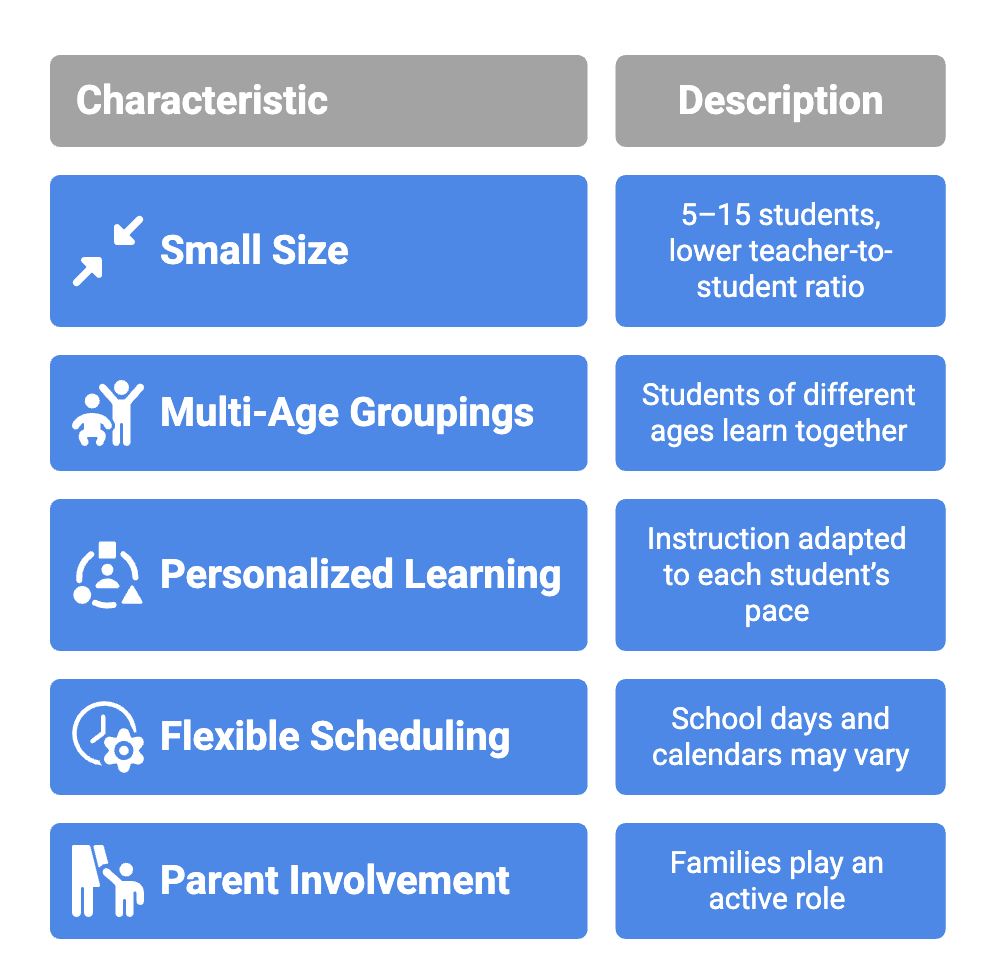
Microschool Typically Include the Following Features:
- Small size: Usually 5–15 students, providing a lower teacher-to-student ratio
- Multi-age groupings: Students of different ages learn together rather than being separated strictly by grade level
- Personalized learning: Instruction is often adapted to each student’s pace, needs, and interests
- Flexible scheduling: School days and calendars may vary based on program design or family needs
- Parent involvement: Families may play an active role in planning, supporting, or facilitating learning
- Competency-based progression: Students may advance based on mastery of skills rather than time spent in a grade level
The History of Microschools
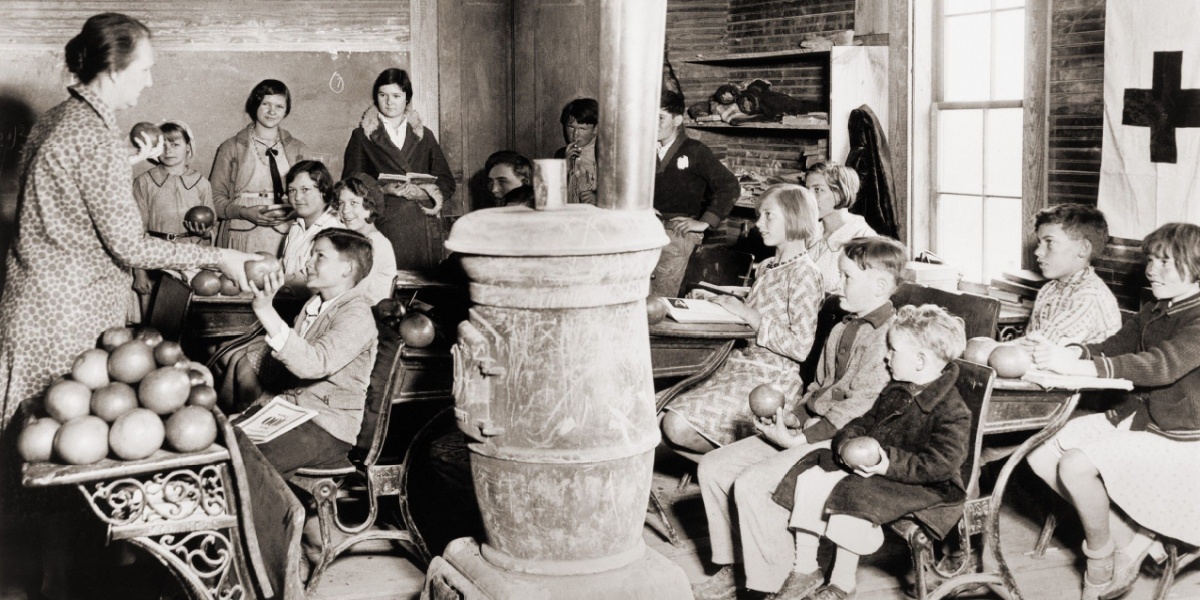
Small, community-based learning models like one-room schoolhouses and private tutoring have been around for decades. While the traditional one-room schoolhouse declined as public schools expanded in size and scope, private schools and homeschooling remained an option for those who preferred a different learning environment.
Throughout the 1990s and 2000s, homeschool co-ops gained momentum, as families pooled their resources and combined their educational efforts. When the COVID-19 pandemic disrupted education, some families formed “learning pods” at home, hiring private educators to teach small, multi-aged groups of students online or in-person. In some cases, these pods and homeschool co-ops evolved into what are now called “microschools.”
Today, the term “microschool” is not a formally-defined category in most states—instead, it’s more of an umbrella label that can cover many different types of small learning environments. Advances in educational technology have supported the growth of microschools by increasing access to digital curriculum programs, online resources, and remote teachers.
How Is a Microschool Different from a Traditional School?
While both traditional schools and microschools aim to support student learning and development, they differ in a variety of ways. Here’s a comparison of the two.
| Traditional School | Microschool | |
| General Structure | Highly-structured school day with regular schedule | Schedule may be flexible or customized to be different each day |
| Class Size | Age-based grade levels; average classes range from 15 to 25 students, with some much higher (source) | Smaller groups, often multi-age instead of divided by grade |
| Curriculum | Typically state or district mandated standards | May be flexible or customized, usually chosen by instructor or families |
| Pacing | Students generally advance from one grade level to the next as indicated by an annual academic calendar | May be mastery-based and individualized based on personal student progress |
| Instruction | Led by certified teachers in classroom settings | May be led by a teacher, facilitator, or learning guide; certification is often not required |
| Socialization | Large age-related peer groups; often many opportunities for school-related extracurricular activities | Small groups, may be multi-age; families may need to seek out opportunities for extracurricular activities |
| Cost | Publicly-funded; may have additional fees for certain classes or activities | Tuition-based; may be able to use ESA funds or earn scholarships to cover fees |
How Is a Microschool Different from Homeschooling?
Homeschools and microschools have a lot in common—both generally prioritize smaller learning environments, family involvement, and flexible approaches to curriculum, scheduling, and pacing. But there are some key differences as well:
| Microschools | Homeschool | |
| Leadership | Led by a paid teacher, facilitator, or small team; leaders may or may not be parents | Typically led by a parent or guardian, sometimes with support from tutors or online programs |
| Learning Environment | Small group setting (about 5–20 students), often in a dedicated or shared space | Usually home-based, with one child or siblings learning together |
| Structure and Organization | More structured with set schedules to meet group needs | Highly flexible; structure is determined by the family |
| Curriculum | Often selected or guided by the program or facilitator | Chosen and managed by the parent or guardian |
| Social Interaction | Built-in peer group with regular interaction | Varies; may include co-ops, extracurriculars, or community groups |
| Cost and Funding | Typically involves tuition or fees; may qualify for funding options like ESAs | Costs vary widely based on materials, programs, and support |
| Regulations | Classification varies by state (e.g., private school, learning pod, or homeschool variant) | Subject to established state homeschooling laws and reporting requirements |
Are Microschools Legal? What Families Need to Know
Microschools are legal in all 50 states, but how they operate and the regulations they must follow vary widely depending on state law and how the school is structured.
In most cases, states don’t have a separate legal category for microschools. Instead, they operate under homeschool laws, private school laws, or hybrid models that combine elements of both. Families interested in microschools will need to understand the specific rules for their state.
Key legal considerations for microschools vary by state and depend on how the school is structured. For instance, microschools may need to register as private schools or comply with homeschool notification requirements, depending on local laws. States also have different rules regarding compulsory attendance, including how attendance is tracked and reported, and microschools must follow the requirements that apply to them.
In addition, families or microschools may be responsible for maintaining records related to attendance, coursework, and student progress, and in some cases submitting these records to the state. Funding is another important factor, as some states allow the use of Education Savings Accounts (ESAs) or other school choice programs to cover certain microschool-related expenses, making it important to review state-specific regulations and available resources.
Key Legal Considerations for Microschools
Microschools may need to register as private schools or comply with homeschool notification requirements. This varies by state, as well as the specific structure and setup of the microschool.
States have different laws regarding compulsory attendance, including how attendance is tracked and reported. Microschools must comply with the state attendance laws that apply to them.
Families or microschools may be responsible for maintaining records for attendance, coursework, and/or student progress, and in some cases submitting these records to the state.

Some states allow the use of funds from Education Savings Accounts (ESAs) or other school choice programs to cover specified microschool-related expenses. Consult your state’s regulations for more information, and explore our ESA guide and state-specific resources to learn about possible funding and regulations in your area.
The 7 Most Common Types of Microschools
There are many types of microschools, with differences in setting, structure, focus, and educational approach. Here’s an overview of some of the most common.
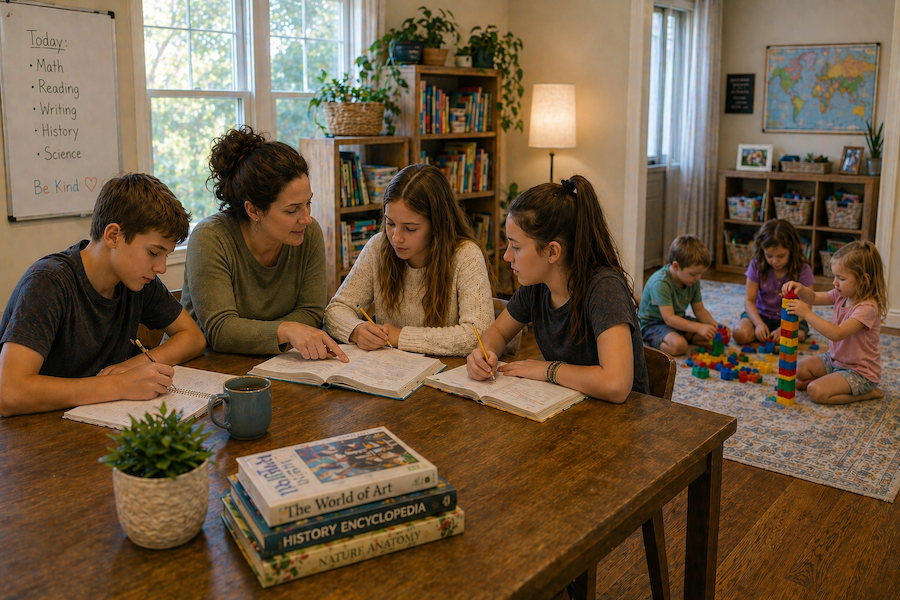
Home-Based Microschools
📚 Small groups meeting in a home setting
📚 Often parent-led or facilitated by a hired educator
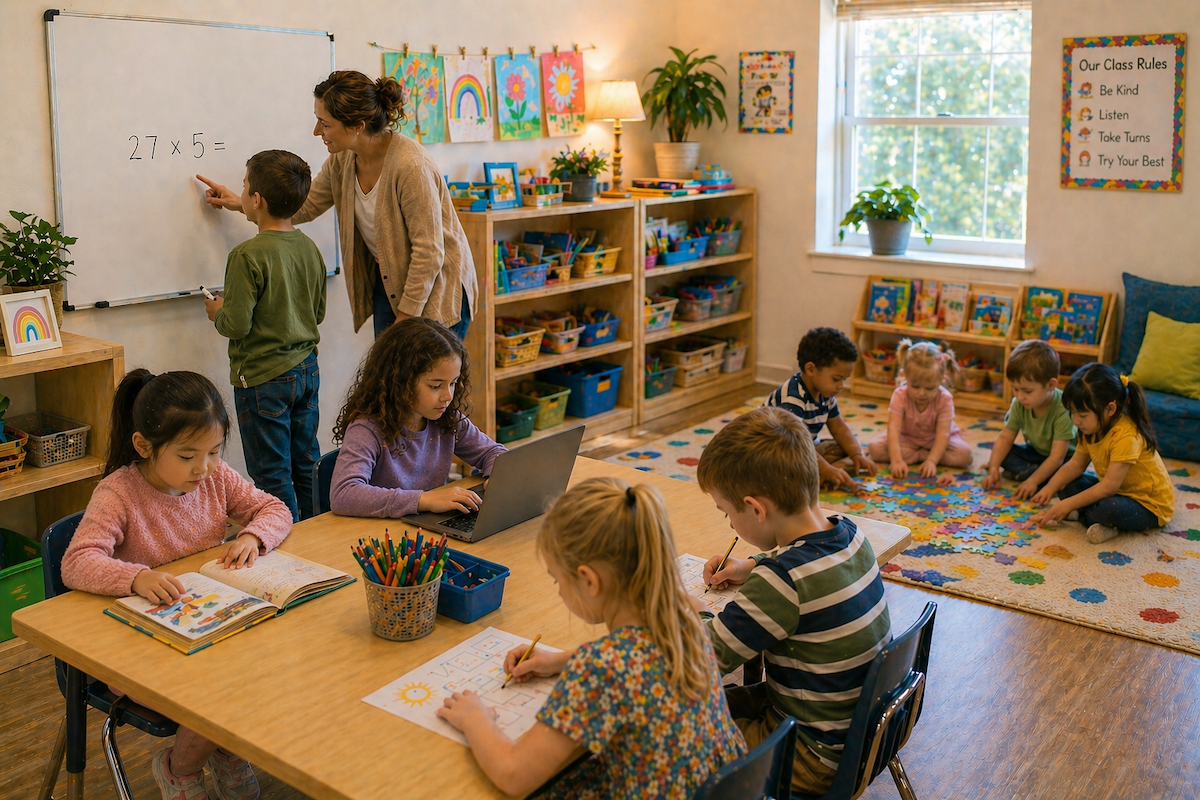
Dedicated Facility Microschools
📚 Small schools operating out of rented or owned spaces
📚 May resemble a very small private school
Faith-Based Microschools
📚 Incorporate religious instruction or values into daily learning
📚 May operate independently or as extensions of existing faith communities
Special Education Microschools
📚 Designed to support students with IEPs or learning differences, such as autism or Attention Deficit Hyperactivity Disorder
📚 Smaller, structured environments and individualized approaches may be beneficial for certain learners
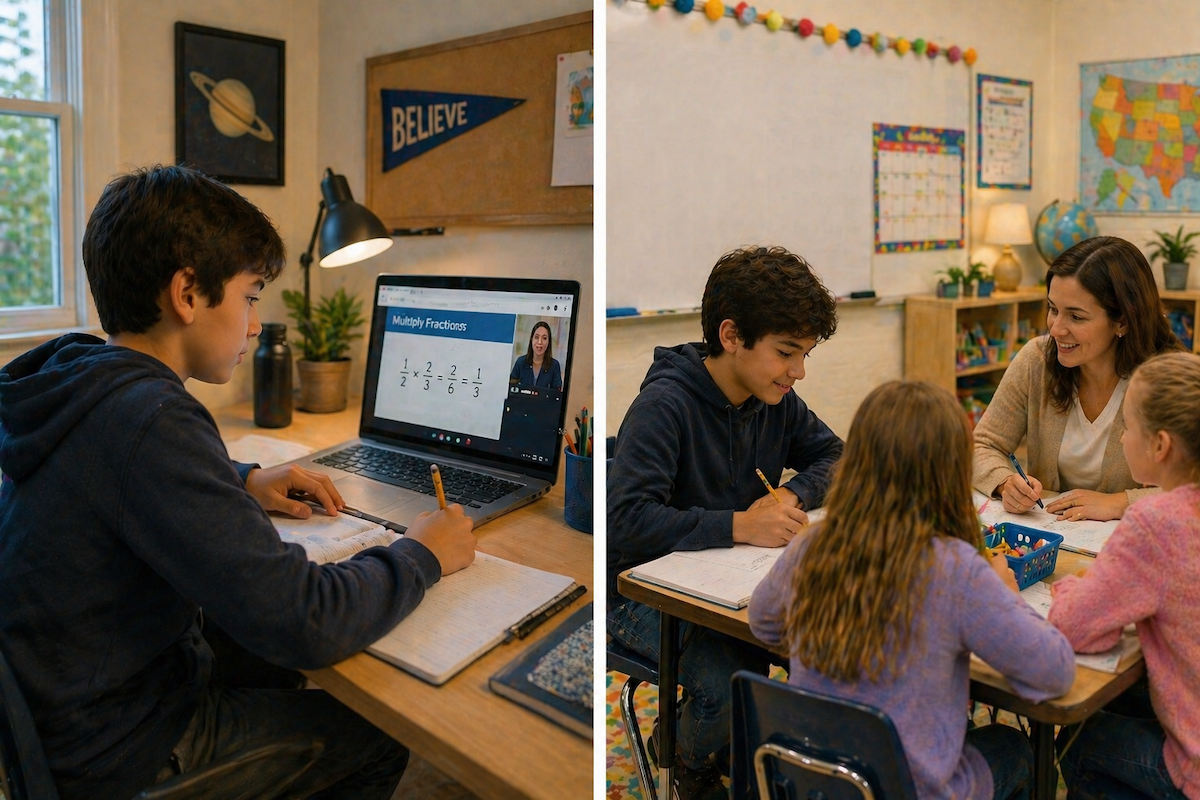
Hybrid Microschools
📚 Blend of in-person and online learning
📚 Became more common after the COVID-19 pandemic
District-Affiliated Microschools
📚 Public school districts developing small, microschool-style programs within the public system
📚 Must comply with federal requirements such as Individuals with Disabilities Education Act (IDEA) and Free Appropriate Public Education (FAPE)
Network-Affiliated Microschools
📚 Operate as part of a larger microschool network or organization
📚 Often use shared curriculum, training, or operational support
Who Runs a Microschool?
A wide range of people can run a microschool, depending on the school’s focus, setting, and educational goals. In some, families hire certified teachers, tutors, or retired educators to run a microschool, while others are led by parents or community members, with or without support from tutors or subject matter experts. Often, microschools are designed for flexibility, allowing a variety of people to help with teaching and operating the organization.
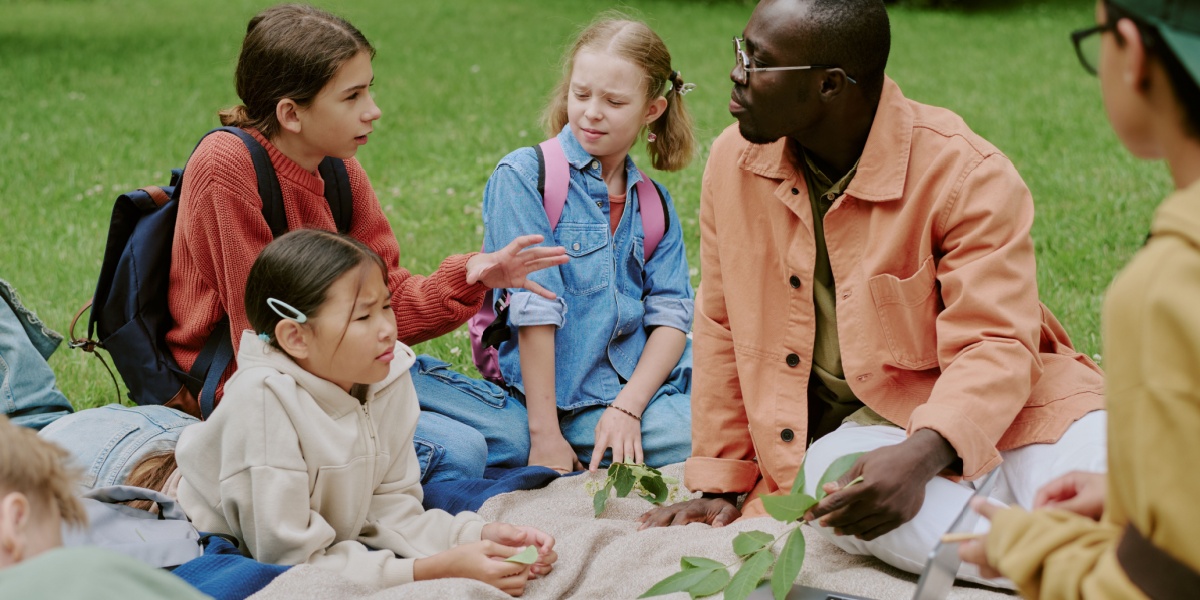
While some microschools use a more traditional teacher-led instruction style, many others rely on adults as “guides” or facilitators. In this approach, adults may do the following:
- Help organize group activities, guide learners, and monitor progress
- Place less emphasis on whole-class instruction aligned to a specific schedule or curriculum
- Students often work independently or in very small groups, with adults to guide or assist when needed.
Teacher credential requirements for microschools vary based on state laws and how the school is structured, but here are the key points to understand:
- In many areas, microschools operate under homeschool or private school laws, which often do not require teachers to be certified or credentialed
- Some states have specific staffing or qualification requirements that microschools must follow
- Microschools run by public school districts must meet state teacher certification requirements
- To qualify for special funding, some microschools must meet certain criteria, which may include specific provider or staffing requirements.
According to The National Microschooling Center’s research from 800 microschools across the United States, “Most currently-operating microschools are led by experienced educators: 35 percent are currently licensed teachers or administrators, 19 percent are formerly licensed, and 32 percent have experience as professional educators who have not held public teaching licenses (such as Montessori).”
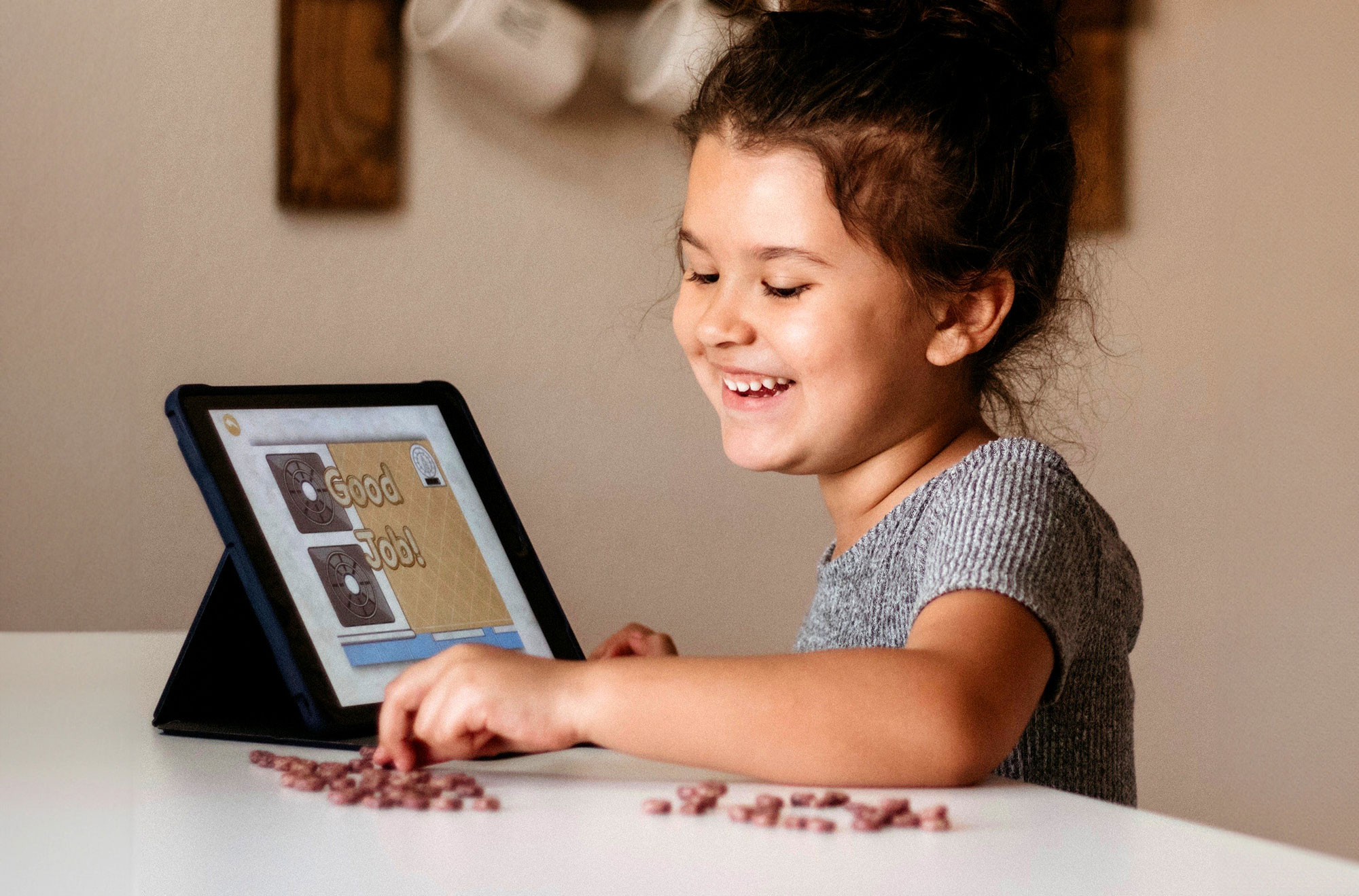
Technology and curriculum tools can also play a role in supporting instruction, particularly in settings where the facilitator is not a licensed teacher. Digital learning platforms can provide structured lessons, track student progress, and offer built-in assessments across subject areas.
For example, digital learning platforms are often used in microschool settings to provide a structured, research-validated curriculum that guides learning even when the facilitator isn’t a credentialed teacher—covering literacy, math, science, and social studies through thousands of engaging activities and lessons.
What Curriculum Do Microschools Use?
Microschools use a wide range of curriculum programs, depending on the age of their students, their educational goals and approaches, and the structure of the school. Most schools cover core subjects including reading, writing, math, science, and social studies, and many include the arts, physical education, and enrichment activities as well.
One defining aspect of many microschools is the ability to adapt learning to each individual student. Some schools may use the same curriculum program for every student, adjusting the pace or providing different levels of support. Others may customize curriculum based on student abilities and interests, modifying lessons and activities to meet student needs.

Many microschools rely on digital tools and educational apps as part of their curriculum. Online platforms can provide structured lessons, practice activities, and assessments across subject areas, helping to support consistency in instruction while accommodating individual pacing needs. These tools may be used alongside hands-on activities and group instruction, depending on the design of the microschool.
Common Microschool Instructional Approaches
Rather than following a single standardized curriculum, microschools often draw from a variety of instructional approaches. These are some of the common models they may use:
| Approach | Description |
| Classical Education | In this approach, students focus on literature, history, and language development through a structured sequence, often based on stages such as grammar, logic, and rhetoric. |
| Charlotte Mason | This method focuses on developing strong habits and comprehension through short lessons and meaningful engagement with ideas rather than traditional textbooks and worksheets. It includes nature study, art, and music alongside core subjects. |
| Project-Based Learning (PBL) | Students are encouraged to explore topics in depth through hands-on, interdisciplinary projects and real-world problem-solving. PBL often involves volunteer work in the community as part of the curriculum. |
| Montessori Inspired | This self-directed learning approach uses hands-on materials and multi-age groupings, with an emphasis on independence and choice. The learning space is arranged so students can move and work without constant adult assistance. |
| Waldorf/Steiner | This method integrates arts, movement, and storytelling, encouraging creativity and imagination. In early childhood, there’s usually less emphasis on formal academic skills like reading, with more focus on social and practical activities. |
| Competency-Based Learning | In this approach, students progress based on mastery of skills or concepts rather than time spent on a subject. This method places less emphasis on grade-level frameworks and more on individual student progress. |
| Online or Blended Learning | This method combines digital instruction with in-person support, often using educational platforms for core subjects. |
| Experiential or Place-Based Learning | Students engage in learning that is grounded in real-world experiences, local environments, and community resources. Instruction often ties what students are learning in class to real-life situations in their community through projects, field trips, or hands-on activities. |
| Eclectic or Mixed Approach | Many microschools combine elements from multiple educational philosophies, adapting instruction based on student needs and program goals. |
Benefits of Microschools for Kids and Families
Proponents of microschools describe a range of potential benefits for students and families, though these vary based on the specific learning environment, curriculum programs, and instructional approaches. These are some of the benefits families and educators often highlight.
Microschool Benefits
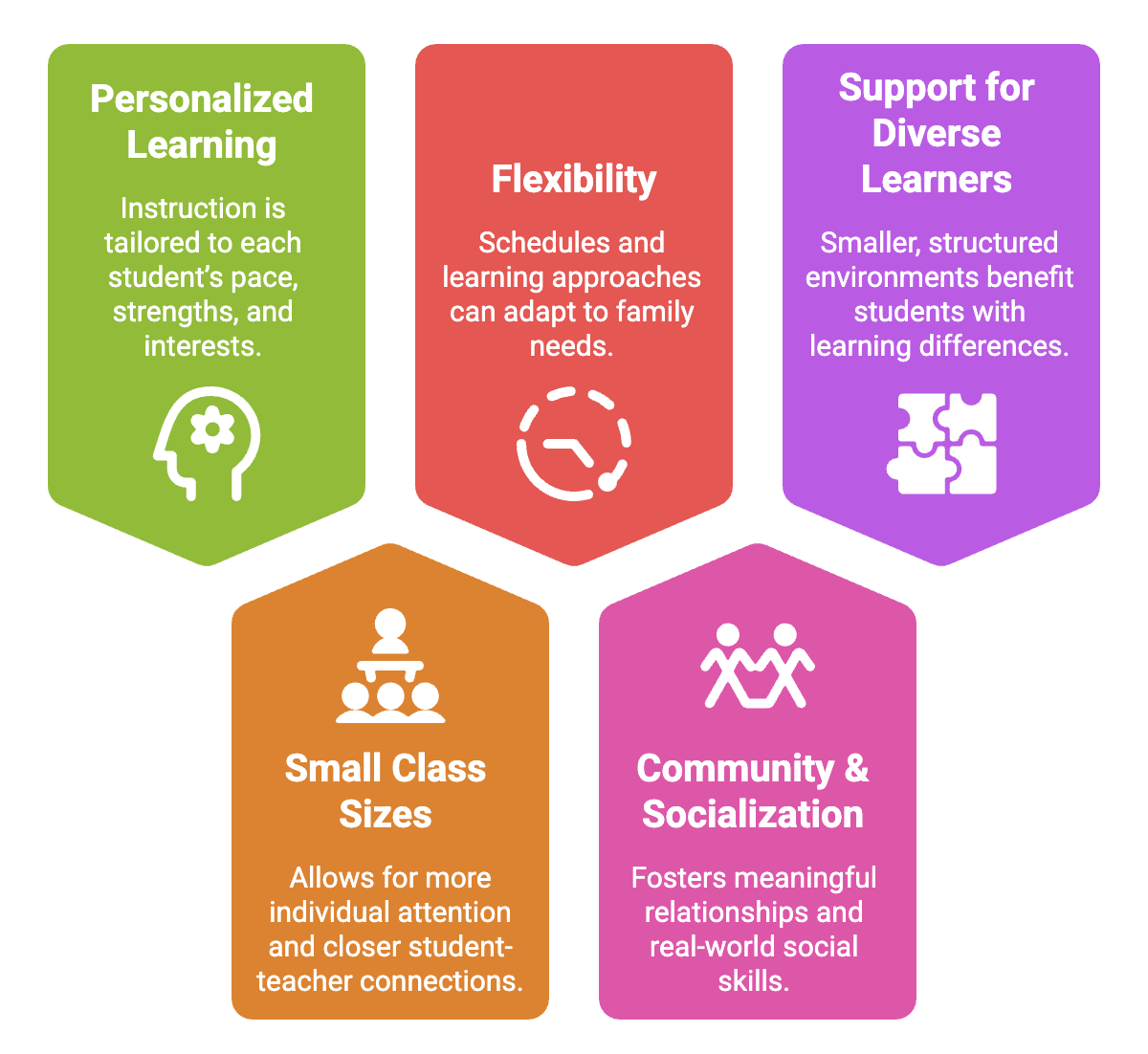
Personalized Learning
Microschools often aim to tailor education to each student’s pace, strengths, and interests. Some models focus on competency-based progression rather than age-based grade levels, allowing students to advance at their own speed based on mastery of skills or concepts rather than a fixed schedule.
Small Class Sizes and Strong Relationships
Many microschool classes are very small, usually no more than 5 to 15 students. A lower student-to-teacher ratio generally means students receive more individual attention, and they may form closer relationships with their teachers as a result.
Flexibility
In many cases, microschools use flexible scheduling models, which may help accommodate therapies, family life, and individual needs. Flexibility may allow educators to adapt curriculum, instructional methods, and pacing in real time, supporting individualized learning approaches.
Community and Socialization
Microschools typically include frequent interaction among students throughout the day. Many use multi-age groupings, which some educators describe as reflecting real-life social environments where people interact across a range of ages and experience levels.
Support for Diverse Learners
Some families and educators report that microschool environments can support students with a range of learning needs, including learning differences, attention-related challenges such as ADHD, anxiety, or autism. For instance, smaller group sizes and more predictable routines may contribute to reduced sensory issues or anxiety in some students.
Challenges of Microschools for Kids and Families
While microschools may offer potential benefits for some families and learners, there are also several important challenges and considerations to keep in mind.
Microschool Challenges
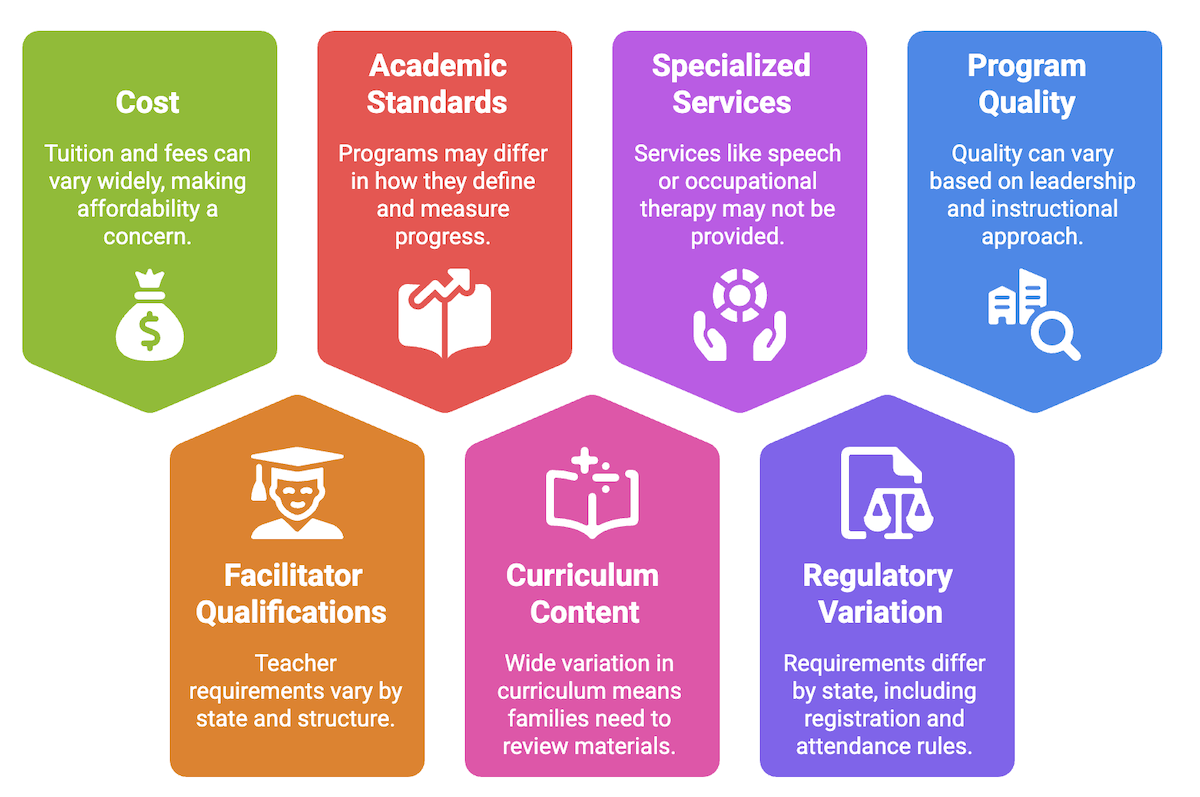
Cost
Tuition costs and fees vary widely across microschools, making affordability a consideration for some families. A growing number of states offer Education Savings Accounts (ESAs) that can help families cover microschool-related expenses, including curriculum, online learning programs, and educational therapies.
Facilitator Qualifications
Requirements for qualifications vary by state and by whether the microschool operates under homeschool, private school, or other regulations. While many areas don’t require certified teachers for microschools, families who want or are required to work with credentialed educators should consider the costs and logistics involved.
Academic Standards and Rigor
Some microschools follow state standards and traditional grade-level expectations, while others use mastery-based or alternative frameworks with different pacing and benchmarks. Families may want to review how academic progress is defined, measured, and communicated within a program.
Curriculum Content and Values Alignment
Microschools may use a wide range of curricula and materials depending on their approach or model. Families may want to review sample lessons, reading lists, and curriculum outlines to understand what students will learn and how topics are taught. Looking at materials ahead of time can help families see whether a program fits their educational priorities and values.
Access to Specialized Services
Access to related services such as speech therapy, occupational therapy, or other student supports may depend on the microschool’s structure and local availability. In some cases, families may need to coordinate these services independently.
Regulatory and Legal Variation
Depending on the state, microschools are typically treated as private or homeschools. Each state has its own set of laws governing private and homeschools, which may include requirements related to registration, attendance, staffing, and oversight. It’s important for families to explore and understand their state’s individual legal requirements for microschools.
Variability in Program Quality
Because microschools operate under a range of models and approaches, their program structures, curriculum, and instructional quality can differ widely. Some are led by experienced educators with established curriculum programs, while others use newer or more informal instructional models. Families should evaluate factors such as educator experience, curriculum design, and learning environment when considering options.
Essential Resources for Microschool Families and Educators
Successfully running a microschool often depends on having the right mix of tools, support systems, and reliable information. From choosing effective digital learning platforms to connecting with other educators and understanding legal requirements, these resources can help families and facilitators create a well-structured, engaging learning environment.
Digital Learning Platforms

Microschool learning tools often vary in structure, flexibility, and level of independence required. Many are designed to support multi-age learning and track progress, while offering interactive content that can be used in both guided and independent settings.
Digital learning platforms are frequently used to support microschool instruction in core subjects like reading, math, science, and social studies. These tools can provide structured lessons, interactive activities, and progress tracking that supplement in-person or facilitated learning.
What to Look for in Digital Learning Platforms for Microschools:
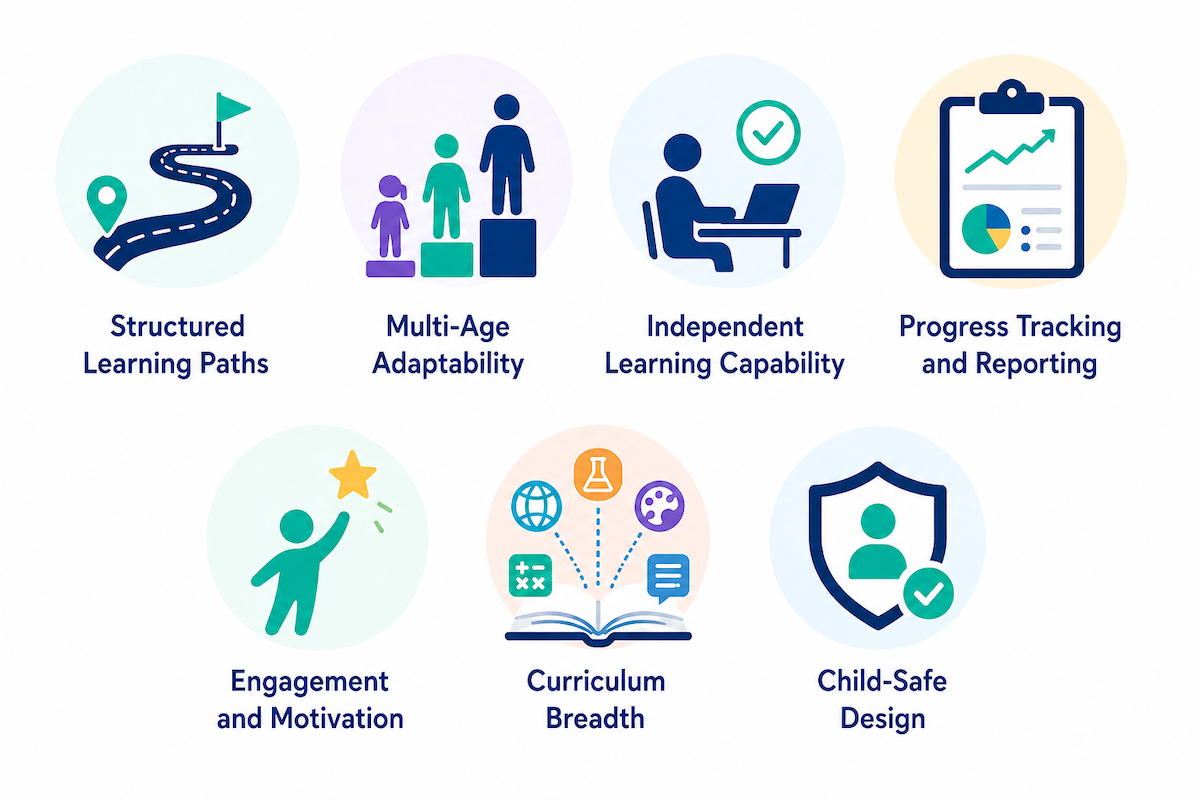
When evaluating digital learning tools for a microschool, consider the following:
- Structured learning paths: Does the platform offer a clear progression for students, or is it a collection of standalone activities?
- Multi-age adaptability: Can the platform serve students at different ages and skill levels simultaneously?
- Independent learning capability: Can students work through lessons without constant adult guidance?
- Progress tracking and reporting: Does the platform allow facilitators and parents to monitor student usage and growth?
- Engagement and motivation: Does it keep students interested through interactive, age-appropriate content at the right skill level?
- Curriculum breadth: Does it cover core subjects (reading, math, science, social studies)?
- Research-backed design: Is the content developed by education experts and supported by research?
- Child safe design: Does the app limit a child’s ability to click into other outside content? Does the app run third party ads?
Educational Apps for Microschools
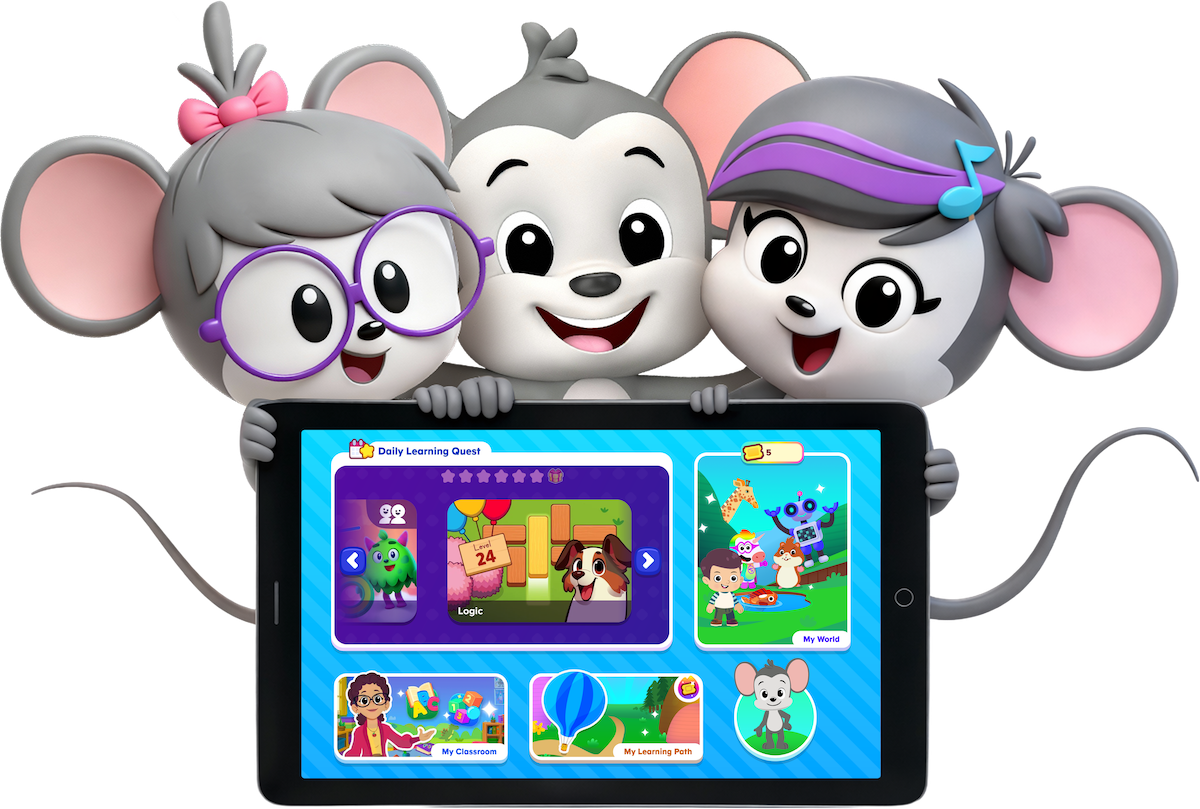
For young learners ages 2–8, ABCmouse offers a comprehensive, research-validated curriculum that supports standards instruction with more than 13,000 individual learning activities spanning literacy, math, science, health, and social studies — all delivered through engaging, play-based games and lessons in a child-safe app.
For older students in elementary and middle school (ages 8–13), Adventure Academy immerses kids in a safe virtual world packed with videos, games, books, and quizzes covering language arts, math, science, and social studies. Both may be eligible educational expenses for families in some state ESA programs and can be purchased through ClassWallet.
Microschool Networks and Communities
Many microschool families connect through online and in-person networks to share resources, provide support, or collaborate and learn from one other. These support groups may be formal or informal, large or small.
Here are some resources for microschool families to consider:
- Prenda: This network supports small, often home-based learning environments led by local guides or facilitators using a shared instructional model and platform.
- Acton Academy: A network of learner-driven schools that emphasizes student autonomy, project-based learning, and self-paced progress within a structured environment.
- Local Homeschool Co-ops: In these parent-organized groups, families may share resources, and teaching responsibilities, and arrange social and extracurricular gatherings and activities.
- Facebook Groups: These groups may serve local homeschool families, or those aligned by their learning approaches, educational values, or other common factors.
Legal and Administrative Resources
Families and educators may benefit from legal and administrative organizations that can help them better understand state requirements, homeschooling regulations, and program compliance. Here are some common organizations microschool families may use.
Here are some resources for microschool families to consider:
- National Microschooling Center: Focused specifically on microschool needs, this national organization provides information, resources, and support related to development and operation, including policy and practice guidance.
- State Departments of Education (DOE): Each state has its own laws and regulations governing microschools. State DOEs may help families better understand legal requirements.
- HSLDA: This national non-profit advocacy organization provides legal information and support related to homeschooling laws and regulations in the United States.
- State Homeschool Associations: State-level organizations offer guidance on local homeschool laws, reporting requirements, and community resources. These associations vary by state but often serve as a reference point for understanding regional regulations that may apply to microschools.
- State ESA or School Choice Programs: These organizations may help families understand funding eligibility and compliance.
Microschool FAQs
Are microschools legal?
Microschools are legal in all 50 states, but requirements vary widely depending on state law and the way a school is set up. In most states, microschools operate under homeschool or private school laws, or a combination of both.
How much does a microschool cost?
Microschool tuition and fees differ greatly from one school to another, with costs ranging from a few thousand dollars a year to $15,000 or more depending on the program, services, and schedule.
Can I use ESA funds for a microschool?
Some states offer Education Savings Accounts (ESAs) that can help families cover microschool-related expenses, such as curriculum, online learning programs, and educational therapies.
How many students are in a microschool?
Microschool enrollments vary, but are usually between 5 and 15 students, though some are larger. There’s no specific definition for the size of a microschool.
Do microschool students take standardized tests?
Depending on the location and educational philosophy, microschool students may take standardized tests. In some cases, students may be required to take standardized tests to meet state requirements for homeschools or private schools, or to be eligible to use ESA funds for microschooling costs.
Are microschools accredited?
The majority of microschools are not accredited—a 2025 survey indicates around 22% of microschools have earned accreditation. Some states require accreditation for microschools that wish to participate in ESA programs.
What’s the difference between a microschool and a learning pod?
A microschool is a small, flexible school (often 5–20 students) that usually has a consistent learning model or curriculum and is led by an educator or founder. A learning pod is a small group of students who learn together informally, often with parent or tutor support, usually to supplement homeschooling or remote learning.
Can kids with IEPs attend microschools?
Yes. Some families believe children with special learning needs benefit from the more personalized support a microschool may offer. However, microschools are typically not required to provide IDEA services, and may not provide access to specialized services like speech or occupational therapy, or other needed support. Families may need to coordinate these services on their own.
What curriculum do most microschools use?
Microschool curriculum programs vary based on the school’s educational philosophy and instructional approach. Some schools use digital learning platforms for core subjects, supplemented and supported by in-person lessons and activities.
How do I find a microschool near me?
Start by searching online for “microschools in [your city/state]” or checking directories from the National Microschooling Center. Many microschools rely on word-of-mouth, so local community groups are often the best place to find them. Join local parent groups—like those on Facebook—for recommendations.
Legal disclaimer: Any information, materials, or links to third-party resources are provided for informational purposes only. We are not affiliated with and do not sponsor/endorse these third parties and bear no responsibility for the accuracy of content on any external site. All information provided in this article is current as of April 2026.

