50+ First Day of School Activities & First Week of School Ideas for Kids
Share
Welcome students to the classroom with games, crafts, and activities that they’ll love to do!
Table of Contents
Kick off the school year with activities that help students feel welcome and build classroom connections from day one! Find 50+ classroom games, icebreakers, crafts, team-building activities, and free printable worksheets for preschool through second grade, along with free resources that make planning the first week of school easy and enjoyable.
First Day of School Activities for Kids
These first day of school activities help children get to know each other in a variety ways, including quiet activities kids can complete on their own and activities that get them up and moving and chatting with their classmates.
Get-to-Know-You Activities
Get-to-know-you activities help students learn classmates’ names, discover common interests, and begin building classroom friendships. These simple activities encourage conversation while helping teachers learn more about each child.
The Line-Up Game
Best For: Preschool–5th Grade
Challenge students to line up in order without speaking! You can have them try lining up silently in the following ways:
- By birth day month
- By favorite animal
- The number of pets
- By favorite school subject
All About Me Worksheets
Best For: Kindergarten–5th Grade
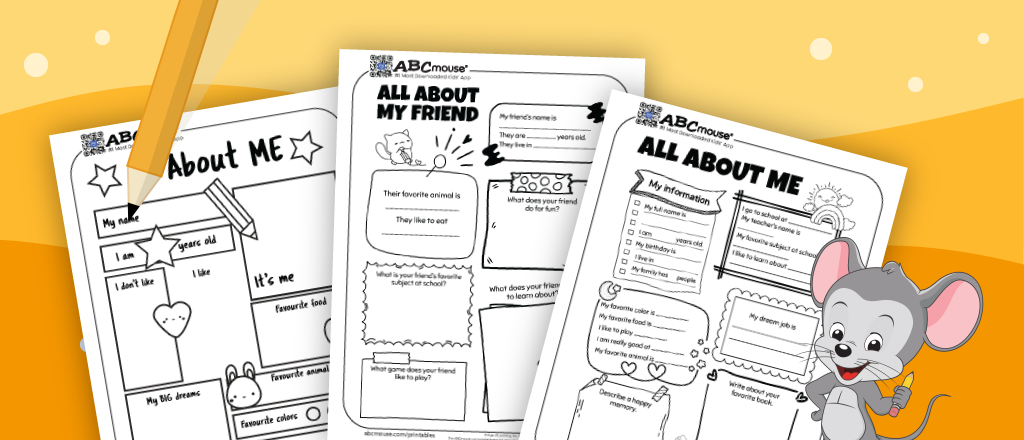
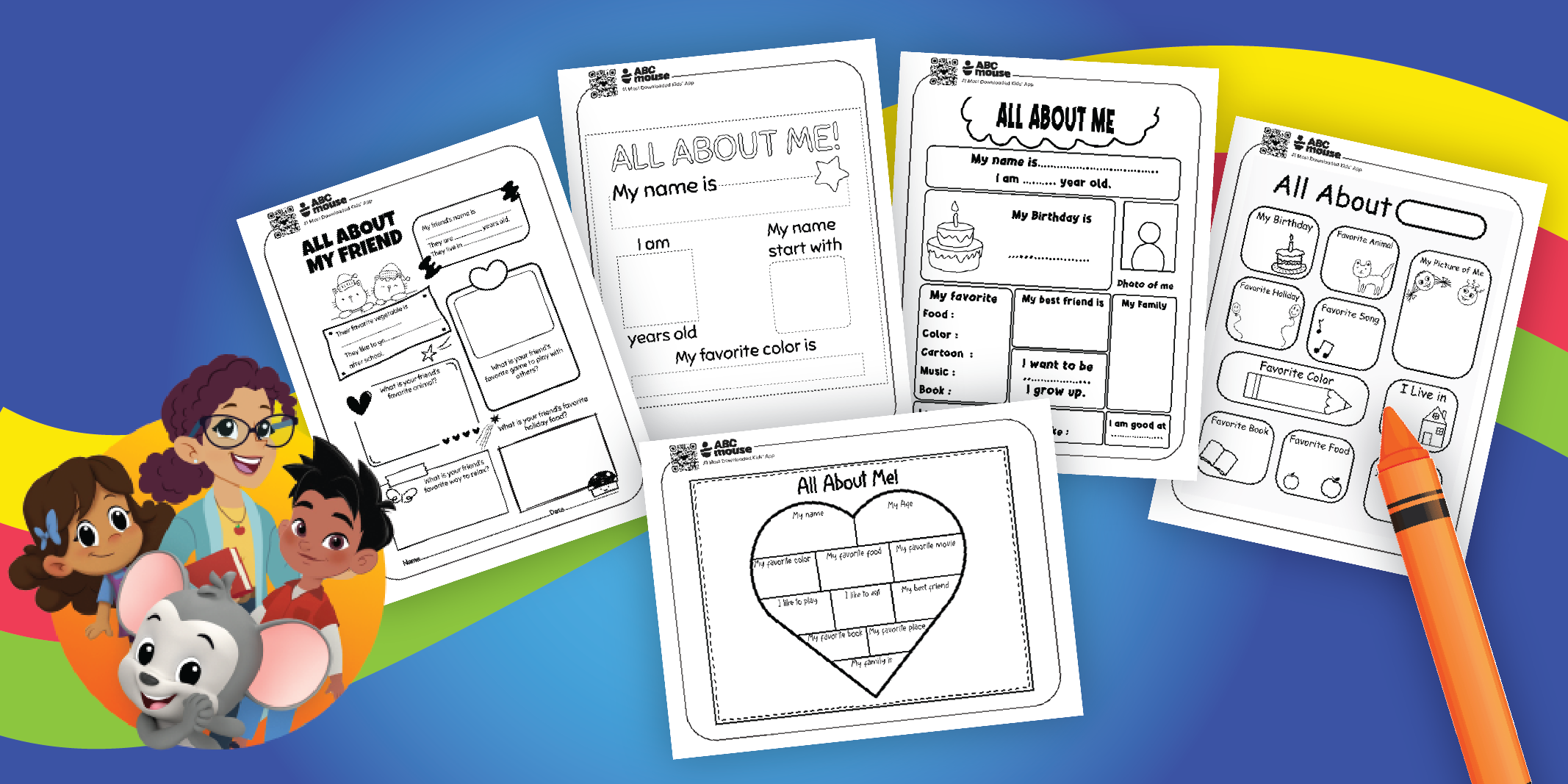
These free printables provide an easy way for students get to know each other and make it easier for more introverted kids to share information about themselves.
Name Activities
Best For: Preschool–5th Grade
Write each student’s name on an index card and challenge children to try these name-based activities with classmates throughout the day.
- Find a classmates whose name starts with the same letter or the next letter in the alphabet
- Find a student with a name that has the same number of lettters as yours
- Find a student with matching first, middle, or last names
- Find a classmate who has the same name as a family member
Partner Interviews
Best For: Preschool–5th Grade
Pair students together and provide a few simple questions on topics like their favorite animal, favorite book, or what they did over the summer. After interviewing each other, students introduce their partner to the class and share what they learned about each other.
This or That?
Best For: Preschool–5th Grade
Create a list of two choice options for students to pick from, such as recess or gym and dogs or cats. Read off the choices and have kids line up according to which option they prefer.

Musical Match Up
Best For: Preschool–5th Grade
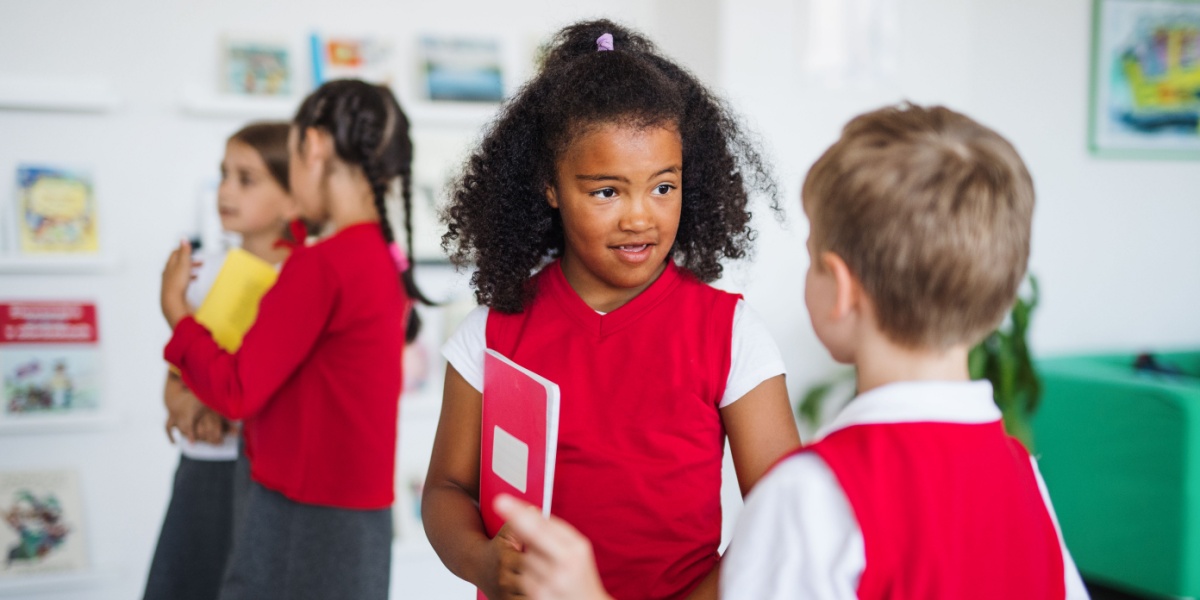
In this variation of musical chairs, kids move around the classroom until the music stops, then they turn to the person next to them and share a fact about themselves. Before starting the music again, have 3-4 students share what they learned about a classmate.
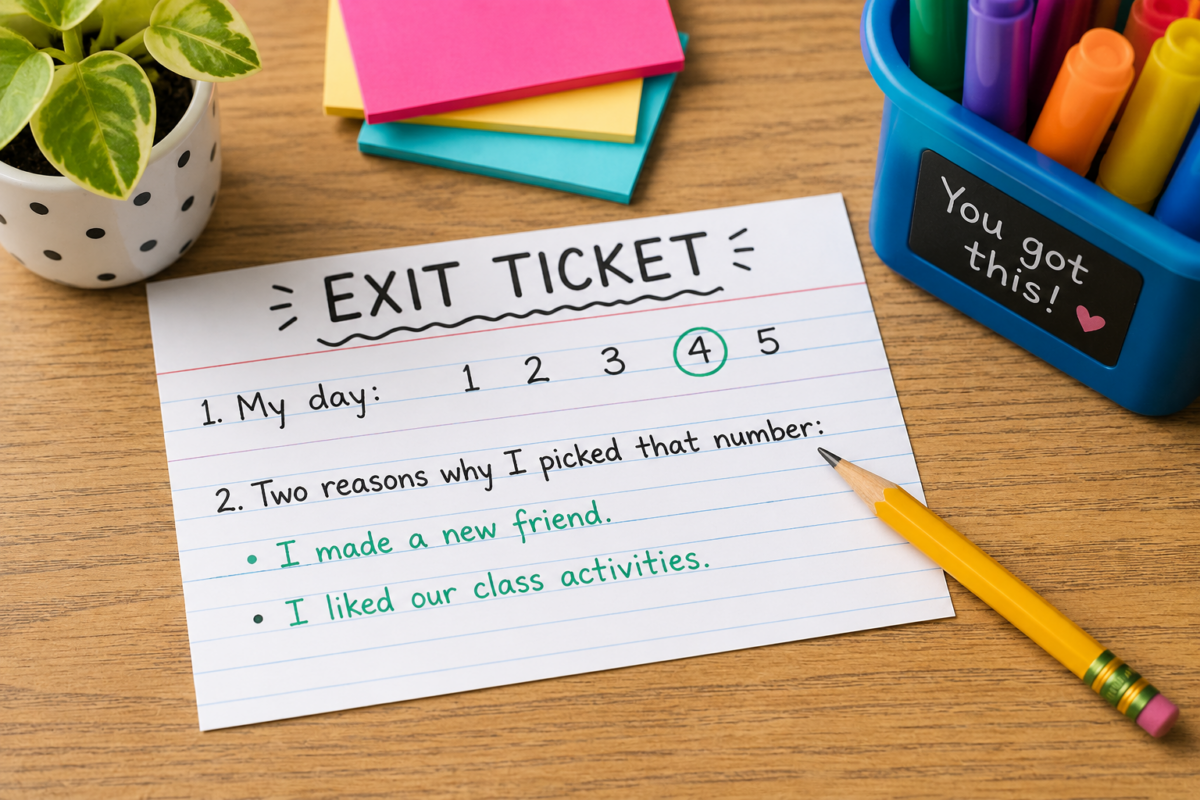
First Day Exit Ticket
Best For: Kindergarten–5th Grade
Writing exit tickets helps students review their first day before coming home to share details with their families and also help teachers understand how the day went for students. Try these ideas:
- Pass out index cards have kids write a number between 1-5, rating their day. Then have them write 2 reasons why they picked that number.
- Have students write the high point and low point of the day.
- Have students draw a face that shows how they feel about the day and add an explanation about it.
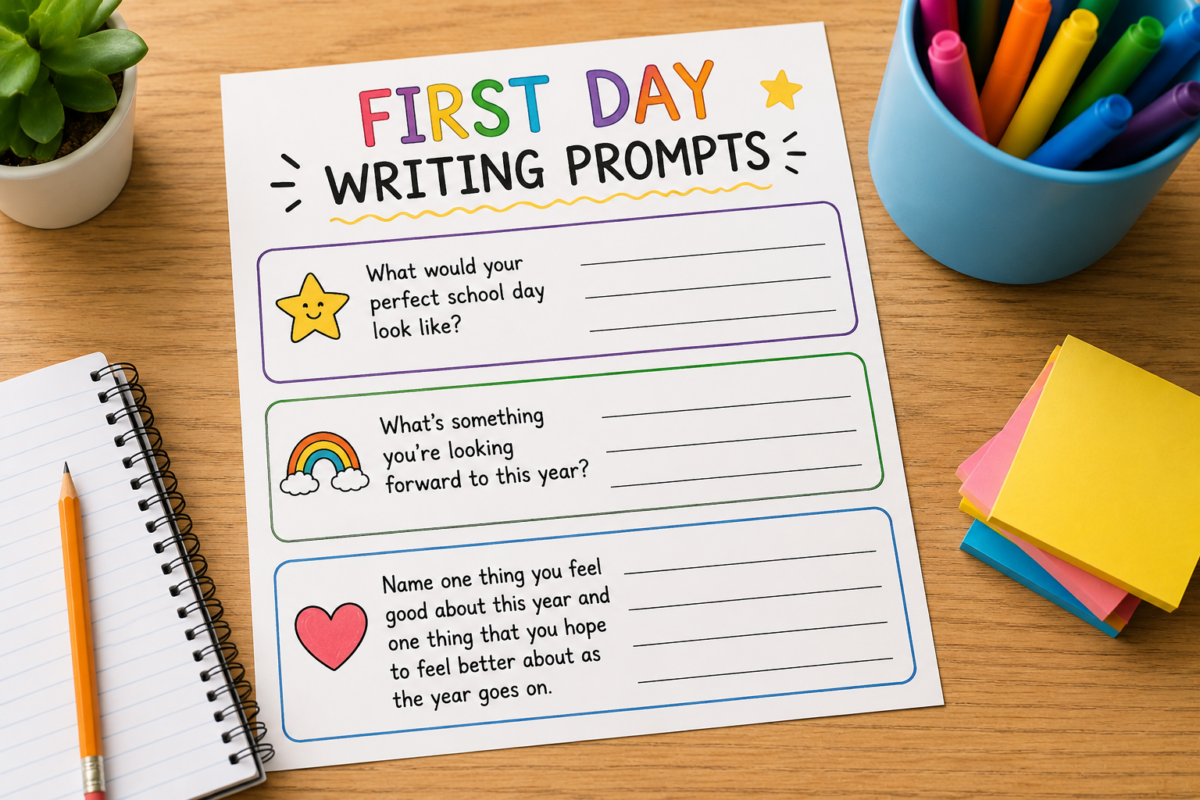
First Day Writing Prompts
Best For: Kindergarten–5th Grade
First day of school writing prompts can give teachers insight on their students and provide kids with time to reflect on the school year. Here are a few prompts to pick from:
- What would your perfect school day look like?
- What’s something you’re looking forward to this year?
- Name one thing you feel good about this year and one thing that you hope to feel better about as the year goes on.


First Day Icebreaker Games
Put a fun and relaxed spin on getting to know each other with simple icebreaker activities for kids. Pick from low-prep options, printables, or ideas to encourage movement and teamwork.
The Name Memory Game
Best For: Preschool & Up
Each day during the first week of school, pick 8+ of your students’ names and write each one on a sticky note. Then stick them onto a table or white board in a random pattern.
Give students 1 minute to quietly study the names, then remove one while everyone closes their eyes. Challenge the class to identify which classmate’s name is missing. Repeat with different names throughout the week to help students remember each other’s names and challenge their memories.
Classmate & Classroom Scavenger Hunts
Best For: Preschool–5th Grade
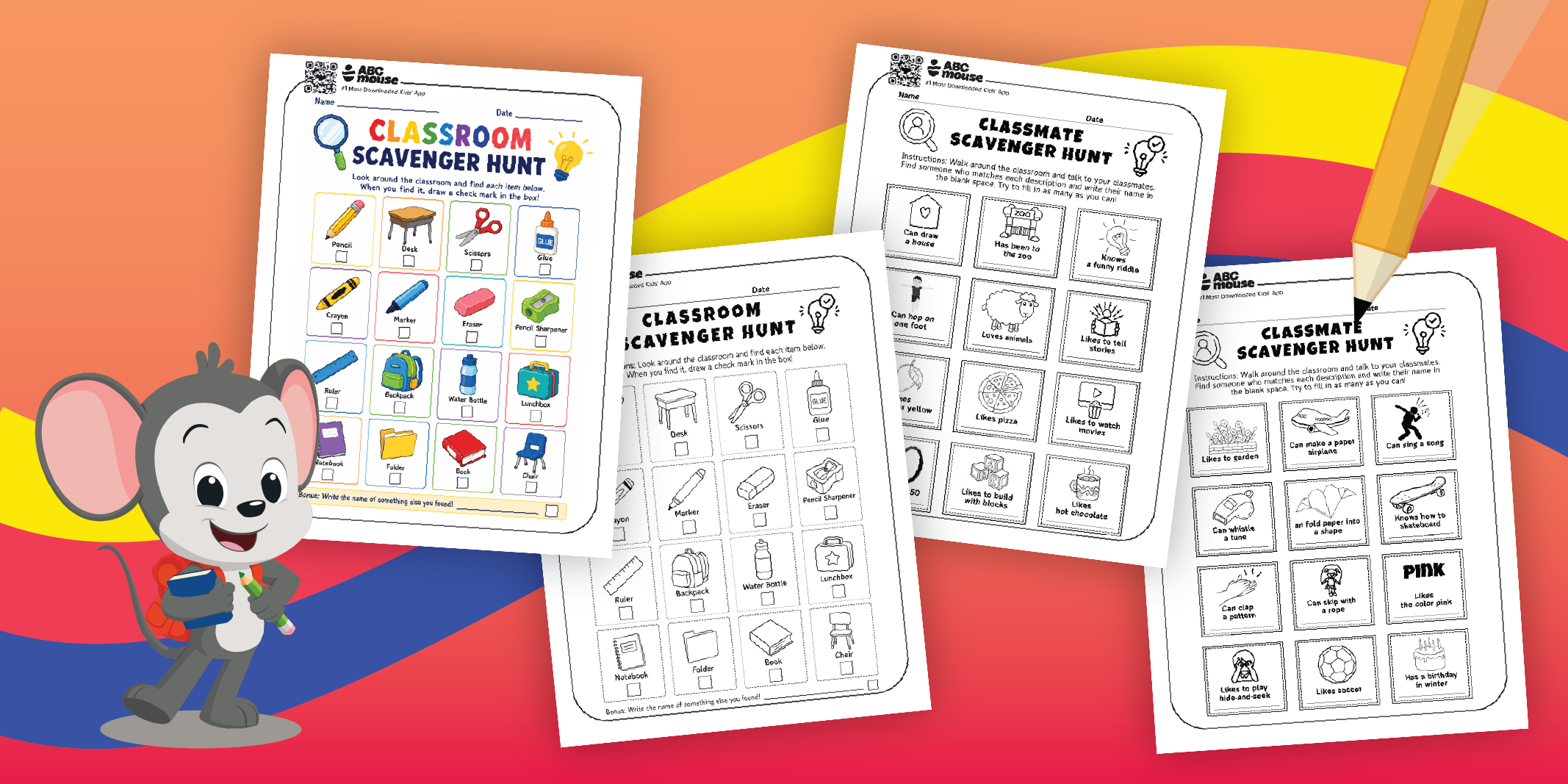
From sheets of Would You Rather questions to Classmate Bingo and a Classmate Scavenger Hunt, these free printables make it fun and easy for students to move around the room and get acquainted.
You’ll also find classroom scavenger hunts that kids can complete in pairs or teams as they get familiar with their new learning environment.
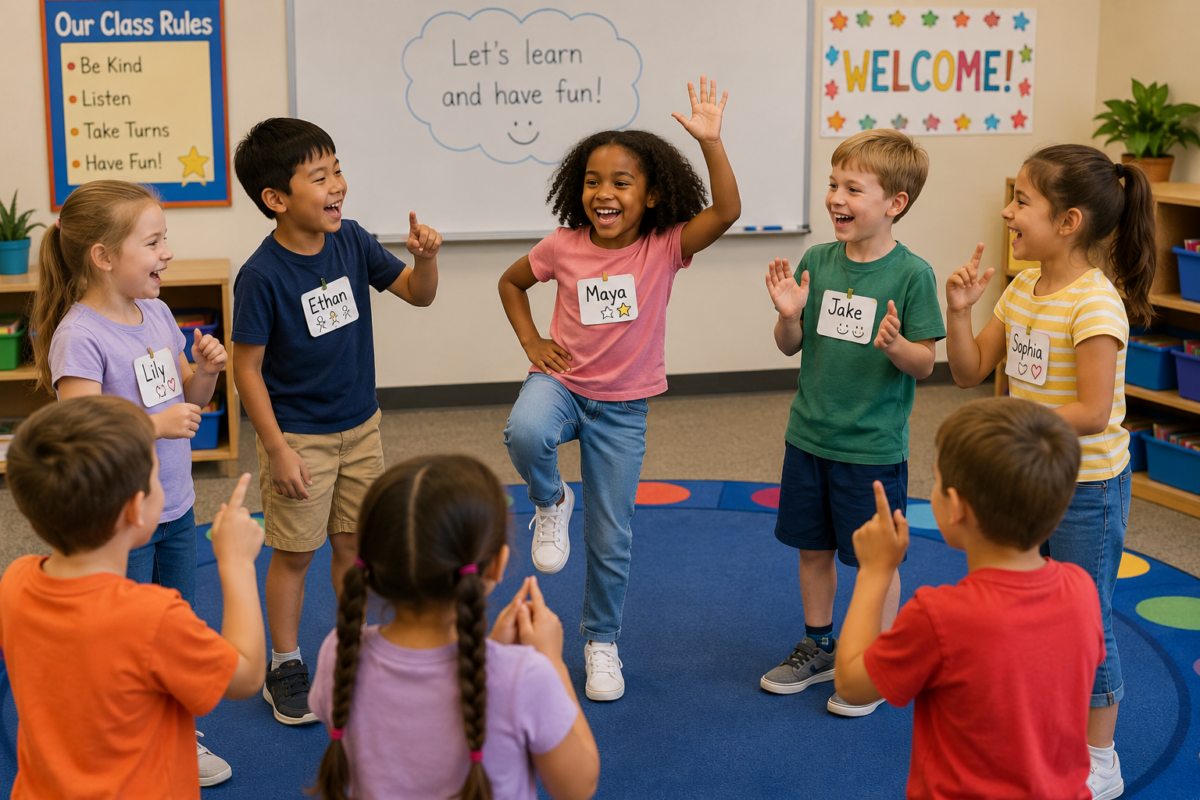
The Circle Name Game
Best For: Preschool–1st Grade
Invite students to stand in a circle and say their name along with an action, such as a jump, wave, or silly pose. The class repeats both the student’s name and action before the next person takes a turn. This interactive game helps children remember names while getting everyone laughing and moving.
You can make it more challenging by having students try to remember the names and movements of each student who went before them before sharing their own.
Partner Activities
Best For: Preschool–5th Grade
Pair students together and provide an activity for them to complete as a team, such as:
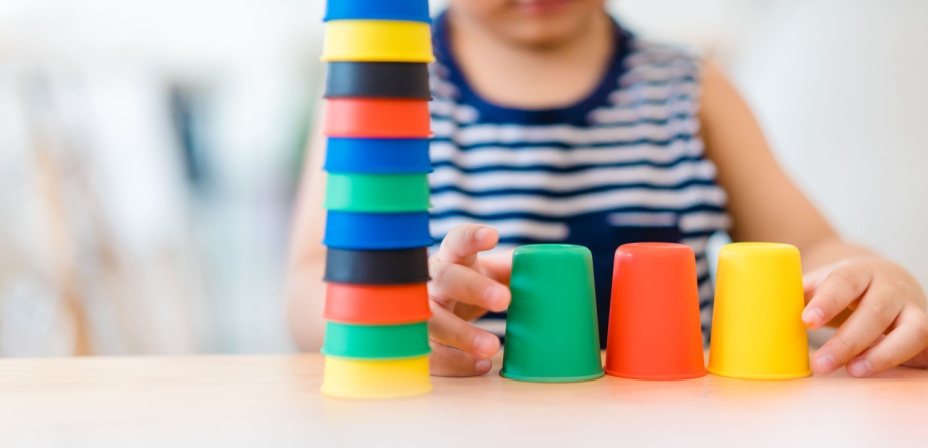
- Use plastic cups to build the tallest tower they can
- Draw a picture together by taking turns adding to the scene (this is especially funny if each artist draws blindfolded).
- Tell each other school-themed jokes and sharing their favorite with the class
- Play a game together, like this free matching game from ABCmouse.
Design the Perfect Classroom or School
Best For: Kindergarten–5th Grade
Divide students up into small groups and give each one paper, markers, and craft supplies, then challenge them to design their “perfect classroom.” Students work together to decide what rules, learning spaces, decorations, and classroom jobs they would include before presenting their ideas to the class.
Investigate the Teacher
Best For: Kindergarten–5th Grade
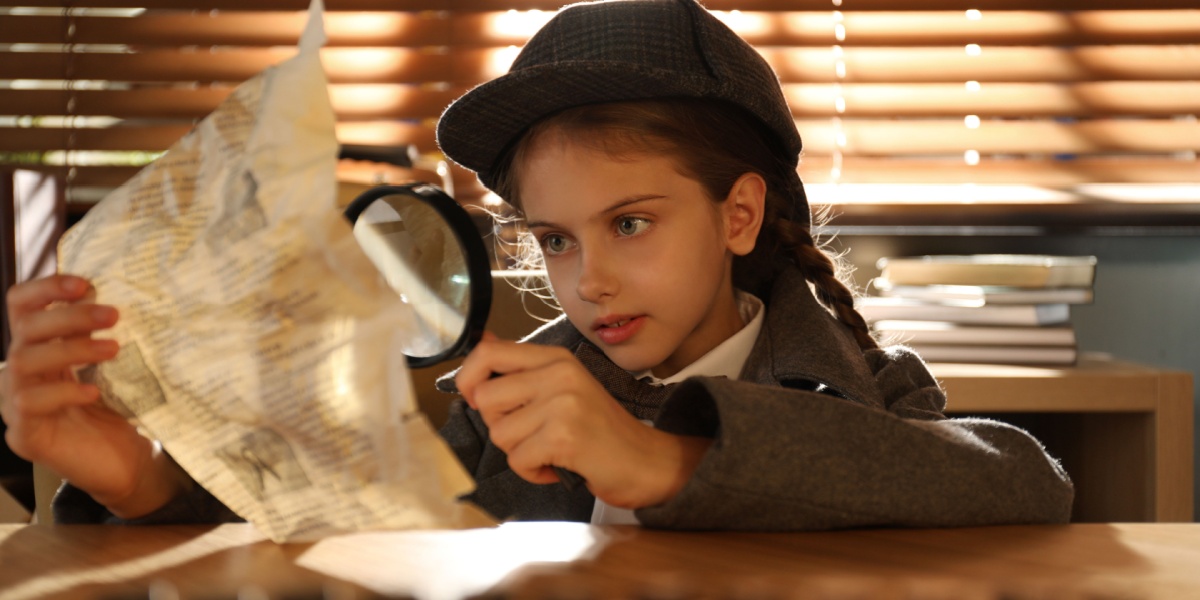
Turn your students into detectives, and ask them to look closely around your classroom for clues to your personality, style, and likes and dislikes. They might note that your bulletin boards feature bright colors, you have lots of plants on the windowsills, or you keep a stash of diet soda under your desk.
This is such a fun and interactive way to help them get to know you while sharpening their observation skills!
Snowball Fight
Best For: 1st Grade & Up
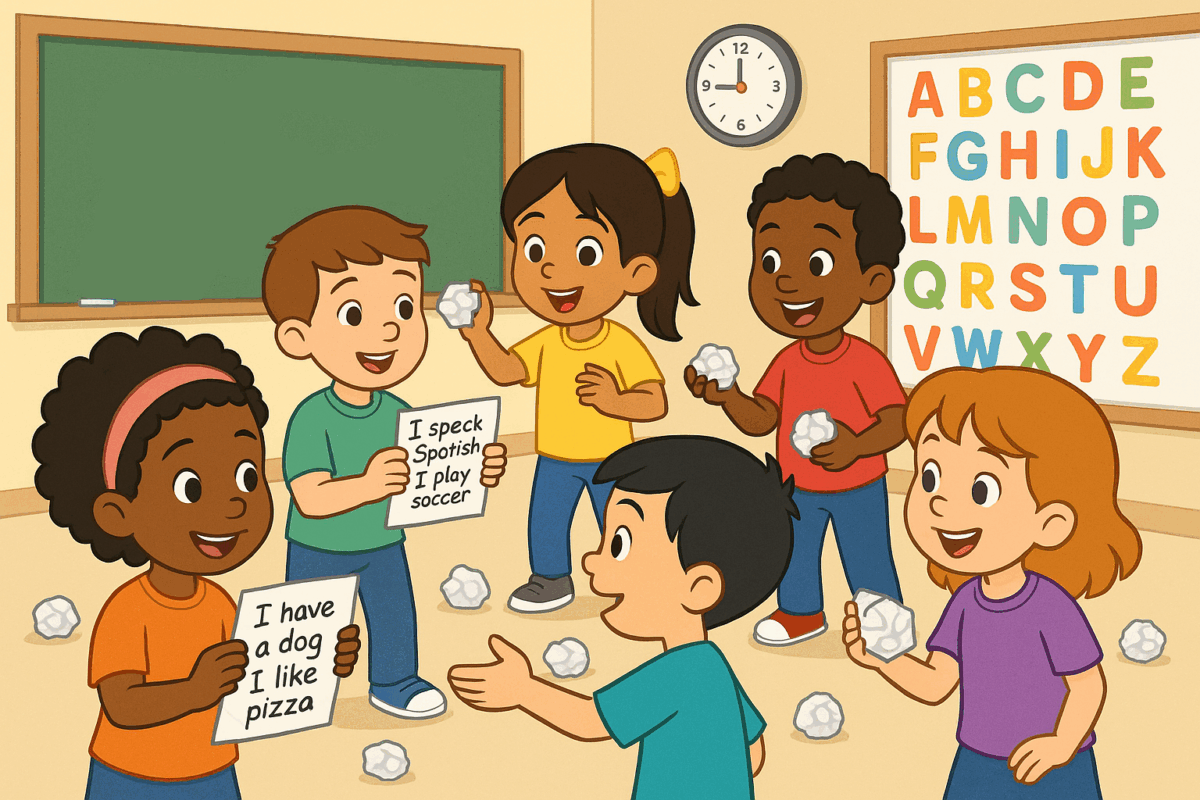
A chance to throw things in the classroom without getting in trouble? You know students will be into this! Ask each student to write 2 to 3 facts about themselves on a piece of paper, then crumple it into a “snowball.”
At the signal, kids toss the balls gently around the room until you say stop. Then, each student collects one snowball, opens it up, and tries to find the student who wrote it.
My Name Starts With
Best For: 1st Grade & Up
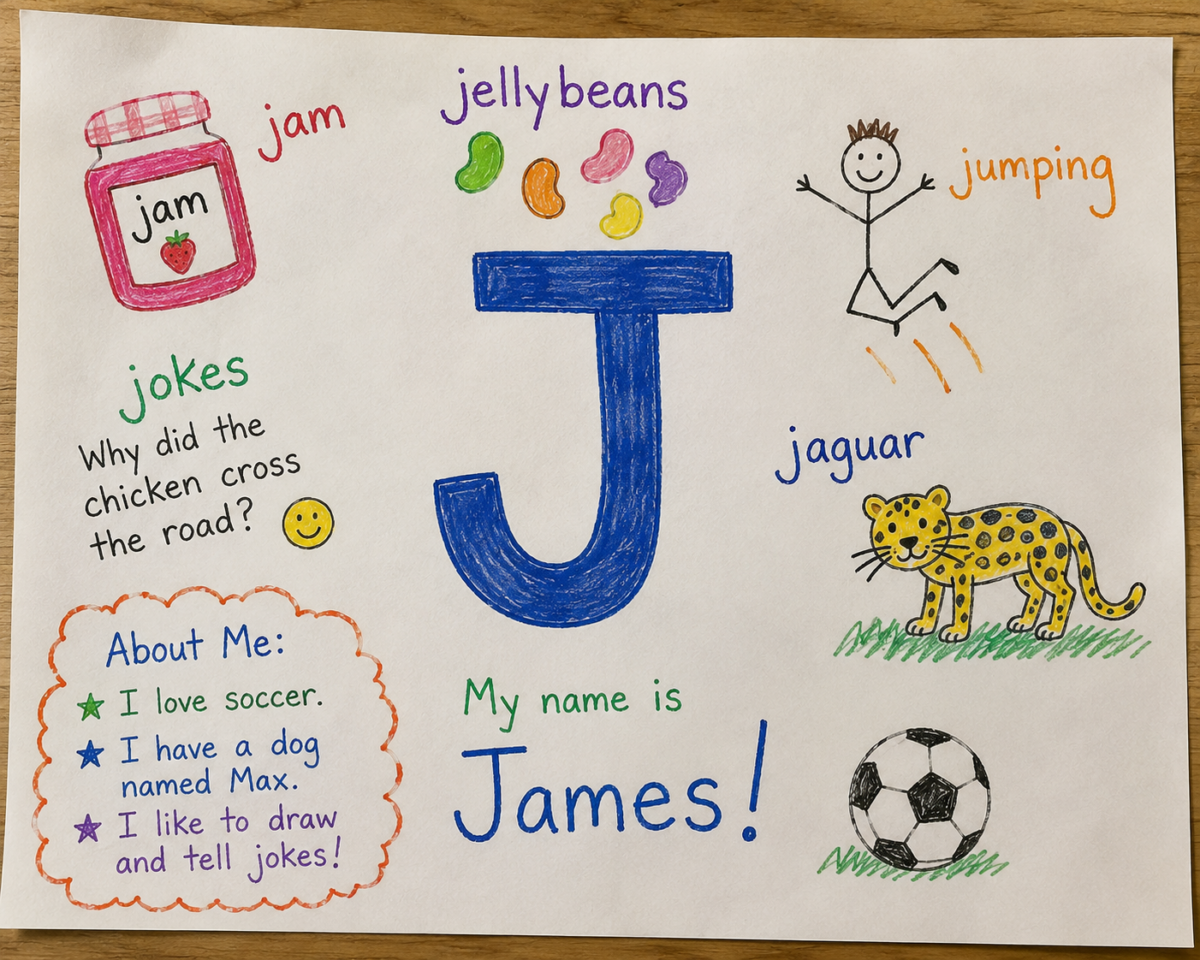
On a plain piece of paper, each student writes the first letter of their first name in big print in the middle. Then, they add words or drawings of things that start with the same letter, and also describe themselves.
For example, a student named James might add things like jam, jellybeans, jumping, jokes, and jaguars. Have each child share their page when they introduce themself.
Emoji Story
Best For: Kindergarten–5th Grade
Ask students to choose three emojis that represent their summer and draw them on paper. Then, have them share what each emoji means with the class.
Lines and Blobs
Best For: Kindergarten–5th Grade
In this icebreaker, students gather in lines or blobs (groups) according to the prompts called out by their teacher. Some examples:
- Line up in order of height.
- Gather in blobs by your favorite color.
- Line up in order of your birthday month and day.
- Gather in blobs by your favorite pizza topping.
Two Truths and a Lie
Best For: 2nd Grade & Up
Here’s a classic first day icebreaker: During their introduction, each person shares three facts about themselves. Two of the facts should be true, while one is made up. Classmates try to guess which one is the fib!
Emoji Name Tags
Best For: Kindergarten–5th Grade
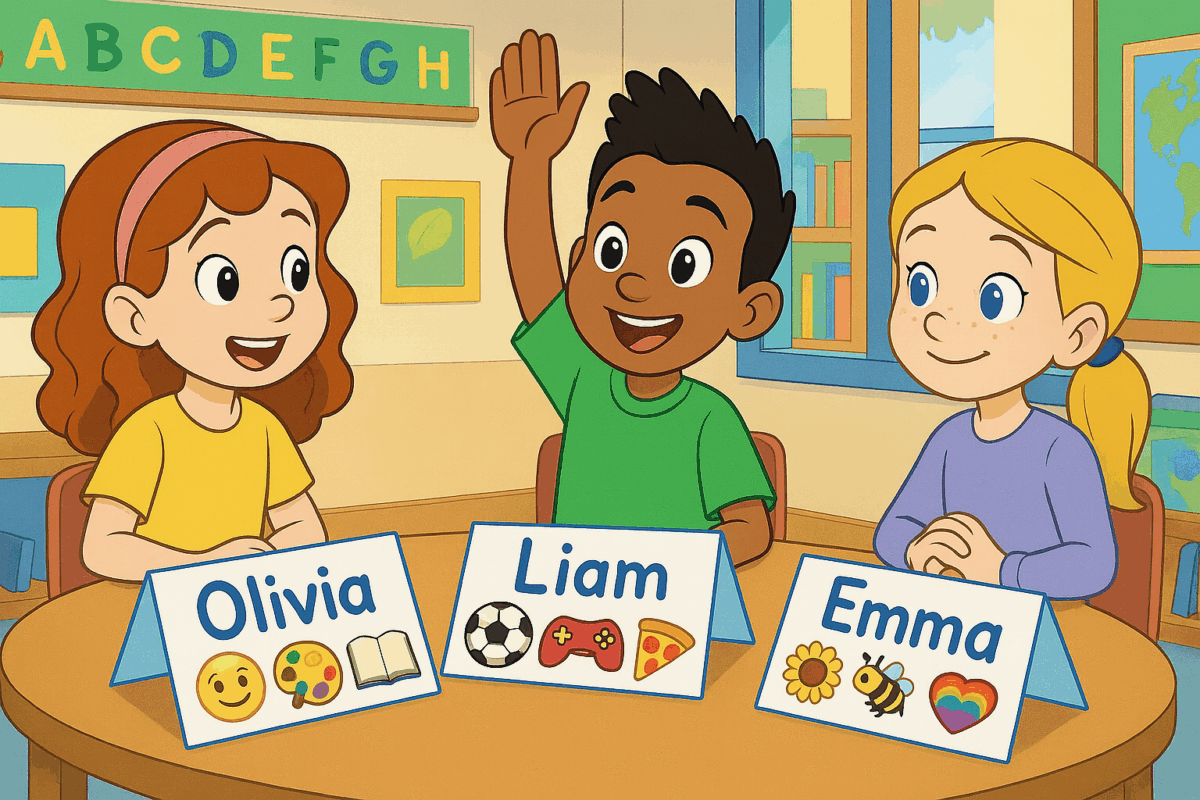
Give each student a name tag or tent. Have them write their name, then add 3 to 4 emojis that best describe their personality. As they introduce themselves, they can explain their choices to the class.
Find Your Match
Best For: Kindergarten–5th Grade
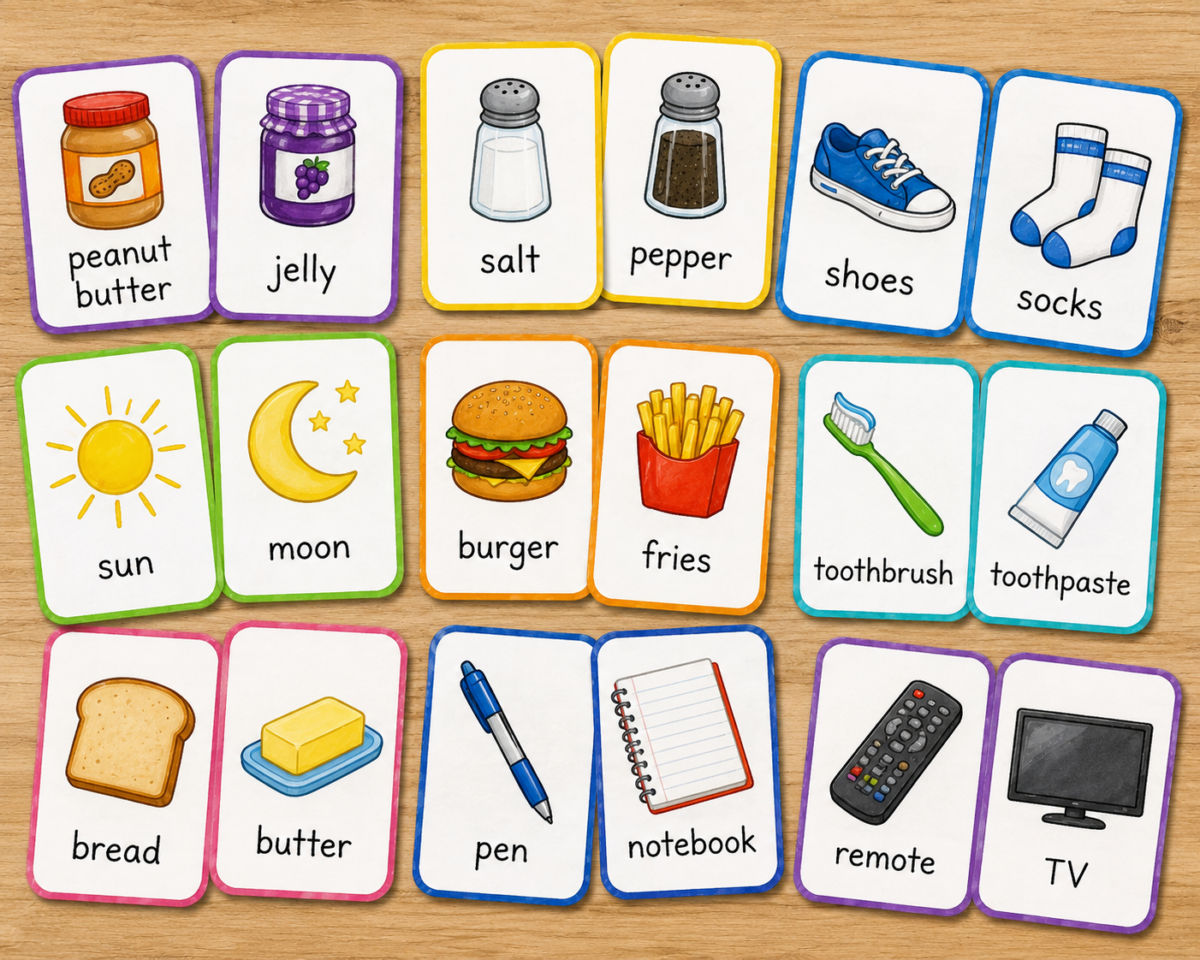
Make a collection of notecard pairs, such as peanut butter and jelly, salt and pepper, shoes and socks, etc. Mix up the cards and give one to each student. They circulate the classroom looking for their pair, then spend a few minutes getting to know each other. Collect the cards, mix them up, and redistribute to repeat as long as you like.
Stand Up, Sit Down
Best For: Preschool–5th Grade
Create a list of yes/no icebreaker questions like “Do you like pineapple on pizza?” or “Have you ever traveled to another state?” As you ask each question, students who answer yes stand up. Those whose answer is no sit down (or stay seated).
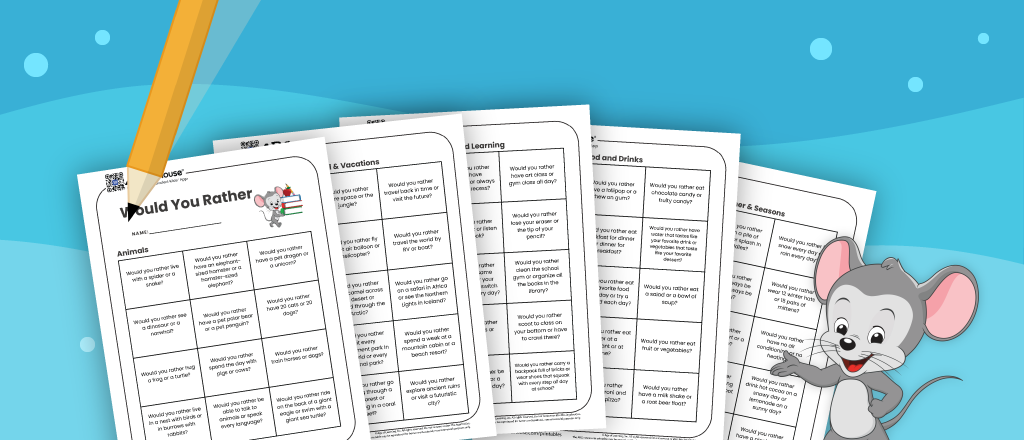
Get More Icebreaker Ideas!
Explore our collection of free printable Classroom Icebreakers.
Classroom Welcome Activities
Welcome activities help children feel comfortable as soon as they walk through the door. These simple ideas create a positive first impression while introducing classroom routines and expectations.
Welcome Station Activities
Best For: Preschool & Up
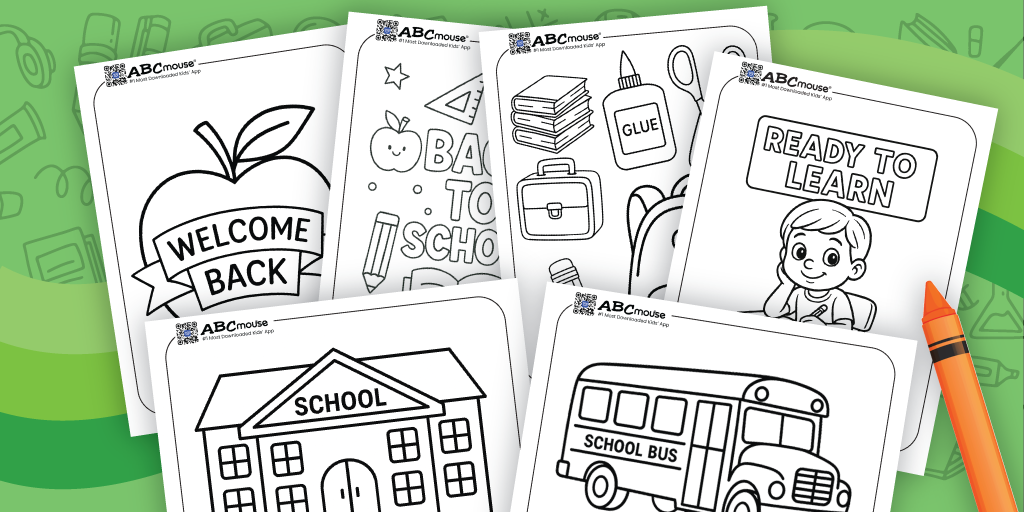
Set up simple activities at students’ desks, such as Back-to-School-themed coloring pages, small puzzles, wordsearches, or All About Me worksheets, to keep children busy as classmates arrive.
Morning Greetings
Best For: All Ages
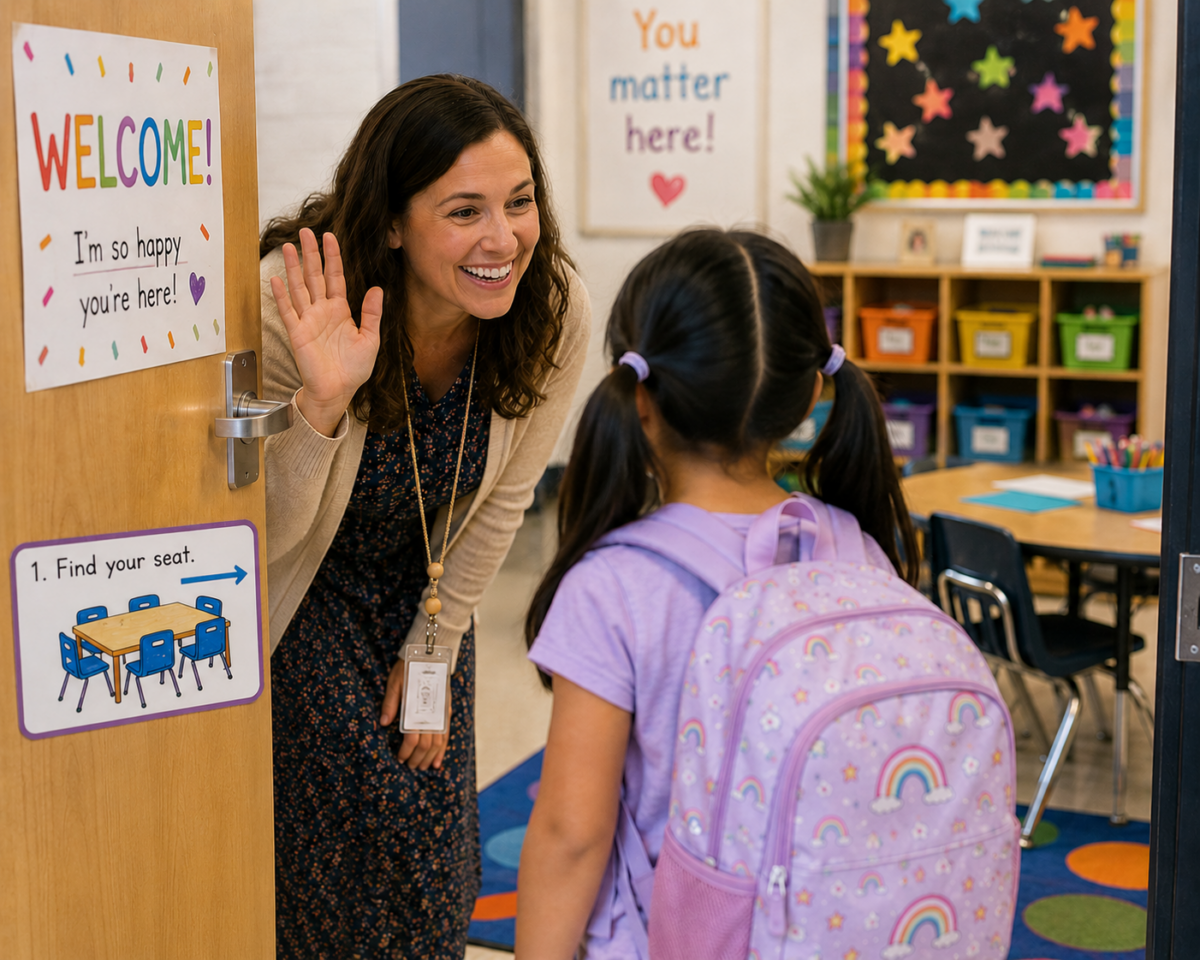
Welcome each student with a smile, handshake, wave, or special greeting to help them feel seen and valued. Let kids know where to put their things and where to sit so they know exactly what to do when they walk in.
Classroom Tour
Best For: Preschool–5th Grade
Walk students through important classroom areas like the reading corner, supply station, cubbies, and classroom library so they know where everything is.
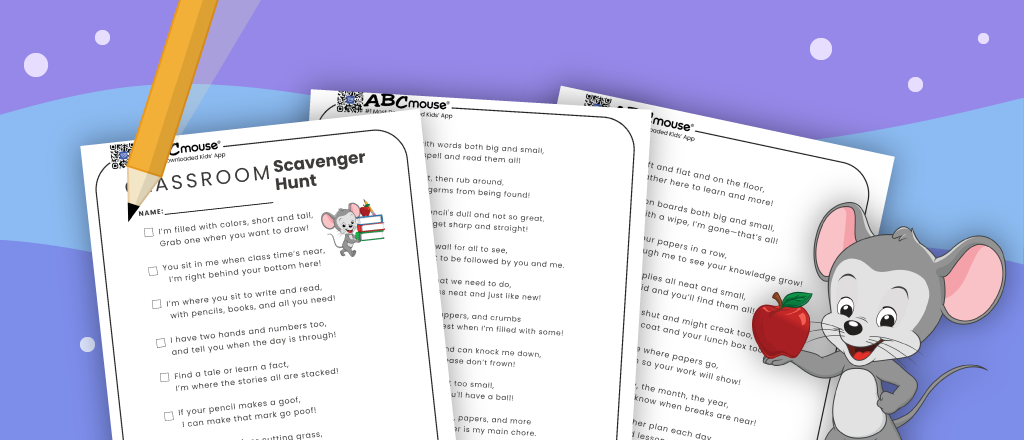
Use our free printable classroom scavenger hunt riddles to put a fun spin on this!
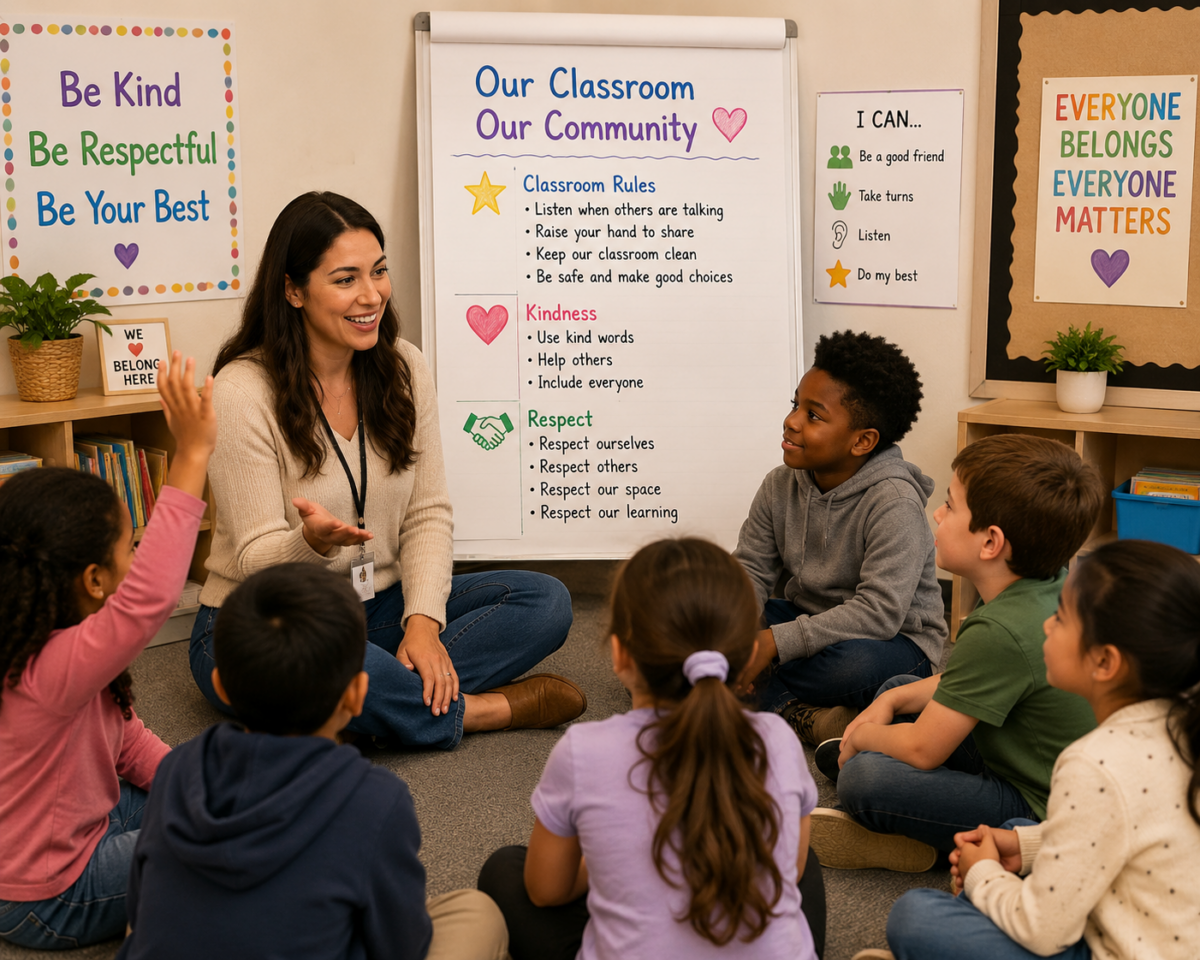
Classroom Expectations
Best For: All Ages
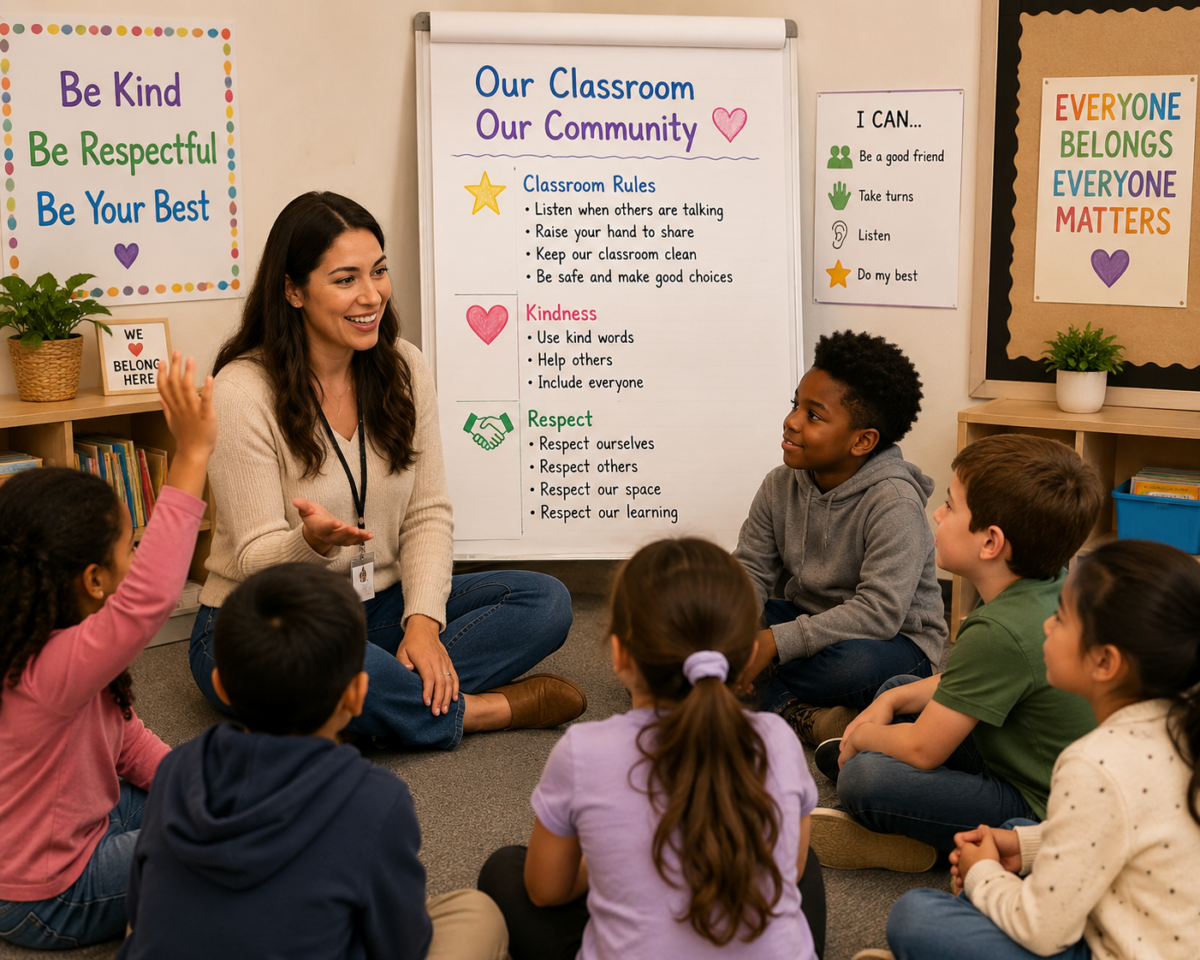
Work together to discuss classroom rules, kindness, and respect. Involving students in the conversation helps create shared expectations from the very beginning.
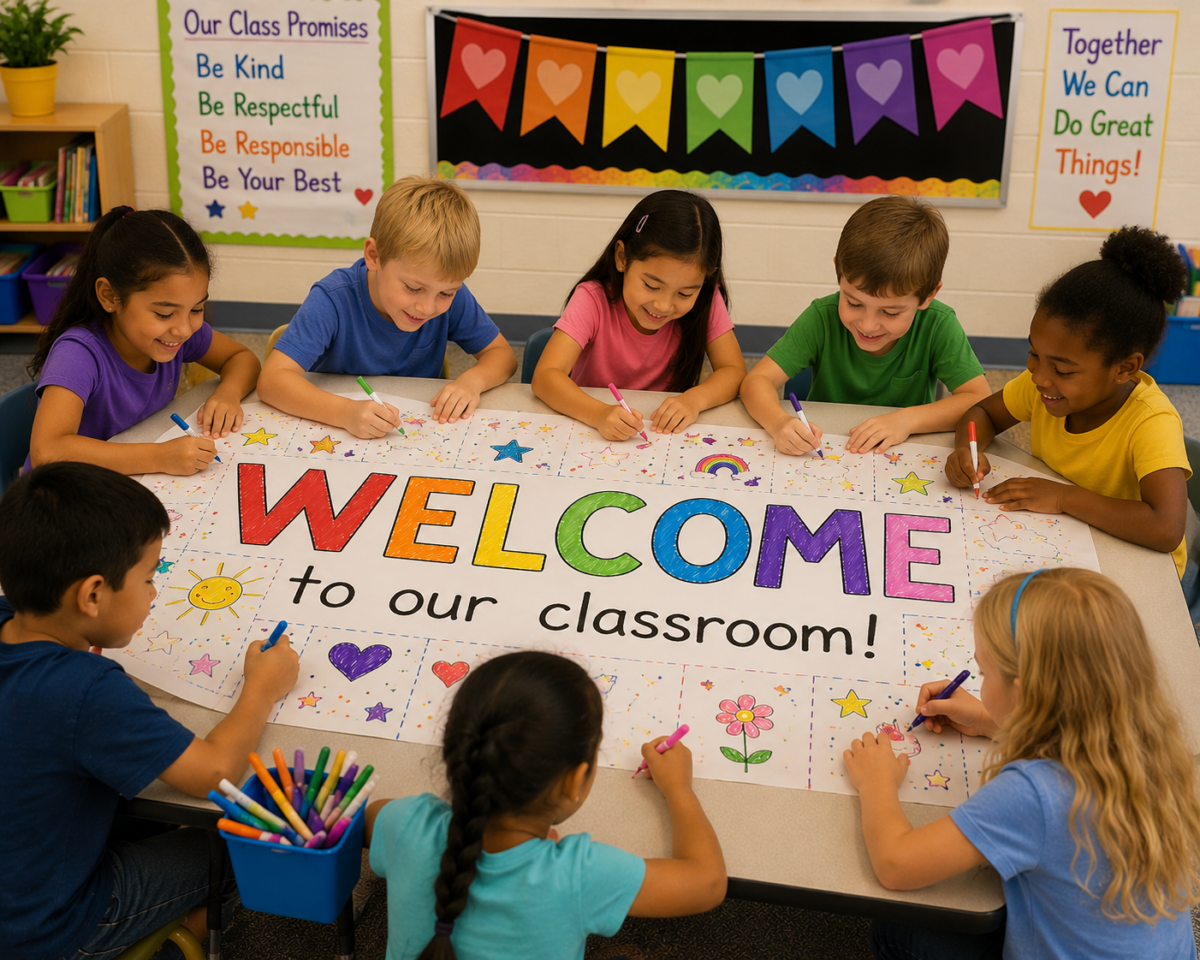
Create a Welcome Banner
Best For: Kindergarten–5th Grade
Invite every student to decorate a section of a classroom welcome banner that can be displayed throughout the school year.
Class Quilt Activity
Best For: Kindergarten–5th Grade
Give each student a piece of paper and ask them to write their name and draw a few of their favorite things on it, then to decorate it.
Tape them together and hang the classroom quilt on a wall.
Classroom Team Building Activities
Team-building activities help students practice cooperation while building friendships and problem-solving skills during the first days of school.
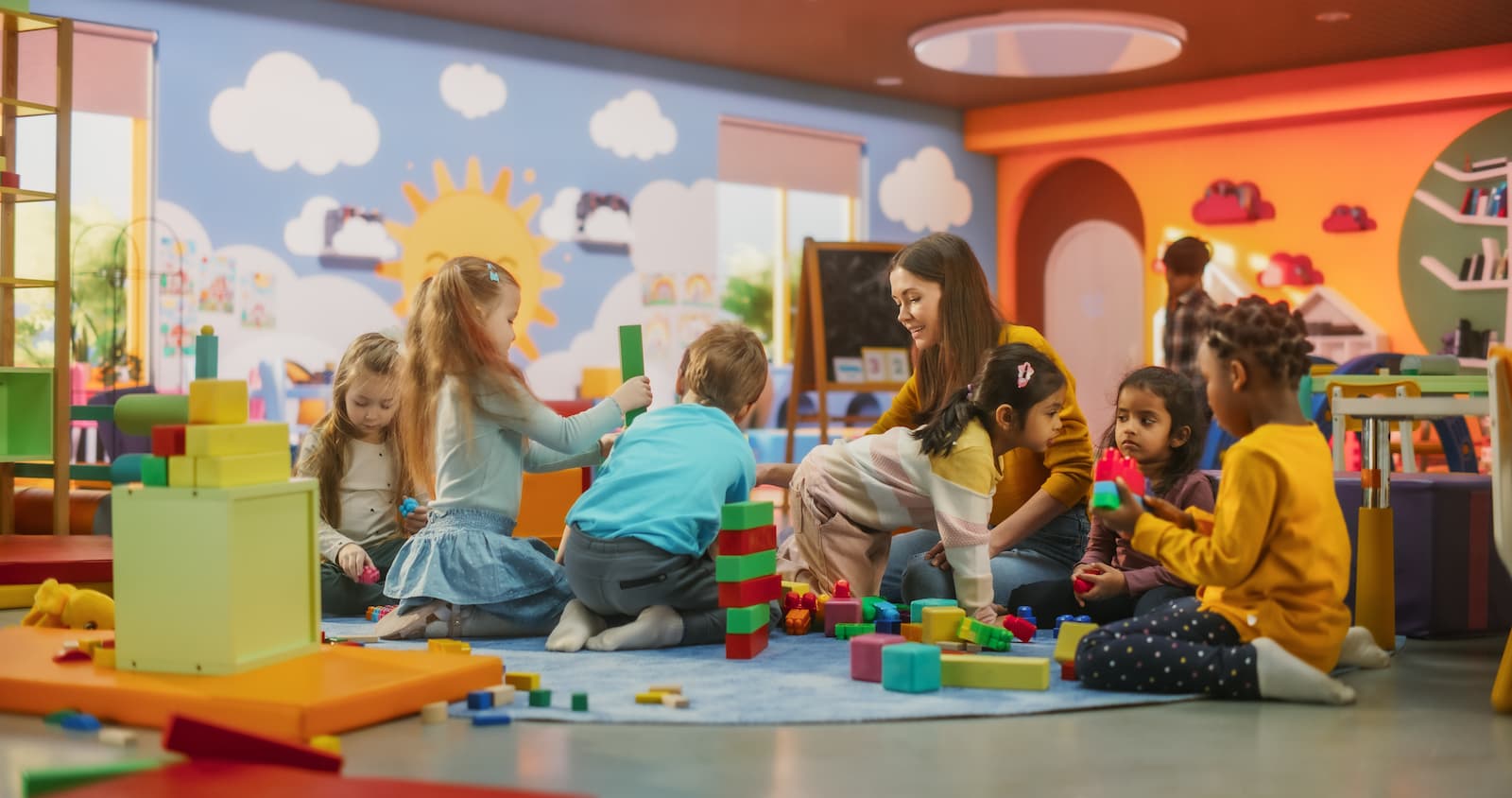
Tower Challenge
Best For: Preschool– Fifth Grade
Using cups, blocks, or recycled materials, challenge small groups to build the tallest free-standing tower they can.
Human Knot
Best For: First Grade and Up
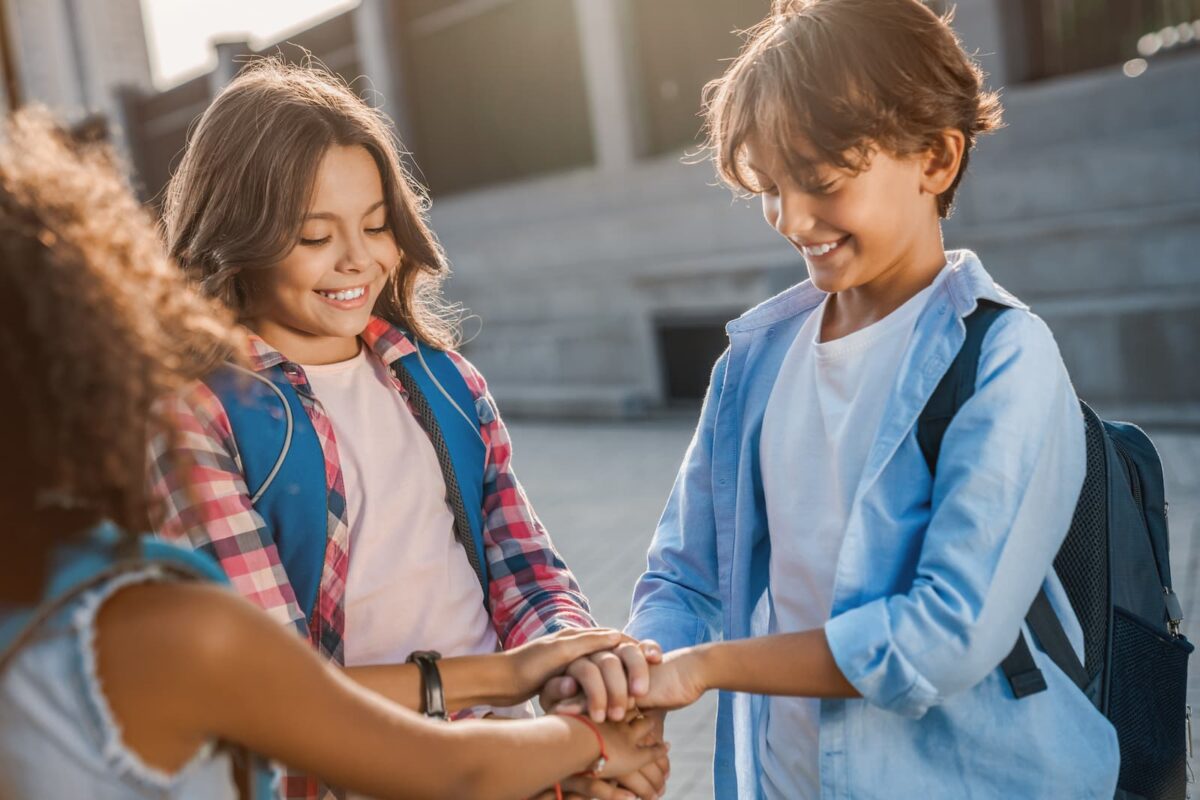
Ask students to form a tight circle. Everyone reaches across to hold hands with two different classmates, creating a “knot.” The group’s goal is to work together to untangle themselves into a circle while keeping their hands connected the entire time.
Toothpick & Marshmallow Challenge
Best For: First Grade & Up
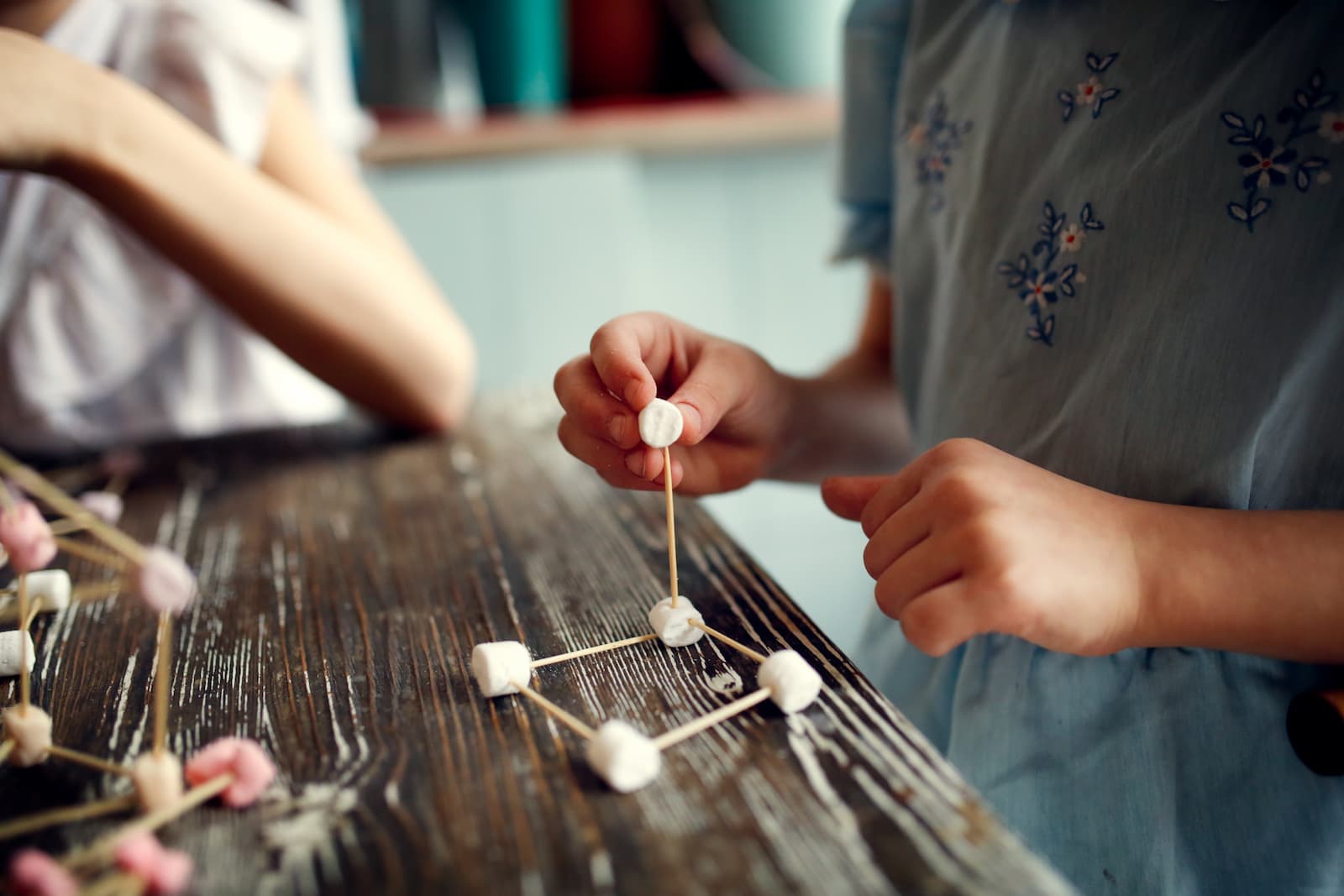
A STEM challenge is a fun way to get students back into problem-solving mode, and when they work in pairs or small teams, it brushes up on the their cooperation skills too. Give each team 20 mini marshmallows and 20 toothpicks, and challenge them to build the tallest tower they can!
Hula Pass
Best For: Kindergarten & Up
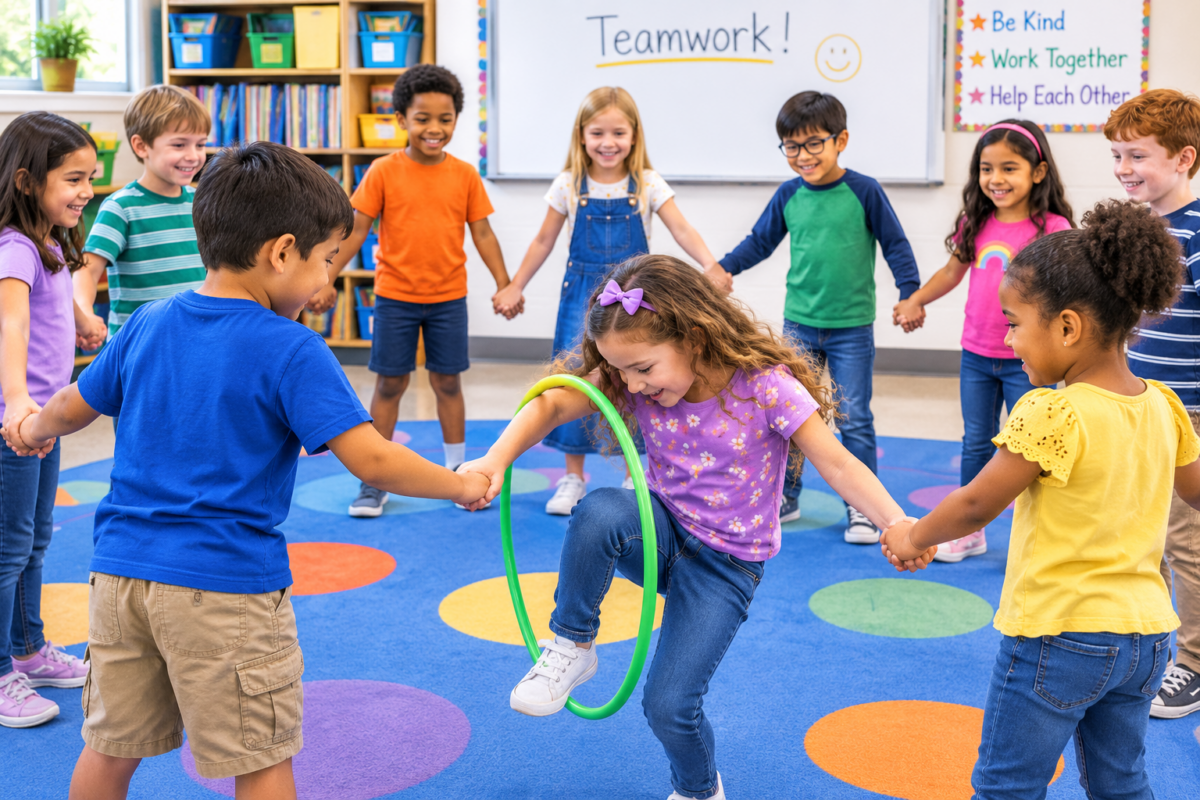
Have students stand in a large circle and hold hands. Place a hula hoop over one student’s arm, then challenge the class to pass it all the way around the circle and back to the starting point without anyone letting go of their neighbors’ hands.
Group Drawing
Best For: Preschool–5th Grade
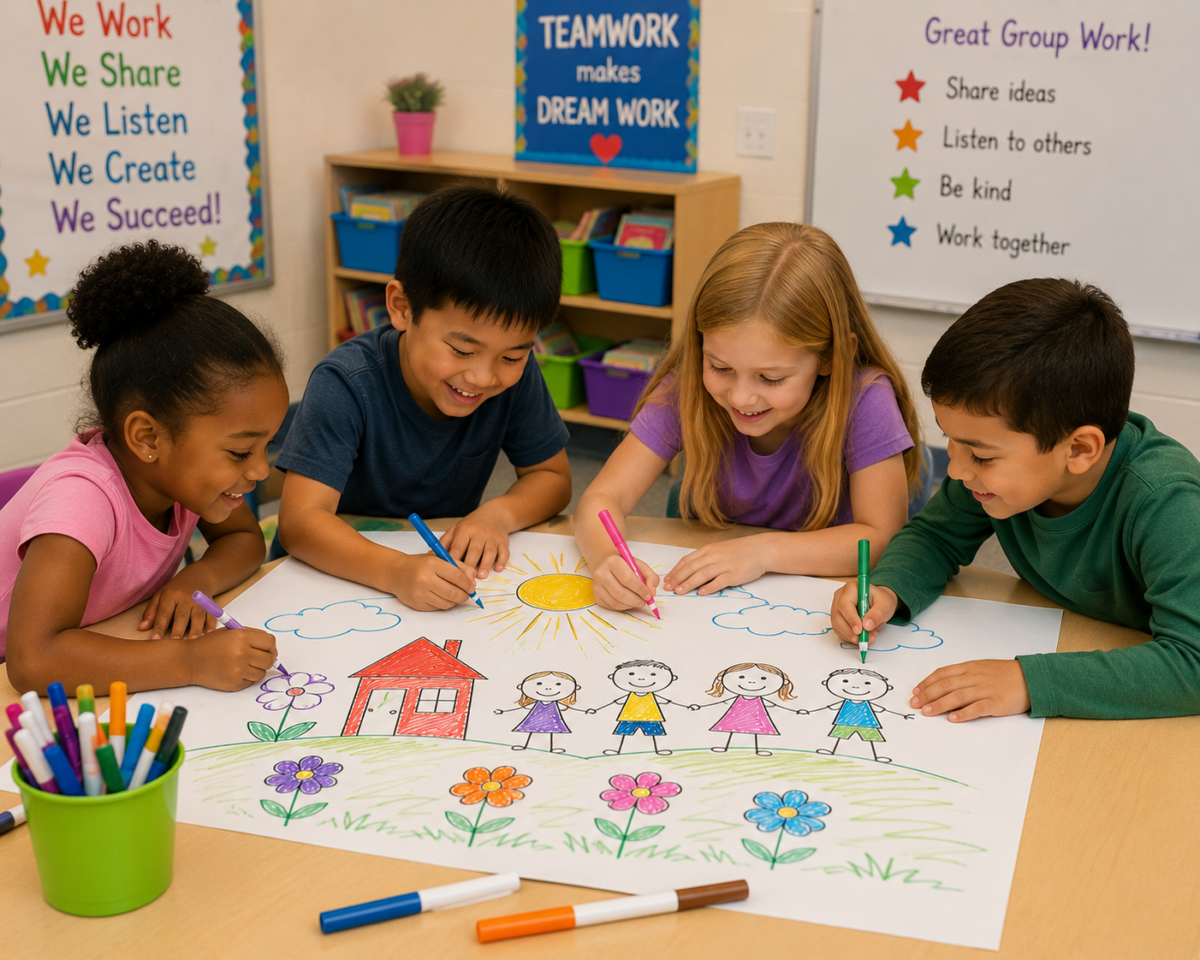
Break the class up into smaller groups. Give each group one large sheet of paper and ask them to create a picture together. Students learn to communicate, share ideas, and collaborate.
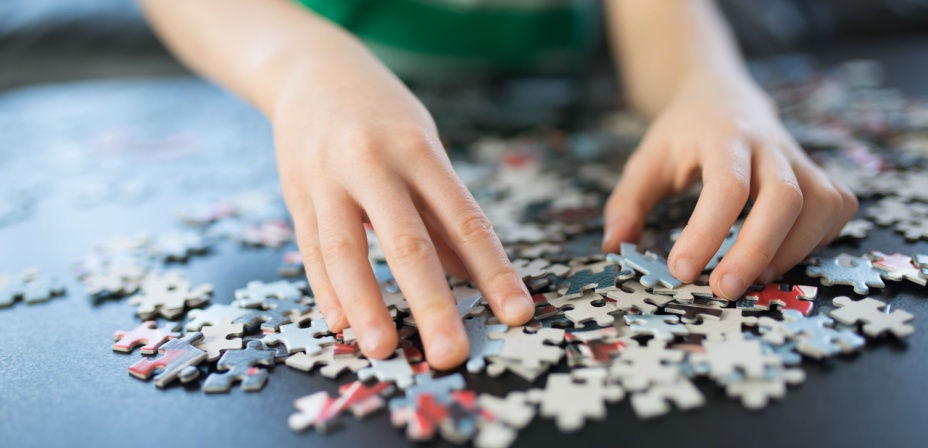
Puzzle Challenge
Best For: Kindergarten–5th Grade
Divide the class up into smaller teams. Have teams race to complete age-appropriate puzzles together.
Flip the Blanket
Best For: Second Grade & Up
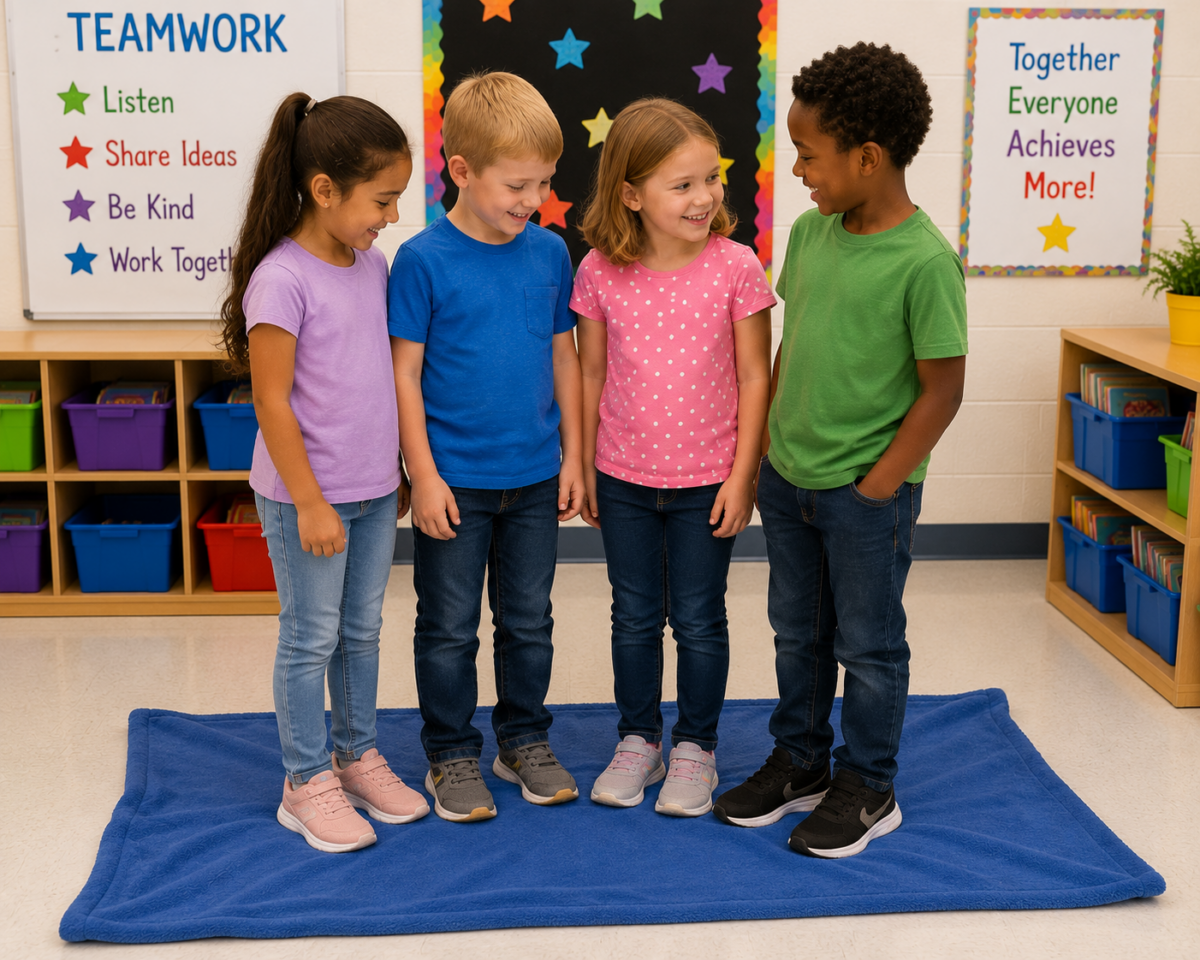
Divide the class into teams and give each a blanket to lay flat on the floor. Challenge each team to find a way to flip the blanket over without any of their feet touching the floor.
Build Together Activity
Best For: Preschool–5th Grade
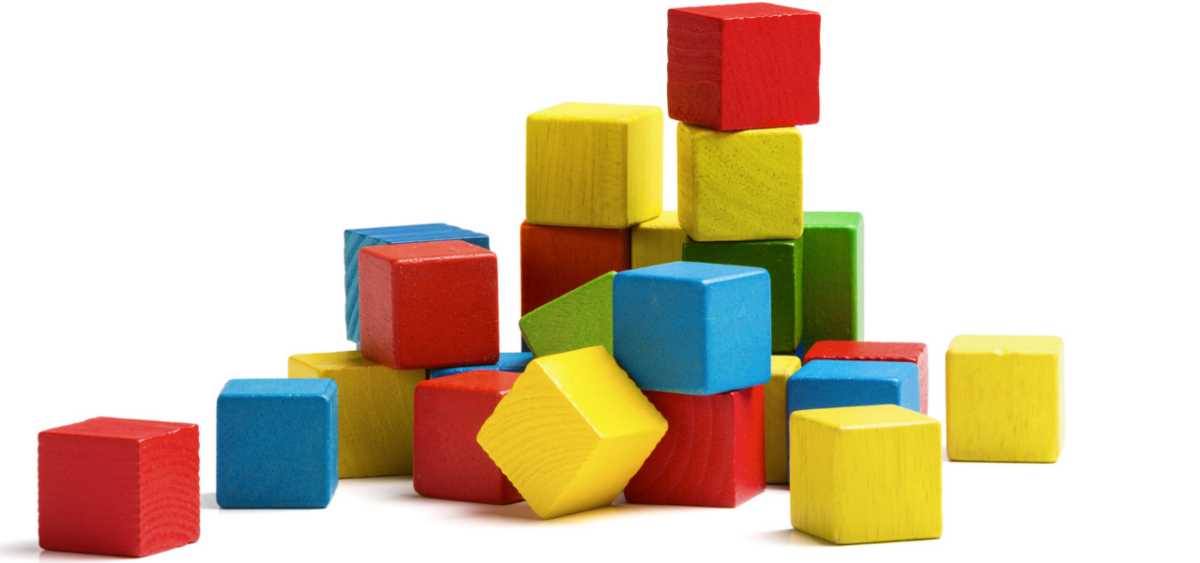
Provide building materials like LEGO® bricks, magnetic tiles, or wooden blocks and challenge students to create something as a team.
Mystery Object Challenge
Best For: Kindergarten–5th Grade
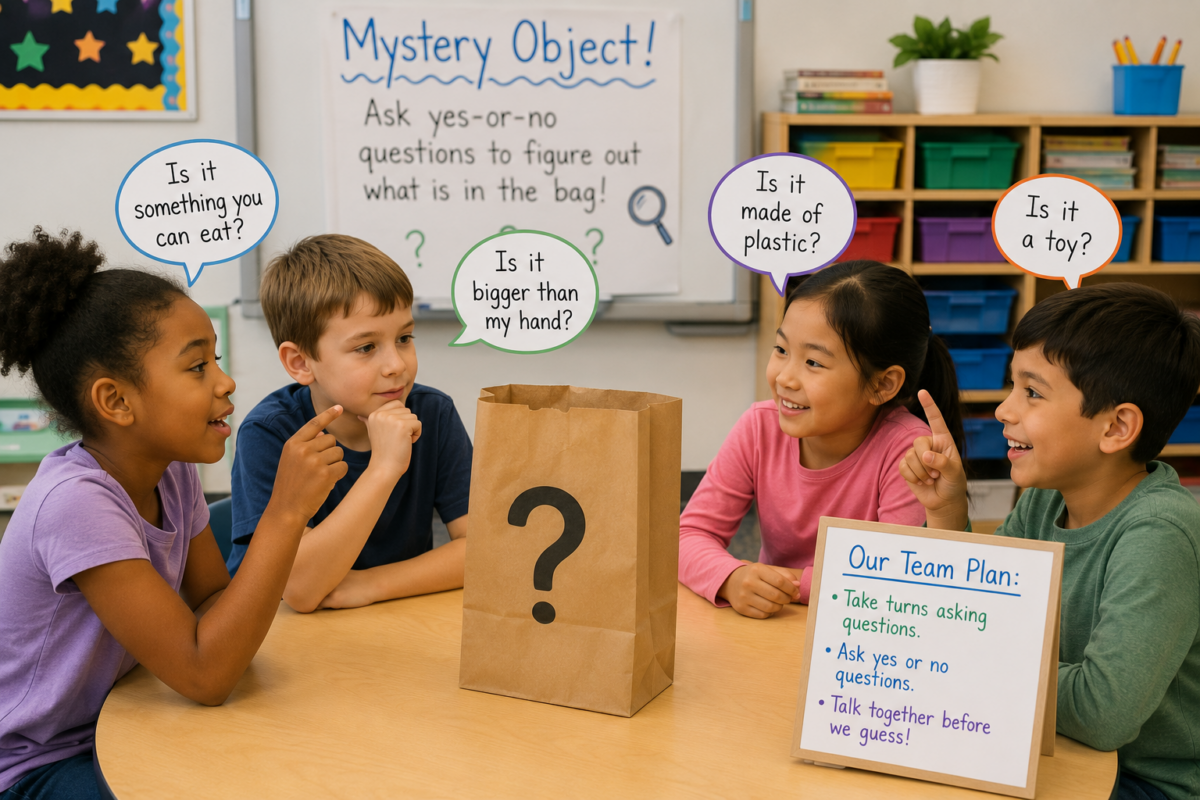
Place a mystery object inside a paper bag or box. Students work together by asking yes-or-no questions to figure out what the object is before making a final guess. Encourage teams to discuss their ideas before choosing each question.
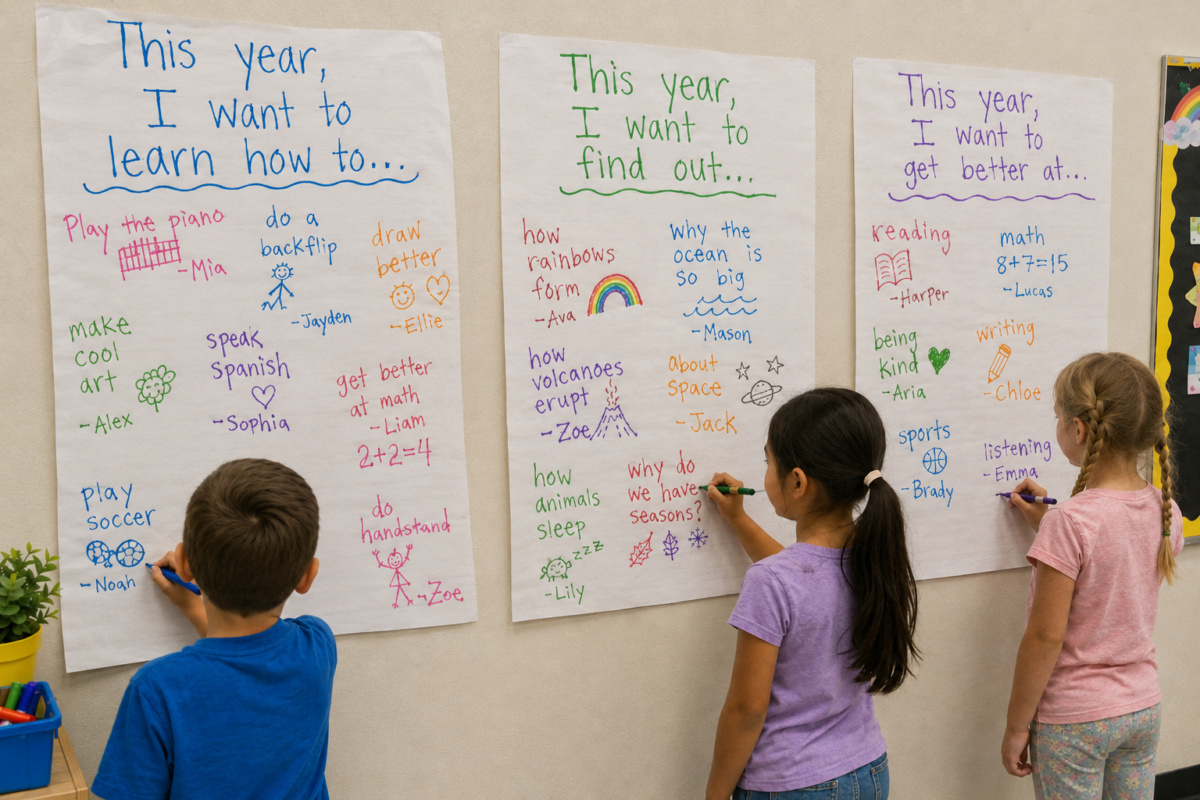
This Year, I Want To
Best For: Second Grade & Up
In the middle of big sheets of chart paper, write open ended statements like, “This year, I want to learn how to …” or “This year, I want to find out …” Hang the charts in different places around the room.
Give each student a marker, and ask them to circulate among the charts and write in their answers. When everyone is done, review the charts together and look for topics that kids have in common and discuss what the year ahead has in store.
Classroom Rules Brainstorming
Best For: 1st–5th Grade
When kids help create the rules, they’re more likely to understand and follow them. Start with a brainstorming session around what a good classroom looks like, and how good students behave. Use those thoughts to help write your class’s rules for the year.
Class Promise
Best For: 1st–5th Grade
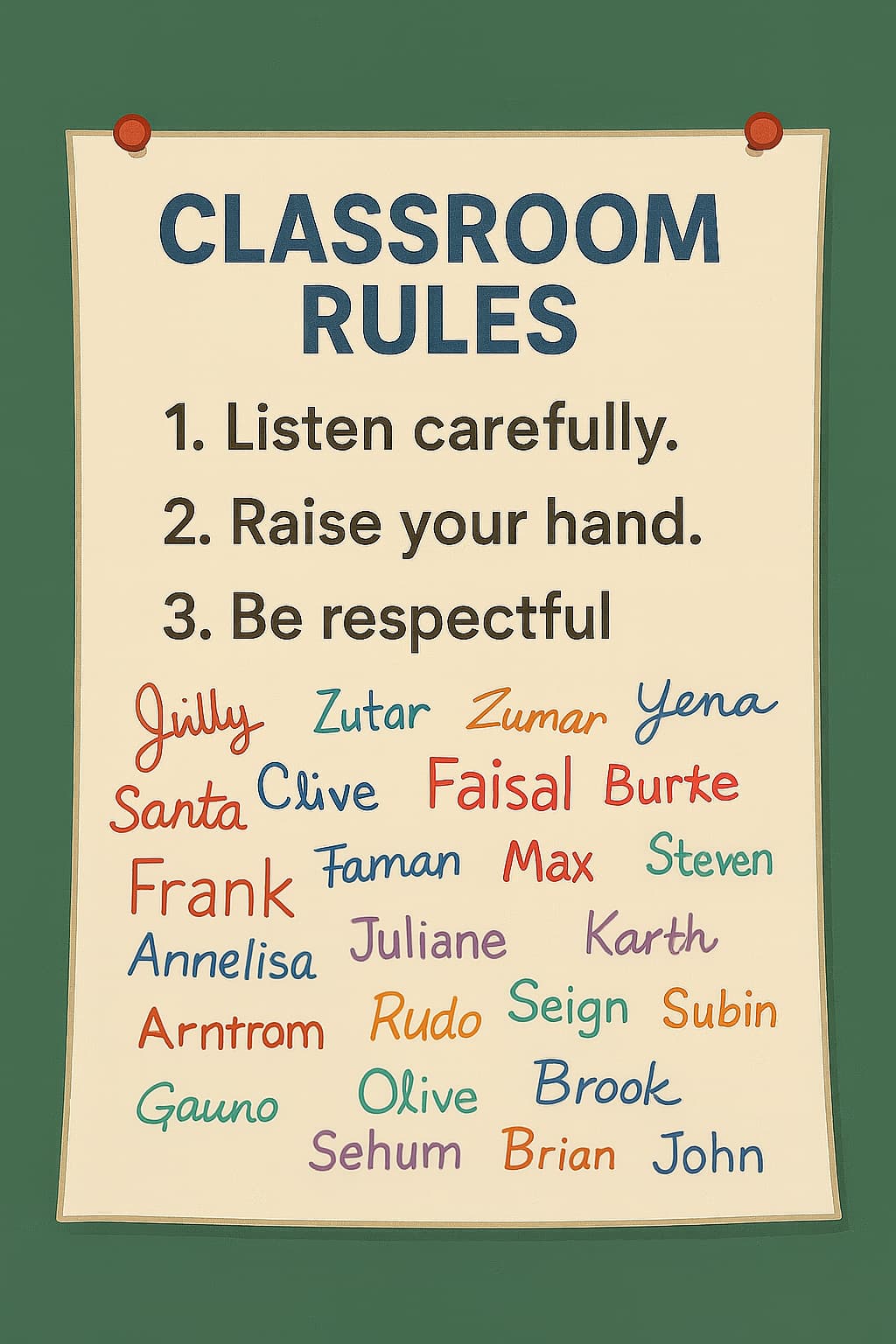
Once the rules are in place, write them on a large piece of chart paper. Then, have every student in the class sign their name to show they agree to do their best to follow these rules every day.
Rules Skits
Best For: Kindergarten-5th Grade
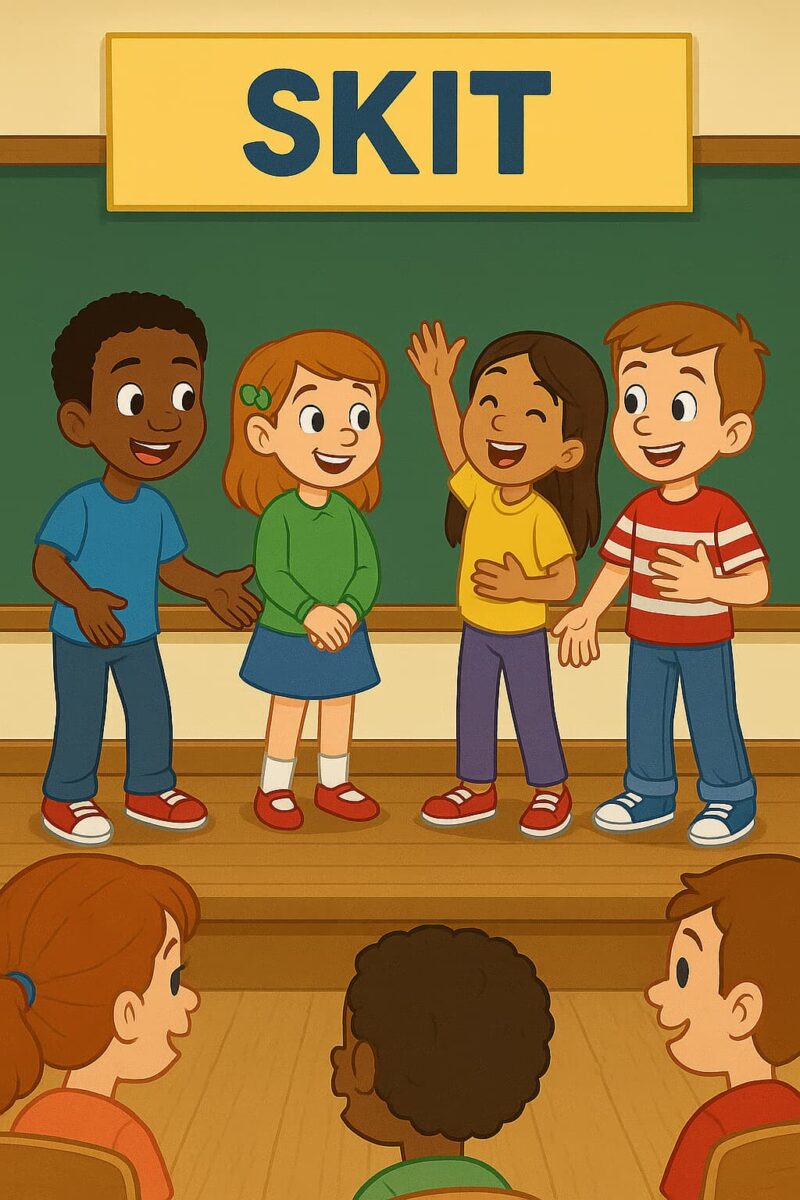
After you present your classroom rules, break students into groups and assign one rule to each. Their goal is to come up with two short skits: one that demonstrates what it looks like when you break the rule, and one that shows what it means to follow it. Kids always have a blast hamming up the broken rules skits!
Class Group Photo
Best For: 1st–5th Grade
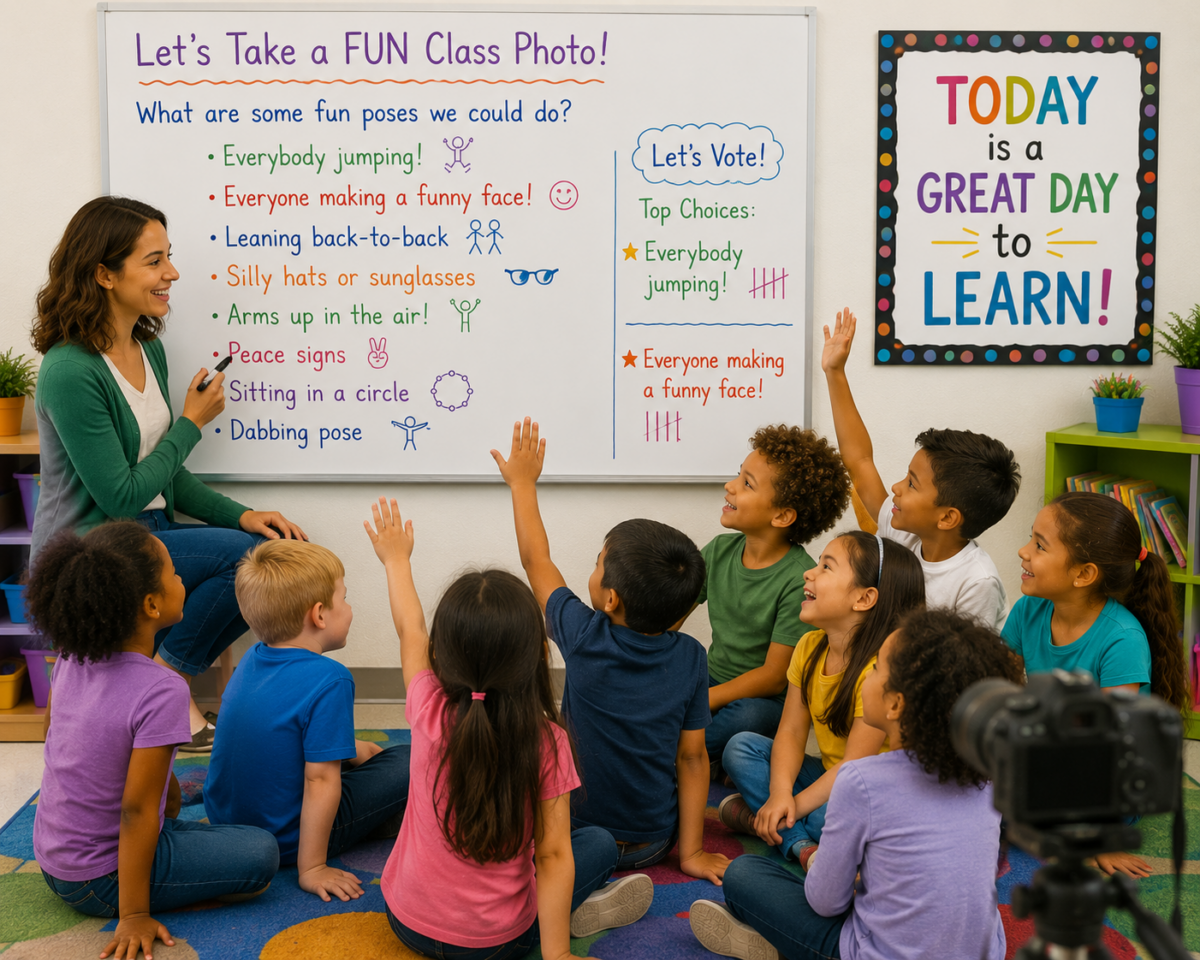
Tell the class you’re going to take a group photo, but you want to make it fun. Ask them to come up with ideas for posing (everybody jumping, everyone making a funny face, leaning back-to-back, etc.). Write down all the ideas, then vote to choose a favorite or two. Once you’ve got the finalists, it’s time to take that first day class photo!
Class Name Paper Chain
Best For: Kindergarten–5th Grade
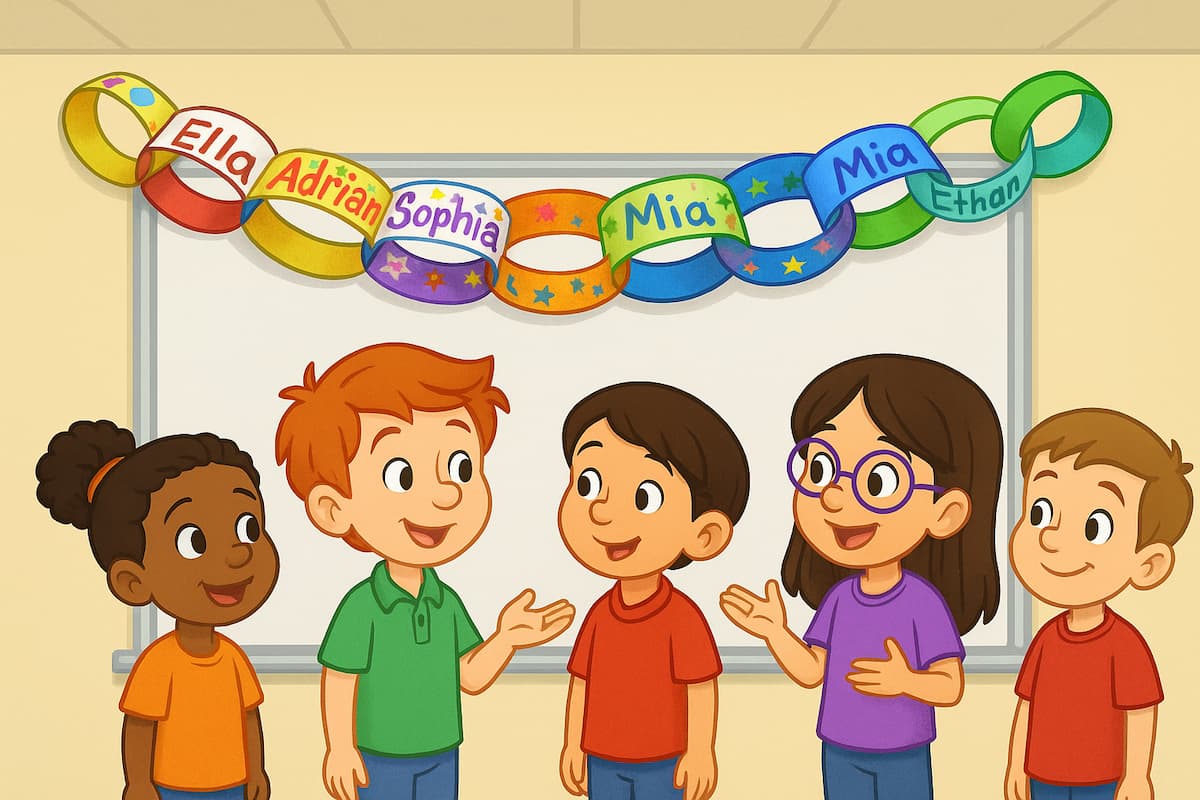
Give each student a strip of paper about 8 inches long and one inch wide. Have them write their name on the strip, then decorate it with markers, crayons, or colored pencils. Finally, have the class work together to glue or staple the strips into one long class paper chain, and hang it from your ceiling or over the whiteboard.
Class Time Capsule
Best For: Kindergarten-5th Grade
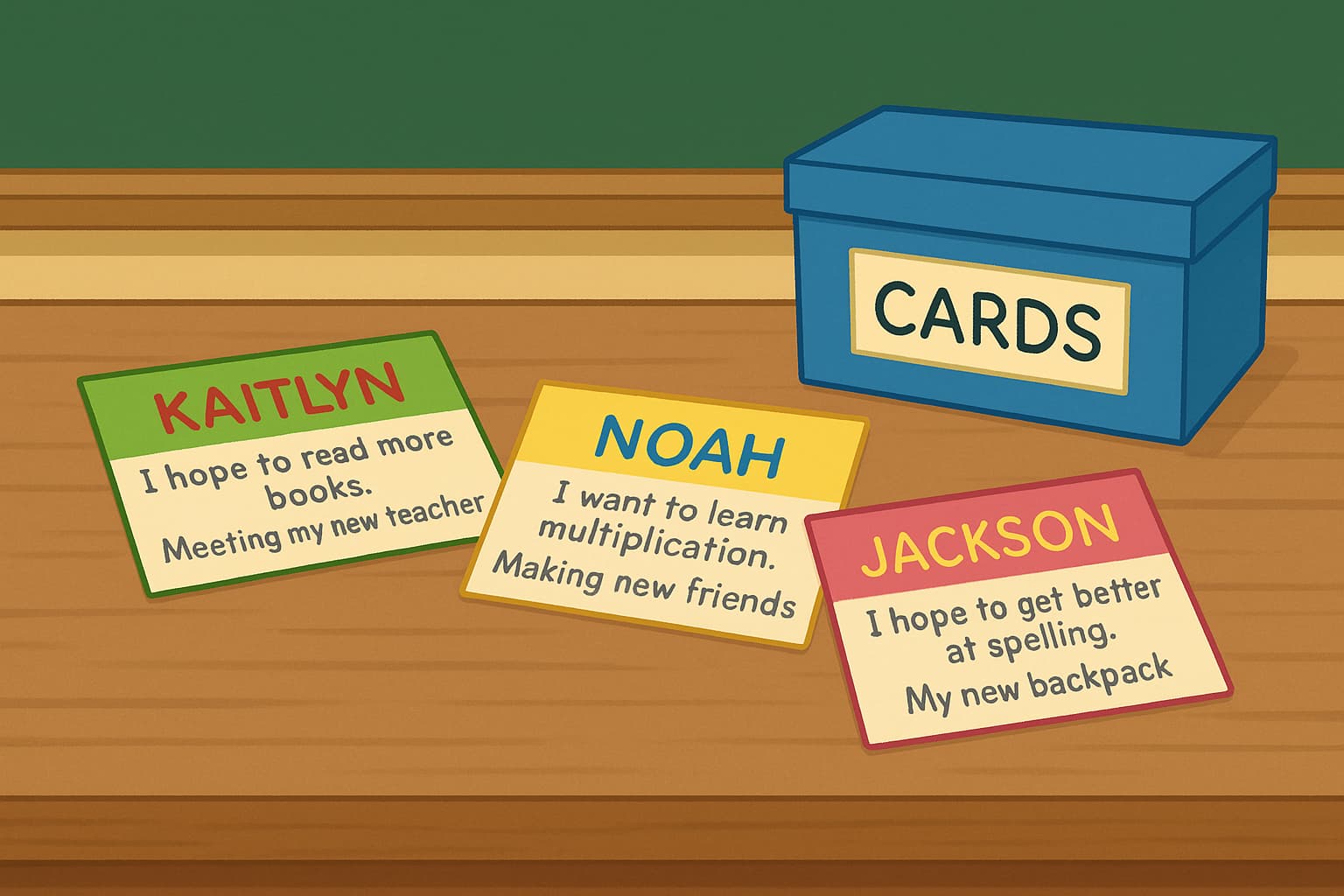
Give each student a notecard and ask them to write their name, plus one thing they hope to accomplish in the year ahead, and one thing about their first day of school they want to remember. Place all the cards into a box or jar, and open it to re-read all the cards on the last day of the school year!
Classmates Book
Best For: 1st–5th Grade
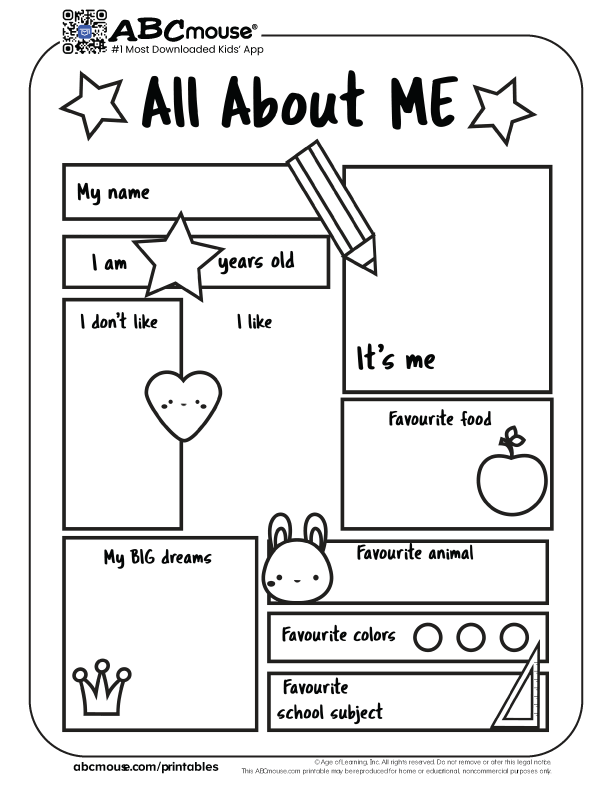
Use worksheets like the All About Me pages shown above, or have each student create their own page from scratch. Bind the pages together and make a cover for it, then pass it around so kids get to know each other. You can even scan in the pages to make a digital version to share with parents!
Class Call and Response Cheer
Best For: Preschool–5th Grade
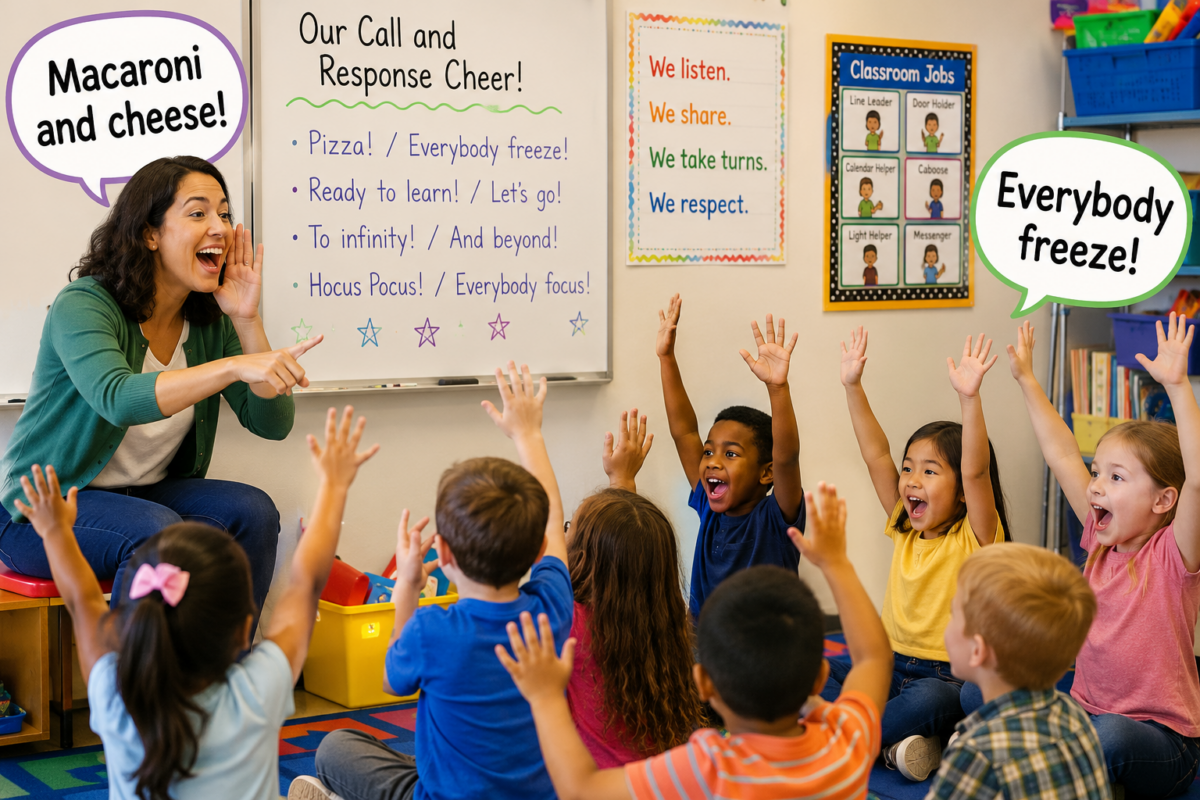
Call and response chants are a useful classroom tool. For instance, the teacher might say, “Macaroni and cheese!” The class responds, “Everybody freeze!” (And hopefully they do!) Ask your class to help you create a call and response cheer you can use just with them when you need their attention or want to pep them up. They’ll have fun coming up with all kinds of ideas—then take a vote to determine the winner.
First Day of School Arts & Crafts Activities
Hands on projects are a fun way to start off the school year. They give kids a chance to get creative (and even a little messy!), showing off their personalities as they work. You’ll find complete instructions here for all of these back to school crafts, plus you can find 40+ more back-to-school craft ideas here for preschool and kindergarten!
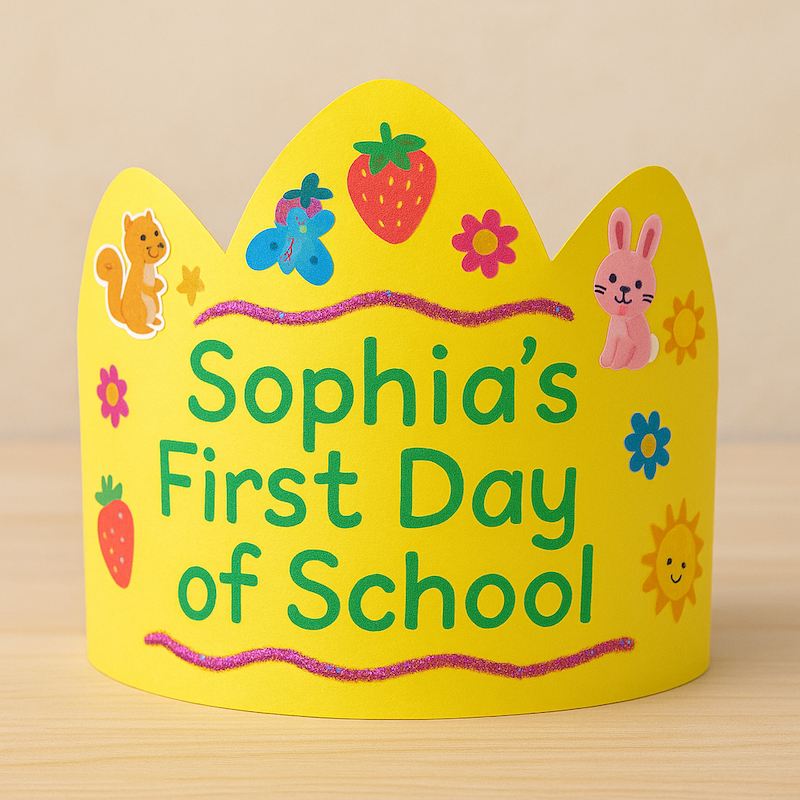
First Day Crown
Best For: Preschool & Up
Cut simple pointed crown shapes from different colors of construction paper, and let students choose one. Have them write their name (or help younger students), then decorate using crayons, markers, stickers, or other art supplies.
Finally, staple each crown together, and take snapshots of each student on their first day.
Student Silly Hair Activity
Best For: Kindergarten & Up
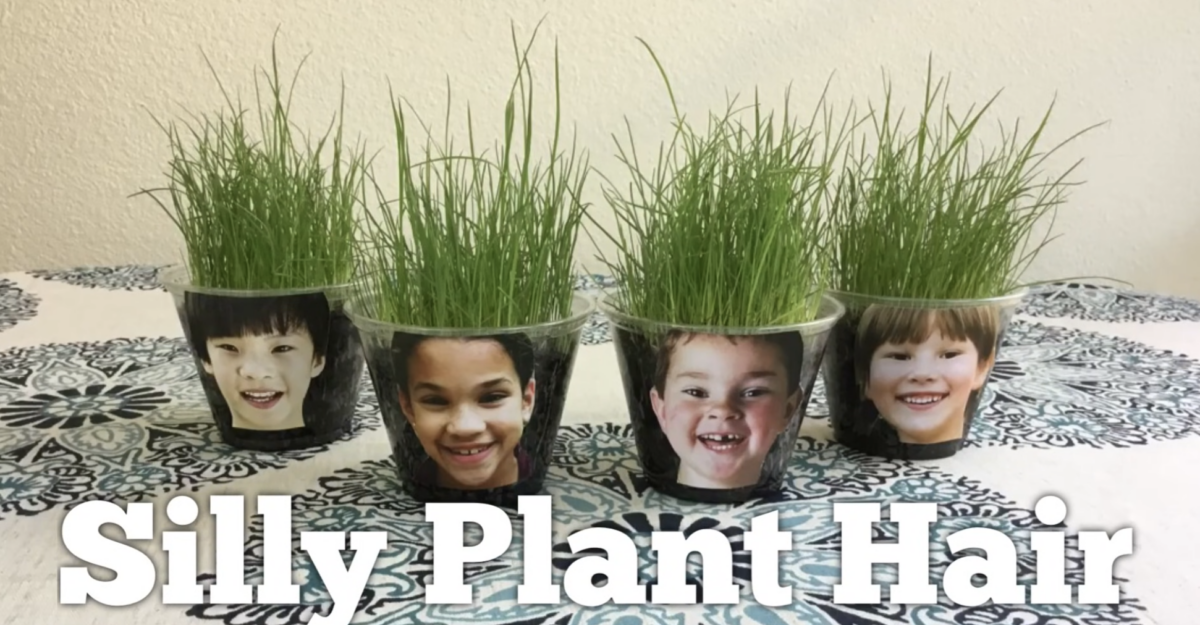
Take pictures of each student and print them out. Glue them to a plastic cup, and fill the cup up 2/3 of the way with potting soil. Plant a few seeds, cover slightly with soil, water, and set in a sunny window. Watch as each students sprouts hair!
About Me Collage
Best For: 1st–5th Grade
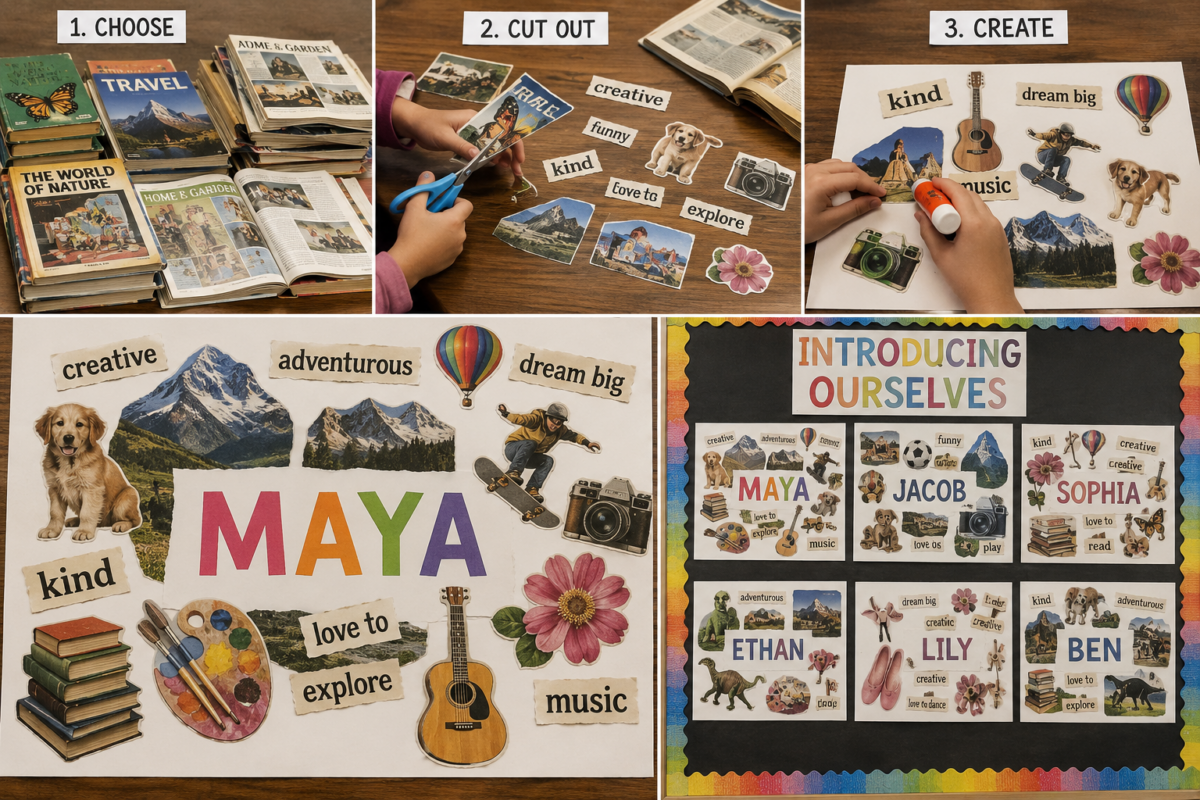
Provide lots of old books, catalogs, or magazines and let kids cut out words and pictures that describe them. Then, they use their cuttings to create a collage, with their name in the middle. Use them as kids introduce themselves, or hang them on a bulletin board for students to look over later.
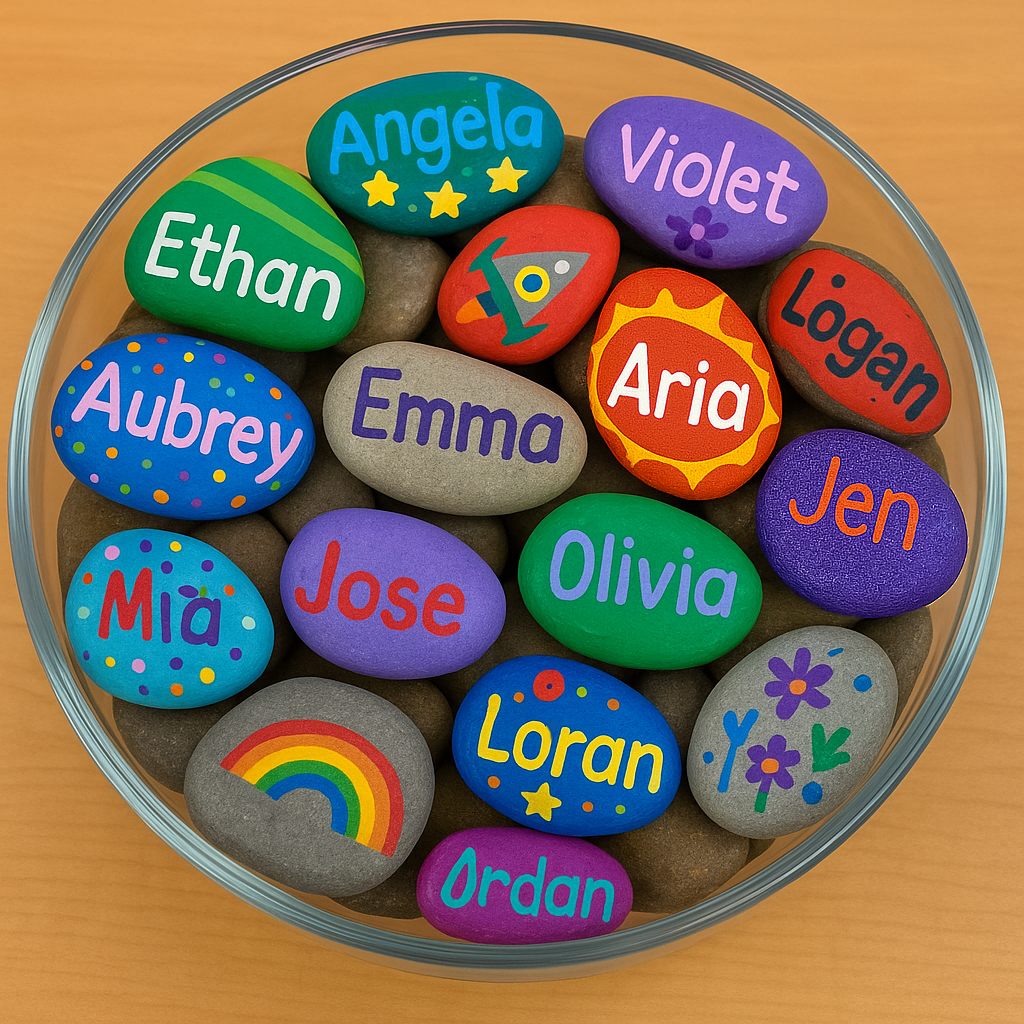
First Day Painted Pebbles
Best For: Preschool–5th Grade
You’ll need washed river rocks and paint markers or acrylic paints and brushes for this one. Ask each student to write their name on a rock and decorate it however they like. Display the rocks in a large bowl or jar. You can even start a huge collection of rocks in one container for all the students you’ve ever taught!
Tip: When you need pick a student at random, just stick your hand into the bowl!
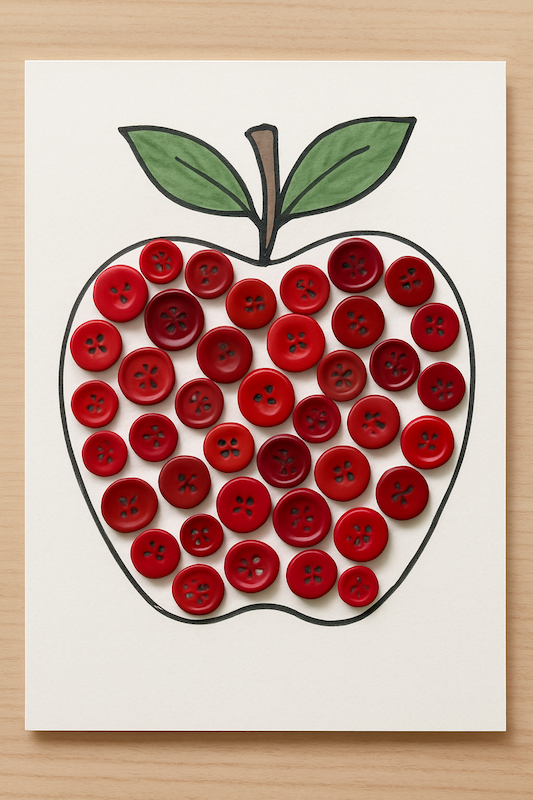
Back-to-School Apple Craft
Best For: Preschool–Kindergarten
Trace a large apple onto cardstock, then glue red or green buttons inside the outline until it’s mostly filled. Add a stem and leaves with markers, and let the glue dry before displaying the finished apple craft.
Get More Back-to-School Crafts
40+ Back-to-School Crafts for Preschool & Kindergarten
Young kids will love these creative ways to celebrate the the first days of school!
First Week of School Activities for Kids
The first week of school is the ideal time to strengthen classroom relationships, establish daily routines, and introduce fun learning activities. These first week of school activities help children build confidence, practice working together, and become familiar with classroom expectations while creating a positive learning environment for the rest of the school year.
Classroom Community Activities
Building a strong classroom community helps students feel connected, respected, and supported. These activities encourage children to work together while creating a classroom where everyone feels welcome.
Classroom Agreements
Have students brainstorm ideas for creating a kind and respectful classroom (listening when others are speaking, helping classmates, taking care of classroom materials). Write this list of classroom promises on a large sheet of paper and display it where everyone can see it throughout the year.
Respect Activity
Read a picture book about kindness or respect, then ask students to discuss what respectful behavior looks like at school. Have children draw or write one way they can show kindness to a classmate and add their ideas to a classroom bulletin board.
Classroom Jobs
Introduce simple classroom jobs like Line Leader, Door Holder, Calendar Helper, Plant Caretaker, or Supply Manager. Rotating responsibilities helps children develop independence while encouraging everyone to contribute to the classroom community.
Community Circles
Gather students in a circle and ask open-ended questions such as, “What made you smile today?” or “What is something you’re excited to learn this year?” Community circles encourage active listening while helping students get to know one another.
Kindness Challenge
Challenge the class to complete one act of kindness each day during the first week of school. Students can help clean up, invite someone to play, compliment a classmate, or assist a teacher. At the end of each day, take a few minutes to celebrate the thoughtful actions students noticed.
Classroom Routine Activities
Practicing routines during the first week helps students feel confident and allows the classroom to run more smoothly throughout the year.
Morning Routine Practice
Walk students through each step of the morning routine, including hanging up backpacks, turning in homework, checking attendance, and beginning a morning activity. Practice the routine several times until everyone feels comfortable.
Classroom Procedures
Model common classroom procedures like lining up, asking for help, using classroom supplies, and cleaning up after activities. Give students opportunities to practice each routine through role-playing before using them independently.
Supply Organization
Show students where classroom materials belong and teach them how to borrow, return, and organize supplies. Turn cleanup into a timed challenge to make practicing organization fun.
Transition Games
Practice moving between activities with games like “Freeze and Listen,” “Silent Line Challenge,” or “Beat the Timer.” These quick activities help children learn classroom expectations while making transitions enjoyable.
Classroom Expectations
Work together to discuss what successful learning looks like during reading time, group work, centers, and independent activities. Encourage students to act out both expected and unexpected behaviors before deciding which choices help everyone learn.
First Week Learning Activities
Introduce academic concepts through fun, low-pressure activities that help students become comfortable learning together.
Reading Activities
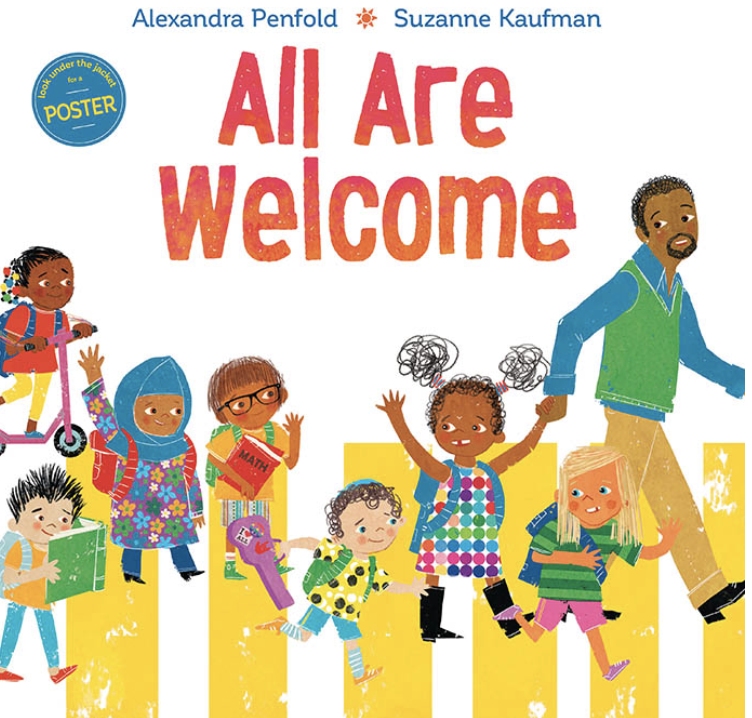
Read a favorite back-to-school picture book and invite students to predict what will happen, identify favorite characters, or retell the story through drawings or sequencing cards.
Math Warm-Ups
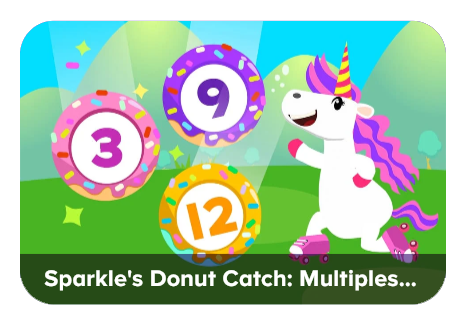
Practice counting, sorting, patterning, number recognition, or simple addition games using manipulatives, classroom objects, or interactive math centers.
Back to School Song
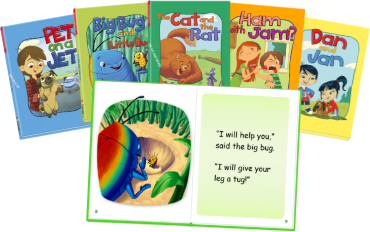
Younger students will especially enjoy being welcomed with this cute song. Learn to sing it together, and encourage them to share it with their families when they get home at the end of the day.
Book Tasting
Give students an introduction to the books on your classroom shelf with book tasting. Place books at various spots around your room, and give kids paper and pencil (a clipboard can be helpful). As they circulate the room and look over the books, ask them to write down the title and author, and make a few notes as to what the book is about and whether they think they’d like to read it.
One Word Goals
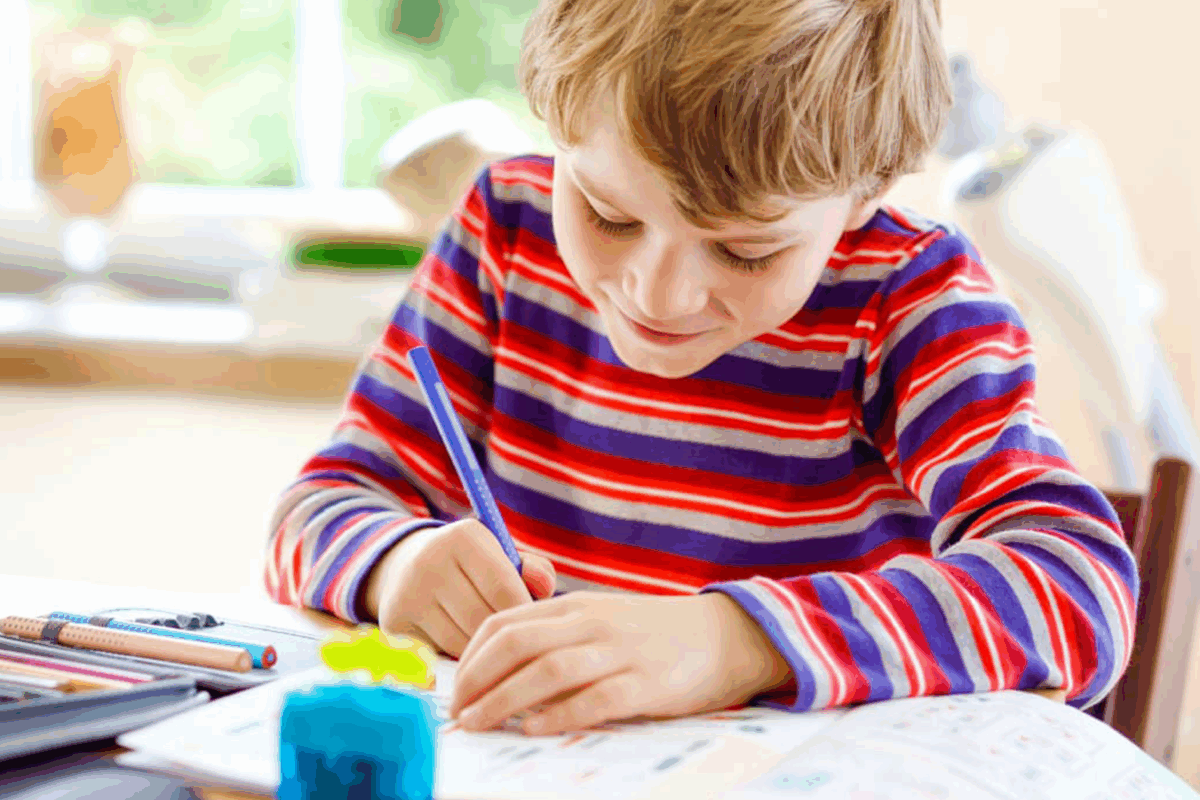
Words can be powerful things, and a unique way to set intentions for the year ahead. Ask each student to choose one word to describe their goals for the year ahead. Start by having them brainstorm lists, then narrow them down until they find one that’s exactly right for them.
STEM Challenges
Encourage students to work together to solve hands-on engineering challenges, such as designing a paper bridge, building the tallest block tower, or creating a structure that can support a small toy.

Writing Prompts
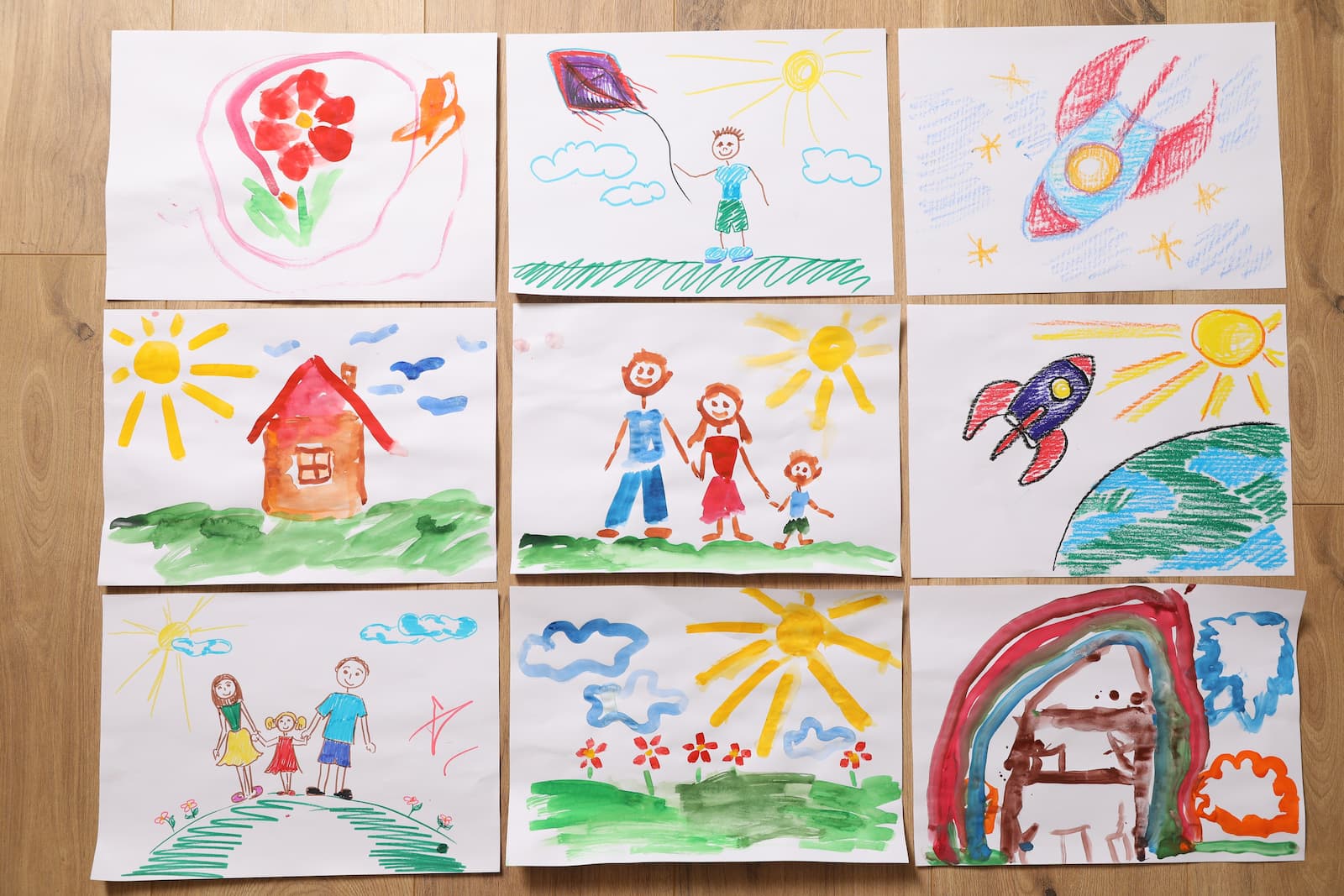
Invite students to draw and write about topics like “My Favorite Summer Memory,” “What I Want to Learn This Year,” or “If I Were the Teacher for a Day.” These prompts help teachers learn more about students while practicing early writing skills.
Science Observations
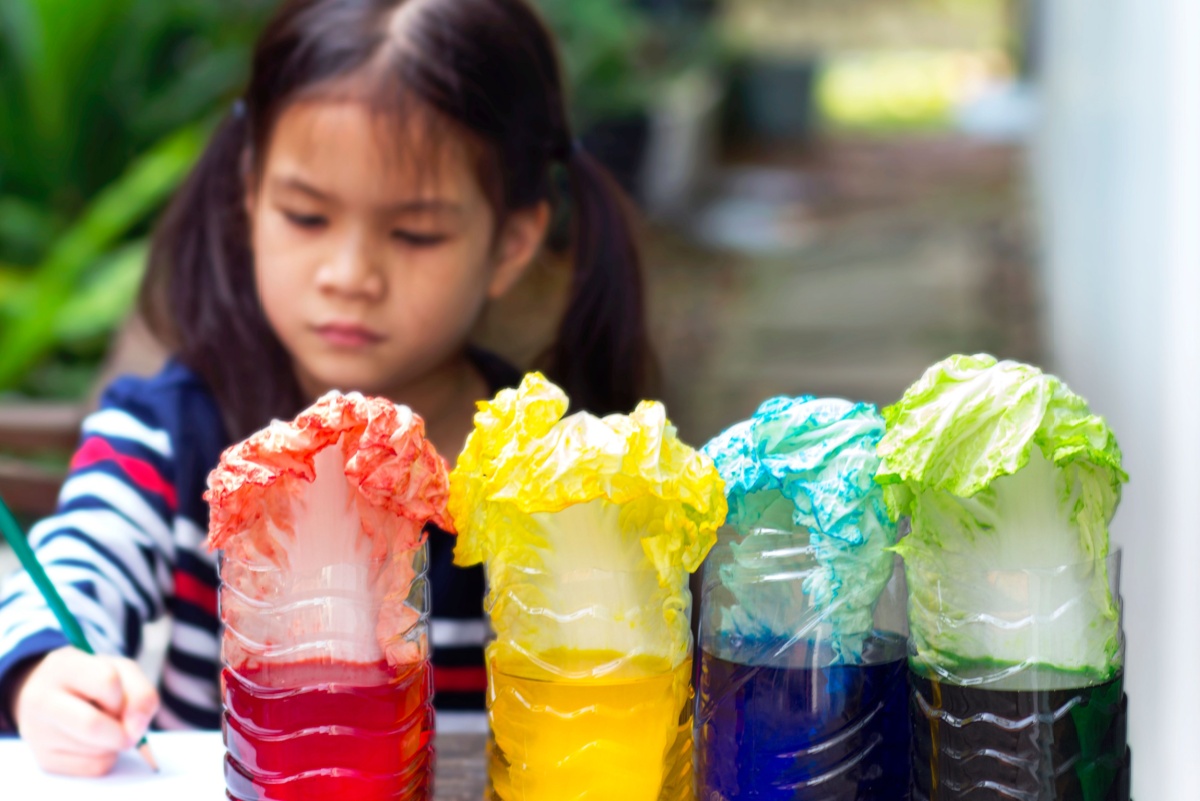
Try a few simple science experiments with kids working in pairs. Pick from our Plant Science Experiments or Science Experiments for Preschoolers and Kindergarteners.
Free Printables for the First Week of School
Printable Worksheets
Use these printables during the first week of school, as morning work, learning centers, or take-home activities.
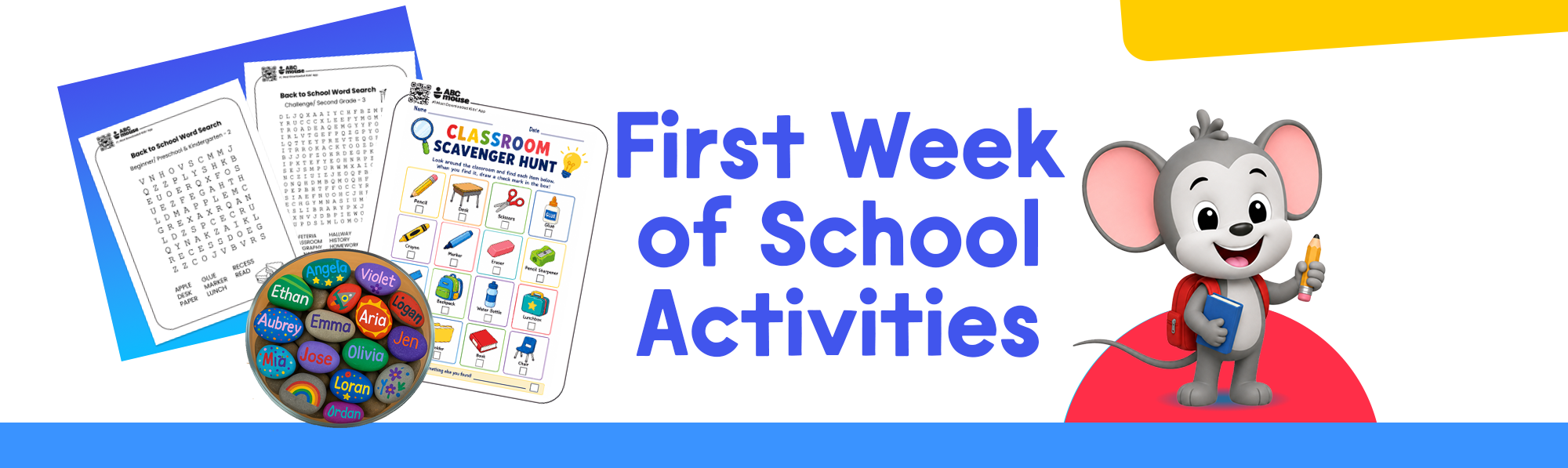
- Back to School Preschool Worksheets – Help young kids practice with line tracing, cutting skills, and more.
- Writing Prompts – coming soon!
- Back-to-School Coloring Pages – Bring some easy creativity to the day with school-themed coloring.
- All About Me Worksheets – These provide a great way for kids to get to know each other.
Printable Games
Printable games are a fun way to help students build friendships and practice classroom skills.
- Back-to-School Bingo – A fun icebreaker that encourages students to interact with classmates.
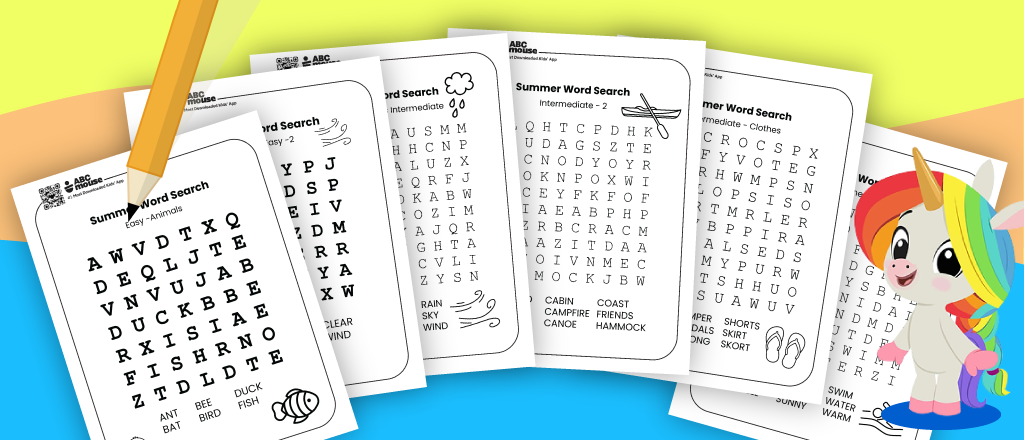
- Back-to-School Word Searches – Reinforce seasonal vocabulary while practicing spelling and word recognition.
- Would You Rather? Questions – Spark classroom discussions and help students learn more about one another.
- Classroom Scavenger Hunt – Help children become familiar with classroom spaces, supplies, and routines through an interactive adventure.
First Day of School Activities by Grade
Preschool First Day of School Activities
Preschoolers are learning to separate from caregivers, explore new surroundings, and become comfortable with classroom routines. Focus on quick, hands-on activities that build confidence while encouraging play, creativity, and social interaction. Try these preschool favorites:
- Complete a simple All About Me Worksheet with drawings, stickers, or teacher assistance.
- Read a favorite back-to-school story and talk about what children might see and do at school.
- Explore the classroom with a picture-based scavenger hunt to find important learning areas.
- Take pictures of each student with our free printable First Day of School Signs.
Explore More Preschool Resources
Kindergarten First Day of School Activities
Kindergarten students are learning classroom routines, making new friends, and becoming comfortable in a new learning environment. Keep activities shorter, interactive, and hands-on. Try these kindergarten favorites:
- Back-to-School Bingo – A fun icebreaker that encourages students to interact with classmates.
- Have kids try our free printable Kindergarten Reading Worksheets or Kindergarten Math Worksheets to review skills and help you get a sense of their skill levels.
- Pick one or two back-to-school crafts to try.
- Try one or two icebreaker activities and a team building activity.
Explore More Kindergarten Resources
1st Grade First Day of School Activities
First graders are ready for activities that encourage teamwork while reinforcing reading, writing, and math skills. Consider adding these activities into your plans for the first weeks of school.
- Write about a favorite summer memory or a goal for the new school year.
- Play Would You Rather to get know classmates
- Build a paper tower or complete other simple STEM challenges with a small group.
- Work together to create classroom rules and community agreements.
Explore More First Grade Resources
2nd Grade First Day of School Activities
Second graders can enjoy collaborative projects that encourage problem-solving, creativity, and classroom leadership. Try these second grade activities include:
- Have students write a letter introducing themselves to you
- Work in teams to complete a classroom mystery challenge or team challenges.
- Have each child write personal learning goals.
- Create a classroom kindness chain by writing encouraging messages for classmates.
Explore More Second Grade Resources
First Day of School Activities FAQ
What are good first day of school activities?
Good first day of school activities help students get to know one another while introducing classroom routines. Popular choices include All About Me worksheets, partner interviews, classroom scavenger hunts, name games, icebreakers, team-building activities, and simple crafts that encourage children to share about themselves.
What are the best first week of school activities?
Some of the best first day of school activities build classroom community and establish routines. Activities like creating classroom agreements, introducing classroom jobs, practicing daily procedures, completing STEM challenges, and participating in kindness activities help students feel confident and prepared for a successful school year.
What are fun back-to-school activities?
Fun back-to-school activities include classroom bingo, word searches, scavenger hunts, Would You Rather questions, goal-setting worksheets, coloring pages, STEM challenges, and collaborative art projects. These activities help students build friendships while easing the transition into a new school year.
How do you help students get to know each other?
Teachers can help students get to know one another through partner interviews, All About Me worksheets, Find Someone Who games, name activities, community circles, and cooperative classroom games. These activities encourage conversation, teamwork, and relationship building from the very first day.
What are good classroom icebreakers?
Simple classroom icebreakers include Two Truths and a Lie, Would You Rather, Find Someone Who, name games, movement activities, and partner challenges. The best icebreakers encourage every student to participate while helping children feel comfortable in their new classroom.
What are welcome activities for students?
Welcome activities help students feel comfortable as soon as they arrive. Greeting students at the classroom door, setting up welcome stations, giving classroom tours, decorating a classroom banner, and completing All About Me activities all create a positive first impression.
What should teachers do on the first day of school?
The first day of school should focus on building relationships, introducing classroom routines, setting expectations, and helping students feel welcome. Teachers can also use icebreakers, community-building activities, and simple learning experiences to establish a positive classroom culture.
How can I build classroom community during the first week?
Building classroom community starts with creating opportunities for students to work together, share ideas, and show kindness. Community circles, classroom agreements, team-building games, classroom jobs, and daily kindness challenges all help students develop positive relationships with classmates.
What are easy no-prep first day of school activities?
No-prep first day activities include Would You Rather questions, partner interviews, classroom discussions, read-aloud books, movement games, community circles, and simple name games. These activities require little preparation while helping students connect with one another.
Where can I find free printable back-to-school activities?
ABCmouse offers a variety of free printable back-to-school resources, including All About Me worksheets, classroom scavenger hunts, bingo games, word searches, writing prompts, coloring pages, and other educational activities designed for preschool through second grade. You can find them all in Back-to-School Resources for Parents and Teachers.
-

How to Help Kids Feel Comfortable Going Back to School
Help kids feel comfortable going back to school with simple tips to ease back-to-school anxiety, prepare for preschool or kindergarten, and build confidence.
-

Back-to-School Resources for Parents & Teachers (2026)
Discover free back-to-school resources for parents and teachers, including printables, activities, checklists, books, and school readiness tips.
-

Printable Back to School Word Searches for Kids (Free PDF Worksheets)
Free printable back-to-school word searches for kids featuring easy, intermediate, and challenging puzzles with answer keys for classroom learning and fun.
-

Back to School Songs and Videos for Kids
Make the first day of school fun with back-to-school songs and videos that help kids build confidence, learn routines, and get excited to learn.
-

Free Printable Classroom Icebreakers
Free printable classroom icebreakers with Would You Rather Questions and Classroom Scavenger Hunts to help students connect and build community.
-
Free Printable All About Me Worksheets
Free printable All About Me worksheets for preschool, kindergarten, and elementary students. Perfect for back to school, self-expression, and fun classroom activities.