
Fun Michigan Facts for Kids (Free Printable List)
Take a trip to the Great Lakes State and learn all about this wonderful place!
Share
There are so many fascinating facts to learn about Michigan! This state has unique geography, a rich history, and incredible wildlife. (It was also the birthplace of corn flakes!) Learn more about Michigan with these facts for kids. Plus, be sure to print our full set of Michigan facts pages to use in the classroom or prepare for your next road trip.

MICHIGAN STATE FACTS
State Nickname:
The Great Lakes State
Date of Statehood:
January 26, 1837
State Capital:
Lansing
State Gem:
Isle Royale greenstone
State Fish:
Brook trout
State Song:
My Michigan
State Animal:
White-Tailed Deer
State Stone:
Petoskey stone
State Tree:
Eastern white pine
State Motto:
Si quaeris peninsulam amoenam, circumspice. (If you seek a pleasant peninsula, look about you.)
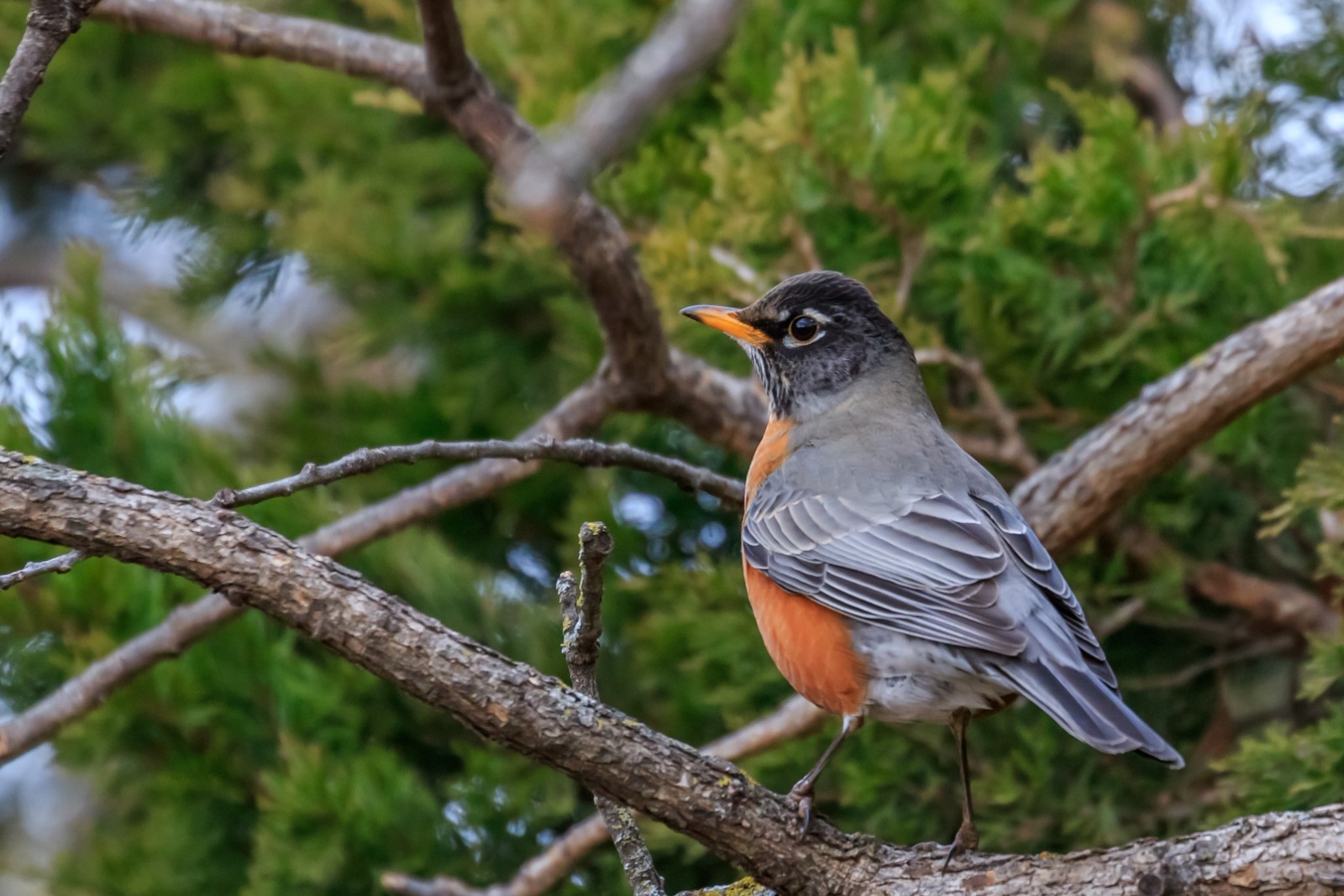
State Bird:
American robin
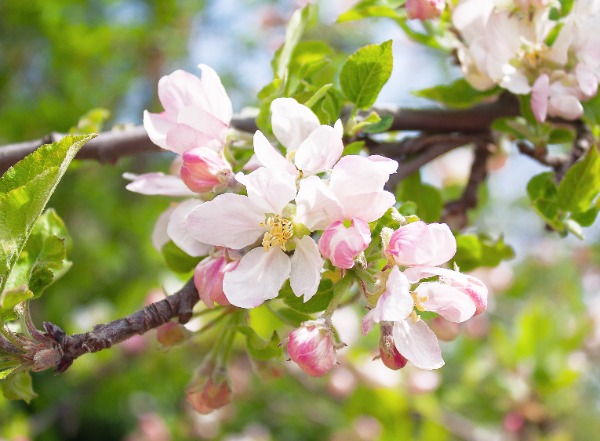
State Flower:
Apple blossom
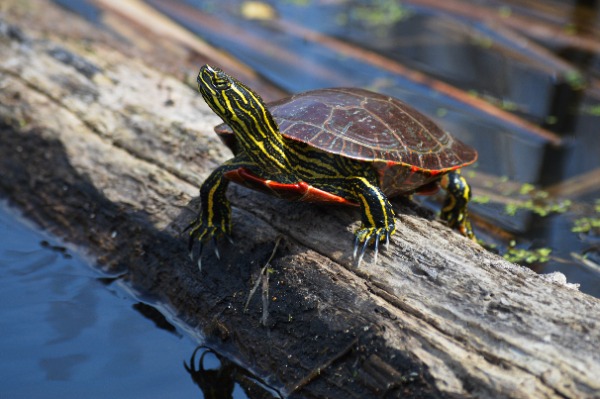
State Reptile:
Painted turtle
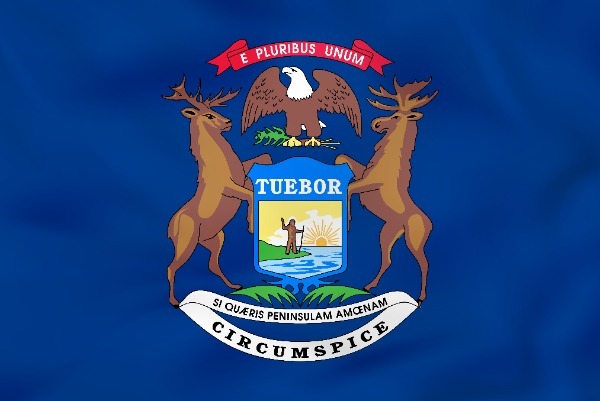
State Flag:
Flag of Michigan
?
DID YOU KNOW?
Michigan’s first flag was double-sided, with the state coat of arms on one side and a picture of the state’s first governor, Stevens T. Mason, on the other.
MICHIGAN FUN FACTS
Fun Fact #1:
Michigan is #22 on the list of U.S. states by size, at 56,539 square miles. It’s the 10th most populous state, with nearly 10.2 million residents.
Fun Fact #2:
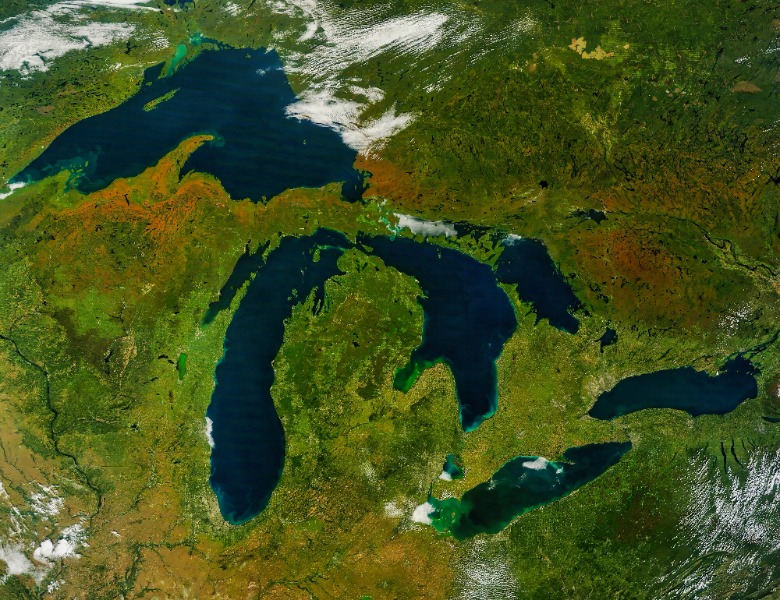
Michigan has more freshwater coastline than any other state—more than 3,200 miles! It’s the only state that touches four of the five Great Lakes.
Fun Fact #3:
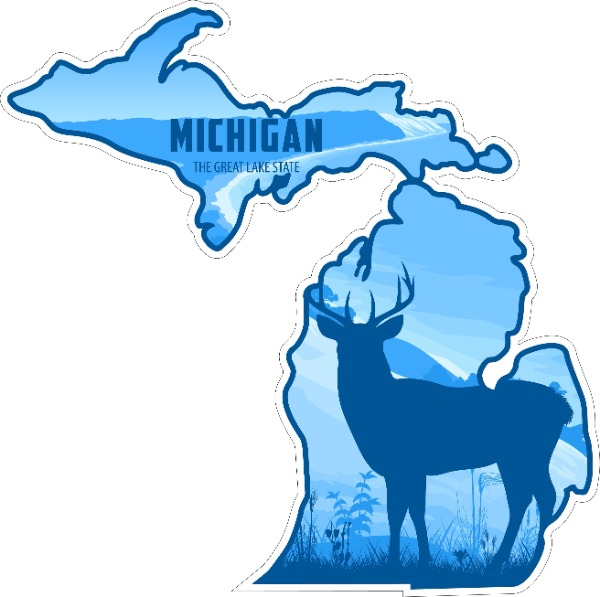
The state of Michigan is made up of two large separate peninsulas. The Upper Peninsula is often called “the U.P.” or “Yoop,” and the residents are known as “Yoopers.”
Fun Fact #4:
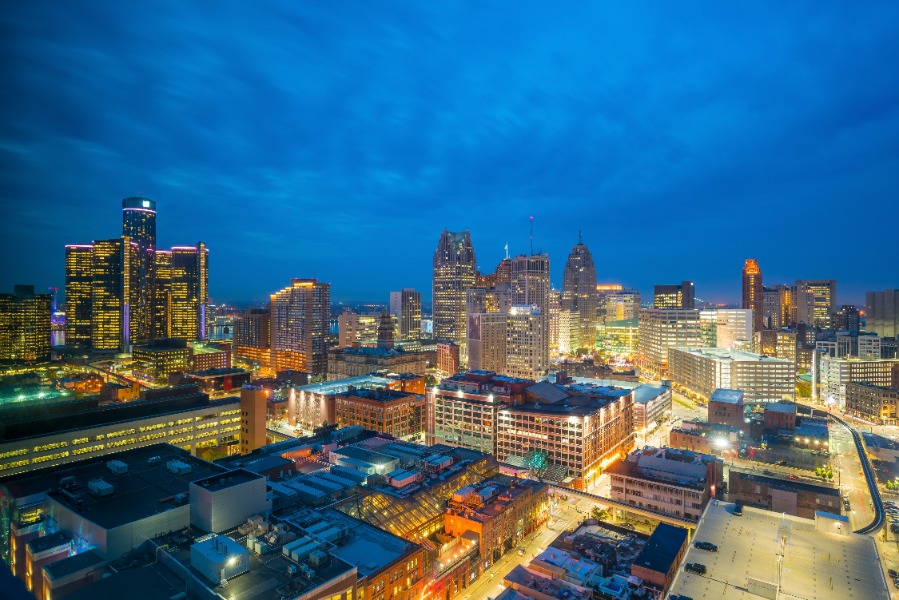
Detroit is the largest city in Michigan, with a population of about 638,000 people. Other large cities include Grand Rapids and Ann Arbor. Lansing, the capital, is only the 6th largest city.
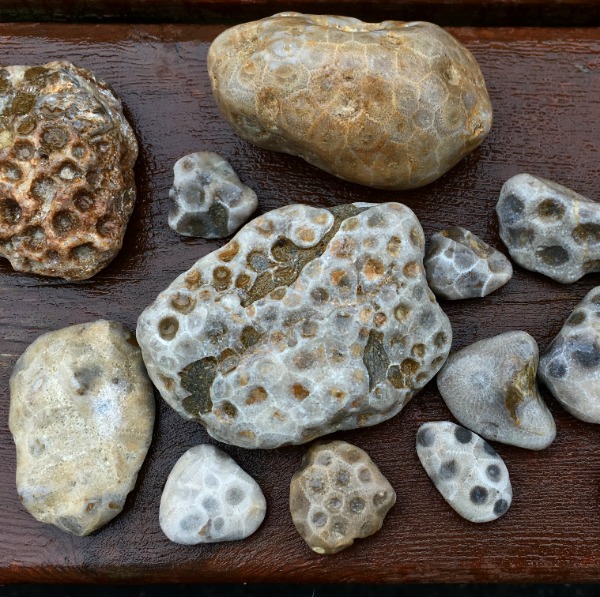
Fun Fact #5:
Petoskey stones are found almost exclusively in Michigan along the shores of Lake Michigan and Lake Huron. These pieces of fossilized coral are reminders of a time 350 million years ago when Michigan was near the equator and covered by a warm, shallow sea.
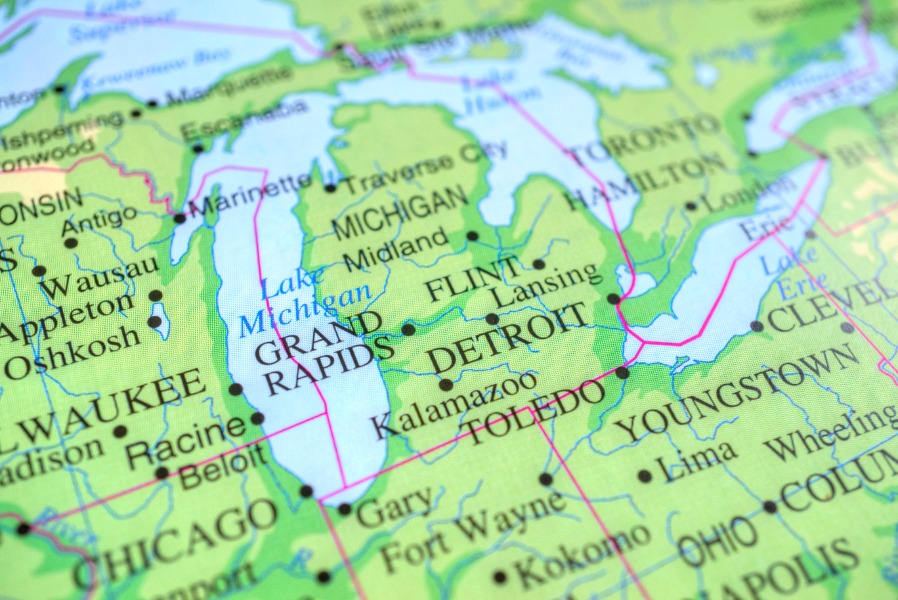
Fun Fact #6:
The lower peninsula of Michigan is shaped like a mitten, and people from Michigan will often show you where they live by holding up their hand and pointing to their town on the palm, fingers, or thumb.
Fun Fact #7:
Detroit is called the Motor City because of its long history in the automobile industry. This nickname is sometimes shortened to “Motown,” a name that was adopted by Motown Records is also used to describe a kind of pop music born in Detroit and popular in the 1960s.
Fun Fact #8:
Gerald Ford was born in Nebraska, but grew up in Grand Rapids and went to the University of Michigan. He’s the only U.S. president strongly associated with Michigan.
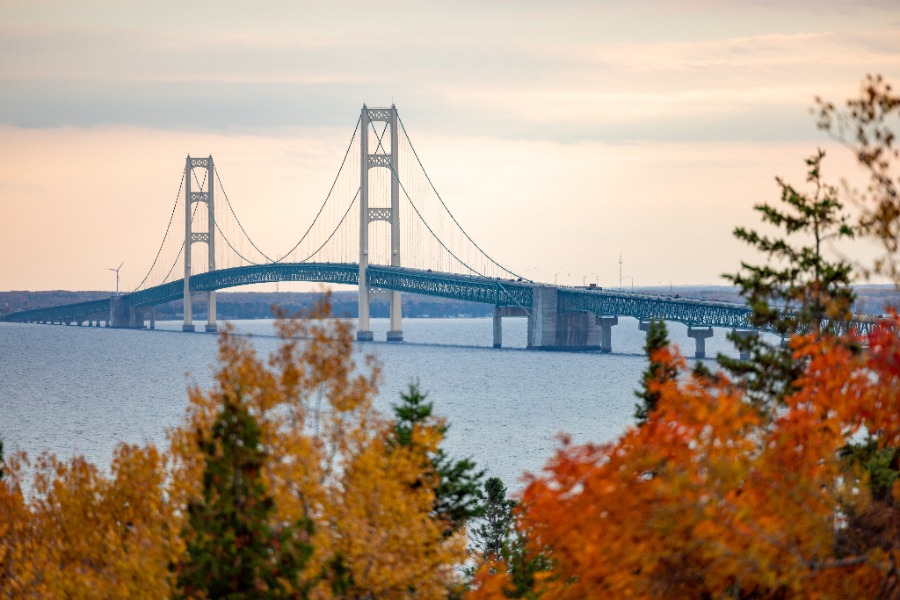
Fun Fact #9:
Michigan’s upper and lower peninsulas are connected by the 5-mile-long Mackinac Bridge (pronounced “MACK-in-aw”). Each year on Labor Day, two lanes of the bridge are closed to traffic, and up to 80,000 people walk across it on foot—led by the current Michigan governor.
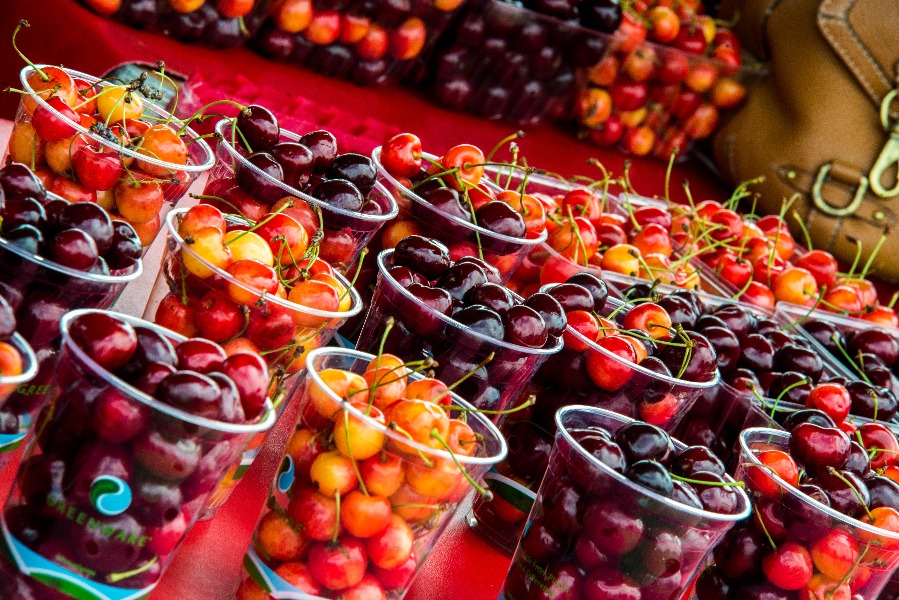
Fun Fact #10:
Traverse City in northern Michigan is famous for its cherries. In 1987, the town baked a record-breaking cherry pie that measured more than 17 feet across and used more than 2.5 million cherries!
MICHIGAN GEOGRAPHY FACTS
Regions/Physiographic Provinces:
Upper Peninsula, Thumb, Detroit Metro (Southeast), West Michigan, Mid-Michigan, Northern Michigan
Climate:
Humid Continental
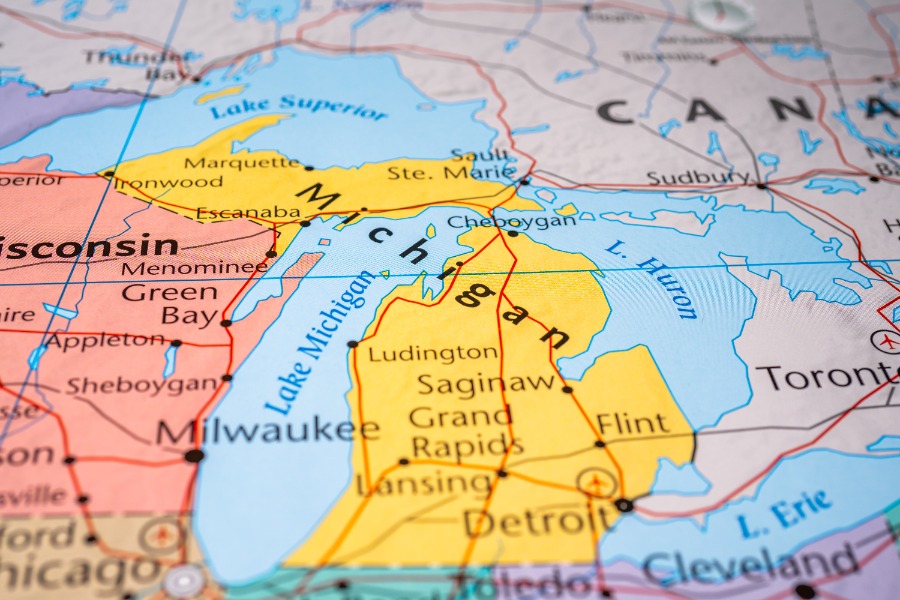
Location:
Upper Midwest–Michigan borders Ohio and Indiana to the south and Wisconsin to the west. It’s surrounded by four of the five Great Lakes—Lake Superior, Lake Michigan, Lake Huron, and Lake Erie
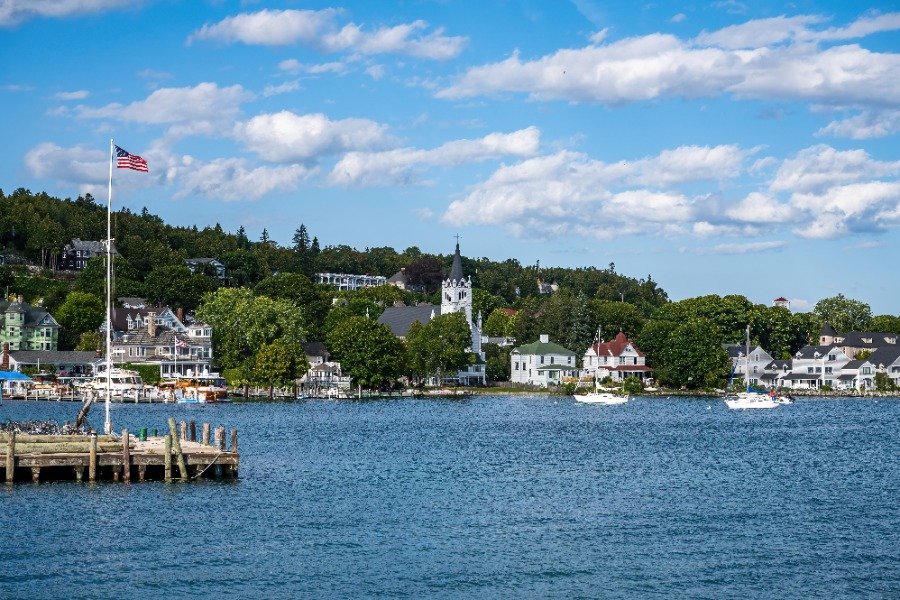
Mackinac Island
Landmarks:
Mackinac Island, Sleeping Bear Sand Dunes, Motown Museum, Frankenmuth, The Henry Ford Museum, Ambassador Bridge
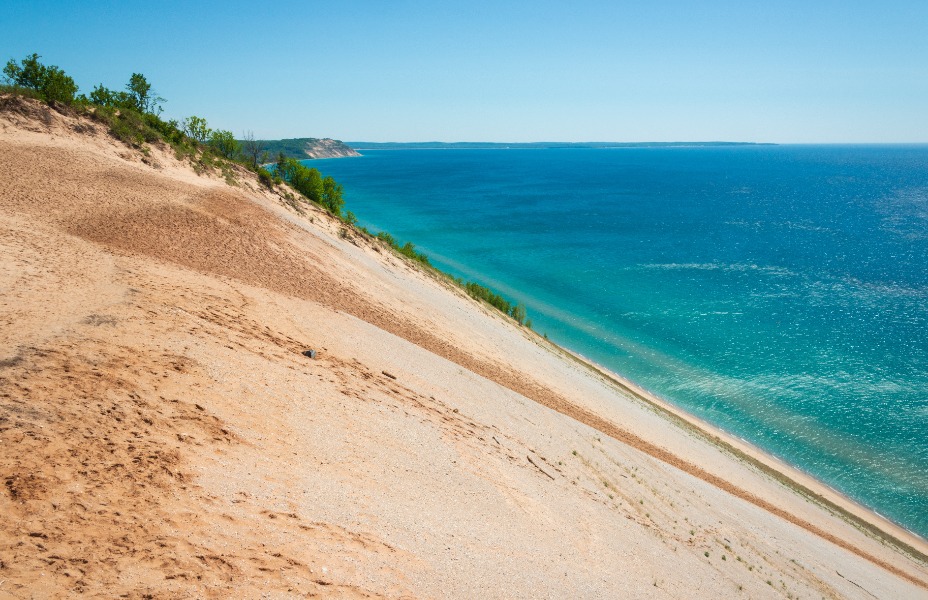
Sleeping Bear Sand Dunes
Sand Dunes:
Sleeping Bear Sand Dunes, Saugatuck Dunes, Silver Lake Sand Dunes, Grand Sable Banks and Dunes, Warren Dunes, Arcadia Dunes
?
DID YOU KNOW?
Michigan has the largest collection of freshwater dunes in the world!
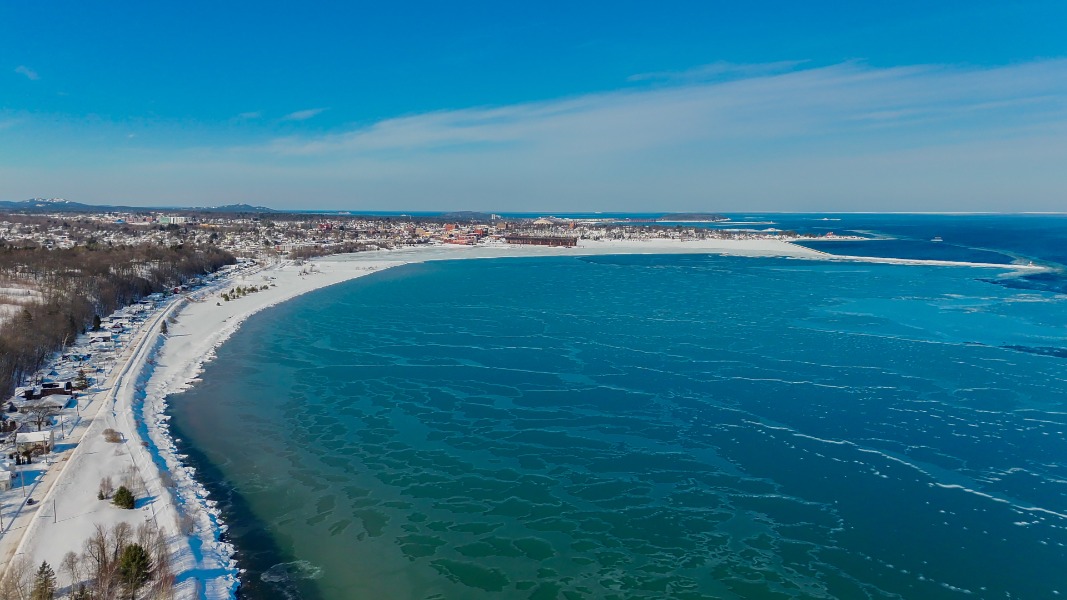
Marquette Bay
Freshwater Coastline:
Michigan borders four Great Lakes, giving it 3,288 miles of freshwater coastline.
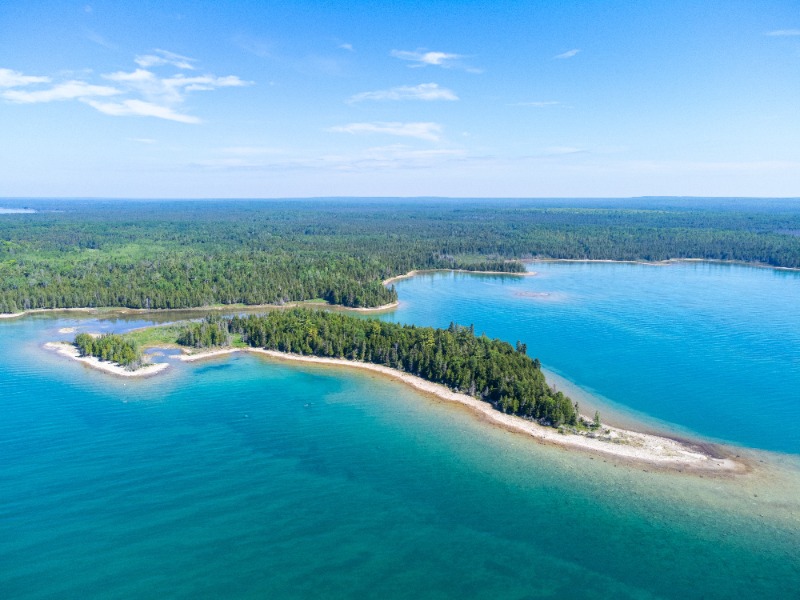
Drummond Island
Islands:
There are 420 named islands in the Great Lakes that belong to Michigan, including Isle Royale, Drummond Island, Beaver Island, and Grand Island.
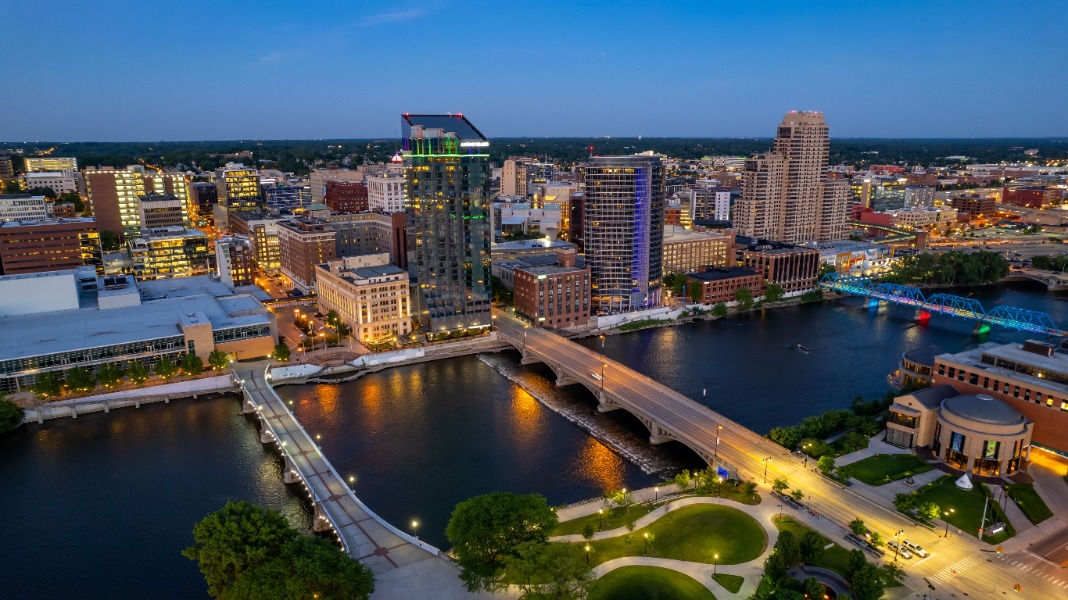
Grand River flowing through Grand Rapids, MI
Major Rivers:
The longest river is the Grand River (252 miles), followed by the Muskegon, St. Joseph, Manistee, and River Raisin.
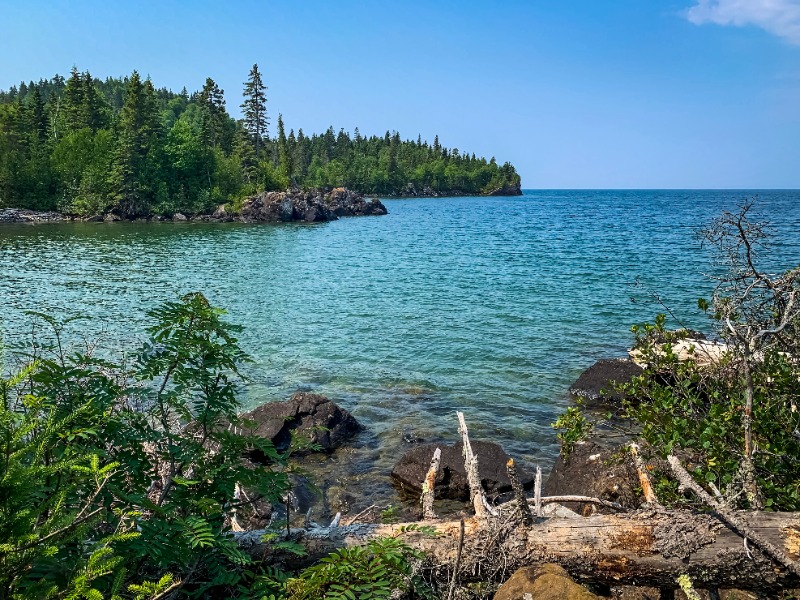
Isle Royale National Park
National Parks:
Isle Royale National Park, Sleeping Bear Sand Dunes National Lakeshore, Pictured Rocks National Lakeshore
Selected State Parks:
Tahquamenon Falls State Park, Holland State Park, Porcupine Mountains Wilderness, Ludington State Park, Warren Dunes
Highest and Lowest Point:
Mount Arvon (1,979 feet), Lake Erie shoreline (571 feet)
?
DID YOU KNOW?
Isle Royale is one of the least-visited national parks, with usually less than 30,000 visitors each year. In 2018, scientists reintroduced wolves to the island, and the population currently numbers around 30.
MICHIGAN WILDLIFE & NATURE FACTS
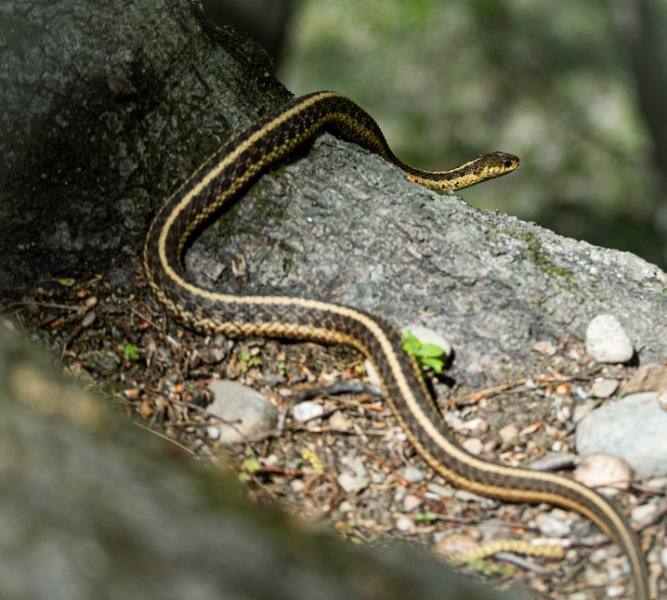
Eastern garter snake
Common Reptiles and Amphibians:
Eastern garter snake, midland painted turtle, common snapping turtle, five-lined skink, American toad, spring peeper, green frog, spotted salamander
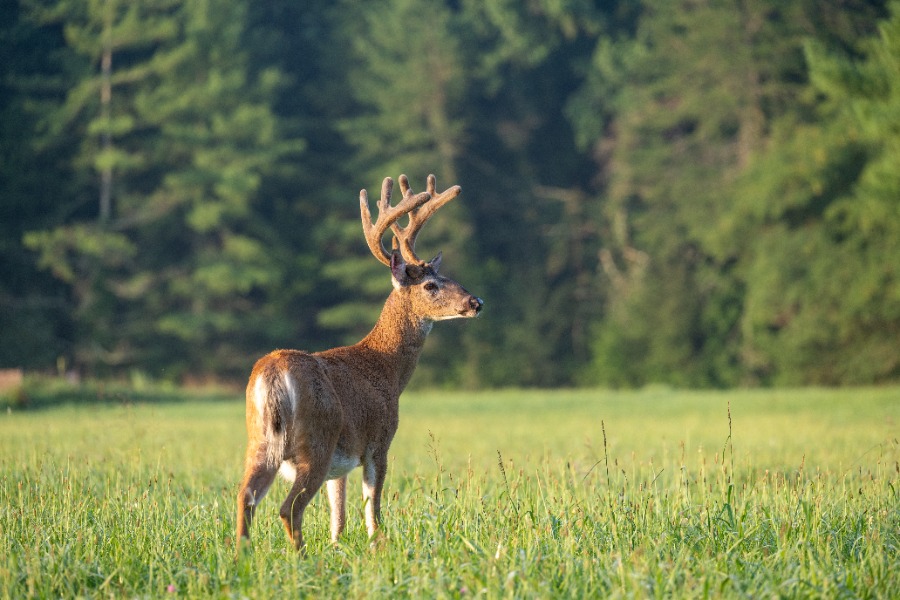
White-tailed deer
Common Mammals:
White-tailed deer, eastern gray squirrel, American black bear, raccoon, North American beaver, coyote, red fox, eastern cottontail rabbit
?
DID YOU KNOW?
Michigan is known as the Wolverine State (it’s the mascot of the University of Michigan), but there are no wolverine populations in the state. Wolverines are extremely rare in the United States outside of Alaska and sightings in Michigan are very unusual.
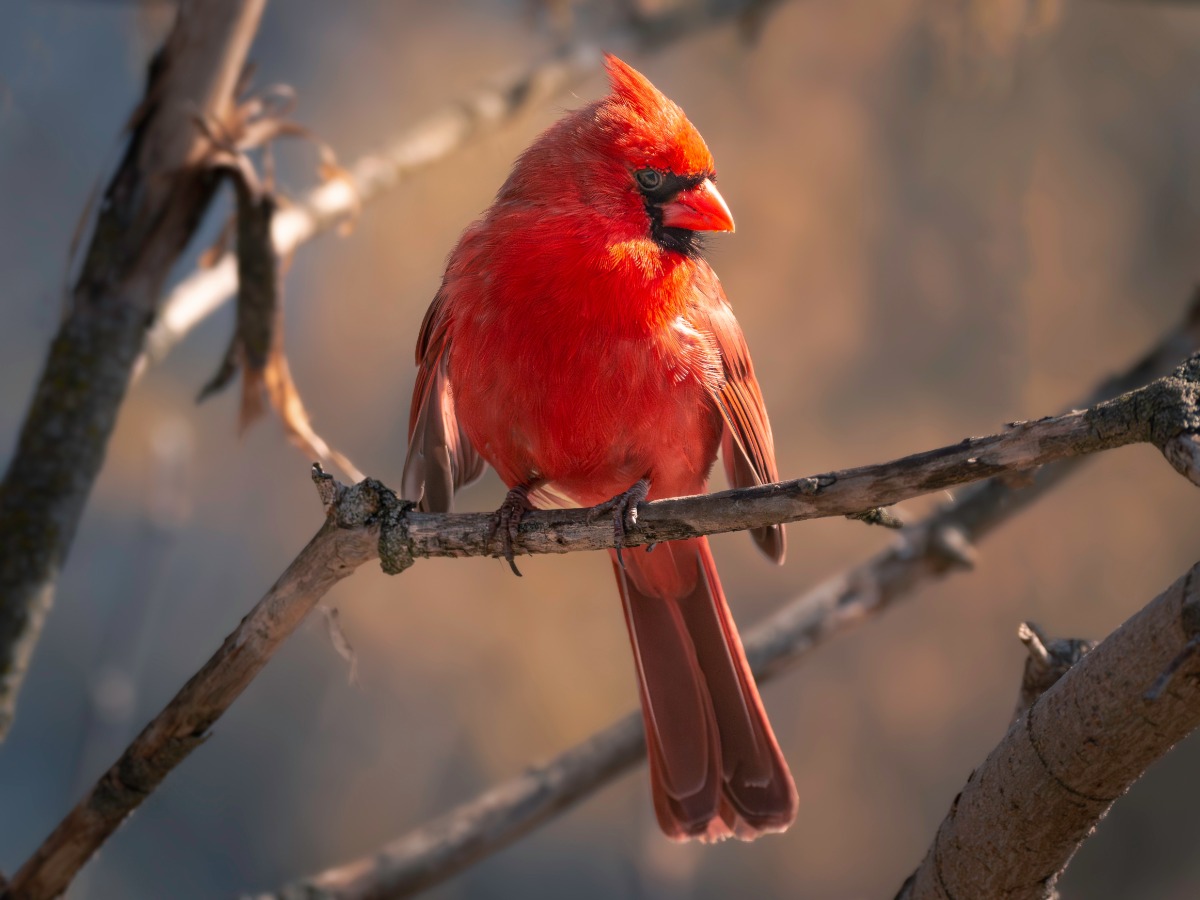
Northern cardinal
Common Birds:
American robin, northern cardinal, blue jay, black-capped chickadee, house finch, red-bellied woodpecker, American crow, Canada goose, mallard, red-winged blackbird
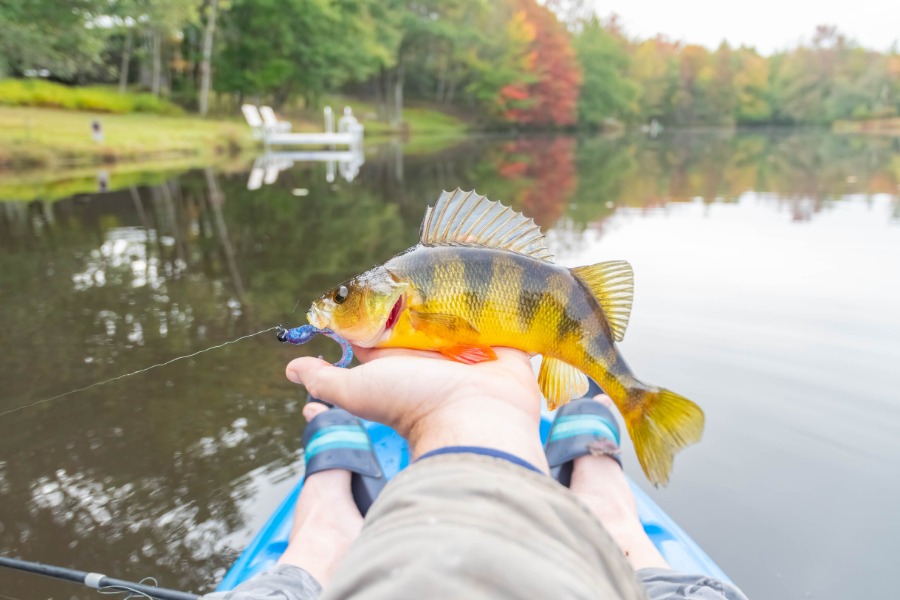
Yellow perch
Common Fish:
Yellow perch, walleye, largemouth bass, smallmouth bass, northern pike, lake trout, bluegill, Chinook salmon
Selected Endangered Species:
Kirtland’s warbler, piping plover, eastern massasauga rattlesnake, lake sturgeon, Indiana bat, Karner blue butterfly, Michigan monkey-flower, pitcher’s thistle, dwarf lake iris Houghton’s goldenrod
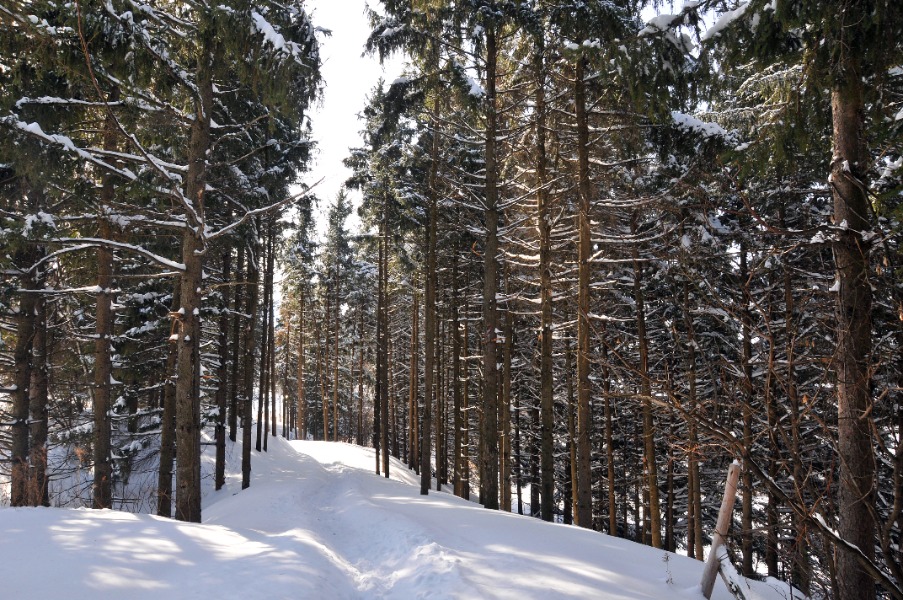
Eastern white pine
Common Trees:
Sugar maple, eastern white pine, northern red oak, paper birch, quaking aspen, American beech, red maple, eastern hemlock
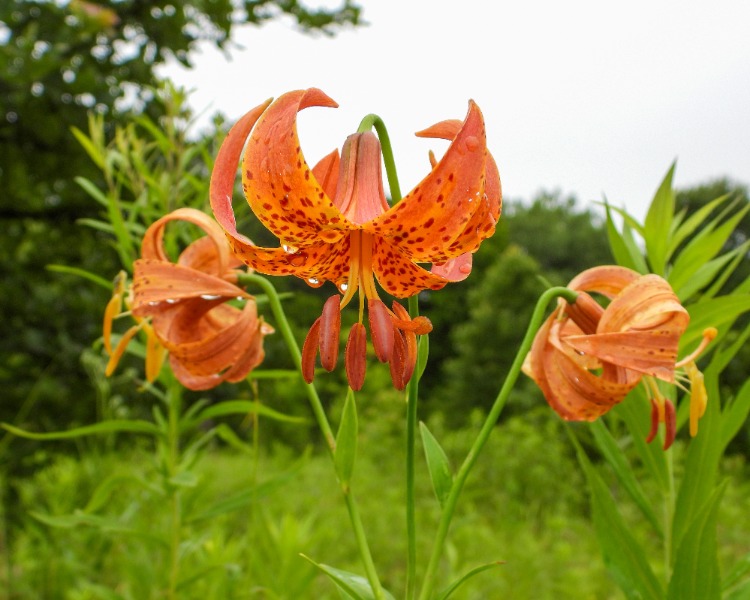
Michigan lily
Common Plants and Flowers:
Black-eyed Susan, trillium, wild lupine, purple coneflower, butterfly weed, columbine, jack-in-the-pulpit, Michigan lily
Selected Invasive Species:
Zebra mussel, sea lamprey, Asian carp, Eurasian starling, purple loosestrife, garlic mustard, autumn olive, phragmites (common reed)
?
DID YOU KNOW?
Michigan’s state wildflower is the endangered dwarf lake iris, endemic to the Lake Michigan and Lake Huron shorelines. It’s currently found in just 89 places in the state.
MICHIGAN HISTORY FACTS
First Inhabitants:
Humans began living in the area that would become Michigan at least 11,000 years ago. By 7,000 years ago, people of the area were making objects of copper and trading with people from as far away as what would later be known as Florida.
Woodland Culture:
The Hopewell people lived throughout what we now know as the central U.S., including Michigan. From about 10 B.C.E. to 400 C.E., the Hopewell people built burial mounds. You can see some of these today at Norton Mounds, outside of Grand Rapids.
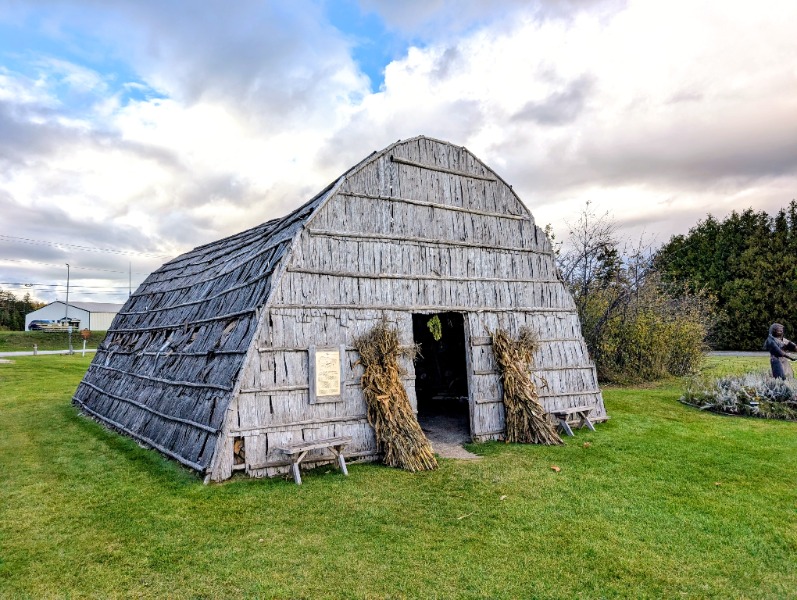
Museum of Ojibwa Culture in St. Ignace, MI
Native Cultures:
Later, cultures such as the Huron, Potawatomi, Ojibwe, and Odawa lived in various areas throughout the state. The Potawatomi, Ojibwa, and Odawa later formed a confederation known as The Three Fires council, which still exists today.
?
DID YOU KNOW?
The Huron people were farmers, growing so much corn they traded it with other tribes.
European Explorers:
The first European known to arrive in Michigan was a French explorer, Étienne Brulé. By 1668, the French had established Sault Ste. Marie, the oldest European settlement in Michigan.
Detroit:
In 1701, Antoine de la Mothe Cadillac established another major fur trading post called Detroit. It grew quickly, becoming the leading French settlement in the Great Lakes region.
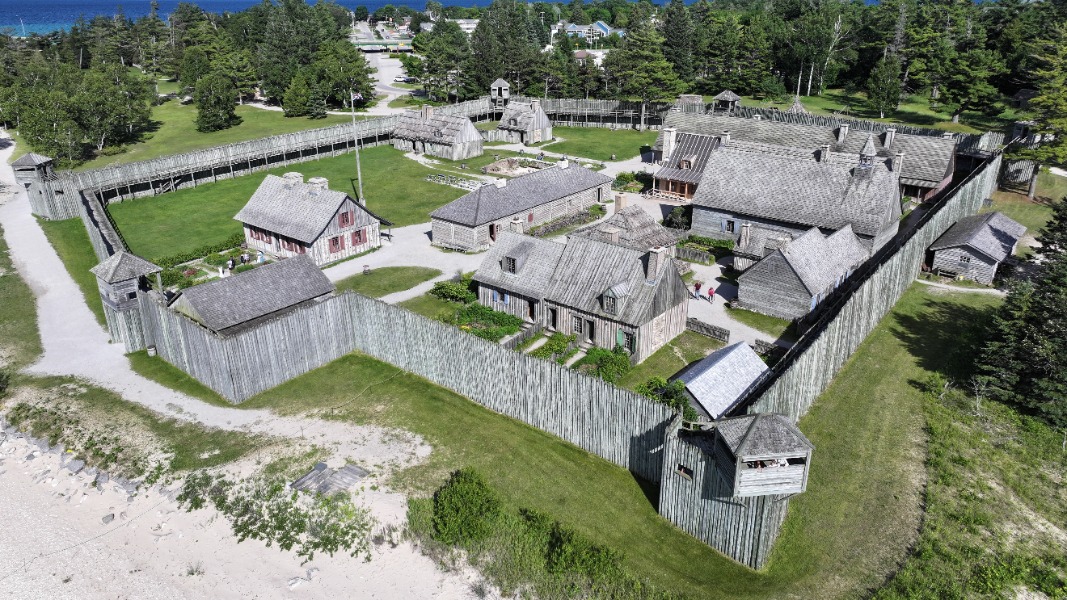
Aerial view of Fort Michilimackinac
Fort Michilimackinac:
The French continued to explore the area, sending fur trappers and missionaries. In 1673, they established a trading post at the current site of Mackinaw City, which became Fort Michilimackinac in 1715. It was surrendered to the British in 1761.
Pontiac’s Rebellion:
Pontiac was a Native American who led his warriors in attacks on British forts across the Great Lakes. They captured Fort Michilimackinac in a surprise attack, but the British held onto Fort Detroit after a long siege.
Treaty of Paris:
At the end of the Revolutionary War, the Treaty of Paris gave the United States a chance to take over land that included modern-day Michigan. However, the British refused to evacuate their forts at Detroit, Mackinac, and other bases. They didn’t leave the region until 1796.
Michigan Territory:
At first, Michigan was part of the Northwest Territory. In 1805, Michigan was separated into its own territory for the first time.
War of 1812:
Michigan was an important battleground during this war between the U.S. and British. Fort Detroit was captured by the British in 1812, and the area remained under British control for about a year until American troops took Detroit back in 1813.
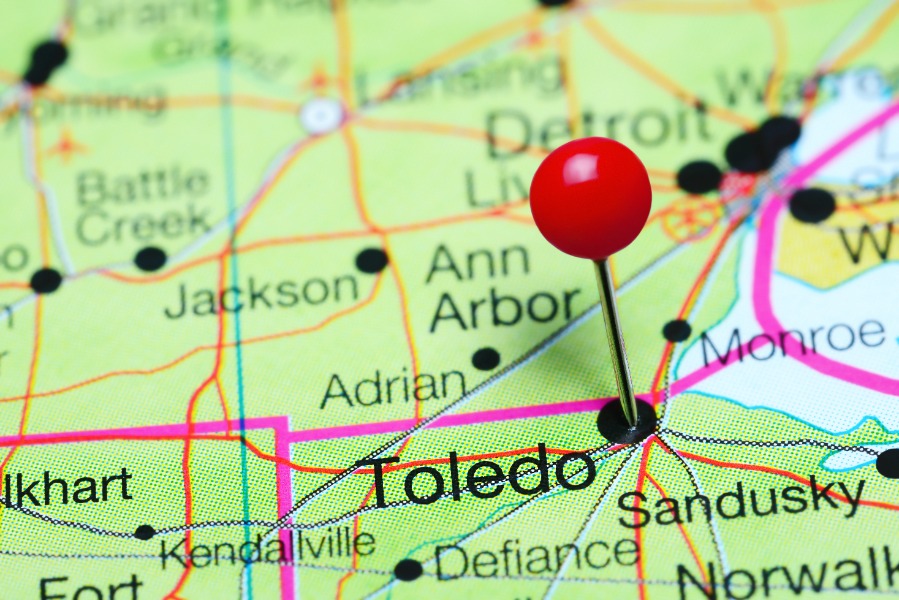
Toledo on a US map
The Toledo War:
Michigan soon wanted to become a U.S. state, but they were fighting with Ohio over a small strip of land that included Toledo. Though there were some minor battles, in the end, Michigan agreed to give up the strip of land in exchange for the western Upper Peninsula.
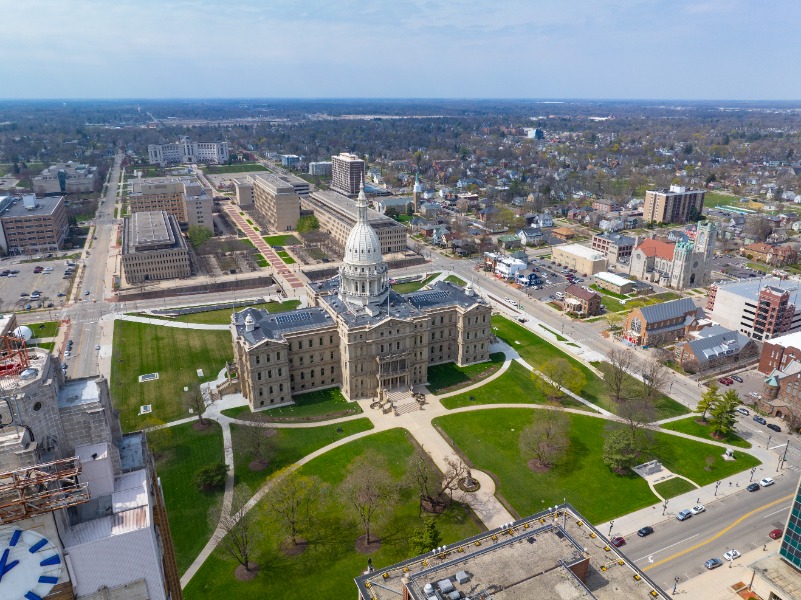
Michigan state capitol in Lansing
Statehood:
In 1837, Michigan was finally admitted to the U.S. as a free state (slavery was not allowed). In 1847, the capital moved from Detroit to Lansing.
?
DID YOU KNOW?
Lansing was a settlement of only about 20 people when Michigan decided to move its capital to a safer, inland location. After a lot of arguing over other possible places like Ann Arbor or Jackson, the Michigan government eventually went with the virtually unknown Lansing instead.
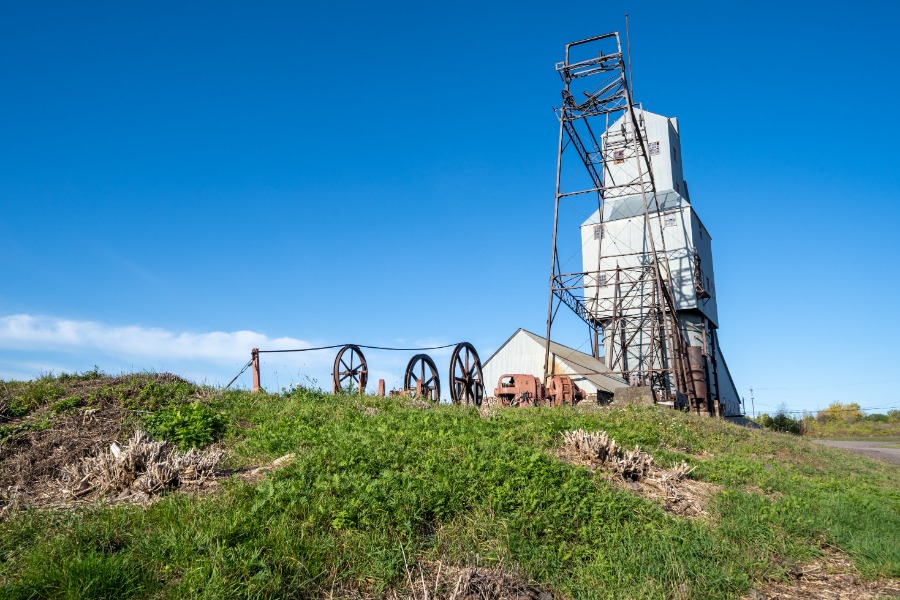
Abandoned Quincy Mine in Hancock, MI
Michigan Fever:
Thousands of people moved to Michigan in the 1840s and 50s to take advantage of the new logging and mining industries.
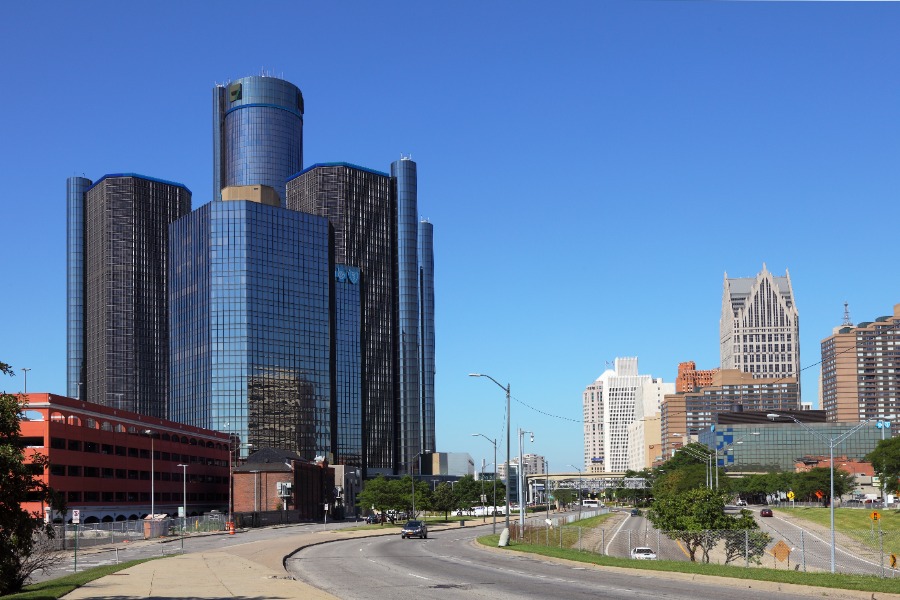
General Motors HQ in downtown Detroit
Motor City:
In 1901, R. E. Olds started the Olds Motor Works in Lansing. By 1903, Henry Ford established the Ford Motor Company in Detroit, making cars like the incredibly popular Model T. General Motors joined the Detroit automotive trade in 1908. Soon, auto plants had been built in cities across the state, and Detroit was known as the “Motor City.”
?
DID YOU KNOW?
Michigan wasn’t just the birthplace of the American automotive industry! In 1900, the company later known as Kellogg’s was started in Battle Creek, Michigan. One of their earliest successful products was corn flakes.
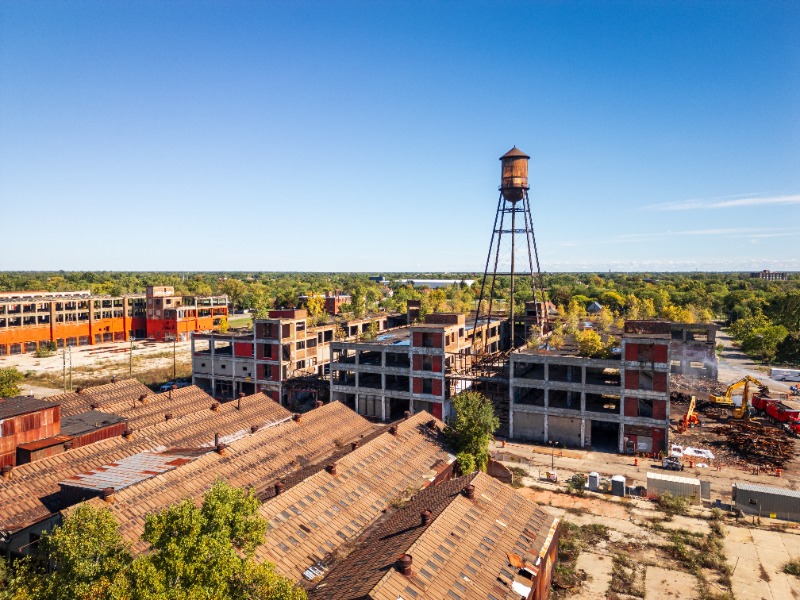
Abandoned car manufacturing plants in Detroit
Arsenal of Democracy:
During World War II, the automotive industry took a backseat as manufacturing efforts shifted to making weapons and arms for the military. Many factories were converted to make planes, tanks, ships, and more, leading some to call Detroit the “Arsenal of Democracy.”
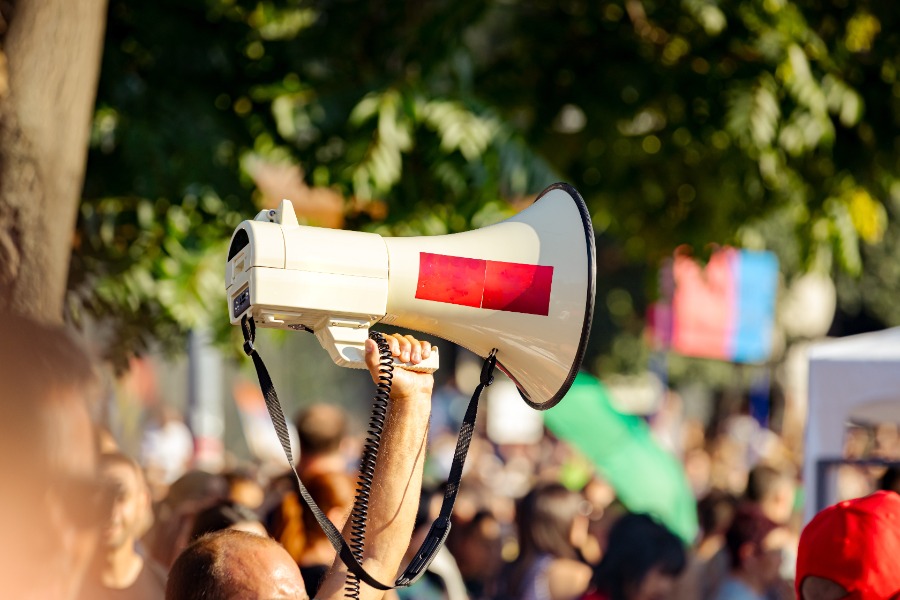
Detroit Uprising of 1967:
In the 1960s, many Black residents of Detroit were angry about racism, poor living conditions, and mistreatment by police. When police raided a bar in 1967, it sparked an uprising that spread across the city like wildfire. Forty-three people died, hundreds were hurt, and thousands were arrested.
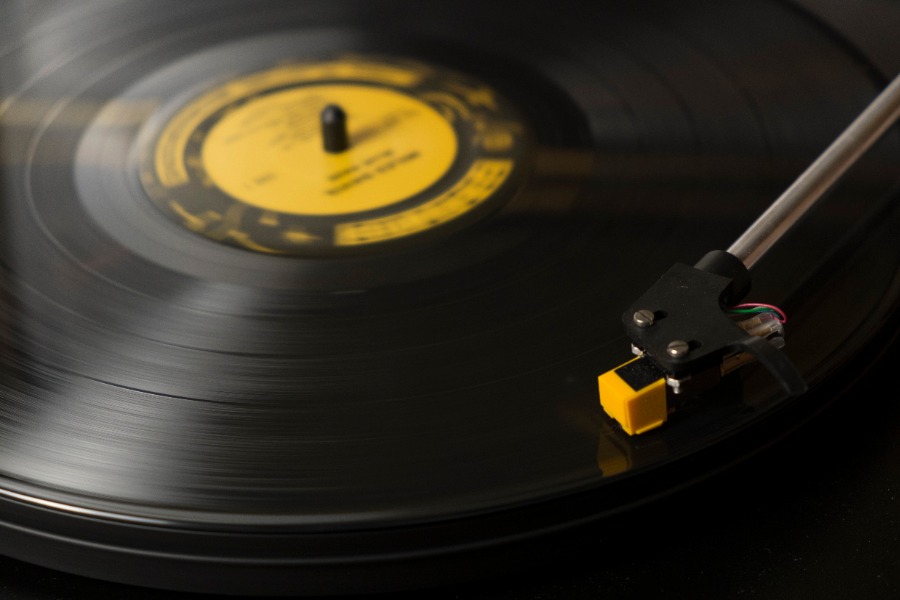
Mowtown:
Detroit was the center of a new kind of music in the 1960s, a blend of Black gospel music, jazz, pop, and soul known as the “Motown Sound.” Hit artists included groups like The Supremes and the Four Tops and performers like Marvin Gaye and Smokey Robinson.
?
DID YOU KNOW?
The Detroit Uprising of 1967 was one of the biggest civil uprisings in U.S. history, leading to reforms in city government and the election of the first Black mayor of Detroit in 1973.
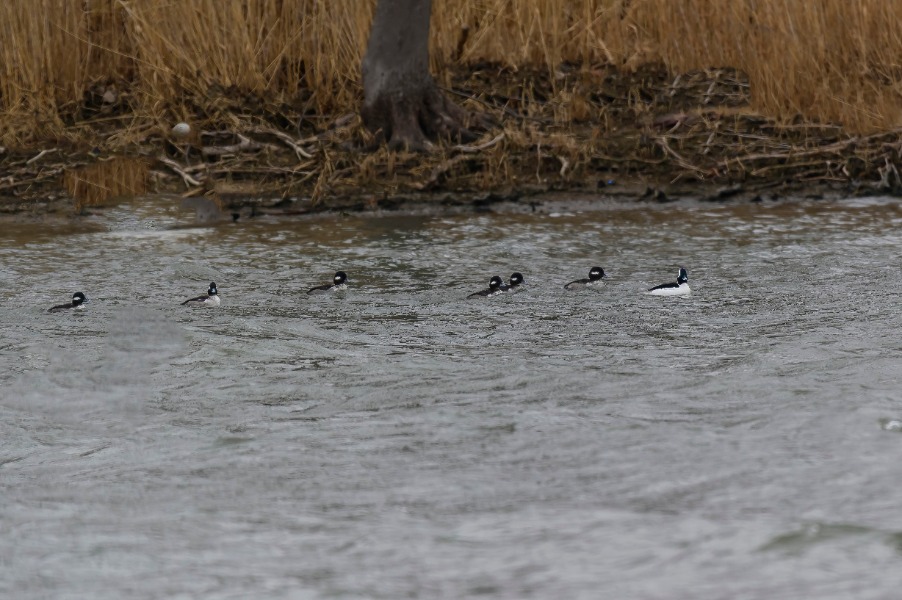
Ducks swimming in a marsh of the Detroit River
Detroit River International Wildlife Refuge
In 2001, this refuge was established to protect the ecosystem along 48 miles of the Detroit River and western Lake Erie coast. It’s the only international wildlife refuge in North America, managed by both the United States Fish and Wildlife Service and the Canadian Wildlife Service.


Looking for Fun Learning Activities?
More State Facts…
-

Interesting Michigan Facts for Kids (Free Printable List)
Explore Michigan with fun facts for kids about the Great Lakes State, including its history, wildlife, state symbols, landmarks, and a free printable list
-

North Carolina Facts for Kids (Free Printable List)
Discover fun North Carolina facts for kids, from state symbols and wildlife to history, geography, landmarks, and a free printable facts list.
-

Fascinating Pennsylvania Facts for Kids (Free Printable List)
Discover fun Pennsylvania facts for kids, from state symbols and wildlife to history, geography, landmarks, and a free printable facts list.
-

100+ Georgia State Facts for Kids (Free Printable List)
Discover 100+ Georgia facts for kids, from history and geography to wildlife and fun trivia—plus a free printable list for easy learning.
-

100+ Illinois Facts for Kids (Free Printable List)
Discover 100+ Illinois facts for kids, including history, wildlife, geography, and fun trivia, plus free printable worksheets for easy learning.
-

Ohio Facts for Kids
Discover fun and surprising Ohio facts for kids—covering history, nature, geography, and more. Includes a free printable list to share.
-

New York Facts for Kids
Discover interesting New York facts for kids—covering history, nature & landmarks. Includes a free printable for learning at home or school.
-

100+ Fun Florida Facts Kids Will Love to Learn
Explore fun Florida facts for kids—from animals and landmarks to weather and history—plus grab a free printable for learning at home or school.
-
90+ Fun Texas Facts Kids Will Love to Learn
Discover 90+ fun Texas facts for kids—covering history, animals, geography, and more. Great for learning or planning a trip!
-

Interesting Facts About California
Discover fun facts about California for kids! Learn about its wildlife, history, landmarks, and geography. Download a free printable list for easy learning.