
100+ Georgia State Facts for Kids (Free Printable List)
Got Georgia on your mind? Find out what makes The Peach State so unique!
Share
From the Atlantic Coast to the Blue Ridge Mountains, Georgia is full of amazing places to explore and stories to discover. Learn more about this state’s rich history, beautiful landscapes, and cool wildlife with these fun Georgia facts. Plus, get a free printable list that includes all the facts found here!

GEORGIA STATE FACTS
State Nickname:
The Peach State
Date of Statehood:
January 2, 1788
State Capital:
Atlanta
State Crop:
Peanut
State Amphibian:
Green tree frog
State Song:
Georgia On My Mind
State Motto:
Wisdom, Justice, and Moderation
State Animal:
White-Tailed Deer
State Vegetable:
Vidalia onion
State Tree:
Live oak
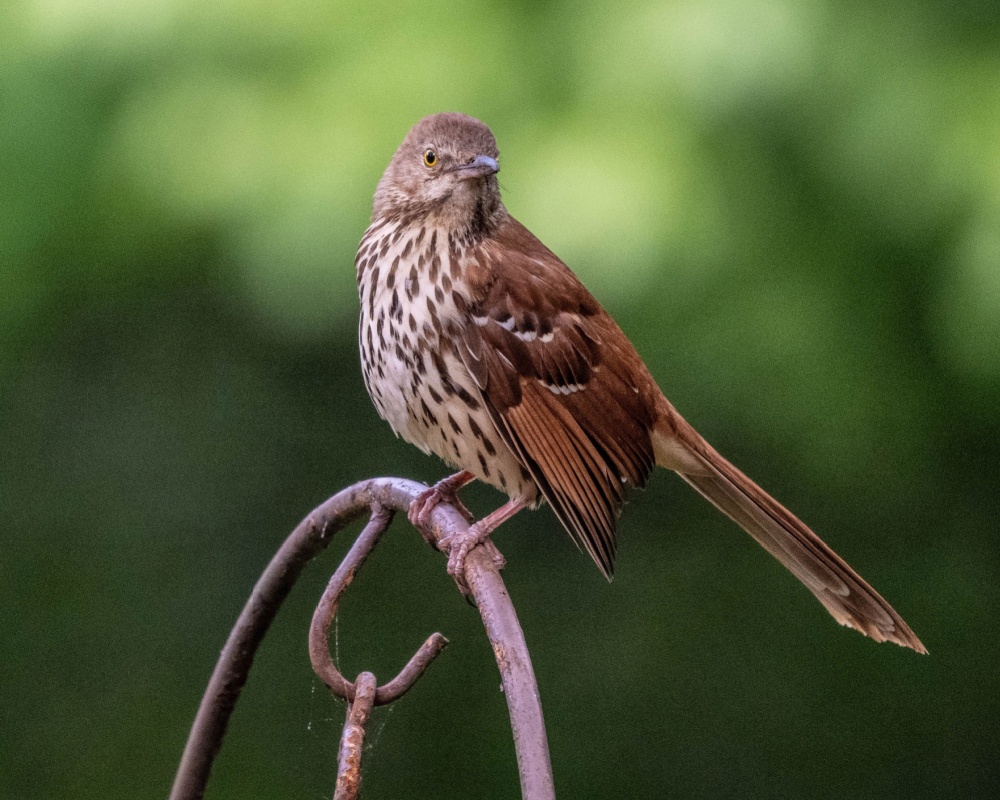
State Bird:
Brown thrasher
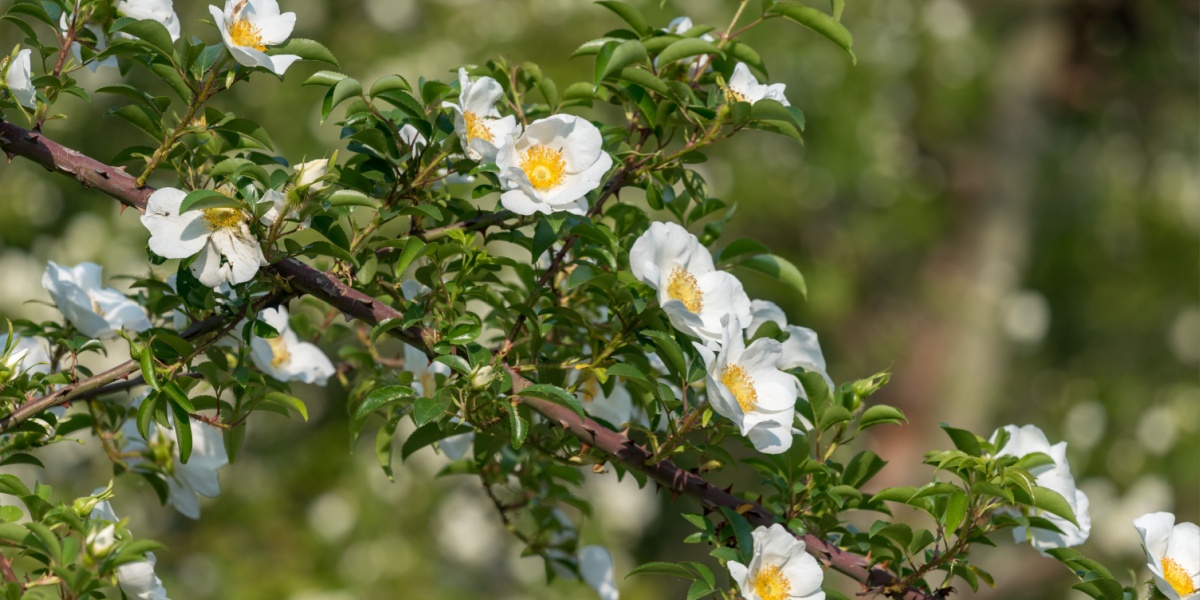
State Flower:
Cherokee rose
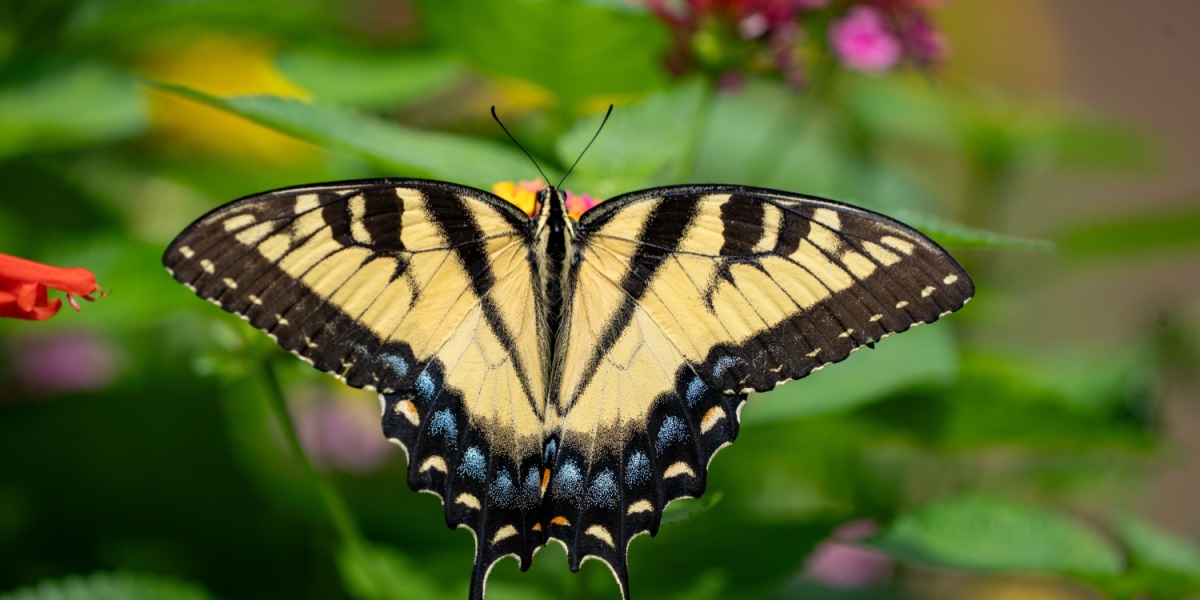
State Butterfly:
Eastern tiger swallowtail
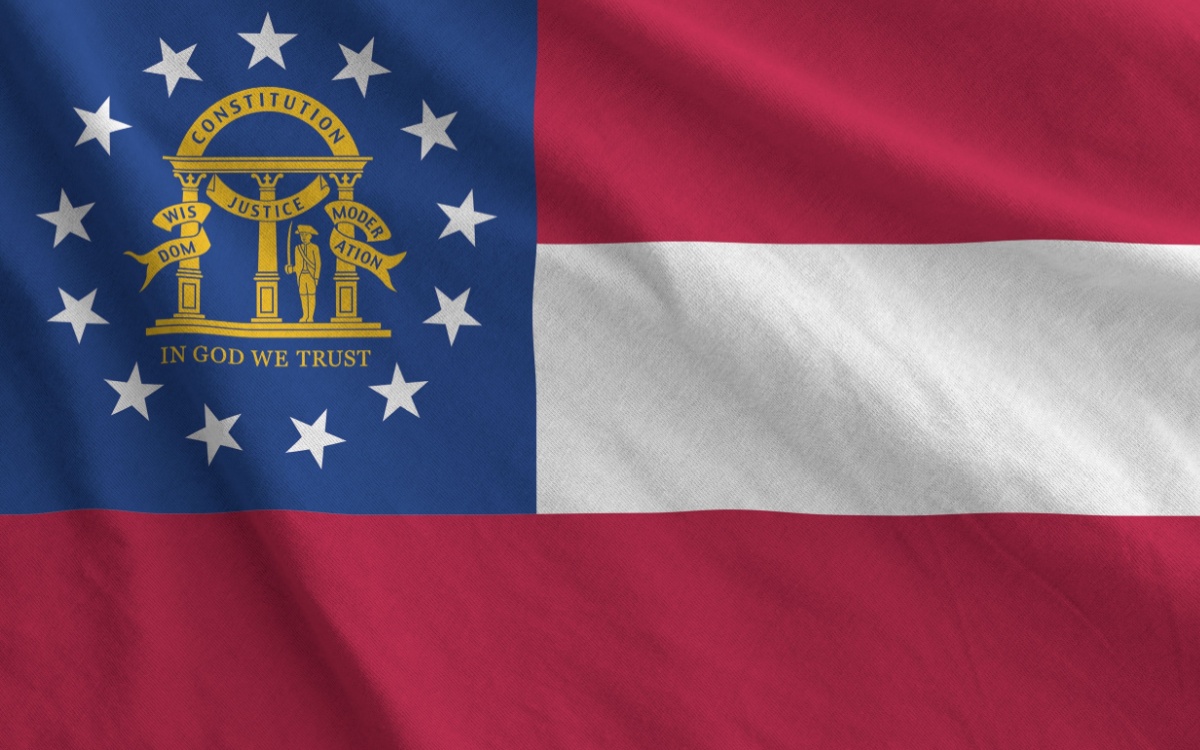
State Flag:
Flag of Georgia
?
DID YOU KNOW?
Georgia has changed its state flag many times throughout its history. The current version was officially adopted in 2003.
GEORGIA FUN FACTS
Fun Fact #1:
Georgia is #21 on the list of U.S. states by size, at 57,919 square miles. It’s the 8th most populous state, with nearly 11.2 million residents.
Fun Fact #2:
Coca-Cola was invented in Atlanta in 1886. Dr. John Stith Pemberton, a pharmacist, created the syrup, and it was mixed with soda water and sold for five cents a glass down the street at Jacobs’ Pharmacy.
Fun Fact #3:
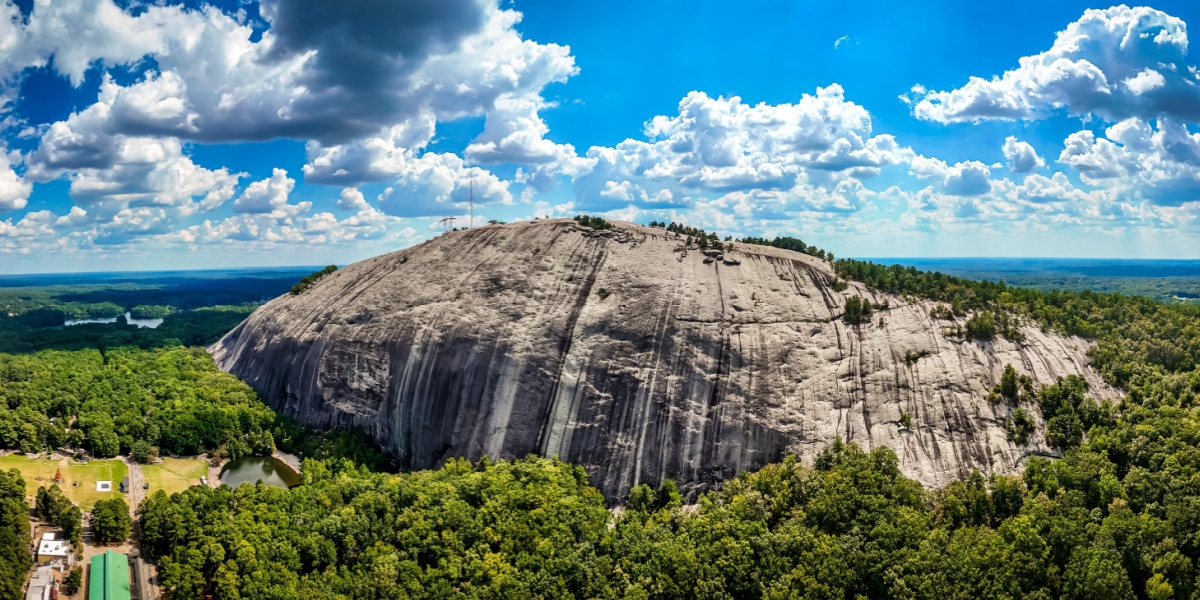
Stone Mountain is one of the largest pieces of exposed granite in the world. The rock here first formed 300 to 500 million years ago, when magma welled up from the Earth’s crust.
Fun Fact #4:
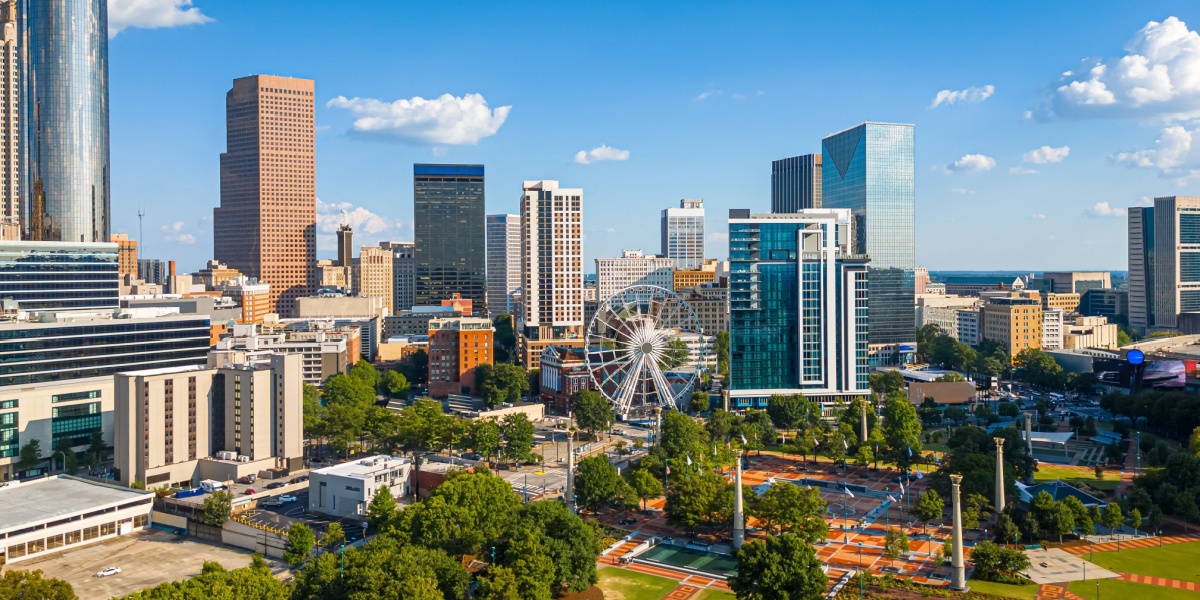
Atlanta, the state capital, is also the biggest city in Georgia, with more than 520,000 people. Other major cities include Columbus and Savannah.

Fun Fact #5:
Civil Rights leader Dr. Martin Luther King, Jr. was born in Atlanta, Georgia on January 15, 1929. Today, his birthplace is a national monument and part of the Civil Rights Trail.
Fun Fact #6:
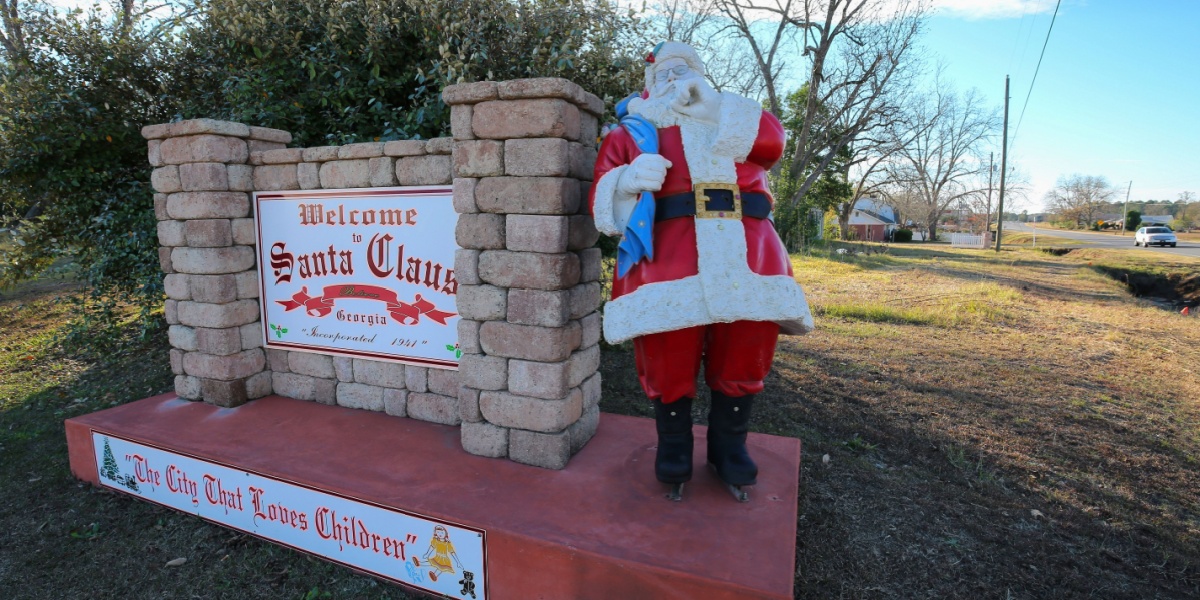
There’s a town in Georgia called Santa Claus! Visitors to the town can see Candy Cane Lane and Reindeer Street, as well as Santa Claus City Hall at 25 December Drive.
Fun Fact #7:
Jimmy Carter was the only U.S. president born in Georgia. He grew up on a peanut farm in a tiny town called Plains.
Fun Fact #8:
The Varsity in Atlanta claims to be the world’s largest drive-in restaurant. It’s located near the campus of Georgia Tech, and on game days it serves more than 30,000 people!
Fun Fact #9:
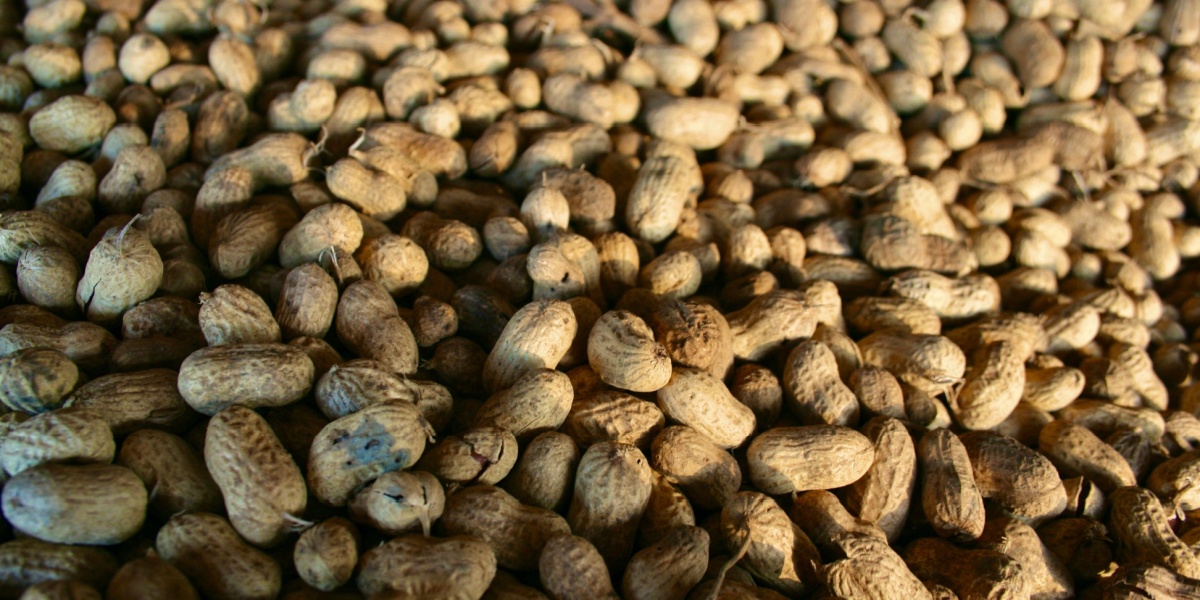
Georgia grows more than 2 billion pounds of peanuts a year—nearly half of the peanuts grown in the U.S.

Fun Fact #10:
Warm Springs, about an hour south of Atlanta, has natural hot springs that are 88 degrees Fahrenheit. President Franklin D. Roosevelt spent a lot of time here bathing in the hot springs. Today you can visit these springs (but bathing in them is no longer allowed) and see FDR’s Little White House too.
GEORGIA GEOGRAPHY FACTS
Regions:
Appalachian Plateau, Ridge and Valley, Blue Ridge, Piedmont, and Coastal Plain
Climate:
Humid subtropical
Location:
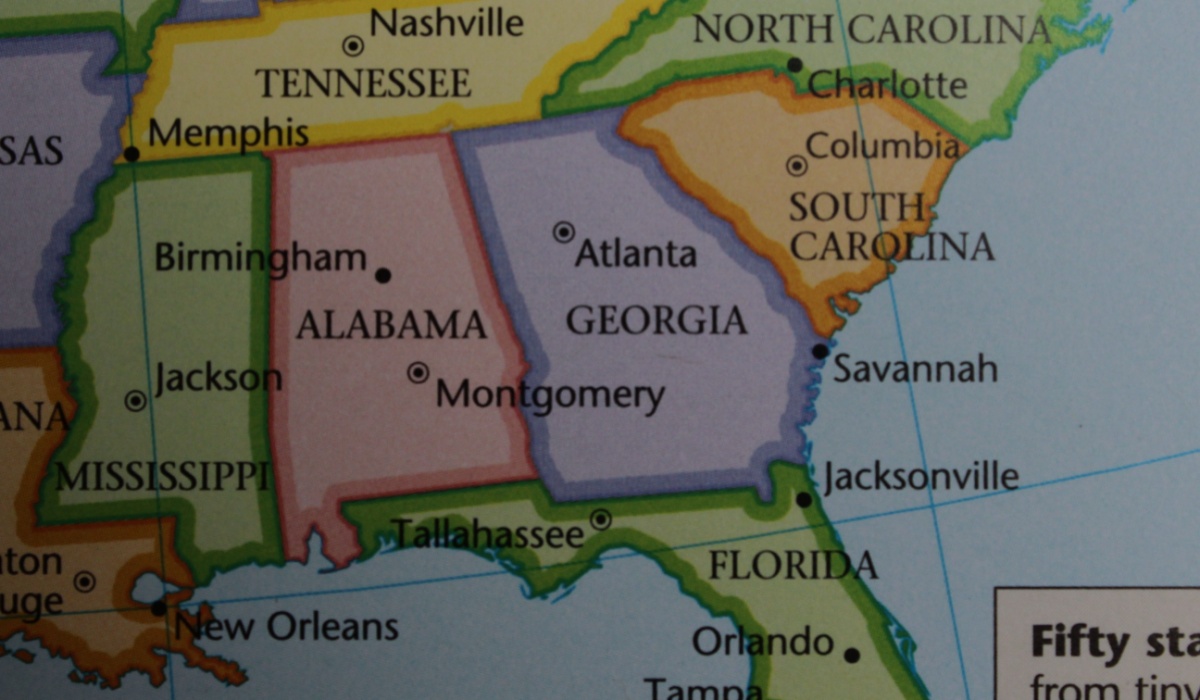
Southeast United States. To the north, Georgia borders Tennessee and North Carolina, while South Carolina and the Atlantic Ocean lie to the east. To the south, Georgia borders Florida, and to the west, it shares a boundary with Alabama.
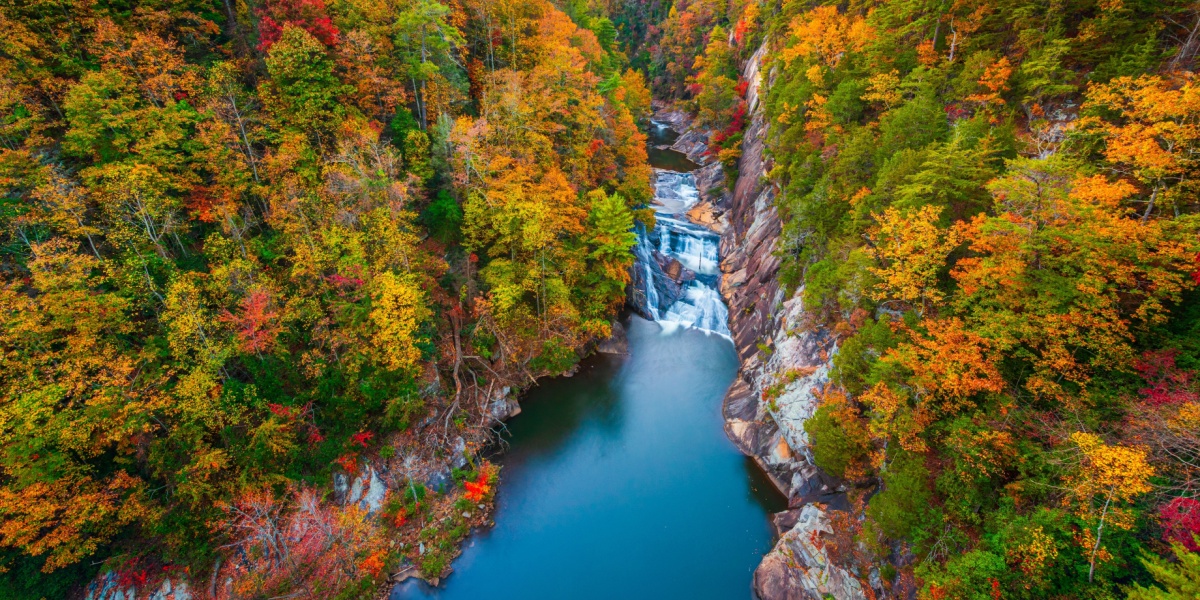
Tallulah Gorg
Landmarks:
Stone Mountain, Amicalola Falls, Okefenokee Swamp, Providence Canyons, Tallulah Gorge, Blue Ridge Mountains, Etowah Indian Mounds
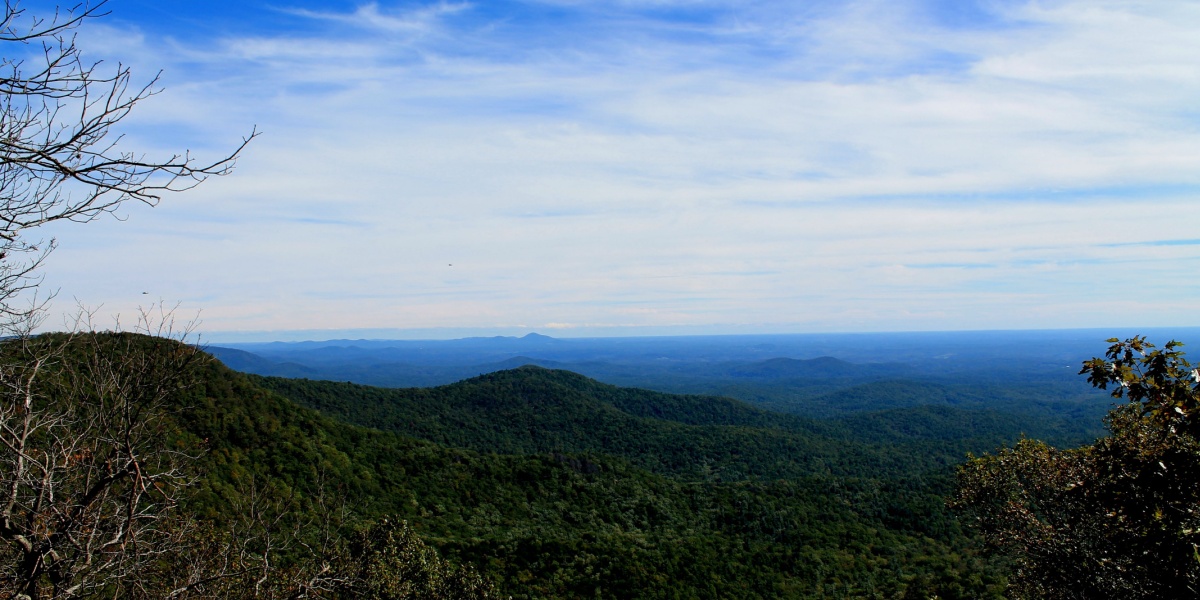
Springer Mountain
Blue Ridge Mountains:
This stretch of the Appalachian mountain range runs from Pennsylvania down through Georgia. One end of the Appalachian Trail is in Georgia at Springer Mountain—the trail runs north all the way to Maine.
?
DID YOU KNOW?
The Blue Ridge Mountains are named for the characteristic blue haze that often appears when seen from a distance. This color comes from a compound called isoprene that the trees give off to protect themselves from the heat of summer days.
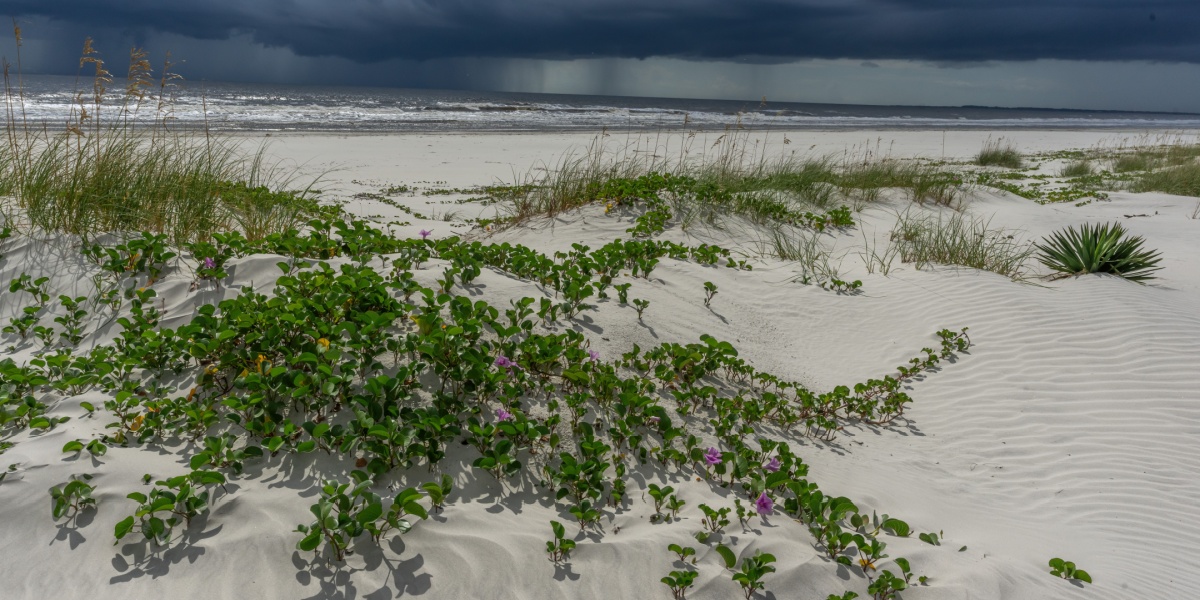
Cumberland Island of the Barrier Islands
Barrier Islands:
This chain of islands along the Atlantic coast protects mainland Georgia from ocean waves and storms. These popular vacation destinations include Tybee Island, St. Simons Island, Jekyll Island, Cumberland Island, and Sapelo Island.
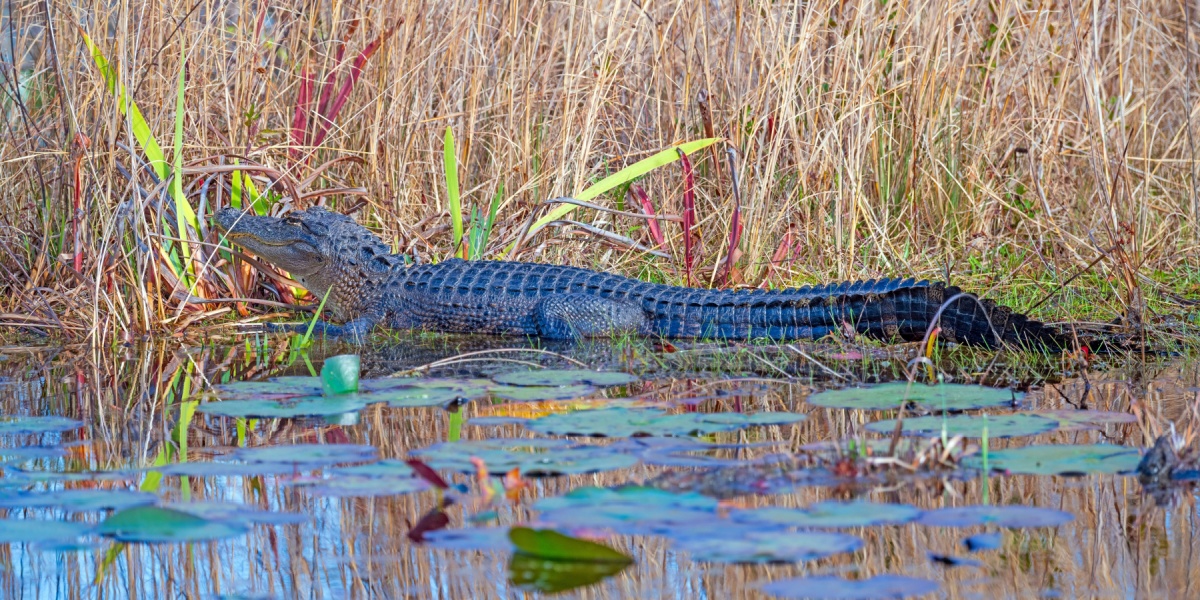
Alligator in Okefenokee Swamp
Okefenokee Swamp:
The Okefenokee Swamp in southern Georgia is one of the largest swamps in North America and is home to alligators, turtles, and lots of unique plants.
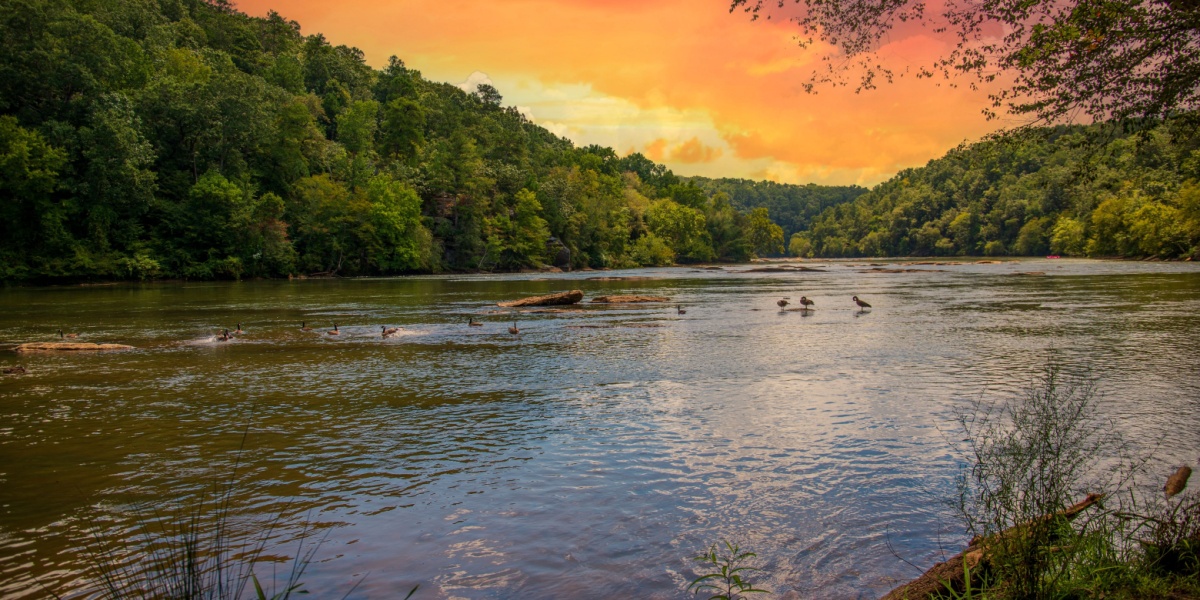
Chattahoochee River
Major Rivers:
Chattahoochee, Savannah, Altamaha, Flint, and Ocmulgee
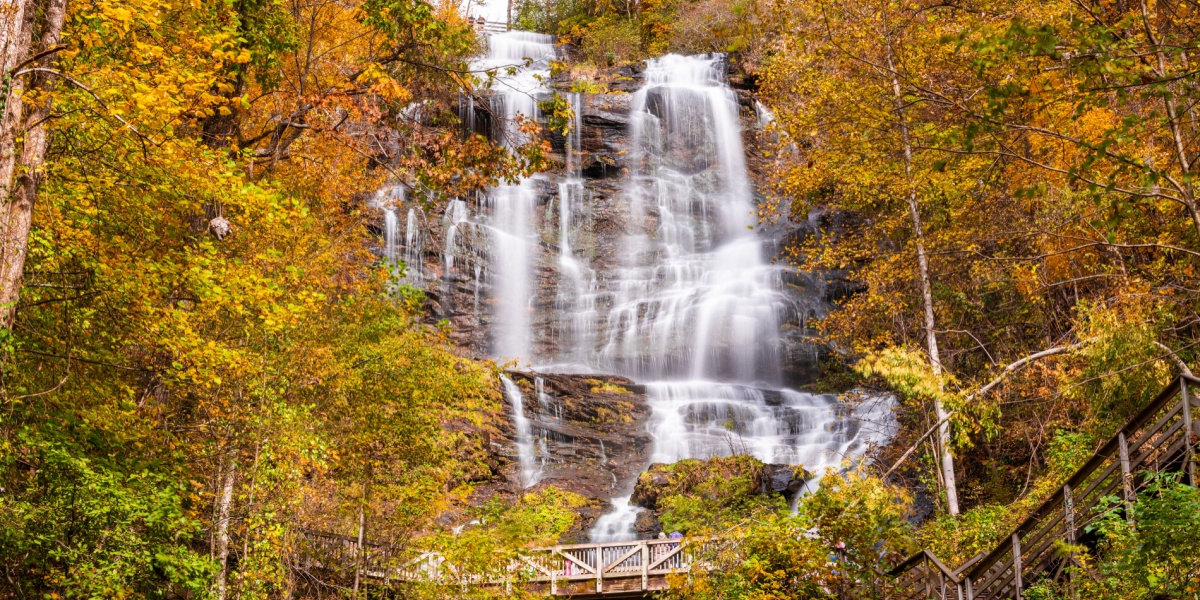
Amicalola Falls State Park
Selected State Parks:
Amicalola Falls State Park, Cloudland Canyon State Park, Vogel State Park, Skidaway Island State Park, Tallulah Gorge State Park, F.D. Roosevelt State Park
Atlantic Coast:
Georgia’s Atlantic coast stretches for about 100 miles in a straight line, but if you include all the bays, estuaries, islands, and other coastal inlets, the state actually has more than 2,000 miles of coastline.
Highest Point:
Brasstown Bald, 4,784 feet
GEORGIA WILDLIFE & NATURE FACTS
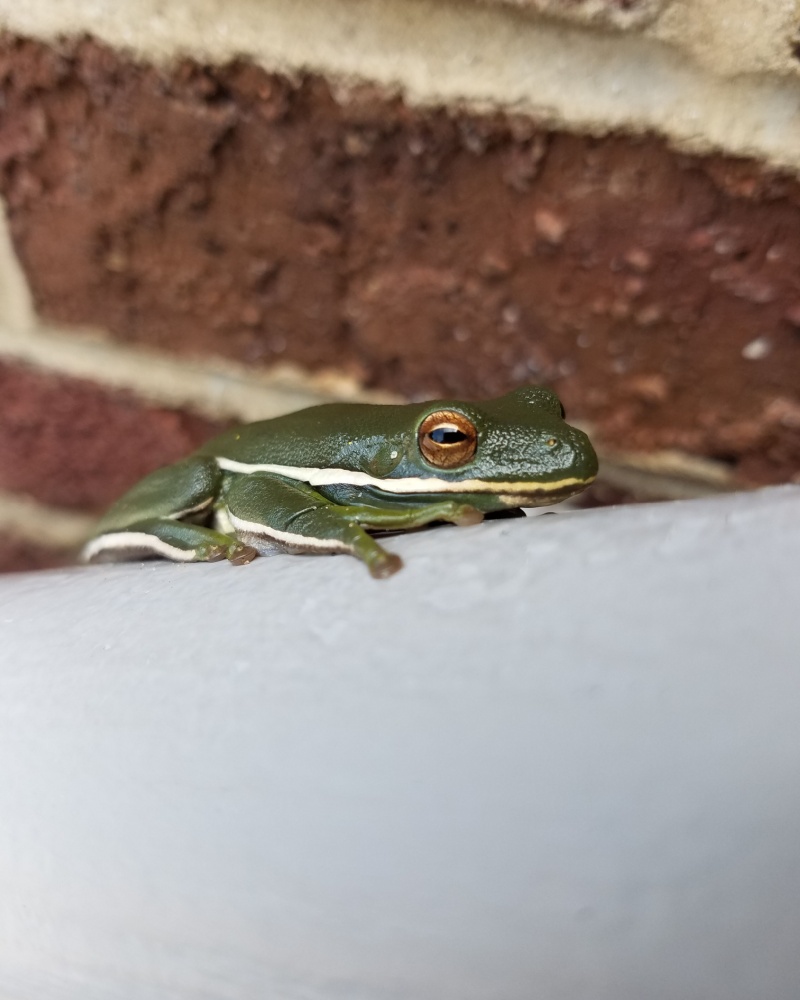
Green tree frog
Common Reptiles and Amphibians:
American alligator, green anole, eastern box turtle, common snapping turtle, gopher tortoise, corn snake, eastern kingsnake, cottonmouth (water moccasin), southern toad, green tree frog
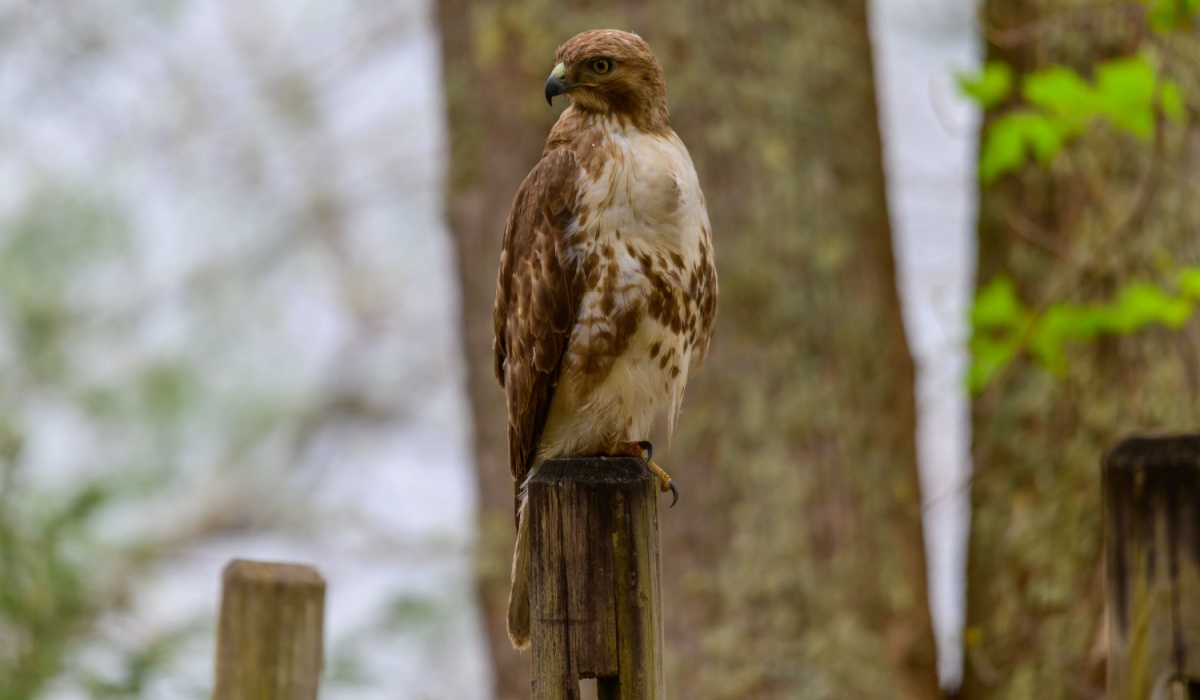
Red-tailed hawk
Common Birds:
Red-tailed hawk, blue jay, mallard, American crow, northern mockingbird, brown thrasher, red-bellied woodpecker, downy woodpecker, northern cardinal, eastern bluebird, American robin, tufted titmouse, Carolina chickadee, pine warbler
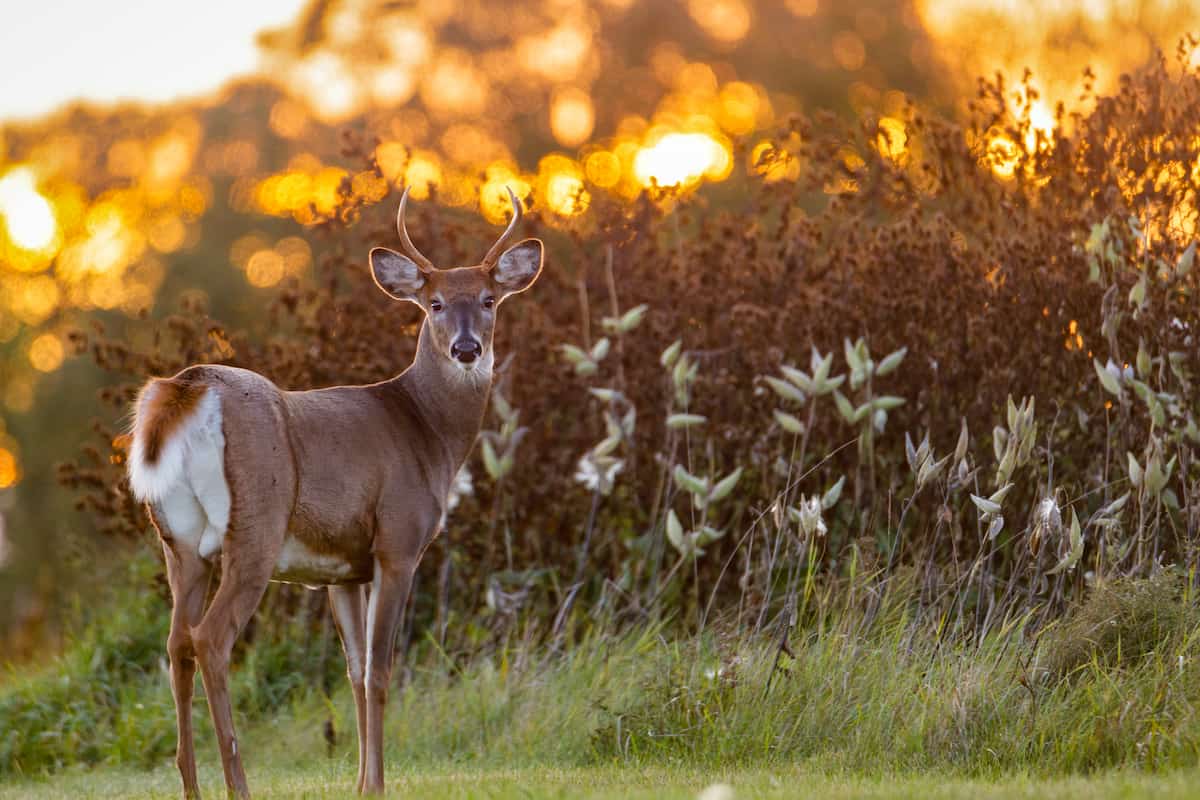
White-tailed Deer
Common Mammals:
White-tailed deer, black bear, coyote, raccoon, Virginia opossum, eastern gray squirrel, fox squirrel, eastern cottontail rabbit, nine-banded armadillo, red fox, gray fox, bobcat, striped skunk, little brown bat, big brown bat
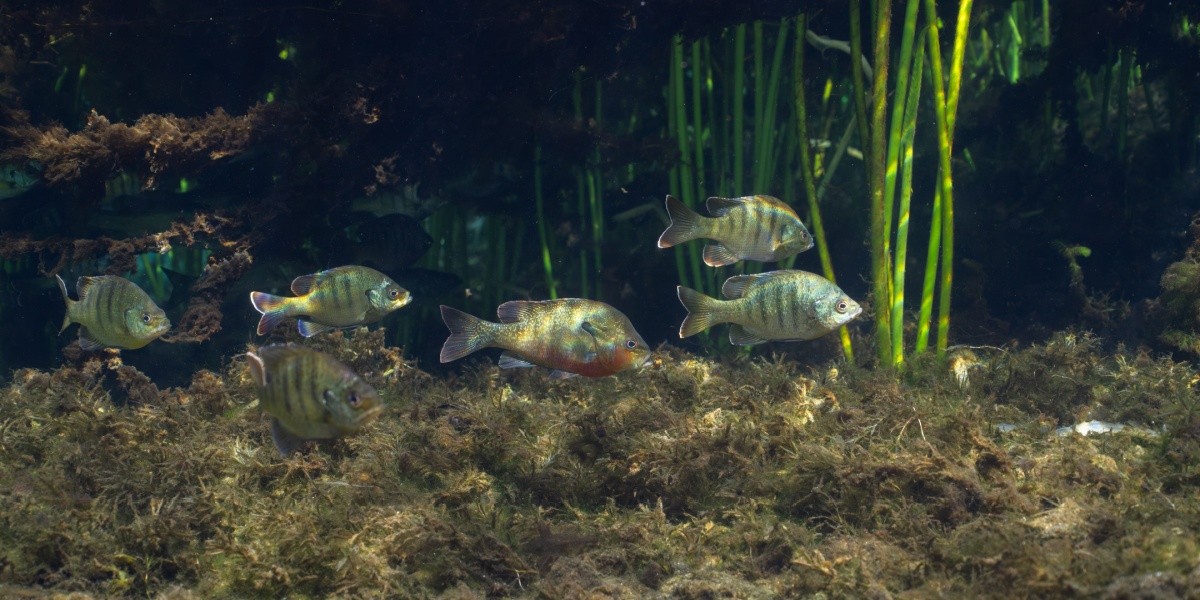
School of bluegill and sunfish
Common Fish:
Largemouth bass, bluegill, channel catfish, crappie, striped bass, sunfish, redear sunfish (shellcracker), smallmouth bass, brown trout, blue catfish
Selected Endangered/Threatened Species:
Red-cockaded woodpecker, gopher tortoise, indigo snake, frosted flatwoods salamander, wood stork, shortnose sturgeon, Atlantic sturgeon, fringed campion, pondberry, smooth purple coneflower
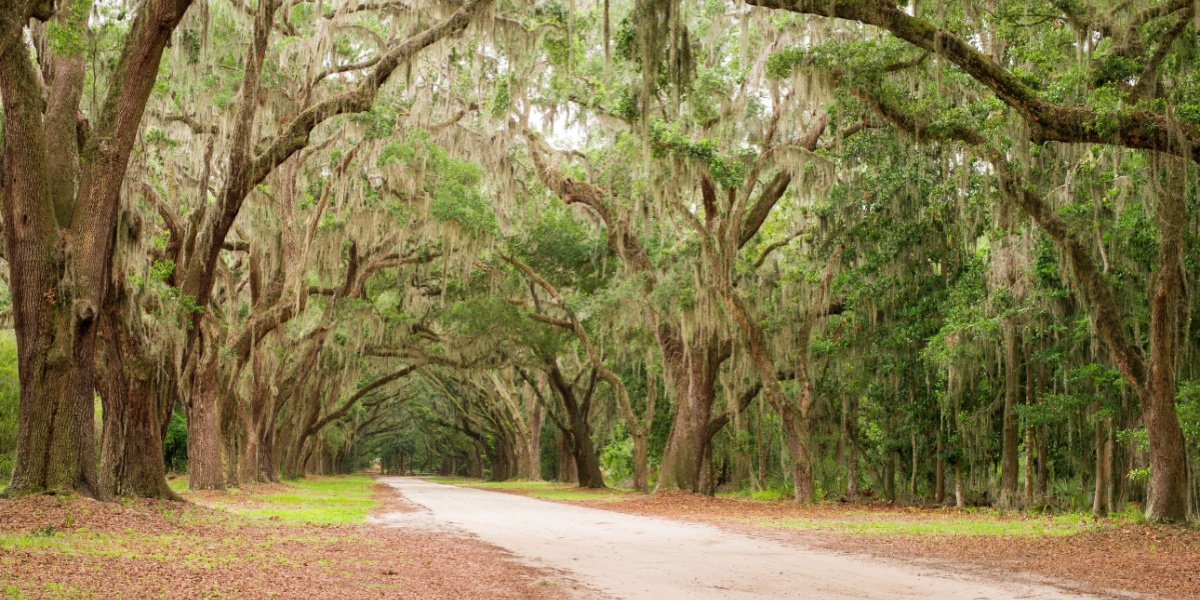
Live Oak Trees
Common Trees:
Live oak, southern magnolia, loblolly pine, longleaf pine, slash pine, sweetgum, red maple, yellow poplar (tulip tree), white oak, hickory
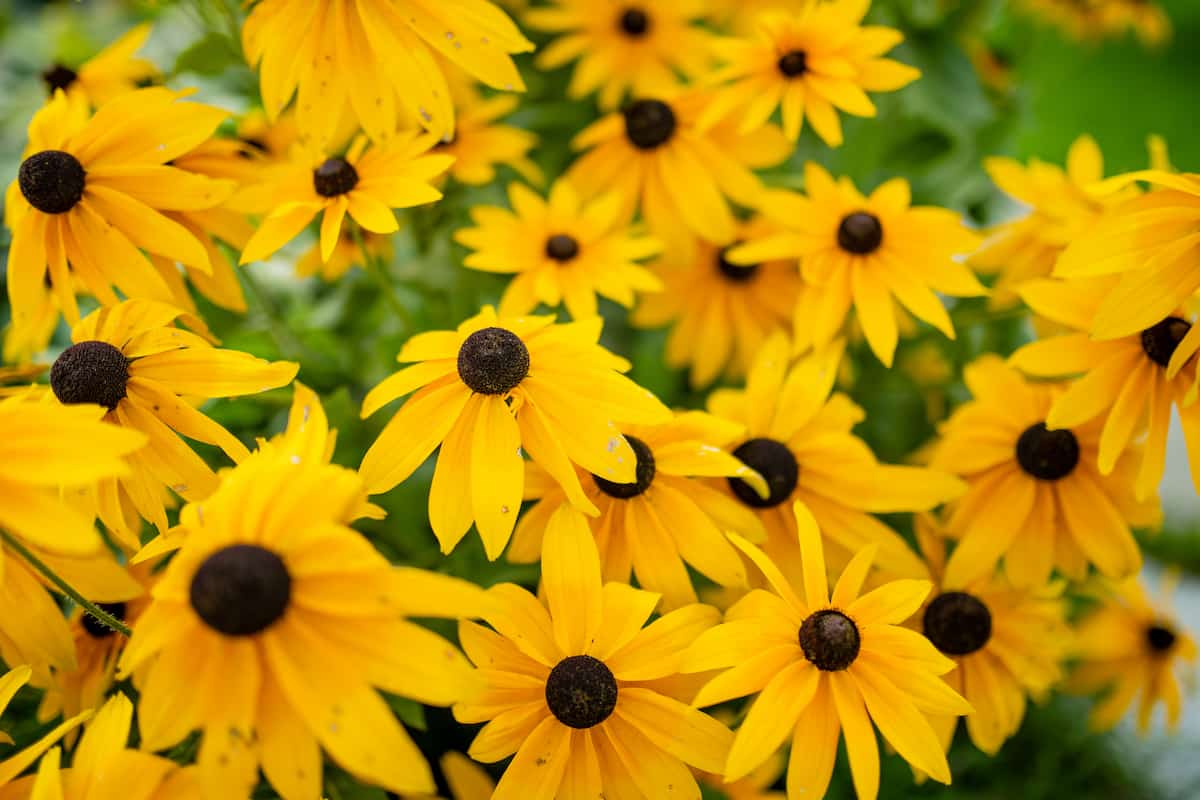
Black-eyed Susan
Common Plants and Flowers:
Azalea, Cherokee rose, black-eyed susan, trumpet vine, butterfly weed, cardinal flower, Joe-Pye weed, goldenrod, wild indigo, mayapple
Selected Invasive Species:
Kudzu, Chinese privet, Japanese honeysuckle, English ivy, cogongrass, feral hogs, brown anole, Argentine black and white tegu, Asian carp, fire ants
?
DID YOU KNOW?
Sometimes called, “The Vine That Ate the South,” kudzu can grow up to one foot every day, and single vines can stretch 100 feet or more!
North Atlantic right whales breed in the Atlantic Ocean waters just off Georgia’s coast. There are only 350 of these whales left in the world today.
GEORGIA HISTORY FACTS
First Inhabitants:
Around 15,000 years ago, people first came to the area now known as Georgia. These Paleo Indians lived in areas like the Macon plateau, hunting animals like mammoths and deer. These people also fished and gathered nuts and berries for food.
Woodland Indians:
By around 1000 B.C.E., native people began creating more permanent settlements. They planted food crops like sunflowers, and traded with other groups as far away as the Great Lakes and Rocky Mountains.
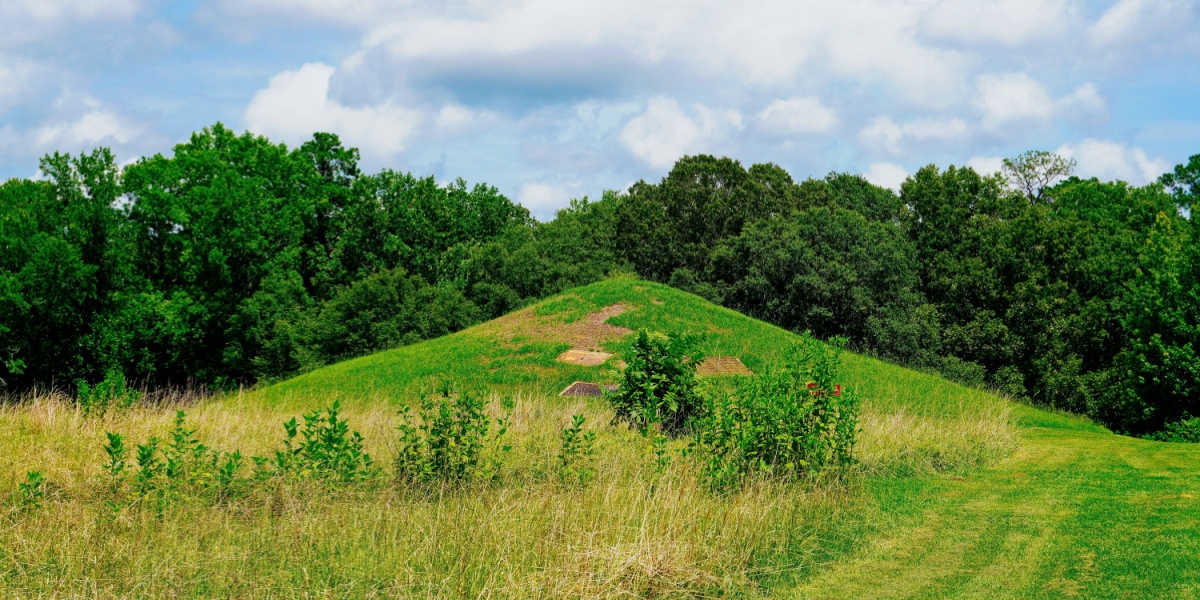
Ocmulgee Mounds National Historical Park
Native Cultures:
From about 900 to 1100 C.E., new cultures arose and built settlements like the massive Ocmulgee Mounds. They carried basket after basket of soil to create platforms for temples and council houses. Over time, towns and chiefdoms came together to form the Muscogee (Creek) and Cherokee Nations.
?
DID YOU KNOW?
The Great Temple Mound at Ocmulgee is 55 feet tall, and archeologists estimate it took around 10 million baskets of dirt to build it. The baskets likely weighed about 60 pounds each, and were dug and carried by hand!
Hernando de Soto:
Spanish explorer de Soto explored and mapped what is now Georgia in the 1540s, traveling through many Native American towns. His soldiers often took food, captured leaders, and fought with communities that tried to protect themselves. Because of this, and the diseases Europeans brought, Native peoples in the region suffered greatly after his expedition passed through.
Colonial Georgia:
In 1733, British prison reformer James Oglethorpe founded the colony of Georgia with a group of settlers in what would become Savannah. Oglethorpe wanted to create a place where England’s “worthy poor” could have a chance at a better life.
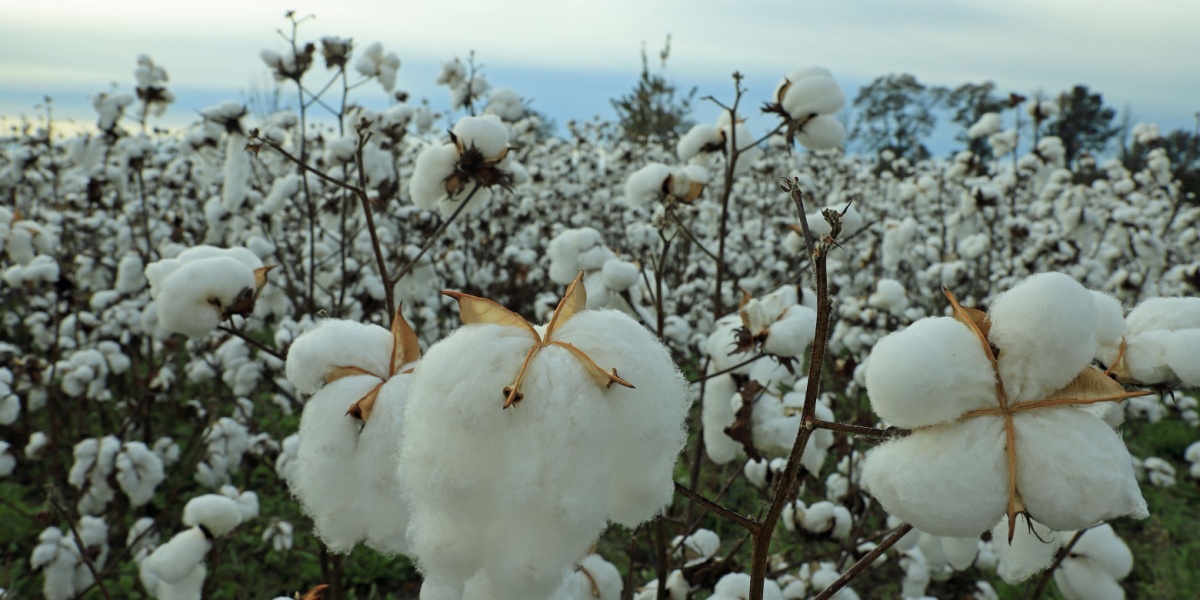
Georgia Cotton Field
Plantation Culture:
Georgia’s climate was especially good for growing rice in the coastal marshlands, as well as indigo, used to dye fabrics blue. Later, cotton became a major crop.Though the colony prohibited slavery at first, it was legalized in 1750, and many colonists established large wealthy plantations supported by enslaved labor.
American Revolution:
At first, Georgian colonists were wary of declaring independence from England, but eventually came around. Savannah was captured by the British in 1778, and they controlled the entire colony for much of the war.
Statehood:
As the war drew to a close, the Americans re-took the area, and British soldiers finally left Savannah in 1782. Georgia became the 4th state to ratify the new U.S. Constitution on January 2, 1788.
?
DID YOU KNOW?
The only county in Georgia named after a woman is Hart County, which was named for Nancy Hart, a Revolutionary War patriot and frontierswoman known for resisting British soldiers and Loyalists.
Trail of Tears:
As the new country grew, settlers demanded more and more land that had belonged to Native Americans. In 1838, U.S. troops ordered the tribes living in Georgia to move west to what would later become Oklahoma, including the Cherokee and Muskogee. Though they resisted, the native people were forced to march hundreds of miles to their new homes. They had almost no food or shelter, and many thousands died along the way.
American Civil War:
Georgia seceded from the U.S. in 1861 and became part of the Confederacy. The state saw many major battles at places like Chickamauga, the second-bloodiest battle of the war. In 1864, Union General Sherman marched from Atlanta to Savannah, destroying railroads, farms, and supplies to weaken the Confederacy.
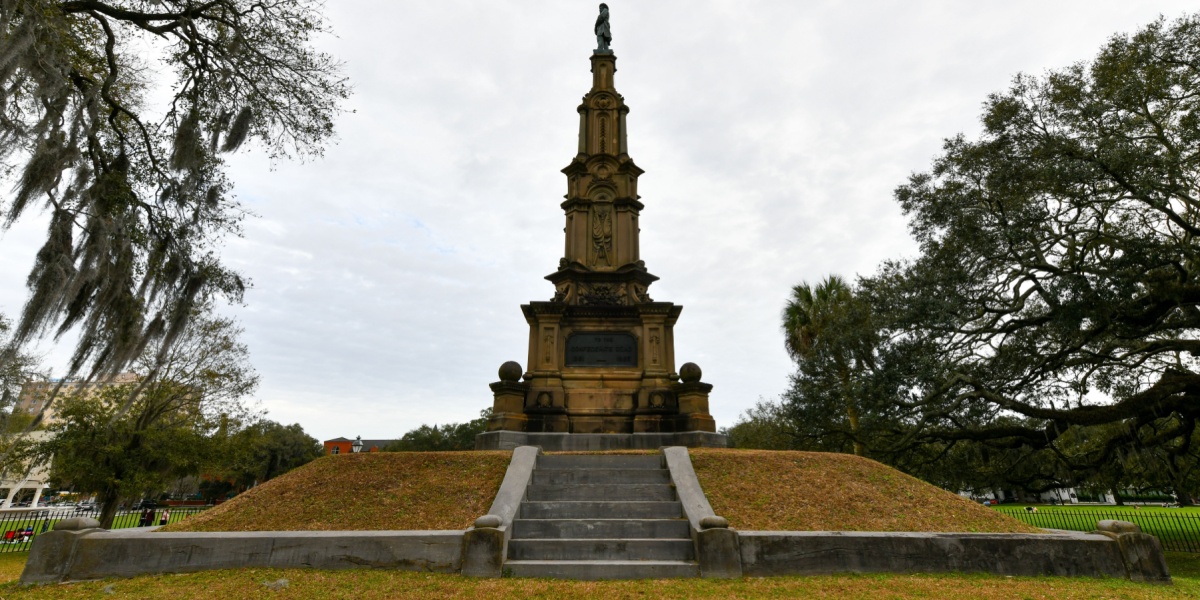
Civil War Confederate Statue Monument Forsyth Park in Savannah Georgia
Reconstruction Era:
After the war ended in 1865, the United States went through a period called Reconstruction. The country worked to rebuild the South, bring the Southern states back into the Union, and help formerly enslaved people adjust to freedom after the 14th Amendment made them citizens. Many white Southerners felt the Reconstruction Era laws were unfair, leading to more conflict in the years ahead.
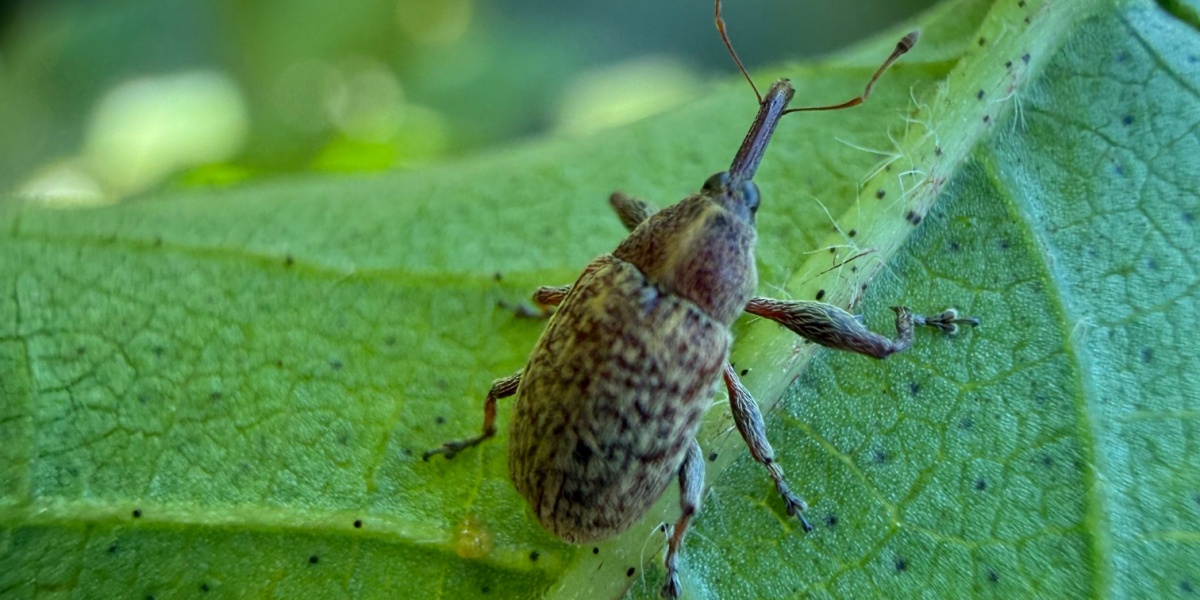
Boll weevil bug
Boll Weevils:
Cotton remained an important crop in Georgia, though it was mainly grown on small farms rather than large plantations. In 1915, the boll weevil appeared in the state, quickly wiping out millions of dollars worth of cotton plants. Many cotton growers lost their farms before scientists found effective ways to control the invasion in the early 1990s, with major eradication efforts continuing into the late 20th century.
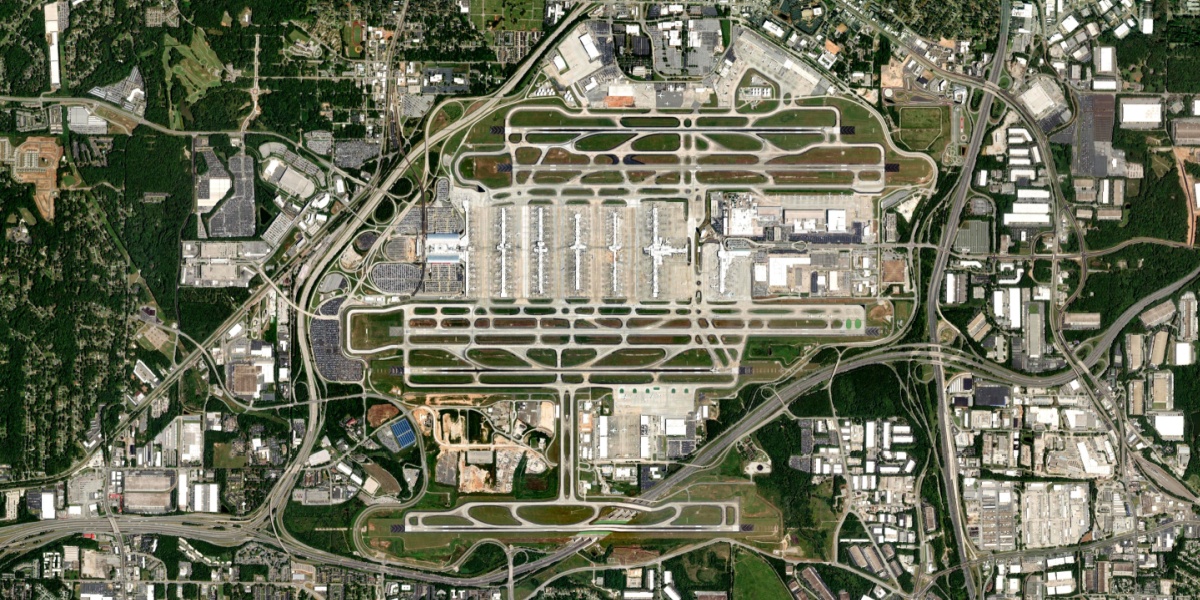
Aerial View of Hartsfield-Jackson Atlanta Airport
Business and Transportation Hub:
As cotton farmers struggled, other industries began to thrive in Georgia. Beginning in the 1960s, Hartsfield-Jackson Atlanta Airport grew quickly—today it’s the busiest airport in the nation. Companies like Delta Airlines, Coca-Cola, UPS, and CNN established their headquarters there.
?
DID YOU KNOW?
In 1996, Atlanta hosted the Summer Olympic Games. During the games, a bomb exploded at Centennial Olympic Park. Two people died and over 100 were injured. The city and athletes continued the games, showing courage and a sense of unity after the tragedy.


Looking for Fun Learning Activities?
More Activities…
-

Learn How to Make Silly Seed Animals
Make silly seed animals with this fun science and plant craft for kids of all ages.
-

Learn How to Make Seed Paper With This Fun Craft
This fun earth day activity can engage your child in plant science while learning how to recycle and upcycle to help keep our planet clean.
-
How To Use Playing Cards to Teach Kindergartners Math
Our ABCmouse Curriculum expert shows how to use a playing card game to teach kindergarten math.
-

50+ Preschool Weather Activities Your Kids Will Want to Do Again and Again
Explore 50+ fun preschool weather activities, crafts, and games that spark curiosity through hands-on learning, creativity, and play.