40+ Spring Activities for Kids: Ideas for Inside & Outside
Share
Get loads of ideas for having fun with kids this spring! We’re sharing indoor activities for rainy days and outdoor adventures to enjoy when the sun is shining.
Spring has sprung, which means unpredictable weather and a need for fun spring activities to enjoy indoors and out, depending on the weather. When raindrops start falling, pick from our list of simple and imaginative activities to try inside, and when the weather cooperates, head outside with our list of creative ways to explore and play in nature.
Looking for spring craft ideas? We’ve got you covered! Check out our list of spring crafts for kids that are made from household craft supplies.
Indoor Spring Activities for Kids
1. Go Indoor Cloud Watching

If it’s too chilly to go outdoors, “watch the clouds” inside instead—with cotton balls!
Start by looking up different types of clouds (cumulus, stratus, etc.) and discussing the features unique to each one. Use images of them to make the shapes of different types of clouds with cotton balls and construction paper.
Then, have fun creating clouds in the shape of different animals or objects, and take turns guessing what they are.
2. Learn Spring Bird Songs
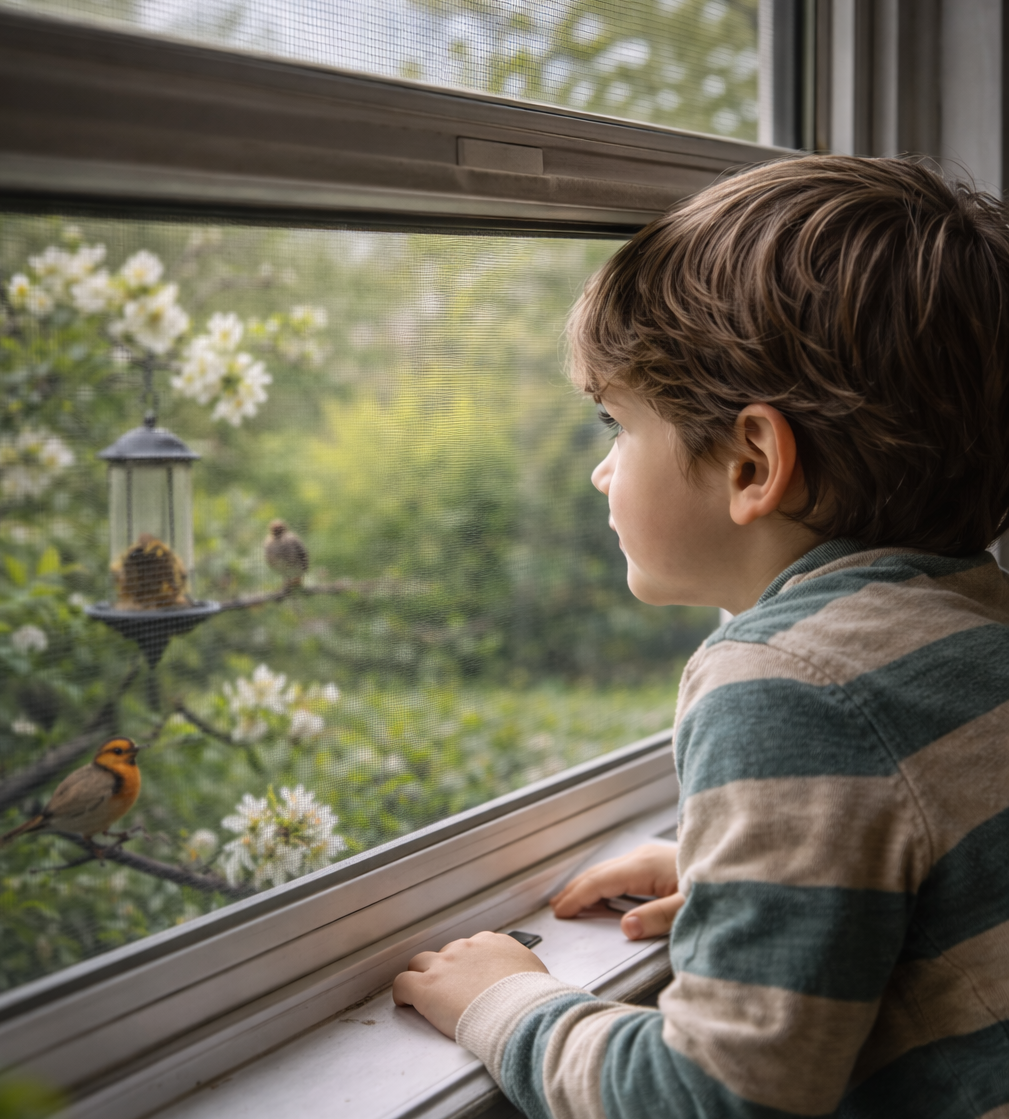
Visit a site like allaboutbirds.org and find out what birds nest in your area in the spring.
Listen to their songs to learn what they sound like (many birds have special spring songs they only sing during mating season).
Then, open a window or head outside to see if you can hear any of these feathered visitors in the wild.
3. Crack Each Other Up

Brighten any spring day with a little laughter and silliness! Whether you’re on the go and need easy entertainment or just want to share a few giggles at home, these spring-themed jokes and riddles are sure to bring plenty of smiles.
Expand Learning: Reading jokes and riddles together is more than just a great way to get a laugh–it’s also a highly-engaging way to practice reading!
4. Make Seed Paper
With plants starting to grow and bloom, spring is an ideal time to work with seeds and planting. This activity transforms seeds and paper into a unique gift your child can share with others or plant in their very own garden. Get step-by-step written instruction here.
Expand Learning: Creating Silly Seed Paper easily ties into talking about or celebrating Earth Day. Use our Earth Day coloring pages and worksheets to guide conversations and learning.
5. Make Fingerprint Flower Paintings
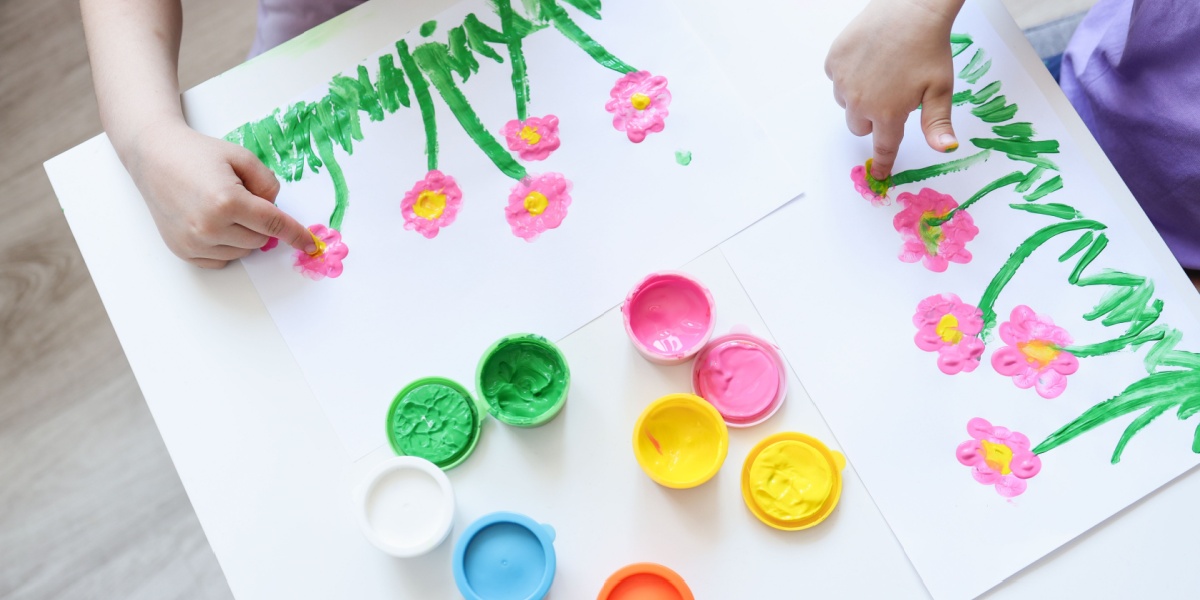
Pull out the fingerpaints to make this simple toddler craft. Use your fingerprint to make the petals of each flower. Line them up in a variety of colors, draw in the stems and leaves, and display your handmade artwork.
6. Play With a Springtime Sensory Bin
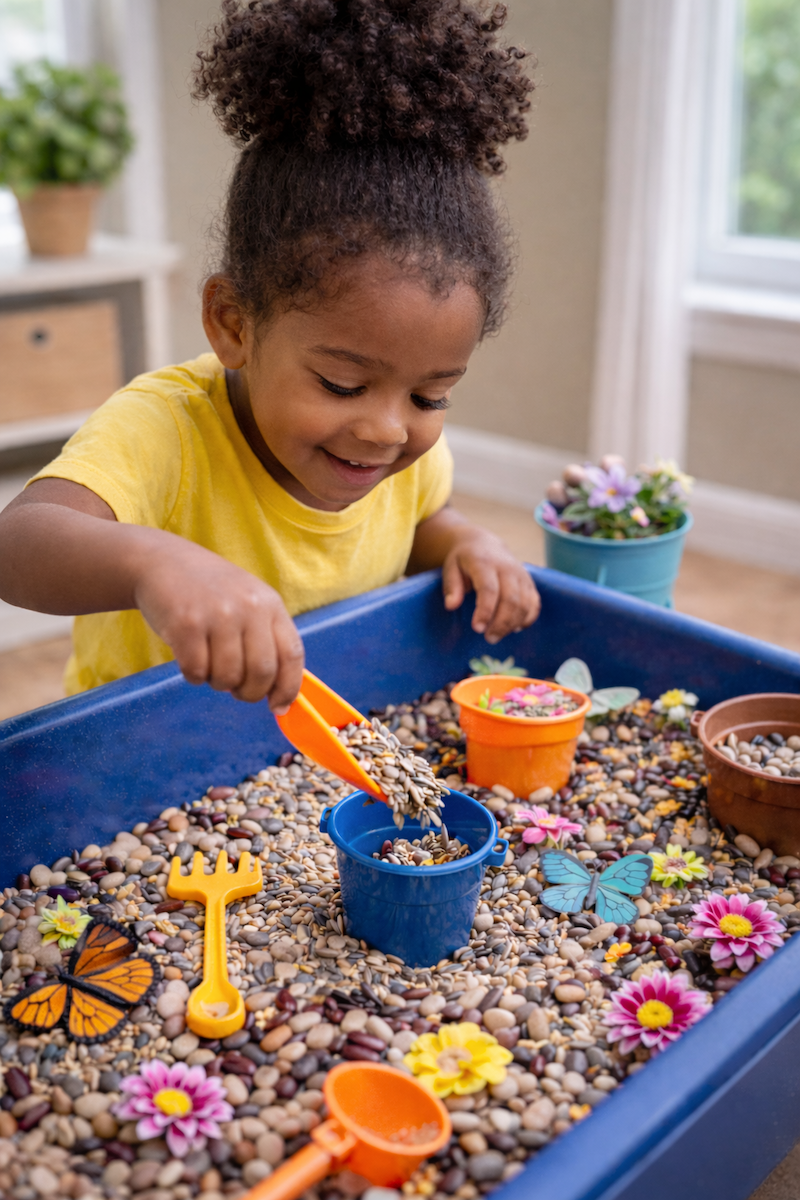
Welcome the warmer months with a spring-themed sensory bin. Here are a few possibilities:
🦋 Dried rice dyed light green, large seeds like sunflower or pumpkin seeds, dried beans or lentils, small springtime animals like butterflies, lambs, etc., and cotton balls with a few drops of floral-scented essential oils
☁️ Blue water beads, shaving cream clouds, lightning bolts cut from craft foam, large beads in rainbow colors, scoops and measuring cups
Potting soil, small toy insects and worms, artificial flowers, shovels, pails, seeds, pebbles and rocks
7. Write a Springtime Acrostic
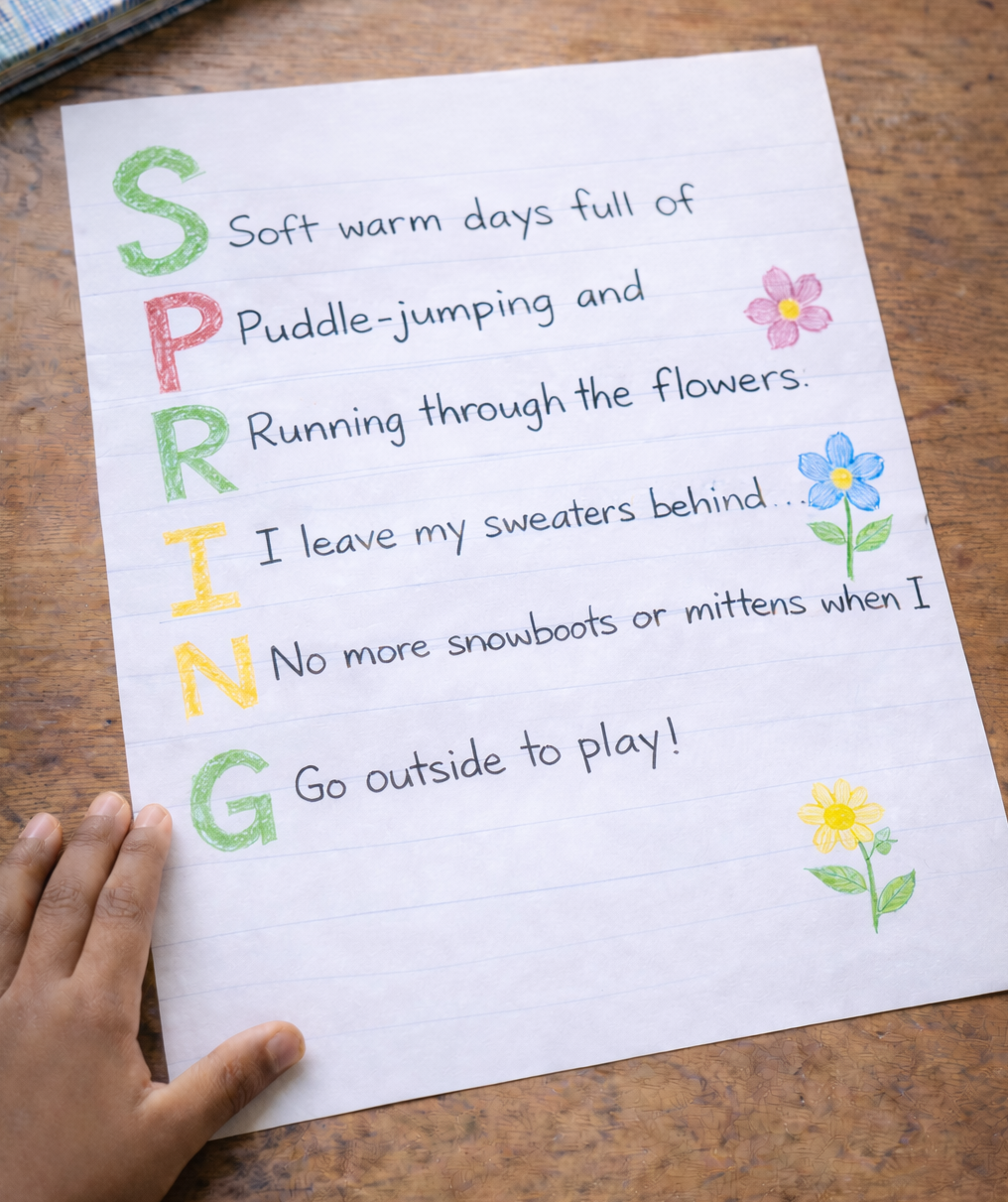
Choose a spring-related word (use our list of 250+ spring words for kids to help) and turn it into an acrostic, where the first word of each line starts with one letter of the word. Then use crayons, paint, or markers to illustrate it, drawing the word S-P-R-I-N-G along the side of your poem. Here’s an example:
Soft warm days full of
Puddle-jumping and
Running through the flowers.
I leave my sweaters behind …
No more snowboots or mittens when I
Go outside to play!
8. Hang a Spring Garland
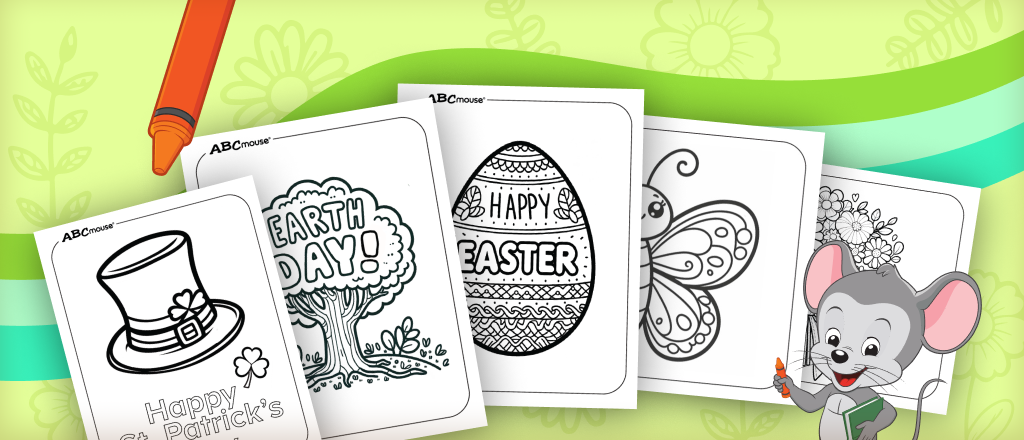
Our spring coloring pages are full of flowers, baby chicks, little lambs, and other springtime symbols. Color the ones you like and cut them out, then string them along a ribbon or some yarn for a fresh new decoration to hang across a window or mantel, above a doorway, or along a wall.

9. Sing Along with Springtime Songs
The Four Season Song
This catchy tune helps children learn about the four seasons. They can watch or sing along or simply enjoying listening to it while coloring or playing.
Splish Splash Dance in the Rain
Kids can dance along with ABCmouse, pretending to splash in puddles and dance in the rain, complete with “splishes” and “splashes!”
10. Build Your Own Bird Nest

This is the time of year when birds get busy making nests to raise their young. How would you build a nest? Gather sticks and other nature items and make a small model nest for birds.
Or, think bigger and make a “nest” for people-sized birds from blankets, pillows, etc. Settle down in your nest and play a game of pretend as you sit on your “eggs” and raise your little chicks, or simply use your nest as a cozy spot to read, play, or learn with ABCmouse.
11. Create an Indoor Rainstorm
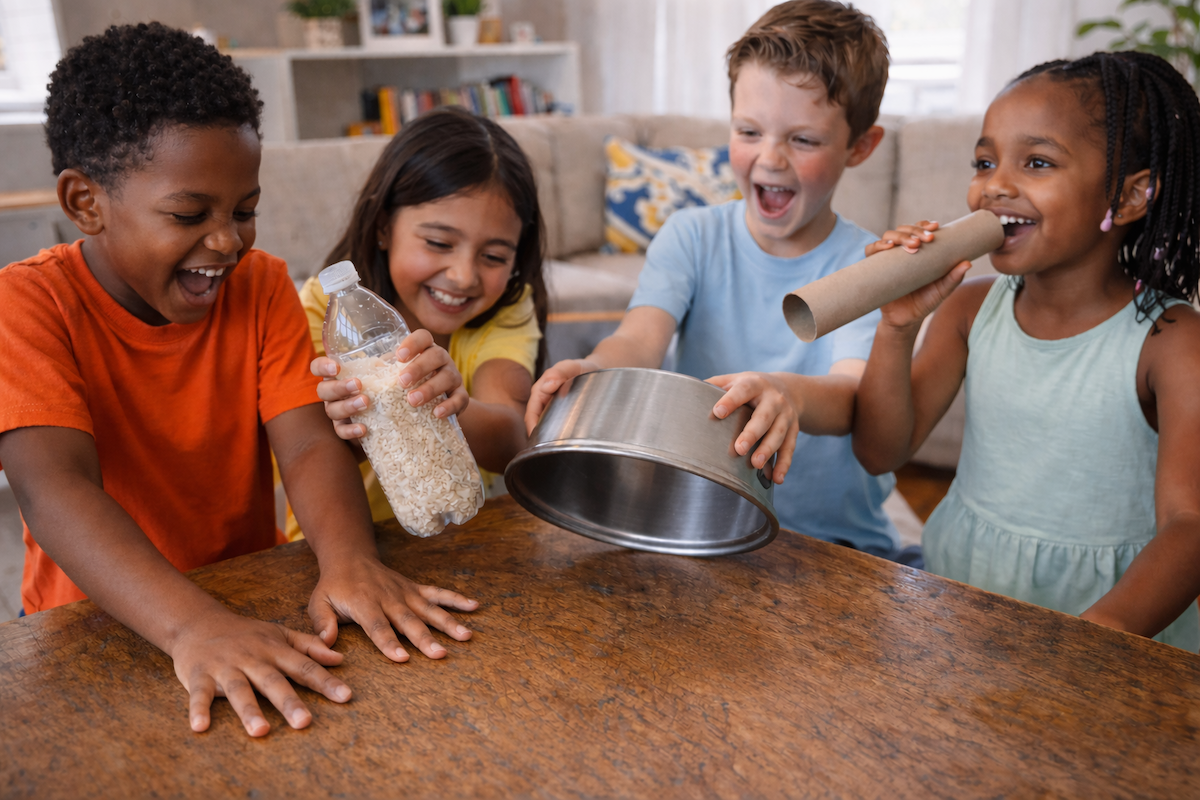
Kids can create the sounds of rainstorm using everyday household items while exploring different sounds and rhythms.
This is an ideal activity for groups of children, families, and classrooms, where each child can contribute to the sound of the storms with the ideas below.
DIY Storm Tips:
- Raindrops – Lightly tap fingertips on a table or clap softly to mimic the gentle sound of raindrops. Experiment with faster or slower claps to match light drizzles or heavier showers.
- Pattering Rain – Pour uncooked rice or dry beans into a plastic bottle or container and shake it gently. This creates the sound of steady rainfall. Let kids try shaking it at different speeds to mimic drizzle or a downpour.
- Thunder – Bang on a metal baking pan or upside-down pot to create the rumbling sound of thunder. Try tapping it lightly for distant thunder or giving it a louder bang for a big storm!
- Wind Whooshing – Blow through a paper towel roll or wave a plastic bag in the air to mimic the sound of a blustery breeze.
12. Note the Signs of Spring

What are the signs of spring where you live? When the days are finally longer than the nights? When the snow all melts away? When migrating birds appear? Keep an eye out for the obvious and subtle signs of spring as they appear, and make a list, noting the date of each observation. In the years to come, you can compare the dates and see if spring is early, late, or right on time!
Tip: Add an illustration to accompany each sign of spring that you note.
13. Enjoy Silly Spring Poems
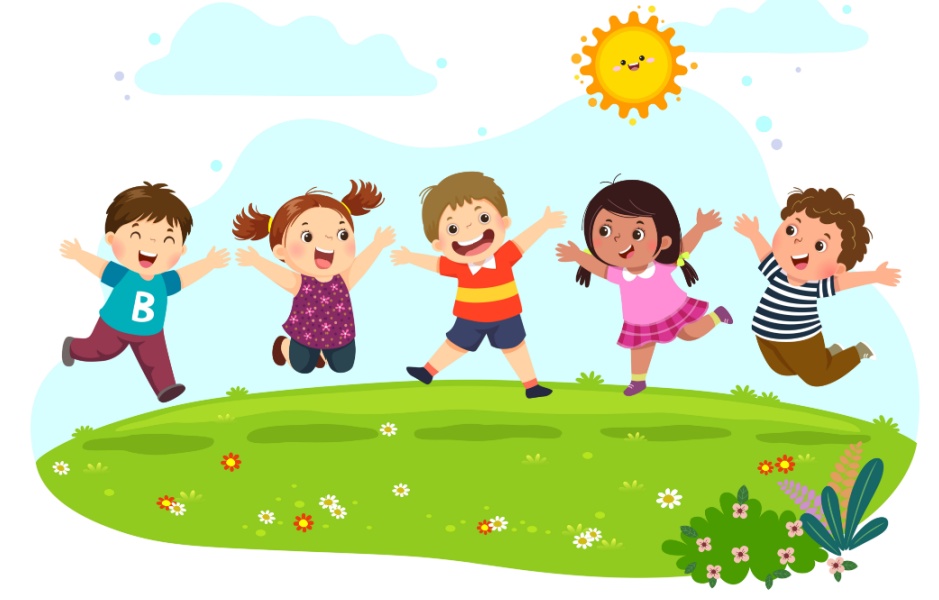
These fun and playful spring poems are perfect for toddlers, preschoolers, and beyond and celebrate the animals and natural beauty of the season. Young children will especially enjoy the goofy rhyming poems! These are great for reading at bedtime or while sitting outside enjoying the weather.
Expand Learning: Reading poetry is important for children because it helps develop language skills, creativity, and emotional expression. Rhyming poetry can also help children learn to identify sound patterns in words..
14. Put Together a Spring Diorama
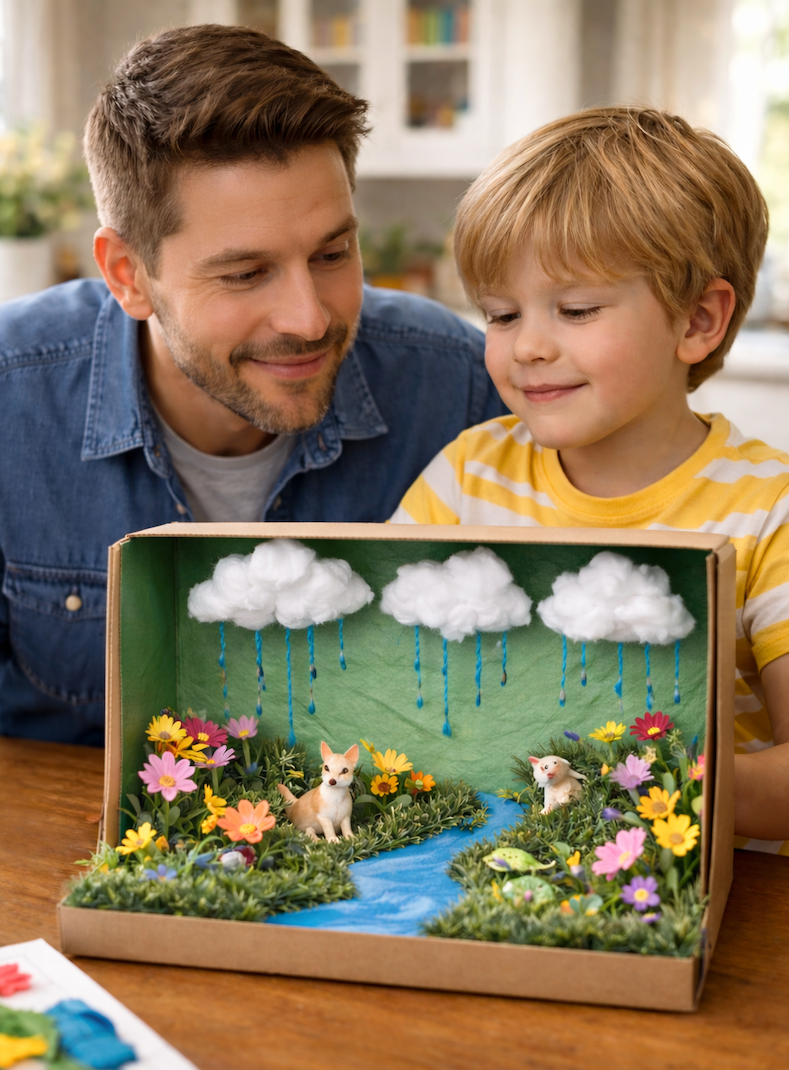
Grab an empty cardboard box and make a classic kid craft: the diorama! Use small toys, pictures, figures made from modeling clay, and other items to create a spring scene.
Here are a few ideas of what you can show in your diorama:
🌸 The first flowers blooming as a family takes a walk
🐦 Birds raising their young
🌧️ Rainclouds making the flowers bloom
🐶 Animals enjoying a rainy day
15. Sort and Count Seeds
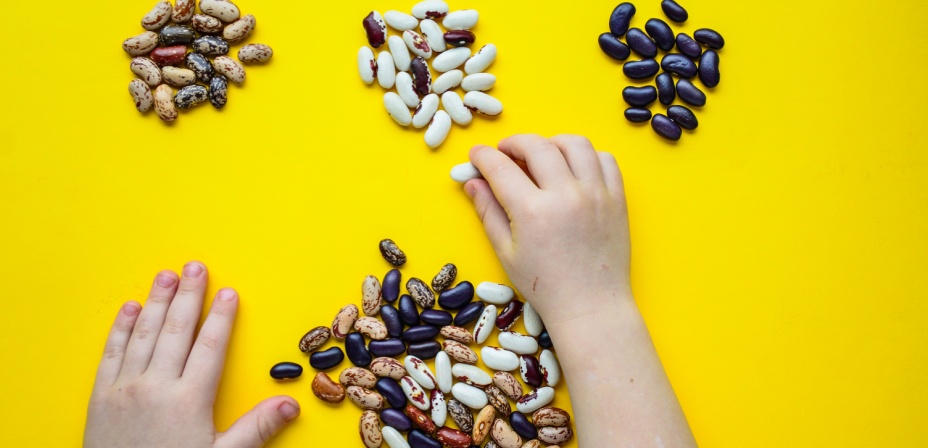
Use dried beans or lentils or flower seeds (old seed packets are great for this) for a hands-on math activity. Pour out your seed packets or a package of assorted dried beans and lentils.
Work with your child to sort the beans or seeds according to appearance or size and then count out how many of each type you have.
Tip: If using new seed packets, go one step further and plant them outside!
16. Trace Raindrops
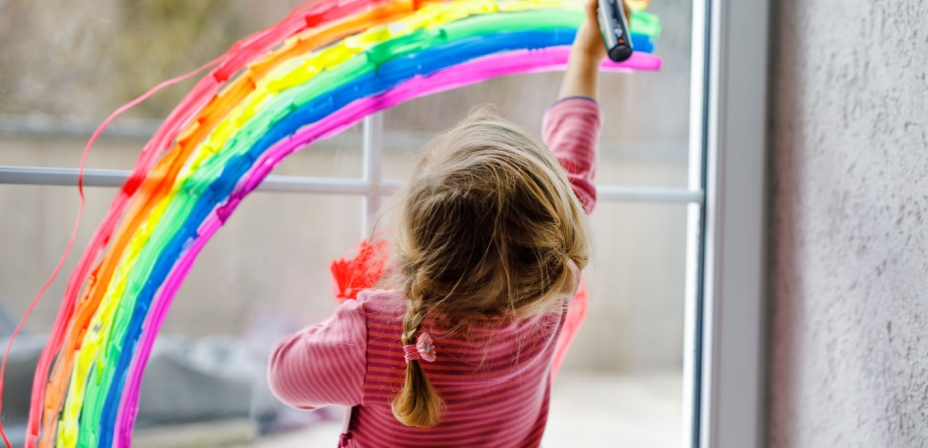
Pick up some washable window markers and during the next rainstorm, invite your child to trace the path of the raindrops landing on the windows. Or they can use the markers to create the sunny spring scene they’ll see after the rain passes.
17. Make Magic Leprechaun Rocks
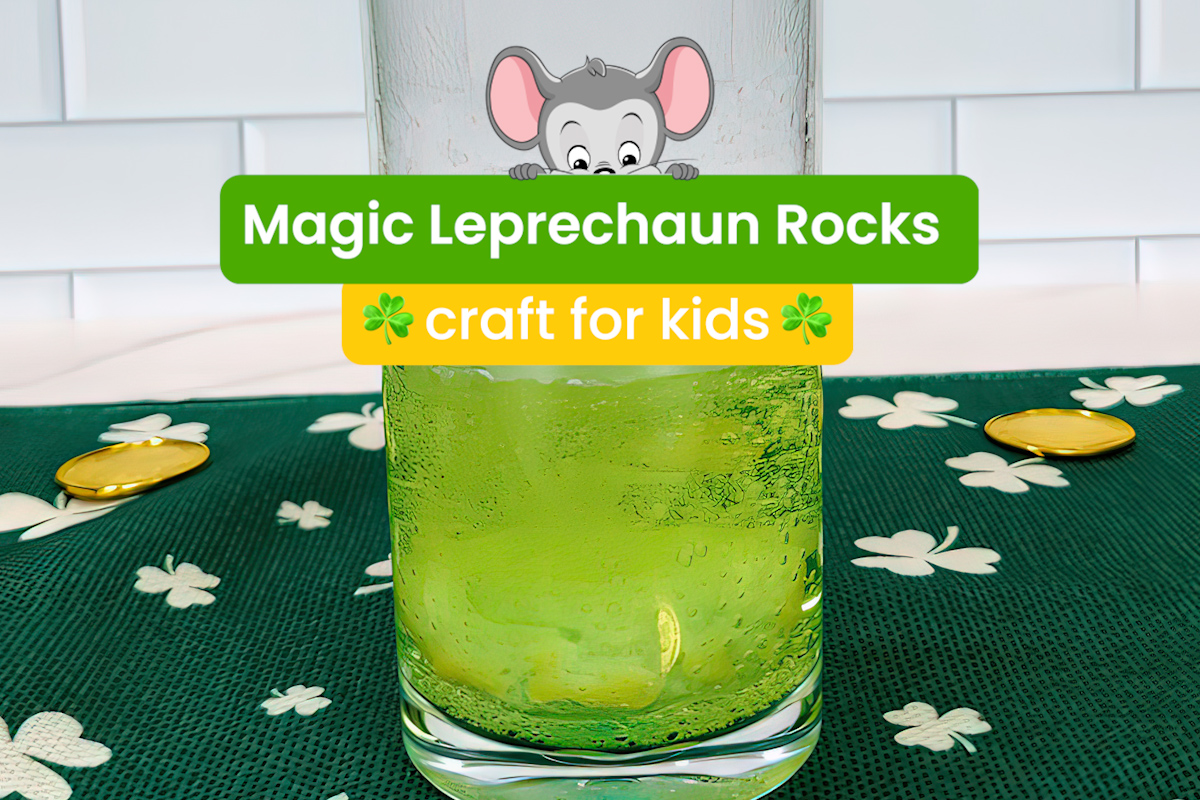
Create a little St. Patrick’s Day magic with Magical Leprechaun Rocks! These fun and easy-to-make rocks fizz and dissolve, revealing hidden treasures inside. It’s the perfect blend of creativity and science, making for an exciting and hands-on holiday activity.
Tip: Check out the full tutorial on the ABCmouse Instagram page here!
18. Flower Stamping
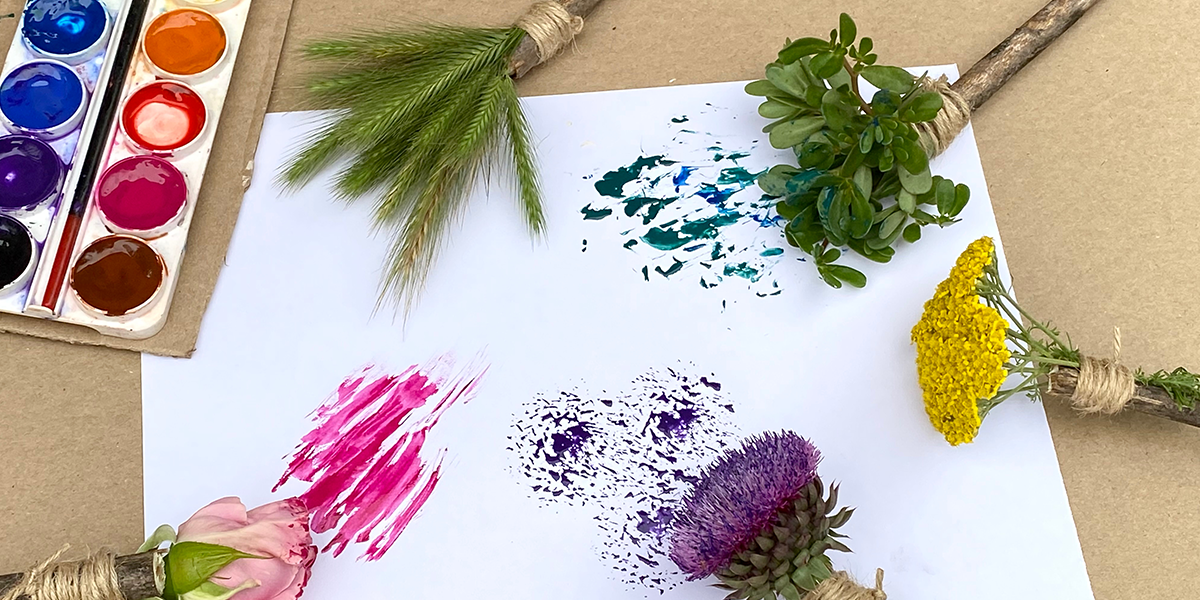
Head out to the backyard and pick some flowers and leaves from plants that are plentiful, such as dandelions. Add some paint to a paper plate and gently dip the flower heads into the paint and then stamp them onto paper, seeing what kind of print they create. For leaves, it may work best to apply the paint to them with a paint brush and then stamp it onto the paper.
19. Make an Egg Carton Caterpillars, Bugs, or Flowers
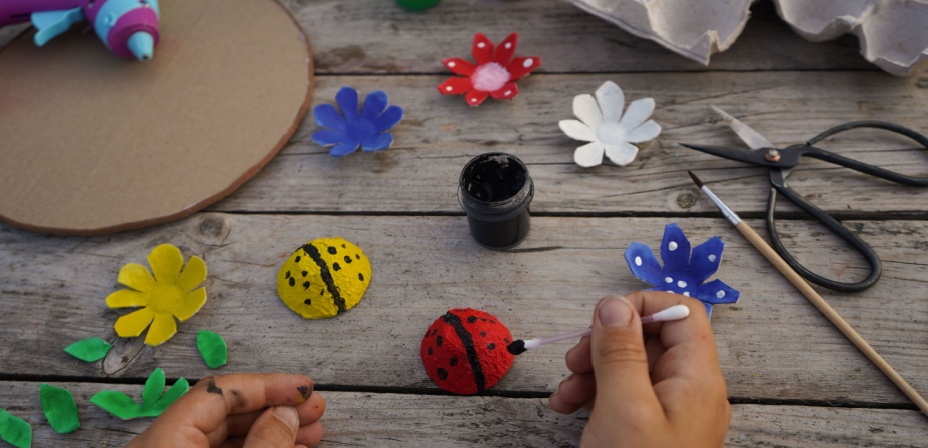
Turn an empty egg carton into an adorable caterpillar by cutting out a row from the egg carton and painting each section. Let it dry and then add googly eyes, a smile, and pipe cleaner antennae. Or, cut out each section of an egg carton and turn them into ladybugs or trim the edges to create flowers.
Extend Learning: Caterpillars can make a great introduction to exploring the life cycle of a butterfly, which children will increasingly see as the weather warms. Use our free printable butterfly coloring pages to help with the lesson.
Outdoor Spring Activities for Kids
20. Do a Flower Smelling Test
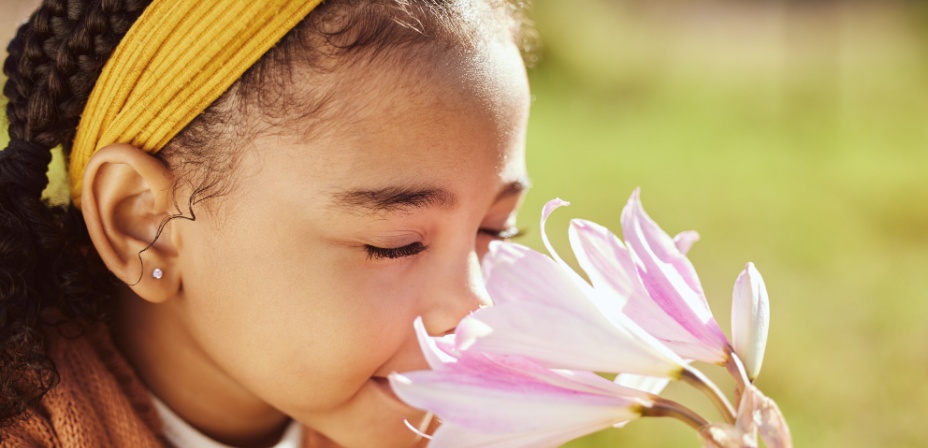
Whether outside in a garden or in the flower section of the grocery store, invite your child to smell the flowers, noting which ones have a strong fragrant smell and which ones have a more subtle scent. For an added challenge, have your child close their eyes during this activity to see if they can pick up more nuances of each flower’s smell.
Tip: For an added challenge, have your child close their eyes during this activity to see if they can pick up more nuances of each flower’s smell.
21. Float a Mini Raft or Boat
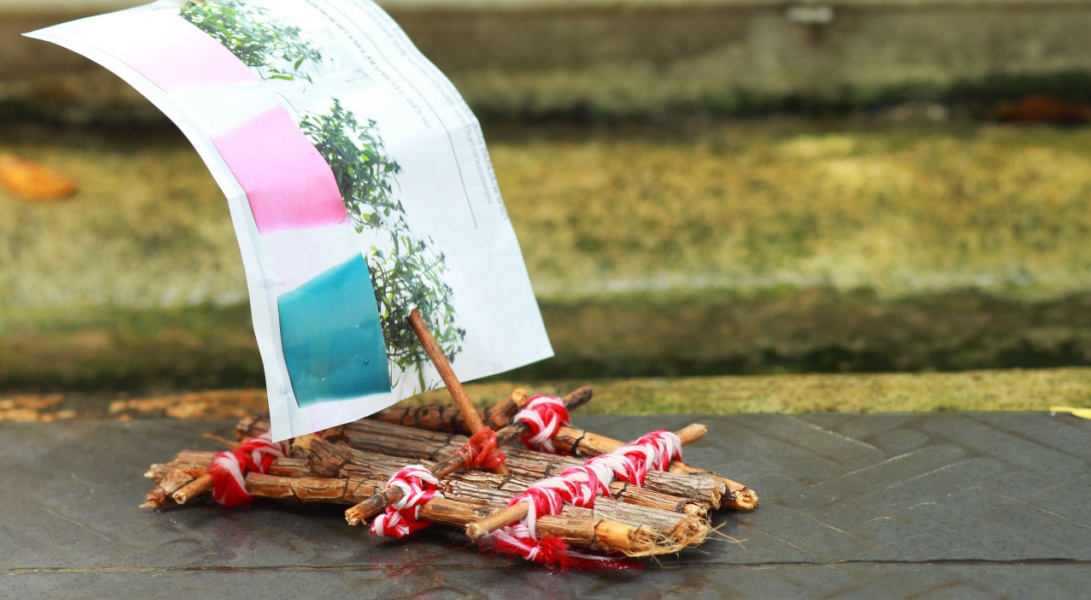
Gather sticks, bark, or leaves and use simple materials like twine to put them together into small rafts or boats. If you’d like, create a sail with a stick and sheet of scrap paper or fabric scrap. Then find a big puddle or (even better) a flowing stream, and sail your creations together.
22. Hang Some Wind Chimes
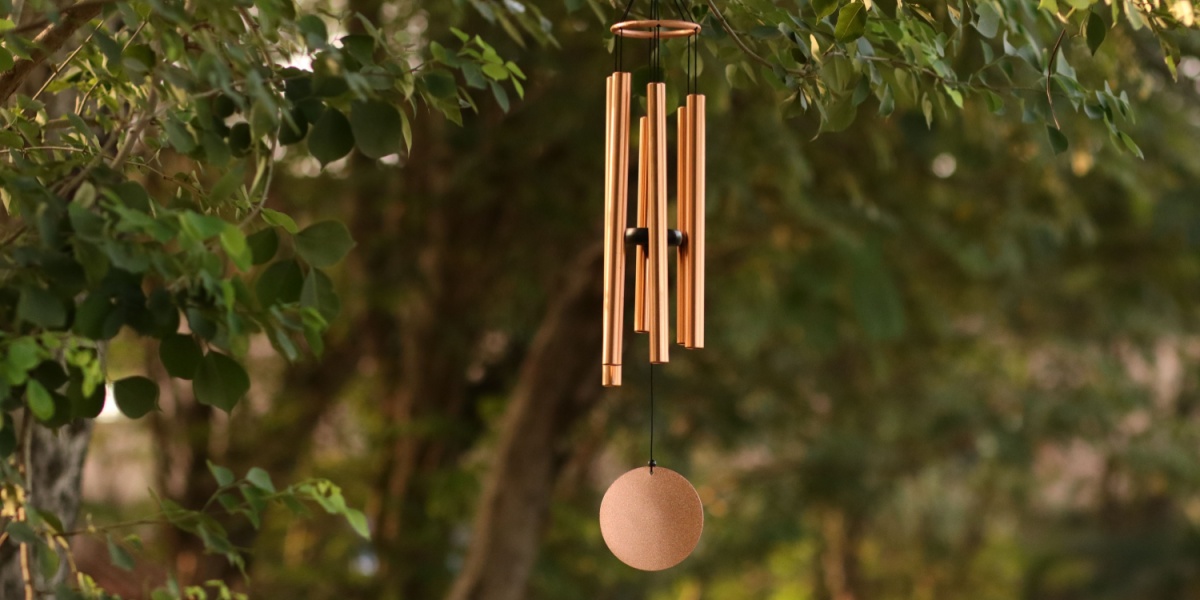
While you can’t see the wind directly, you can certainly hear it, especially when you hang some wind chimes! Buy or DIY a set and try hanging them in different places around your yard. See what your child can observe, and ask them when and where the chimes are the loudest or what causes them to make noise.
Brainstorm ways to create your own chimes, such as hanging empty cans, sticks of different sizes, old keys, nails and screws of different sizes, or small bells.
23. Color a Garden in a Garden
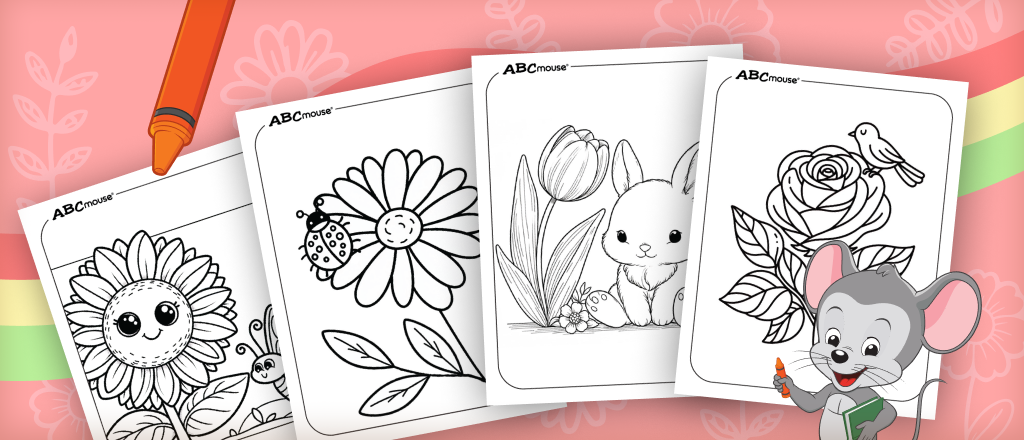
Print out our free printable flower coloring pages and pack up a lap desk or clipboard and some crayons, markers, or colored pencils. Head to a park or public garden and use inspiration from the flowers around you to color in the flowers of the coloring pages. As your child colors, make note of the real flowers you see that look similar to those they colored.
24. Worm Observation Station
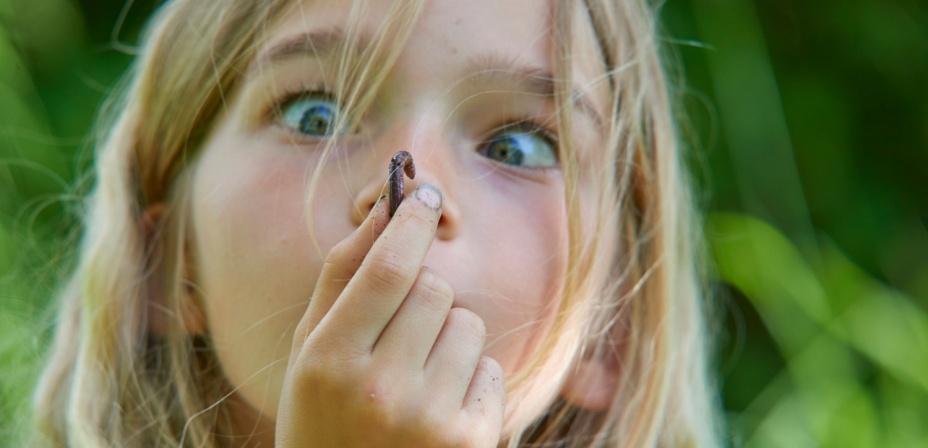
Dig up a small patch of soil or find worms after it rains. Place them in a clear container with damp soil and watch them move! Talk about how worms help gardens grow by loosening the soil. After observing, gently return them to nature.
25. Go on a Storytime Picnic
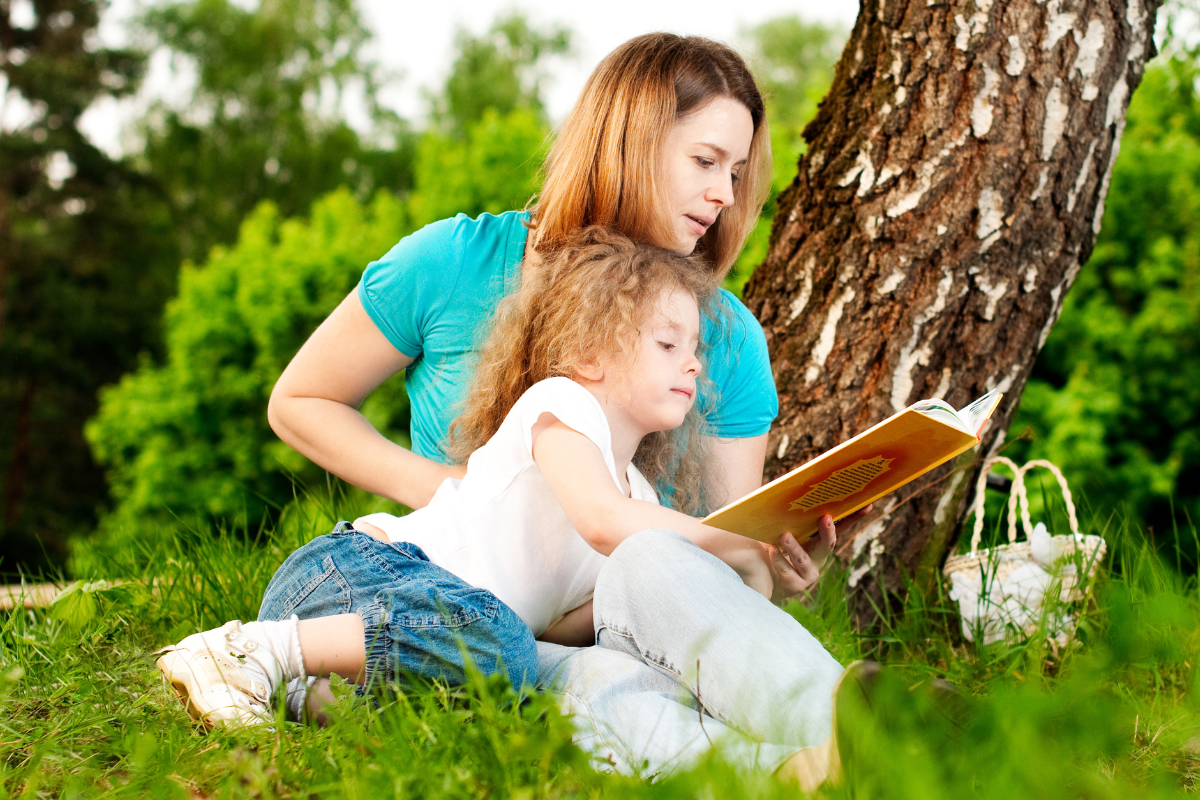
Choose a favorite springtime book or two (try Kate Messner’s Up in the Garden and Down in the Dirt or the Robert McCloskey classic, Make Way For Ducklings). Pack a picnic full of seasonal treats like fresh berries, rhubarb pie, or fresh spring peas, and find a sunny spot to enjoy the warmer weather. After you eat, relax by reading aloud the spring-themed books you brought along!
26. Put Out Bird Nesting Materials
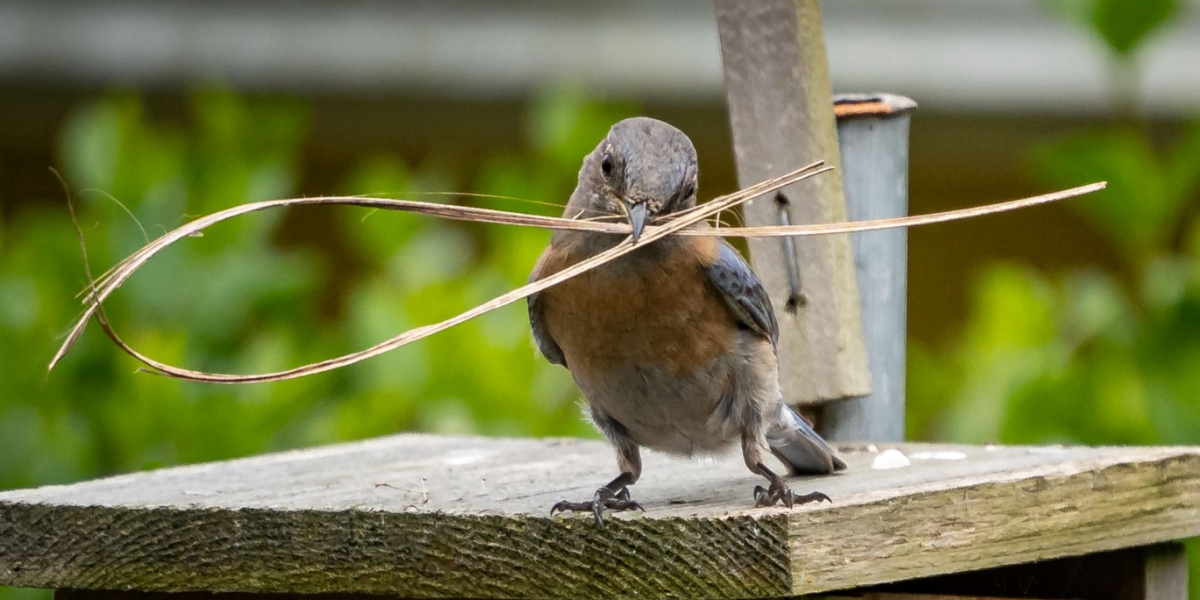
Birds gather a variety of materials to build their nests, depending on the species. You can help them out by providing bird-safe materials like small twigs and sticks, pet fur (as long as it hasn’t been treated with flea powder or other medications), leaves, bits of straw, grass clippings, feathers, plant fluff (from milkweed or thistle, for example), moss, or bark strips.
Spread them along shrubbery, leave them in small piles in your yard, or stuff them into an empty suet feeder cage hung from a branch, and watch as the birds take what they need.
Tip: Do NOT put out string, ribbon, or yarn, dryer lint, human hair, plastic strips, or cellophane, as these can harm birds.
27. Rain Collection & Measuring Experiment
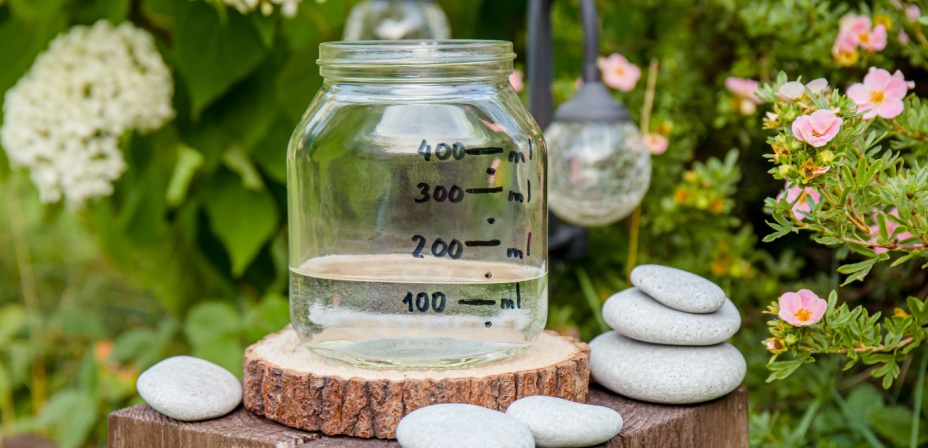
Set up a rain gauge using a clear plastic bottle with marked measurements. Each day after it rains, measure how much rainwater has been collected. Keep a rain journal and track how different days get more or less rain. Compare with weather reports to see if the predictions were correct.
Expand Learning: Tracking rain and the weather creates a natural opportunity to explore bar graphs as a form of data collection. Use our free printable graphing worksheets to help explain the concept.
28. Take a Nature Walk
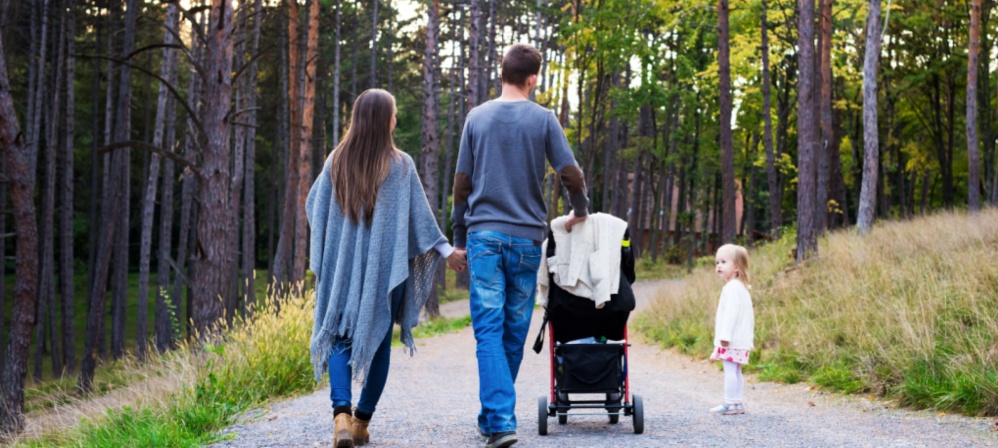
Practice observation skills and appreciating nature with a walk outdoors. Watch out for wildlife, such as birds, squirrels, and rabbits, and discuss their behavior and what they may be doing. Look for plants with leaves just beginning to unfurl or flowers starting to bloom.
Talk to your child about how these are all signs of spring. Repeat the walk a few weeks later and talk about the changes that happened since your last stroll.
29. Make a Toad House
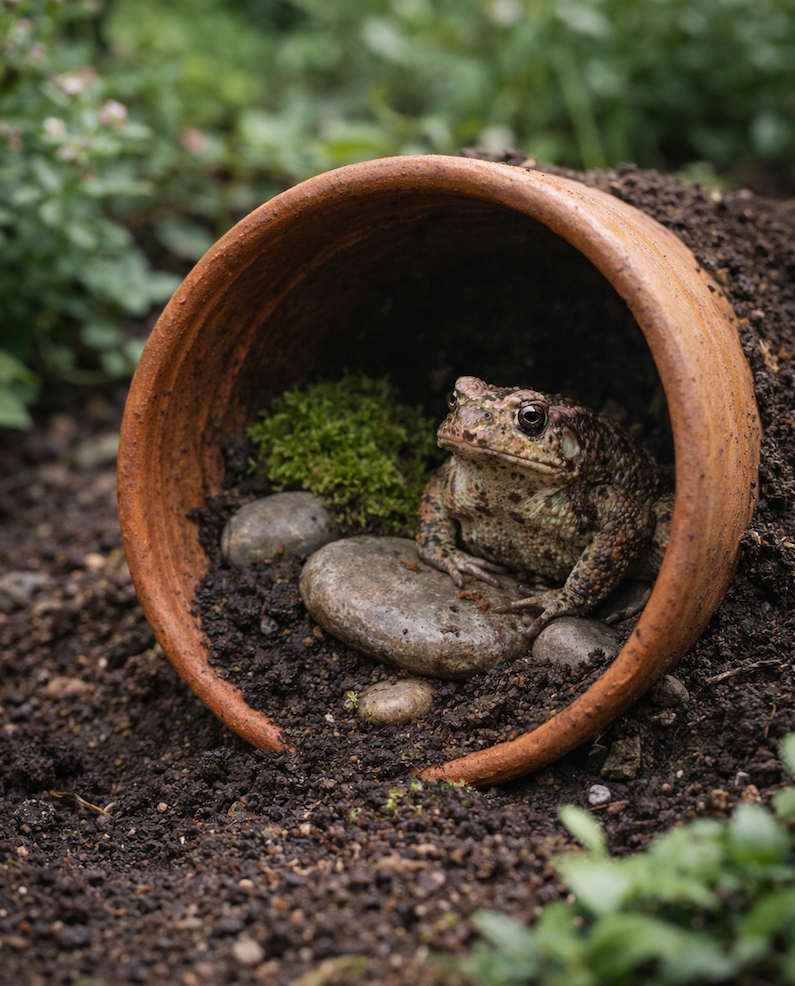
Sunny warm days bring out all the spring peepers and American toads! Welcome them to your garden with a homemade toad house, which protects them from hot sun and predators.
One of the easiest ways is to turn a small terra cotta pot on its side, burying it part way in the soil. (If you like, you can paint or decorate your pot first.) Pile up some small flat rocks inside and around the entrance, and add some moss or tree bark too. Peek inside from time to time to see if you have any new residents!
30. Measure Plant Growth
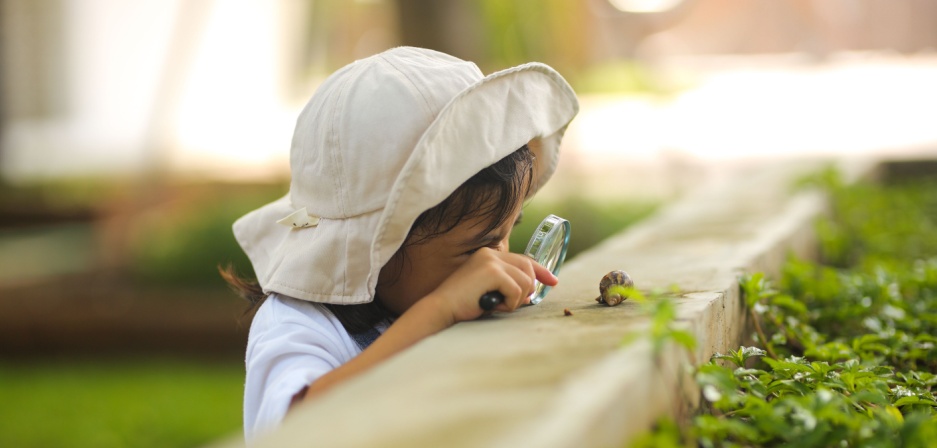
Walk through your yard with your child looking for a plant that’s just beginning to sprout. Use a ruler or tape measure to record the date and the plant’s size. Check back every day (or when you have time) and record the plant’s height, noting how much it’s grown and any other changes your child notices.
More Than One Child? Let each child pick a new little plant to keep an eye one. Take the whole crew outside and measure the plants and encourage them to notice differences in their plant.
31. Build a Fairy or Dinosaur Garden
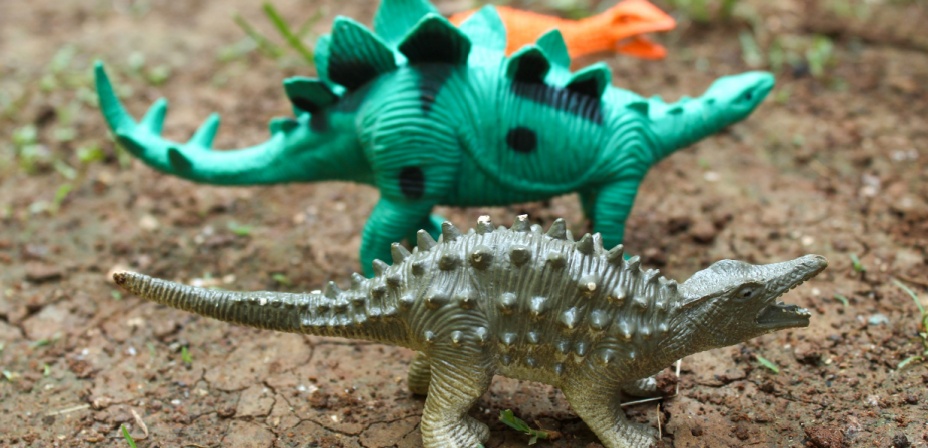
Encourage creativity by setting up a mini-world in a planter, small corner of the yard, or even a large tray. Gather sticks, pebbles, moss, and flowers to build tiny houses, paths, and ponds for fairies or dinosaurs. Kids can add small toys, paint rocks to look like stepping stones, or create little storylines about their enchanted world.
32. Head Out on a Sensory Hunt
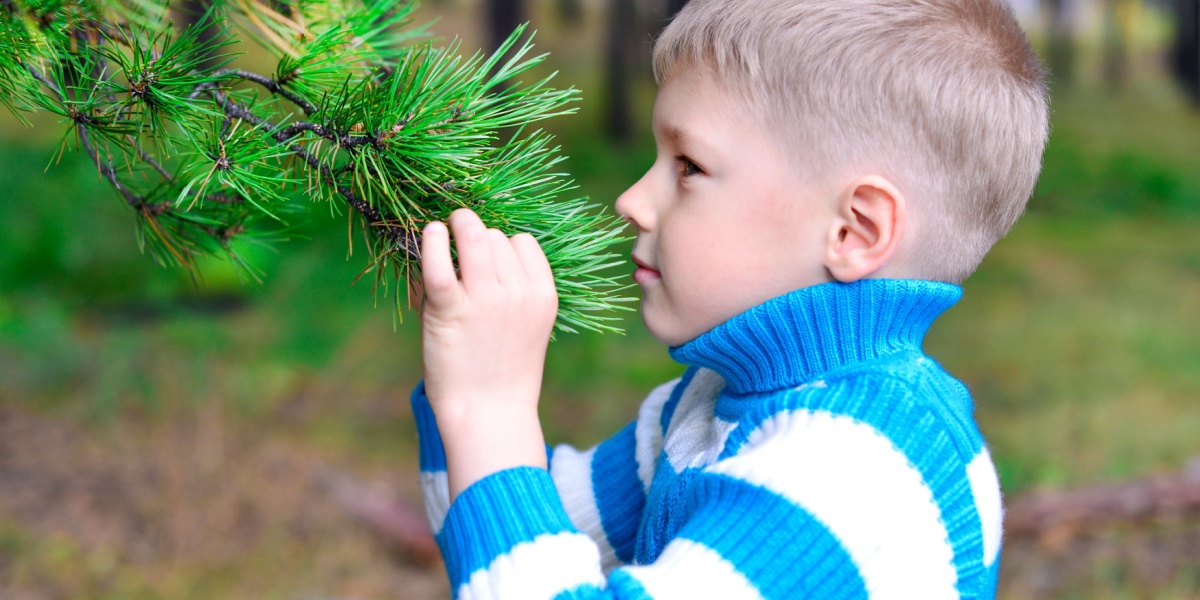
As you enjoy the warm spring weather, take note of what you can see, smell, hear, touch, and even taste! For an extra challenge, wear a blindfold or cover your ears to force your other senses to observe more carefully (stay still while blindfolded or have an adult or friend guide you). Keep a running list as you walk along, and remember not to eat or touch anything unfamiliar, as it could be toxic.
33. Take a Puddle Mapping Walk
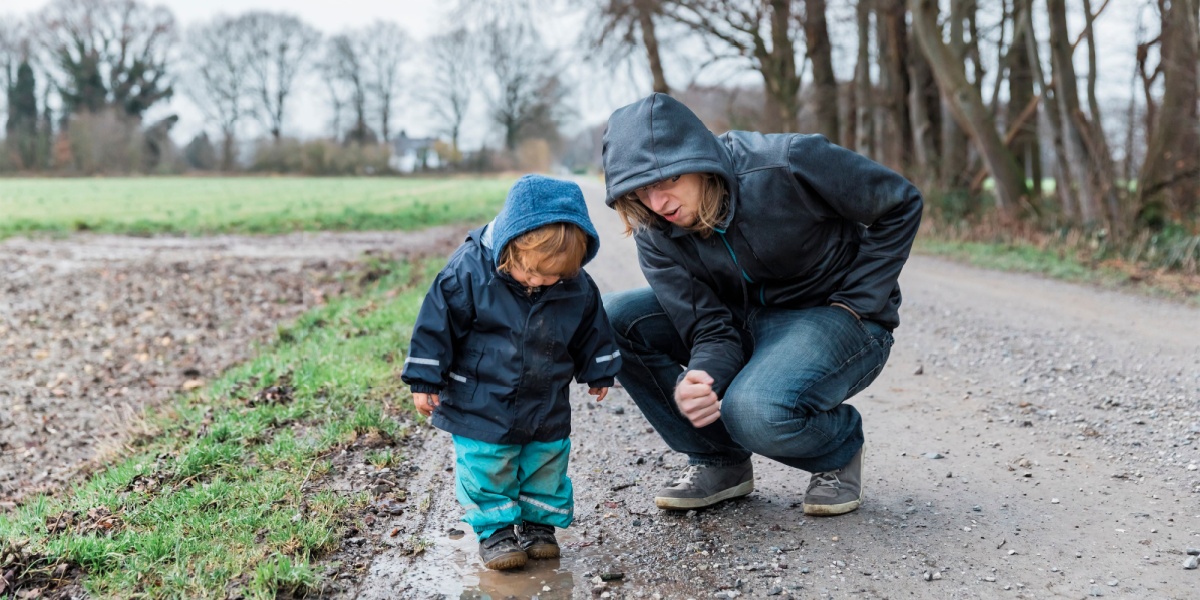
Don’t let a gentle spring rain keep you cooped up! Instead, grab your umbrellas and stroll through the showers. As you walk, take note of where puddles are most likely to appear. Ask kids to think about what those places have in common (hint: they’re usually lower than the surrounding areas). Then, take the same walk the next day and see which puddles have dried up and which are still going strong.
34. Create Rainy Day Watercolors
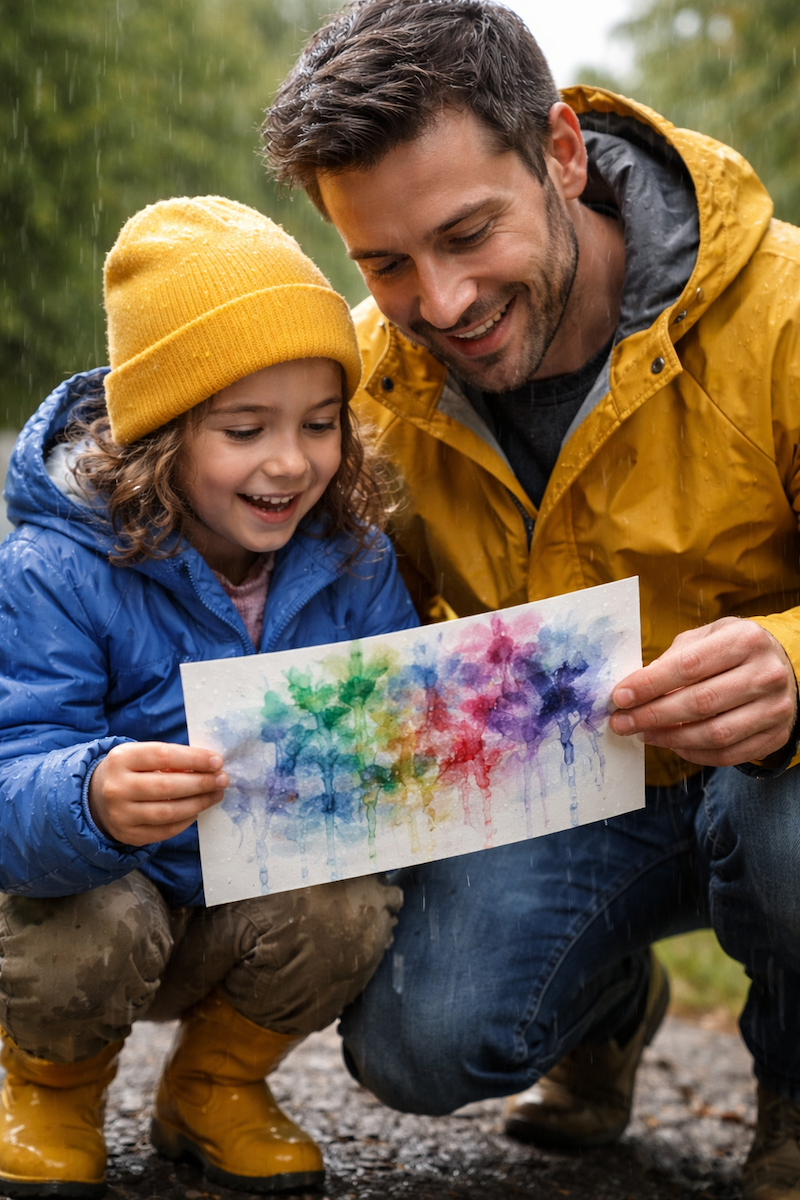
Grab some magic markers and heavy paper and doodle up a storm. Then, set your drawings out in a drizzle for a few minutes. The colors will run and bleed, creating entirely new pictures!
Experiment with different color blends and patterns to see how the rain affects them, and try picking up the paper while it’s wet to see if the colors shift and move.
35. Plant a Small Garden
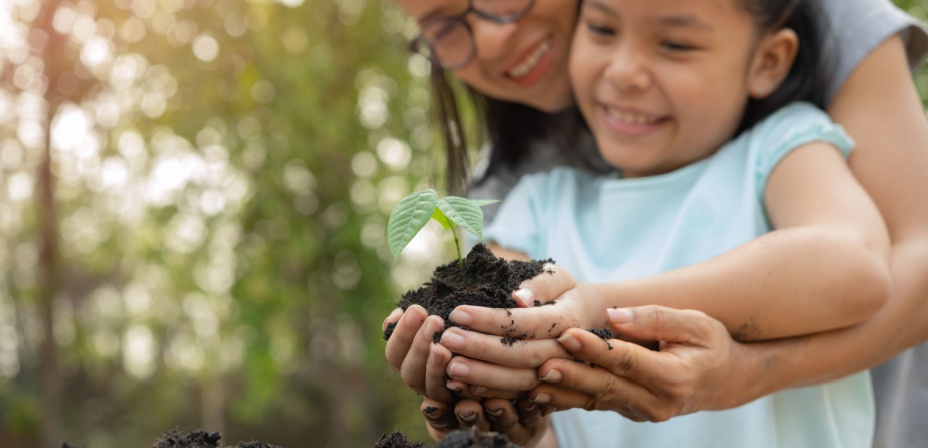
Choose easy-to-grow plants like sunflowers, lettuce, or herbs and let kids get their hands dirty planting seeds. Use this as a learning opportunity to discuss what plants need to grow (sunlight, water, soil). Make it fun by keeping a growth chart where your child can measure and draw pictures of how their plants change over time. Decorate plant markers with painted rocks or craft sticks to personalize the garden.
36. Make a Spring Sidewalk Comic Strip
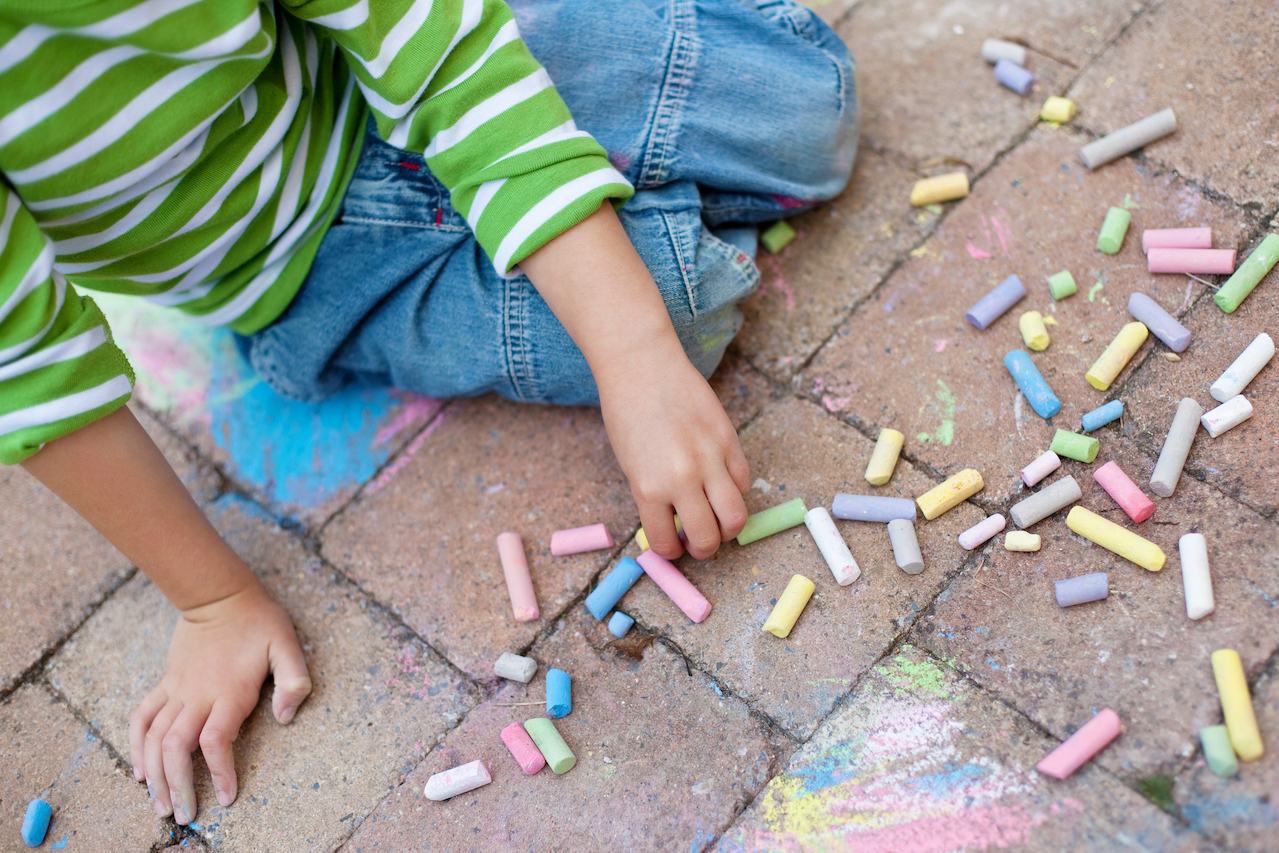
Grab your chalk and head outdoors to the sidewalk or driveway. Explain to your children that they’ll be creating their very own spring-themed comic strip outside. Begin by brainstorming things that make them think of spring, such as flowers, birds, and rabbits. Then, use the squares of the sidewalk (or create your own) to contain each frame of the comic strip and see what the children come up with!
37. Pick Strawberries
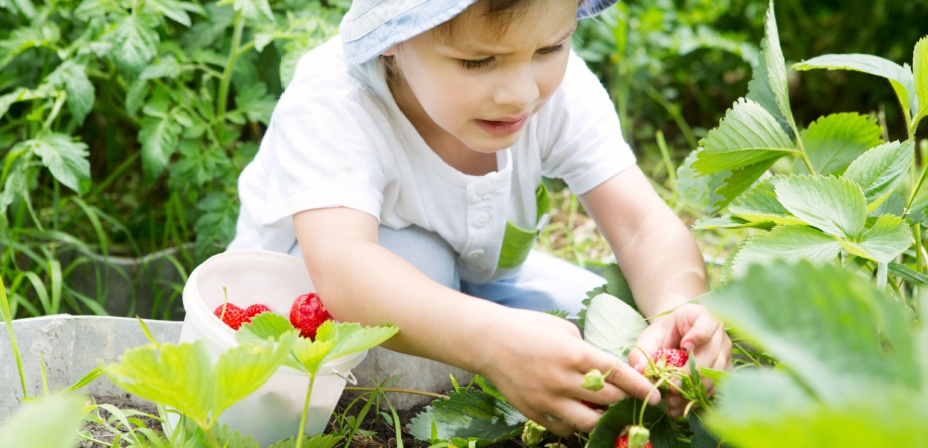
If strawberries are in season in your area, visit a local farm and let kids experience picking their own fresh fruit. Talk about how strawberries grow, from flower to fruit, and why bees are important for pollination. Once home, use the fresh berries for a fun cooking activity, like making homemade strawberry shortcake, smoothies, or a fruit salad.
38. Jump in Puddles
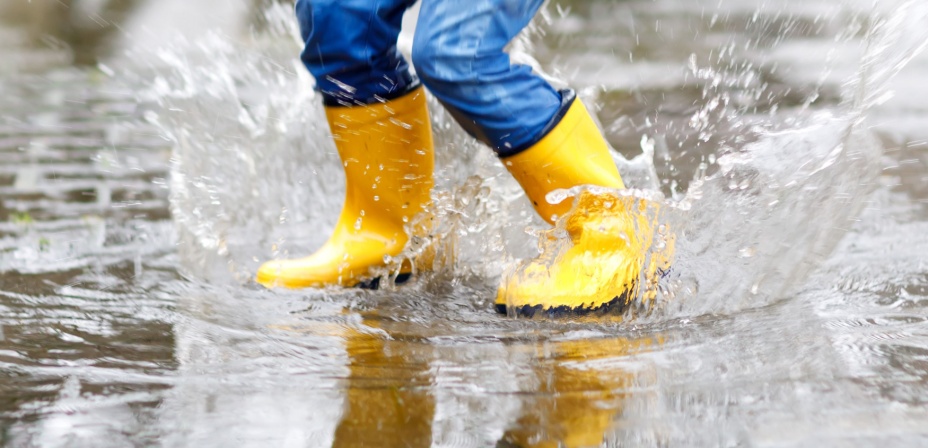
Spring is known for its rain storms. The next time one rolls through, put on rain boots and splash around in puddles! Make it more fun by counting how many puddles you can find or measuring which puddle makes the biggest splash. You can even bring out sidewalk chalk and draw around puddles to see if they change shape or disappear as you splash around them.
39. Try a Spring Scavenger Hunt
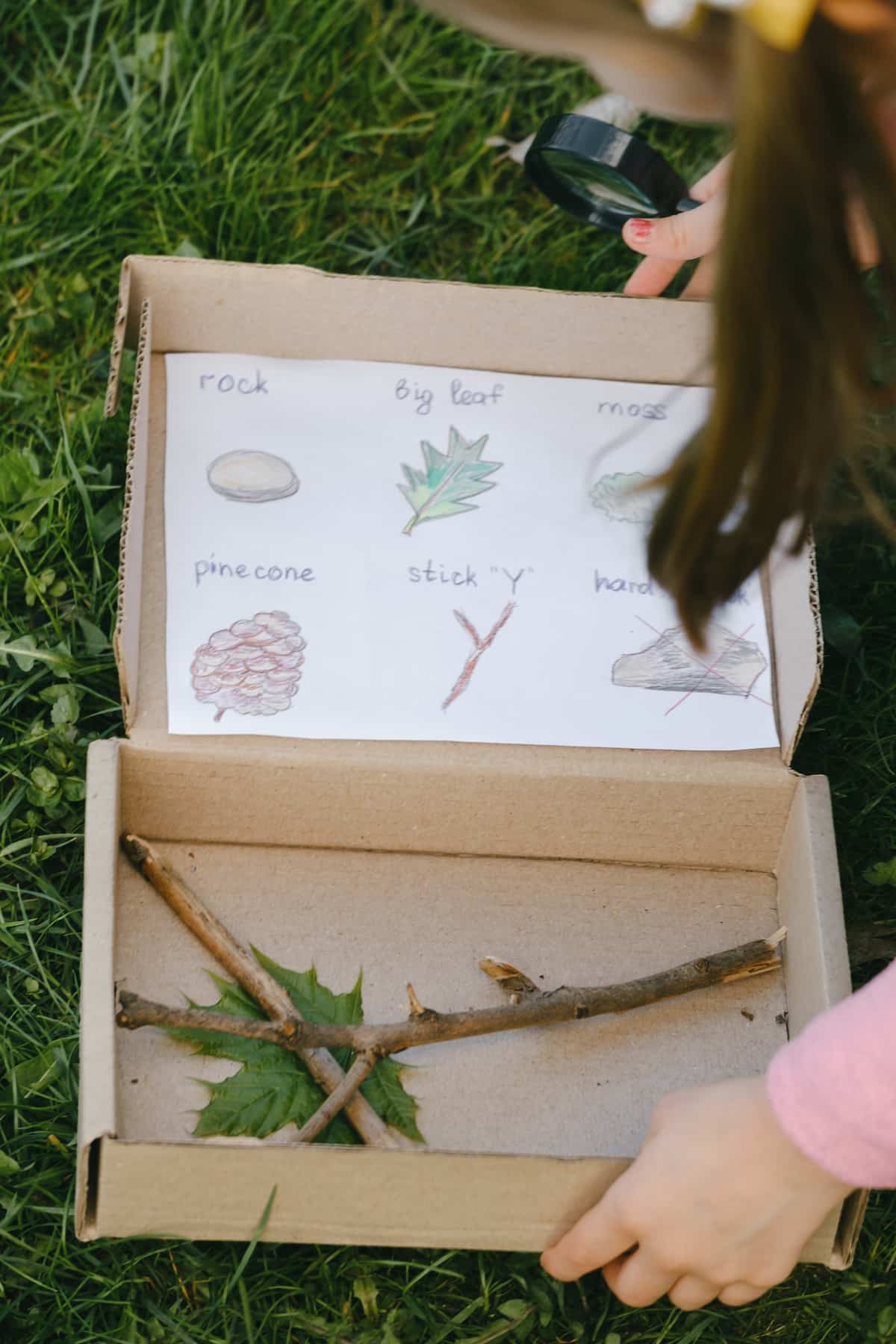
Make a list of springtime sights like blooming flowers, leaf buds, bunnies, butterflies, bees, birds, and puddles. Kids can explore the yard, park, or neighborhood to find and check off each item.
40. Play in the Mud
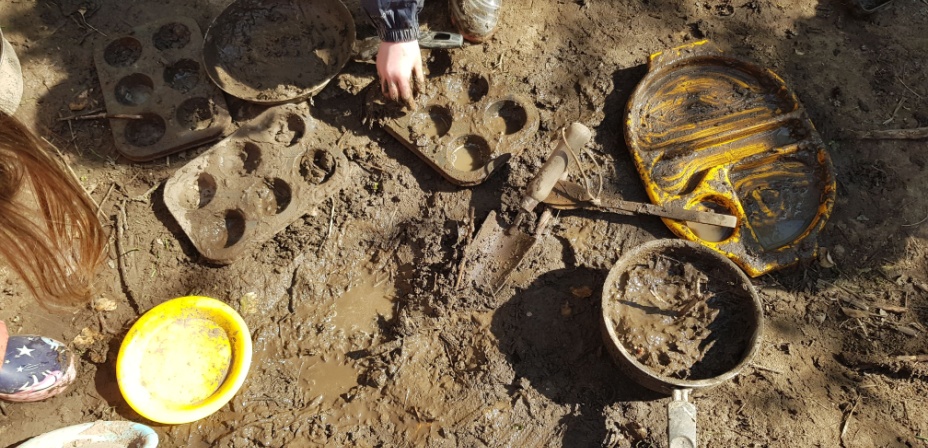
Get ready for a mess but one that’s so much fun to make! After it rains, gather up some old spoons and plastic plates and bowls. Change into old play clothing and gardening gloves and head outside. Tell your child the backyard has turned into a Nature Kitchen and they can use the mud, twigs, leaves, and flowers as their ingredients to create meals that Mother Nature would love!
41. Blow Bubbles with DIY Bubble Wands

The return of spring means it’s time to blow bubbles again! Instead of relying on the wands that come with bubble solution, try making your own instead. Experiment with pipe cleaners, flexible wire, or string and yarn to see if you can make a wand that works even better than the originals. You can also try mixing up your solution from liquid dish soap and water.
Tip: Add a little glycerin for extra long-lasting bubbles!
42. Wear Homemade Nature Bracelets
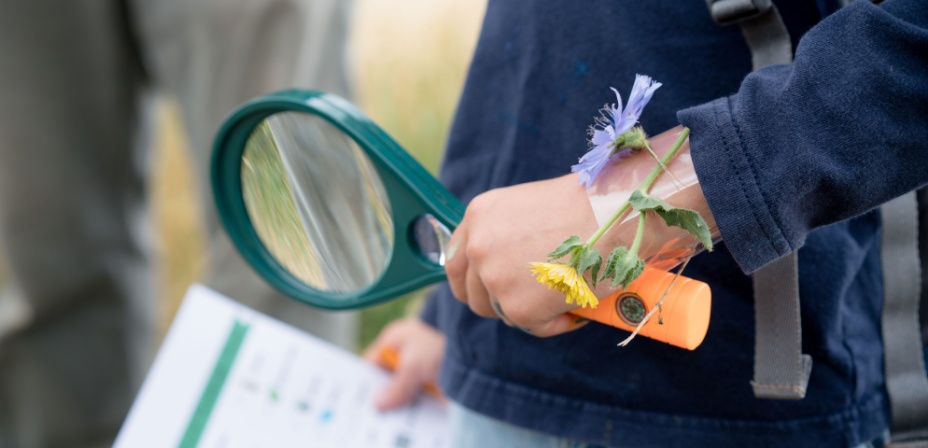
Wear all the beauty of spring! Before you head out on a nature stroll, make a bracelet from masking tape with the sticky side turned out. As you walk, keep an eye out for flowers, leaves, and other springtime items that you can stick to your bracelet.
-

Easy Ping Pong Ball Ghost Craft for Kids
Make friendly ping pong ball ghosts with tissue paper, yarn, and a marker in this easy Halloween craft for preschoolers, kindergarteners, and kids.
-

Halloween Sensory Bins for Kids
Explore 9 Halloween sensory bins for kids with spooky themes, hands-on materials, and playful ideas for scooping, sorting, digging, and more.
-
Easy Ghost Windsock Craft for Kids
Make an easy ghost windsock craft for kids using a paper cup and streamers. A fun Halloween activity for preschoolers and young children.
-

35+ International Literacy Day Activities for Kids (2026)
Celebrate International Literacy Day with 35+ fun literacy activities for kids, including reading, phonics, writing, vocabulary, and classroom ideas.
-
120+ Screen-Free Activities for Kids: Fun, Easy Ideas for Every Age
Discover 120+ screen-free activities for kids of all ages, with fun indoor, outdoor, and educational ideas that inspire learning and play.
-

Father’s Day Craft for Kids: Create a Dad Frame
Create a heartfelt Father’s Day photo frame craft kids can make with simple supplies, family photos, and easy step-by-step instructions.