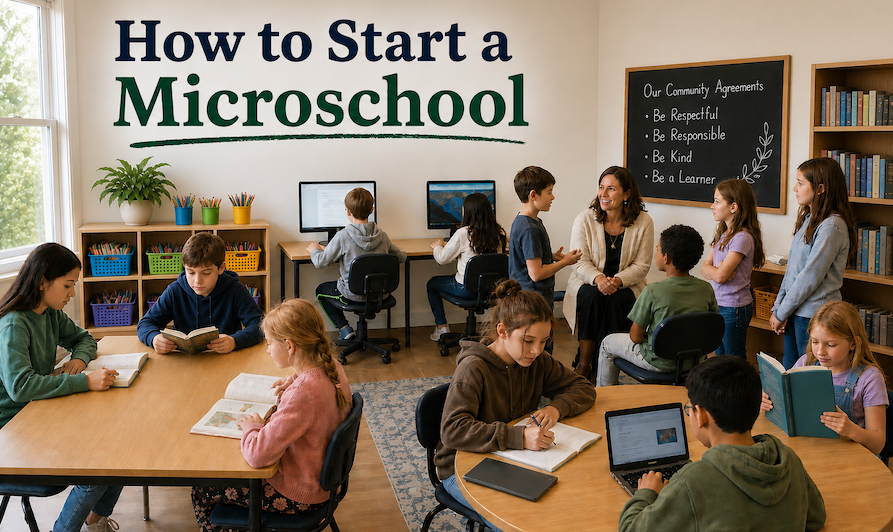
How to Start a Microschool: A Step-by-Step Guide for Parents and Educators
By: Jill Staake
Share
Learn how to start a microschool, including legal requirements, costs, the role of ESAs, and key decisions around curriculum, structure, and more.
Table of Contents–Jump to Each Section
In recent years, the microschool movement has gained momentum among families looking for alternative education options. Microschools blend elements of homeschooling, private schooling, or traditional classroom instruction, aiming to provide personalized educational experiences for a small group of students (typically between 5–15) and a more personalized learning environment. Though exact numbers are hard to come by, it’s estimated that between 750,000 and 2 million students currently attend microschools.
What is a microschool? A microschool is a small, personalized learning environment—typically serving 5–15 students—that can be started by parents, educators, or community leaders using flexible schedules, mixed-age groups, and customized curriculum. Learn more in our article What Is a Microschool? Everything Families and Educators Need to Know.
In this guide, families and educators interested in starting a microschool can explore what it takes to establish and maintain a successful program–from legal requirements and costs to enrollment and funding options, including how families can use ESAs to help offset costs. You’ll also find helpful answers to questions about instructional models, learning approaches, school location and community, and curriculum choices.

Key Factors for a Successful Microschool
Every microschool looks different, as each one is set up and run to meet its own educational philosophy and goals. However, many thriving microschools work towards the following goals:
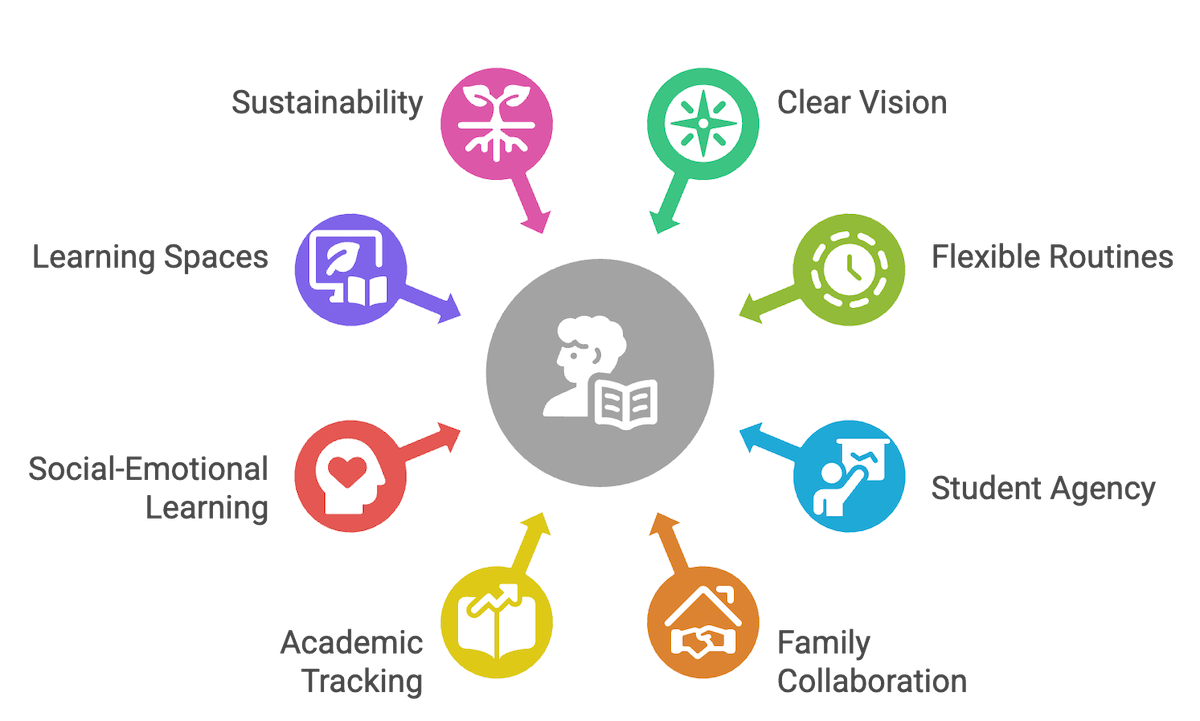
Common Qualities of Successful Microschools

Sustainability and Growth: Successful programs meet all state requirements and are financially viable long-term, with stable staffing, enrollment, and resources. They regularly review and evaluate the program as a whole, gathering feedback from students, families, and teachers.
Clear Vision and Structure: Teachers, school leaders, and families agree on the instructional approaches, educational values and goals, and desired outcomes of the microschool.
Flexible But Reliable Routines: Quality curriculum programs are combined with schedules that accommodate student and family needs, helping microschools run smoothly and effectively.
Student Agency and Ownership: Students have meaningful voice and choice, playing an active role in their own educational path.
Strong Collaboration With Families: These small schools rely on the support and involvement of parents. In return, the microschools communicate openly and regularly with families, inviting their interest and cooperation.

Consistent Academic Progress Tracking: While educational approaches may differ in microschools, all strive to provide excellent academic outcomes for students. Tracking is vital for measuring and evaluating progress, allowing teachers to adjust instruction to support every learner.

Social-Emotional Learning Emphasis: The small-group environment provides an ideal space for developing social skills like collaboration, conflict resolution, and personal responsibility. It also provides space for students to explore their individual emotional regulation needs.

Intentional Learning Spaces: Microschools have the chance to design the ideal environment to support their instructional approaches and learning goals. Spaces are designed thoughtfully to accommodate individual and group work, emphasizing flexibility and engagement.
How to Start a Microschool in Six Steps
Starting a microschool requires a good understanding of both the legal requirements and your personal educational goals. Here’s an overview of the process.
Overview: How to Start a Microschool in Six Steps
Click on each step to jump to more detailed information.
- Research Your State’s Laws
Microschool legal status varies by state, with some operating as private schools, homeschool co-ops, or hybrid programs. Use resources from your state’s department of education to learn what’s required in your area. Learn more about state laws and microschools.
- Define Your Vision and Model
Consider your target age-range, learning philosophy, instructional model, school location, instructors, and other foundational factors. These decisions will be key in determining how you set up and run your microschool. Learn more about defining your microschool’s philosophy and model.
- Build Your Microschool Community
Other microschool families are excellent resources, as are microschool networks like Prenda and Acton Academy. Join local or online groups for support and guidance. Learn more about creating a microschool community.
- Choose Curriculum and Learning Tools
Explore curriculum options, with an emphasis on age-appropriate, research-backed programs that support your learning goals. Determine the tools you’ll need, including textbooks, computers and tablets, and other school supplies. Learn more about choosing curriculum and learning tools for a microschool.
- Select and Set Up Your Learning Space
Microschools can be home-based or run in communal spaces that you rent or own. Create a learning-friendly environment that suits your microschool’s needs and budget. Learn more about selecting and setting up your microschool.
- Plan Your Budget and Funding
Once you’ve determined your overall goals and needs, research the costs involved and create a budget. Decide how you’ll fund your microschool—most charge tuition and fees. Communicate with families about whether they can use ESA funds to help pay for learning programs and other fees. Learn more about budgeting and funding your microschool.
Step 1: Understand Your State’s Microschool Laws

Microschools are legal in all 50 states, but their laws and regulations vary widely depending on each state’s laws and the school’s structure. In many cases, microschools are considered a type of homeschool (learn more about each state’s homeschool laws here). In some situations, you may need to comply with your state’s private school laws instead or a combination of both. To understand the microschool requirements in your area, start by exploring your state’s department of education website. If your microschool is covered by homeschool laws, organizations like Home School Legal Defense Association (HSLDA) may be helpful, as well as the National Microschooling Center.
Key Questions to Ask as You Research Your State’s Laws:
- Should I start a microschool as an LLC or nonprofit?
Microschool may need to decide to operate as an LLC (limited liability company) or as a nonprofit organization with 501(c)(3) status. Operating as an LLC can feel simpler and provide increased autonomy, while functioning as a nonprofit opens the door to more funding and donation options but requires a board of directors. In many cases, a microschool can open as an LLC and transition to a nonprofit later. - What are the registration requirements?
Microschools may need to register as private schools or comply with homeschool notification requirements. This varies by state, as well as the specific structure and setup of the microschool. - What attendance and reporting requirements apply to microschools?
States have different laws regarding compulsory attendance, including how attendance is tracked and reported. Microschools must comply with the state attendance laws that apply to them. - Do microschools require credentialed teachers?
In some cases, you may need to have a certified teacher as part of your staff or advisory board. - What records are microschools required to keep?
Families or microschools may be responsible for maintaining records for attendance, coursework, and/or student progress, and in some cases, submitting these records to the state. - Are there any curriculum standards or testing requirements for microschools?
While most states don’t mandate curriculum or testing for microschools, there are exceptions. - What are your funding options?
Some states allow families to use Education Savings Accounts (ESAs) or other school choice programs to cover specified microschool-related expenses. Consult your state’s regulations for more information, and explore our ESA guide and state-specific resources to learn about possible funding and regulations in your area.
Step 2: Define Your Microschool’s Philosophy and Model
A clear vision and structure set your microschool up for success from day one. Whether you’re founding your own school as a teacher or working with other families to set up a school together, take time to establish a clear educational philosophy and learning model.
Consider the following factors when planning your microschools, and use the provided questions to guide the process.
Educational Philosophy & Values
An educational philosophy sums up your beliefs about how students learn best, what they should learn, and the purpose of education overall. It establishes the guiding principles of your microschool and sets the stage for other important decisions such as curriculum, instructional methods, and learning environment.
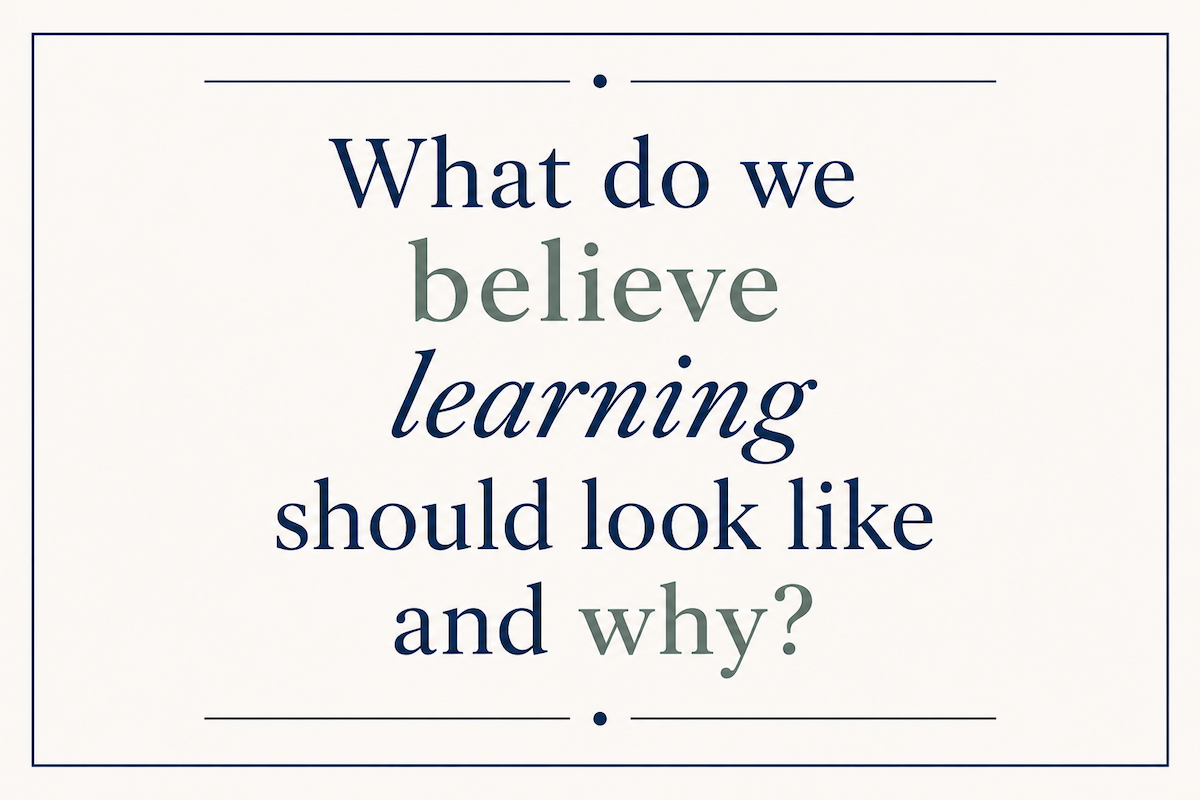
Most importantly, your philosophy answers the question: “What do we believe learning should look like and why?”
Questions to consider:
- What is the purpose or goal of education?
- What learning outcomes (i.e. skills and knowledge) do you value most?
- How do you believe students learn best?
- What role should adults play in a child’s learning — directing it, facilitating it, or supporting it from the sidelines?
- What are your key priorities in establishing your microschool?
- How will you know if your school is successful?
- What will your school provide that others do not?
Logistical Model
Microschools come in all shapes, sizes, and formats, and can grow and evolve over time. Starting with a clear set of guidelines that govern your overall setup and operations can help make that growth possible.
Questions to consider:
- Will you run your school independently or as part of a larger microschool network?
- What age range will your school serve (e.g., 2–8, elementary, mixed-age)?
- How many students will you enroll (minimum and maximum)?
- Will your school be full-time and meeting all academic needs or part-time as a supplement to other schooling methods?
- Will you meet online, in-person, or use a hybrid setup?
- Will in-person schooling be home-based, or will you meet in a co-op space or other facility?
- What special services will you provide (e.g. speech therapy, support for learning or physical differences)?
Leadership & Oversight
One of the most flexible aspects of microschooling is who can lead one. Certified teachers, tutors, retired educators, parents, or community members can run a microschool, with or without outside support. The right fit depends on the school’s focus, setting, and educational goals. Avoid problems down the line by setting up a clear system for leadership and decision-making up front.
Questions to consider include who will…
- Determine the school’s educational philosophy and values?
- Oversee legal compliance?
- Be responsible for daily operations and logistics?
- Handle the funding and finances?
- Choose curriculum programs?
- Collaborate with families?
- Make ultimate decisions when there are disagreements?
Instructional Approaches

Microschools may choose from a wide array of instructional approaches—many use parts of multiple approaches to create their own unique teaching and learning style. Some possible instructional approaches include classical education, project-based learning, Charlotte Mason, Montessori, Waldorf/Steiner, experiential, nature-based, or play-based learning. Research various approaches to decide which fit your school’s needs best.
Questions to consider:
- What kind of learners do you want to create?
- On a day-to-day basis, how will adults interact with students? Will they lead structured lessons, set up learning experiences and step back, or respond to student-initiated questions and interests?
- How much autonomy and personal choice should students have in their learning path?
- What teaching and learning methods do you believe are most effective?
- Aside from core academics, what subjects will your school prioritize?
- What role does play and hands-on exploration play in your school?
- Will your school follow the same schedule each day, or does it need more flexibility?
- How much value do you place on real-world learning experiences?
- Will you hire certified teachers or tutors?
- What role should parents and families play in their child’s education?
- How will you provide individualized, inclusive education for each student?
- How will you accommodate physical or learning differences?
Step 3: Build Your Microschool Community
Successful microschools are backed by a strong community of families who share educational goals and values. If you’re looking for students and families to help build your microschool community, take these steps.

Build an Interest List
Connect with potential families early in the process, and establish your expectations up front. Be prepared to provide information about your educational philosophy, instructional model, proposed location, projected tuition and fees, and curriculum programs.
Meet With Homeschool Co-Ops
In local homeschool co-ops, families may share resources and teaching responsibilities, as well as arrange social and extracurricular gatherings and activities. These can be natural places for a new microschool to start.
Join Local and Online Facebook Groups
These groups may serve local microschool or homeschool families or those aligned around their learning approaches, educational values, or other common factors. Find groups whose educational philosophies match your own to share your microschool opportunity.
Get Listed on ESA Provider Directories
In states with ESA programs, microschools can apply to become approved providers. Depending on state requirements and how the microschool is classified (as a private school, tutoring service, or enrichment program), families may be able to use ESA funds toward tuition, learning materials, and other fees.
Explore Microschool Networks
A network can provide a support framework, guidance, and help get your microschool up and running more quickly. Examples include:
- Prenda supports small, often home-based learning environments led by local guides or facilitators using a shared instructional model and platform.
- Acton Academy is a network of learner-driven schools that emphasizes student autonomy, project-based learning, and self-paced progress within a structured environment.
Step 4: Choose Curriculum & Learning Tools
Microschools may serve mixed-age, multi-level learners simultaneously. Often, students work with a combination of offline and digital materials, in both independent and group settings. Some topics work well for teacher-guided group activities, but independent, self-paced learning options are also essential, especially in core subjects like reading, writing, and math.

School leaders have a variety of curriculum options, and there’s no single best option. To help find the curriculum programs that are right for your microschool, ask these questions:
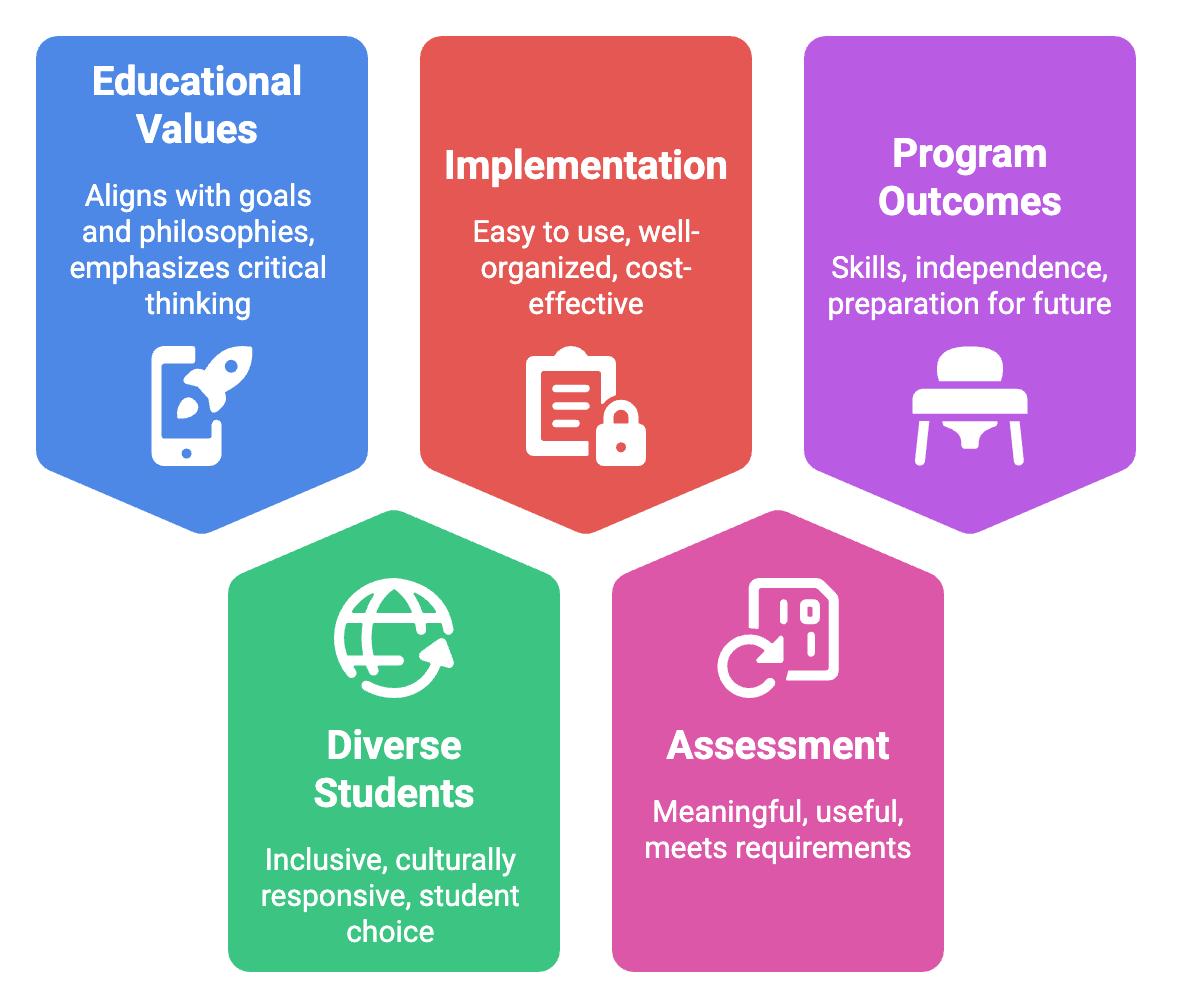
- Educational Values: How does this program align with our educational philosophy and goals? Does it emphasize deep understanding and critical thinking, not just memorization and recall? Does it include hands-on and collaborative learning?
- Diverse Students: Will this program engage our learners and support different abilities? Is it inclusive and culturally responsive? Does it allow for student choice and personalization? Does it support family involvement?
- Implementation: Is this program easy to use and well-organized? Can it work in mixed-age or small-group settings? What are the total costs and required materials? Does it require technology or extensive training? Can we modify the curriculum to meet our needs?
- Assessment: How does the program measure learning and growth? Are assessments meaningful and useful for guiding instruction? Does it meet state requirements or reporting needs (if applicable)?
- Program Outcomes: What skills does this curriculum emphasize (critical thinking, collaboration, creativity, etc.)? Does it foster independence and lifelong learning habits? Will students be prepared for their next step (traditional school, college, workforce)?
What to Look for in Digital Learning Platforms for Microschools
When evaluating digital learning tools for a microschool, consider the following:
- Structured learning paths: Does the platform offer a clear progression for students, or is it a collection of standalone activities?
- Multi-age adaptability: Can the platform serve students at different ages and skill levels simultaneously?
- Independent learning capability: Can students work through lessons without constant adult guidance?
- Progress tracking and reporting: Does the platform allow facilitators and parents to monitor student usage and growth?
- Engagement and motivation: Does it keep students interested through interactive, age-appropriate content at the right skill level?
- Curriculum breadth: Does it cover core subjects (reading, math, science, social studies)?
- Research-backed design: Is the content developed by education experts and supported by research?
- Child safe design: Does the app limit a child’s ability to click into other outside content? Does the app run third party ads?
Digital Learning Platforms for Microschools
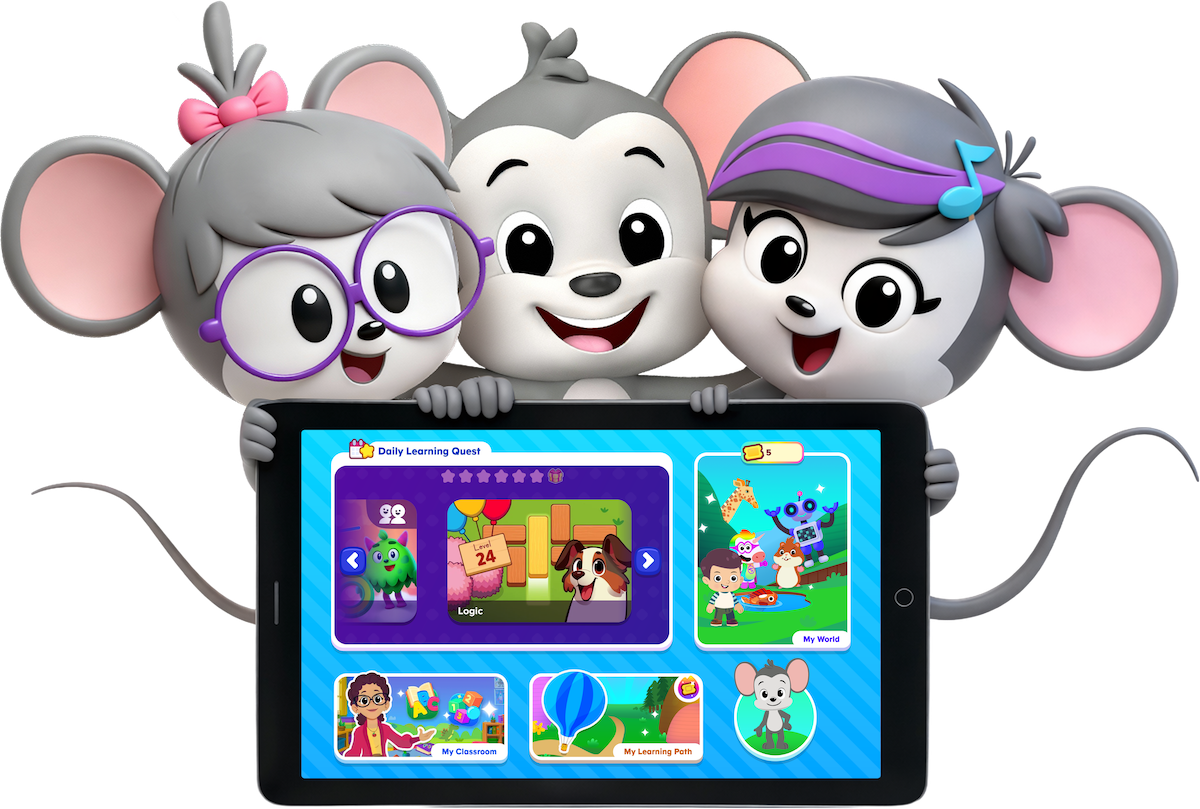
For young learners ages 2–8, ABCmouse offers a comprehensive, research-validated curriculum that supports standards instruction with 13,000+ individual learning activities spanning literacy, math, science, health, and social studies — all delivered through engaging, play-based games and lessons in a child-safe app.
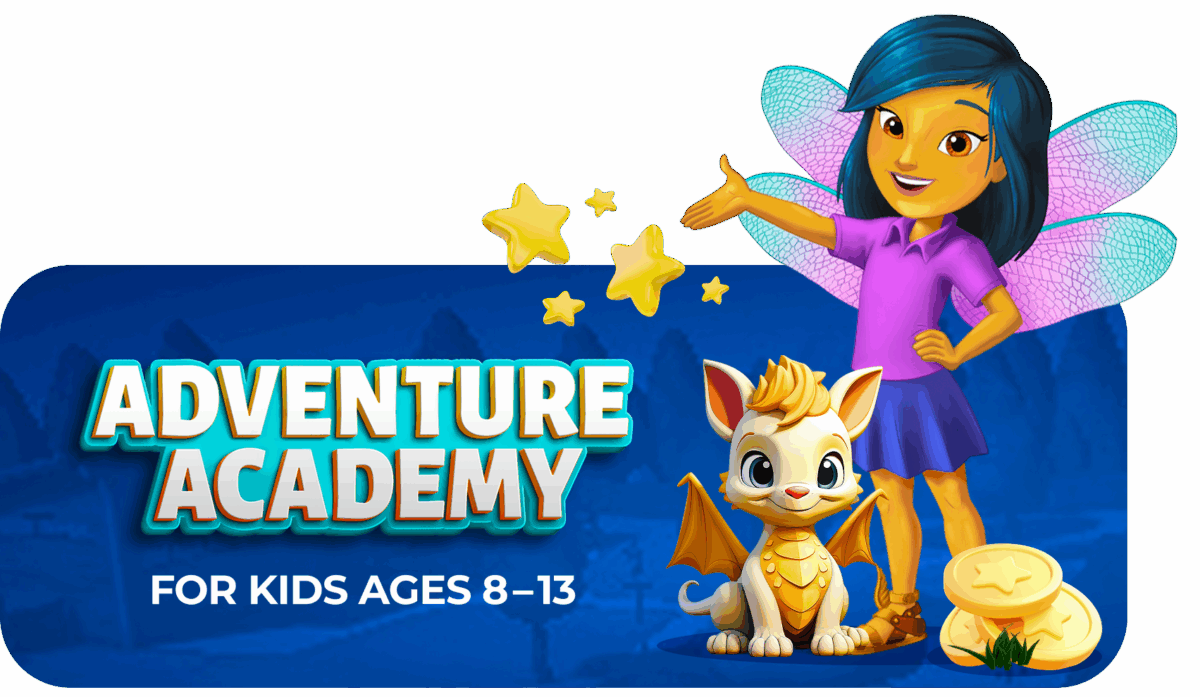
For older students in elementary and middle school (ages 8–13), Adventure Academy immerses kids in a safe virtual world packed with videos, games, books, and quizzes covering language arts, math, science, and social studies. Both may be eligible educational expenses for families in some state ESA programs and can be purchased through ClassWallet.
Step 5: Set Up Your Microschool Space
Choosing and setting up your learning space is a major step and can impact the overall success of your school.
Choosing a Space
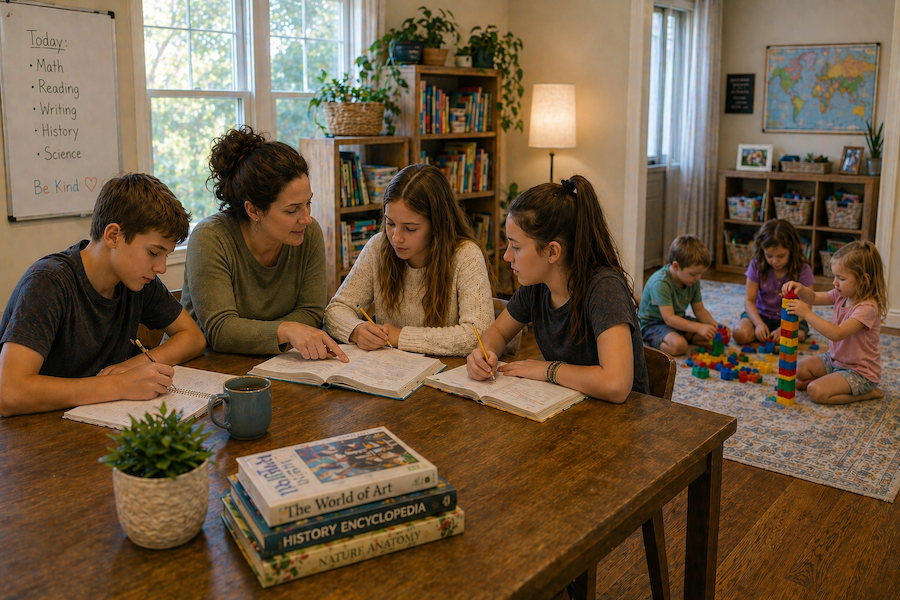
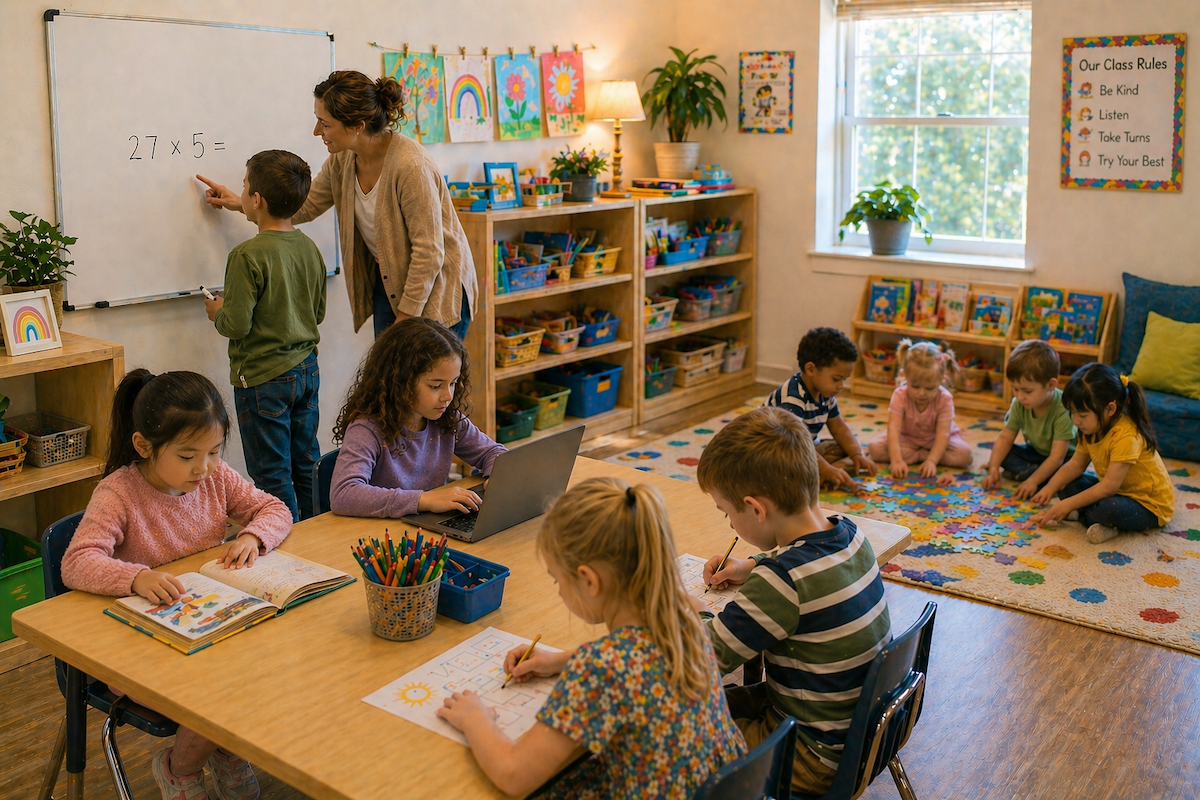
Many microschools start off small, often in a home-based environment. As they grow, microschools may meet in rented spaces like churches, community centers, or commercial spaces. You may even have the opportunity to design a purpose-built space for a microschool. Regardless of which type of space you choose, there are some important factors to consider:
- Availability: Will this space be available whenever it’s needed?
- Purpose: Will this space be dedicated only to your school, or is it a shared-purpose space?
- Customizability: Can you personalize this space to accommodate your needs?
- Size: Will this space comfortably accommodate your planned number of students and activities?
- Zoning and licensing: Are you legally permitted to run a microschool in this space?
- Safety: Is this space safe for your students’ ages and physical abilities?
- Accessibility: Can all students and families use this space well, or will you need to make changes or accommodations?
- Atmosphere: Will this space provide quiet when it’s needed and tolerate nosier activities? Will neighbors welcome a microschool environment nearby?
Setting Up Your Microschool Space
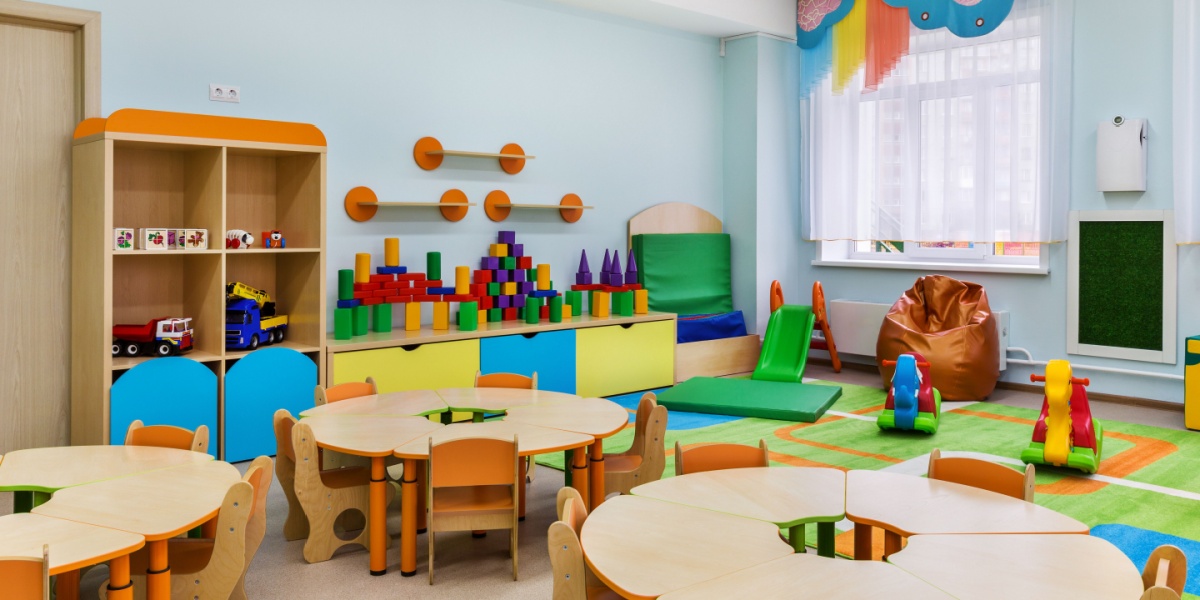

Focus on creating a space that’s flexible, student-centered, and safe for all learners. Look for budget-friendly ideas to support your students while keeping costs affordable and sustainable. Here are some of the items and supplies you may need:
- Seating: Choose flexible seating options that support your instructional approaches and learning goals. Consider standing or adjustable desks, lap desks, beanbags, child-sized tables and chairs, comfortable rugs, or yoga balls.
- Furnishings: In addition to student desks and seating, you may need a teacher desk, filing cabinets, bulletin boards, whiteboards, rolling carts, room dividers, shelving, or storage cupboards.
- Learning Zones: Create quiet spaces for independent learning, and larger areas for group work or play. Set up zones like a library/reading nook, STEM station, imaginative play section, art area, sensory learning space, or a board games and puzzles table.
- Technology: Consider your technology needs. Will you be a 1:1 school, where each student has their own laptop or tablet, or will you share devices? Do you need a large screen for group viewing or presentations? What about a sound system for music or audio learning?
- Supplies and Materials: Consider the materials your school will provide, and those families will need to supply. These could include basic school supplies, art supplies, musical instruments, math manipulatives, science lab tools and materials, and more.
- Personal Space: Provide space for students to store their personal belongings, such as cubbies, lockers, bins, or hooks.
- Kitchen and Dining: If your school day includes mealtimes, plan for needs like a refrigerator, microwave, sink, and dining space. If you plan to incorporate cooking into your curriculum, you may want a stove or hot plate, cookware and bakeware, utensils, and kitchen supplies.
- Restrooms: Where will your students and staff use bathroom facilities? Will you need to provide supplies like toilet paper and hand soap?
- Safety: Depending on your location, curriculum, and student ages, you might need safety supplies like childproofing, safety gates, fire extinguishers, eyewash stations, first aid kits, and evacuation plans.
Step 6: Plan Your Budget and Funding Options
The cost of running a microschool can vary widely based on your location, setup, staff, and instructional models. You may choose to plan your microschool first, determining your needed budget and using that to set tuition costs or seek necessary funding. Or, you may already have a set budget and need to build your school to fit within it. Either way, here are the costs to consider and possible funding methods.
Microschool Startup Costs
These are the initial costs involved in setting up and equipping your microschool. They may be one-time costs, such as paying a rental security deposit, or ongoing costs like rent or consumable supplies.
To keep your start-up costs low, consider establishing a home-based microschool.
You won’t need to spend additional money for rent or security deposits (though you may need to adjust your homeowner’s insurance policy). This works best for small, family-run schools.
If your school will require more room, look into shared or rented spaces in your community.
Possibilities include churches, community centers, and commercial spaces. If you’ll be paying rent, remember to include potential costs like security deposits, utilities, and insurance.
Setting up a full, purpose-built microschool facility is the most expensive option in terms of start-up costs.
This is especially true if you’ll be building from the ground up or need to make extensive modifications to an existing building.
Consider costs for classroom furniture, laptops or tablets, supplies, learning toys, and staff salaries.
When determining your budget, include all your operating costs for at least the first year to help your school start off on solid footing.
Ongoing Microschool Operational Costs
Next, budget for ongoing monthly and yearly operational costs, which might include:
☑️ Rent and utilities
☑️ Insurance
☑️ Staff salaries
☑️ Curriculum programs
☑️ Books
☑️ Educational app subscriptions
☑️ School and art supplies
☑️ Technology maintenance and replacement
☑️ Learning tools, toys, and games
☑️ Materials for learning (e.g. science lab supplies)
☑️ Special services (e.g. translation, speech therapy, etc.)
☑️ Accounting, administrative, and bank fees
☑️ Cleaning and maintenance supplies and/or staff
Microschool Funding and Revenue Models
Once you’ve established a budget showing your startup and operational costs, you can determine the best funding and revenue models to fit your needs. These are some of the most common:
- Tuition-Based: Families pay tuition to enroll students, typically on a monthly, semester, or annual basis. Microschool tuition rates vary, but usually range from a few thousand dollars to $15,000 or more annually per student, though some charge upwards of $20,000.
- Grants: Organizations like VELA, YASSS, or Camelback have awarded grants to microschools.
- Public Funding Partnerships: Some charter schools or districts partner with microschools through per-pupil allocations or service contracts.
- Private Sponsorship: Local or national non-profit organizations or companies may offer funds that can be used to run a microschool, especially those that advance their own organizational values.
- Co-op Model: Families donate time, skills, or teaching support in exchange for reduced tuition costs.
- Homeschool Hybrid: Homeschool families pay a microschool for part-time support, classes, or enrichment.
According to the National Microschooling Center and their data collected from 400 microschools representing 41 states:
“The most common annual tuition/fees for microschool respondents is between $5,000 and $10,000 (43 percent), followed by under $5,000 (30 percent), between $10,000–$15,000 (17 percent), between $15,000–$20,000 (15 percent), and 3 percent charge over $20,000. It is important to note that respondents include microschools offering both full-time and part-time/hybrid weekly schedules.”
Using ESA Funding for Microschools
An ESA can only be used by families for individual student needs, which may include microschool tuition, supplementary materials, curriculum program costs, or digital learning subscriptions.
If you’re starting a microschool or enrolling in one, be sure to explore what educational expenses your state may cover, as it will help determine out-of-pocket costs.
See our state-by-state ESA guide →
See if your microschool’s families can use ClassWallet to purchase ABCmouse or Adventure Academy as a supplemental curriculum program →
Common Microschool Mistakes (and How to Avoid Them)
Establishing a successful microschool can be challenging, and there are some common pitfalls school leaders often encounter. Here’s what to avoid, and how to do things right.
| Microschool Mistake | How to Avoid or Fix the Problem |
| Not understanding state laws | Research your state’s laws thoroughly, starting with your state department of education website. |
| Over-enrolling or growing too quickly | Start small, with a few students and a focused curriculum. Expand as funds and family interest allows. |
| Lack of structured curriculum | Choose high-quality, research-backed curriculum programs that track and monitor student progress and are easy to implement. |
| Underestimating costs | Consider all costs, not just curriculum programs and rent. Make sure your budget accounts for unexpected expenses. |
| Not establishing clear educational goals and instructional models | Be sure you can answer these questions: “What do we believe learning should look like—and why? What learning outcomes do we want for students, and how can we accomplish them?” |
| Not setting clear expectations with families | Share your educational vision and philosophy with parents, and let them review all curriculum and teaching materials, and state tuition and fees up front. |
| Lack of progress monitoring | Choose curriculum programs that help you monitor progress. Review and evaluate each student’s progress regularly, and adjust instruction as needed. |
| Poor student fit | Consider the type of students you expect your school to benefit and support, and share those expectations with families. Be transparent about the learning environment so families can determine if it’s the right fit for their child. |
| Staff burnout | Provide training and development to help teachers and staff do their jobs well. Set aside time for planning, grading, and administrative tasks in their daily schedules, along with student instruction and guidance. |
FAQs About Starting a Microschool
How much does it cost to start a microschool?
Startup costs for microschools vary widely based on the location, model, and operating costs. Some microschools start for as little as $5,000, while others may require $50,000 or more to get up and running. Microschools that start small as home-based operations can keep startup costs low, while those that are larger or more formal need higher initial investments to launch.
Are microschools legal?
Microschools are legal in all 50 states, but requirements vary widely depending on state law and the way a school is set up. In most states, microschools operate under homeschool or private school laws, or a combination of both.
Do I need to be a certified teacher to run a microschool?
Teacher certification requirements vary by state. Microschools generally operate under homeschool or private school laws, or a combination of the two. Some states may require certified teachers for a microschool, or in order for a school to accept ESA funds for tuition or program costs, but most do not.
How many students can I have in a microschool?
There’s no set definition for the size of a microschool, but average enrollments are around 5 to 15 students. When schools grow larger than this, they might lose some of the potential benefits of microschools.
Can I use ESA funds to start a microschool?
ESA funds cannot be used directly to start or run a microschool. However, families attending microschools can use ESA funds to cover tuition and purchase supplemental curriculum or materials. If you’re starting a microschool or enrolling in one, explore whether your state’s ESA program can help cover costs like curriculum, online learning subscriptions, and educational materials. See our state-by-state ESA guide →
What curriculum should I use for a microschool?
Microschool curriculum choices depend on the school’s educational philosophy and instructional approaches. The best curriculum programs align with a school’s educational goals and desired outcomes, support diverse students, are easy to implement, and track and measure student progress in meaningful ways.
Strong digital learning programs offer structured, adaptive learning paths that support independent learning in a child-safe environment. They provide a range of research-backed, age-appropriate interactive activities that engage and motivate students as they advance. The best online learning programs also allow parents and teachers to track student progress and monitor their growth.
How do microschools make money?
Most microschools are funded primarily through tuition paid by families. They may also receive grants, public funding (in some states), and private funding through sponsorships. Community partnerships and parent co-ops may also help microschools cover their needs and costs.
Legal disclaimer: Any information, materials, or links to third-party resources are provided for informational purposes only. We are not affiliated with and do not sponsor/endorse these third parties and bear no responsibility for the accuracy of content on any external site. All information provided in this article is current as of May 2026.

