120 Earth Day Words for Kids (Printable Lists & Activities)
Encourage kids to protect our planet and its resources with these Earth Day vocabulary words, phrases, and fun facts!
Our Earth is a magical place, especially since every known living thing calls it home! Earth Day (April 22) is a time to celebrate our planet, showing our appreciation for everything it gives us and noting what we can do for it in return.
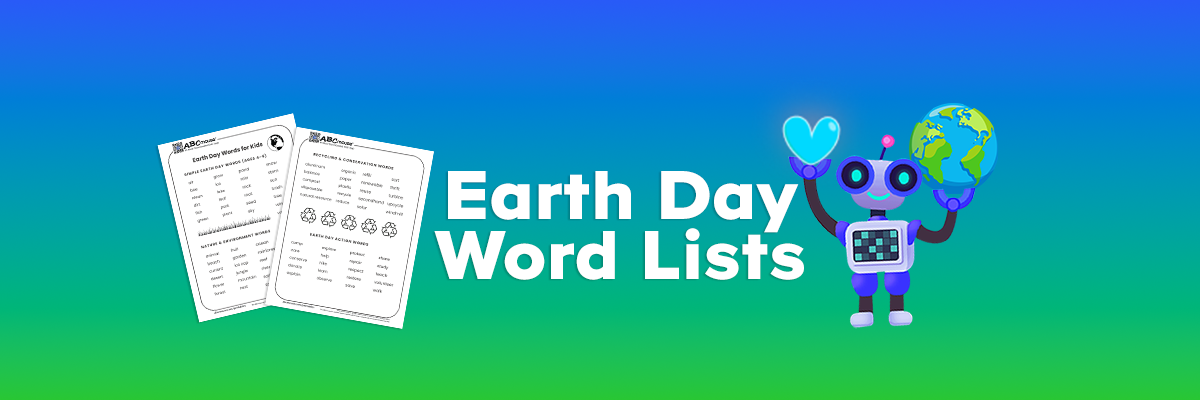
Help kids grow their understanding of nature and conservation with these Earth Day words, phrases, and facts– they’re great for vocabulary building, spelling practice, and for inspiring terrific eco-friendly activities. Use them to play memory games, write short essays or poems, practice spelling words, or do some research into our amazing planet. Grab your free printable copy to share in the classroom or at home.


List of Simple Earth Day Words for Preschool and Kindergarten (Ages 4–6)
| air | bee | clean | dirt | fish |
| green | grow | ice | lake | leaf |
| park | plant | pond | rain | rock |
| root | seed | sky | snow | stem |
| sun | trash | tree | wind | wood |
List of Earth Day Words for Elementary Kids
| biology | climate | community | consumer | drought |
| endangered | energy | environment | fossil fuel | global |
| greenhouse gas | habitat | landfill | life cycle | litter |
| organism | planet | pollinator | pollution | smog |
List of Nature & Environment Words for Kids
| animal | beach | current | desert | flower |
| forest | fruit | garden | ice cap | jungle |
| mountain | nest | ocean | rainforest | reef |
| river | soil | sprout | storm | stream |
| vegetable | weather | wetland | wildfire | wildlife |
List of Recycling & Conservation Words for Kids
| aluminum | balance | compost | disposable | natural resource |
| organic | paper | plastic | recycle | reduce |
| refill | renewable | reuse | secondhand | solar |
| sort | thrift | turbine | upcycle | windmill |
List of Earth Day Action Words for Kids
| camp | care | conserve | donate | explain |
| explore | help | hike | learn | observe |
| protect | repair | respect | restore | save |
| share | study | teach | volunteer | walk |
List of Earth Day Vocabulary with Definitions for Kids
- Atmosphere: Layers of air that surround and protect the Earth, making life possible
- Biodiversity: The variety and number of plants, animals, or other living things in a specific environment
- Biodegradable: Capable of breaking down over time naturally, without harming the environment
- Biome: A large natural area with similar climate, plants, and animals, such as a tundra, desert, or rainforest
- Biosphere: The part of the Earth that is able to support life
- Carbon footprint: The total amount of carbon dioxide and other potentially harmful gases released into the air by a person, product, or activity
- Ecology: The science of how living things interact with each other and the environment
- Ecosystem: All the living and nonliving things in an environment, including plants, animals, rocks, soil, air, and more
- Ozone: A layer of gas high in Earth’s atmosphere that helps protect living things by blocking harmful rays from the sun
- Sustainability: Using and protecting Earth’s natural resources so there’s enough for everyone to use—now and in the future

Fun Facts About Earth Day
Earth Day started in 1970. The very first Earth Day was held on April 22, 1970.
A big oil spill lead to the creation of Earth Day. A major oil spill in California in 1969 helped people realize we needed to protect the planet and was among the environmental issues that inspired Senator Gaylord Nelson’s idea for Earth Day.
Biodegradable: Capable of breaking down over time naturally, without harming the environment
Millions joined the first Earth Day. About 20 million Americans participated — that was nearly 10% of the U.S. population at the time!
Earth Day helped create the EPA. The Environmental Protection Agency (EPA) was established later in 1970.
Earth Day led to important environmental laws. After the first Earth Day, laws like the Clean Air Act and Clean Water Act were created.
Earth Day is celebrated worldwide. More than 190 countries now participate.
Over one billion people take part each year. That makes it one of the largest civic events in the world.
Trees are often planted on Earth Day. Millions of trees have been planted during Earth Day events.
Earth Day has a different theme each year. Themes focus on topics like climate action, plastic pollution, or biodiversity.
You can celebrate at any age. Even small actions like turning off lights, picking up litter, and recycling help the planet!
Did you know? It’s estimated that recycling one aluminum can saves enough energy to power a TV for about 3 hours!
More Earth Day Activities for Kids
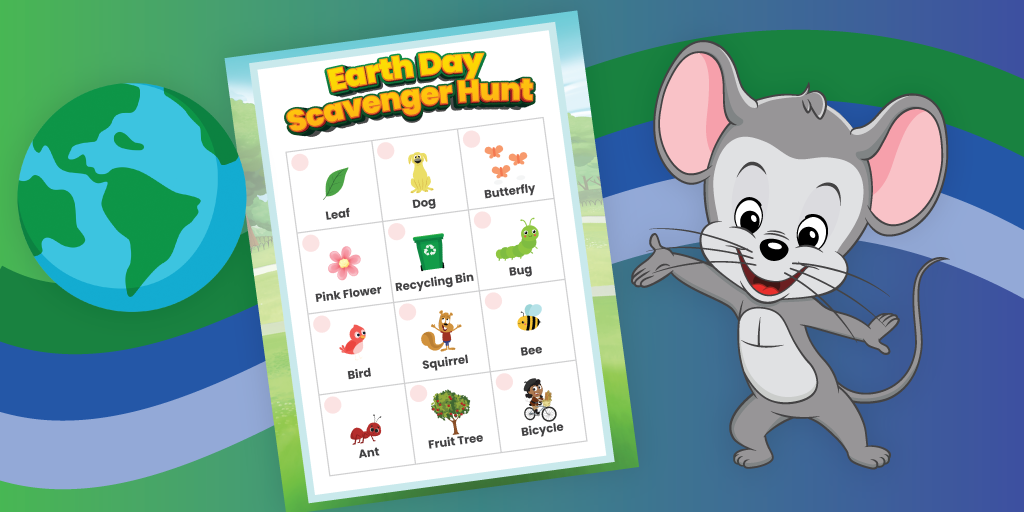
More Activities…
-

Vowel Sounds Word Lists for Kids (Free Printables)
Free vowel sound word lists & printables to help kids learn short, long, and R-controlled vowels through fun activities.
-

80+ Vegetable Names for Kids (Free Printable Lists)
Discover 80+ vegetable names for kids with fun printables, a catchy song, and hands-on crafts to make learning about healthy foods exciting.
-

100+ Opposite Words for Kids -Free Printable
Explore fun opposite word pairs for kids, from simple to challenging, plus free printable and teaching tips!
-

250+ Spring Words for Kids (Free Printable Lists)
Discover fun spring words for kids with free printable lists! Expand vocabulary with seasonal words, from weather to animals, and enjoy learning activities.
-

Rhyming Words for Kindergarten (Free Printables)
Make learning fun with rhyming words for kindergarten! Find word lists, worksheets, and engaging activities to boost phonics and early reading skills.
-
Rhyming Words List for Kids (Free Printables)
Discover free printable rhyming word lists for kids! Organized by sound patterns, these lists make learning fun with poems and engaging activities. Download now!